

Make a Joyful Noise Unto the Lord: SATB Choral Octavo
Words from Psalm 100, music by Judith Baity
Item: 00-PO-0001555
$1.95
Minimum order quantity: 20 copies
Pickup currently not available
Related Items
Make a Joyful Noise Unto the Lord: SATB Choral Octavo |
$1.95
|
View |
Description
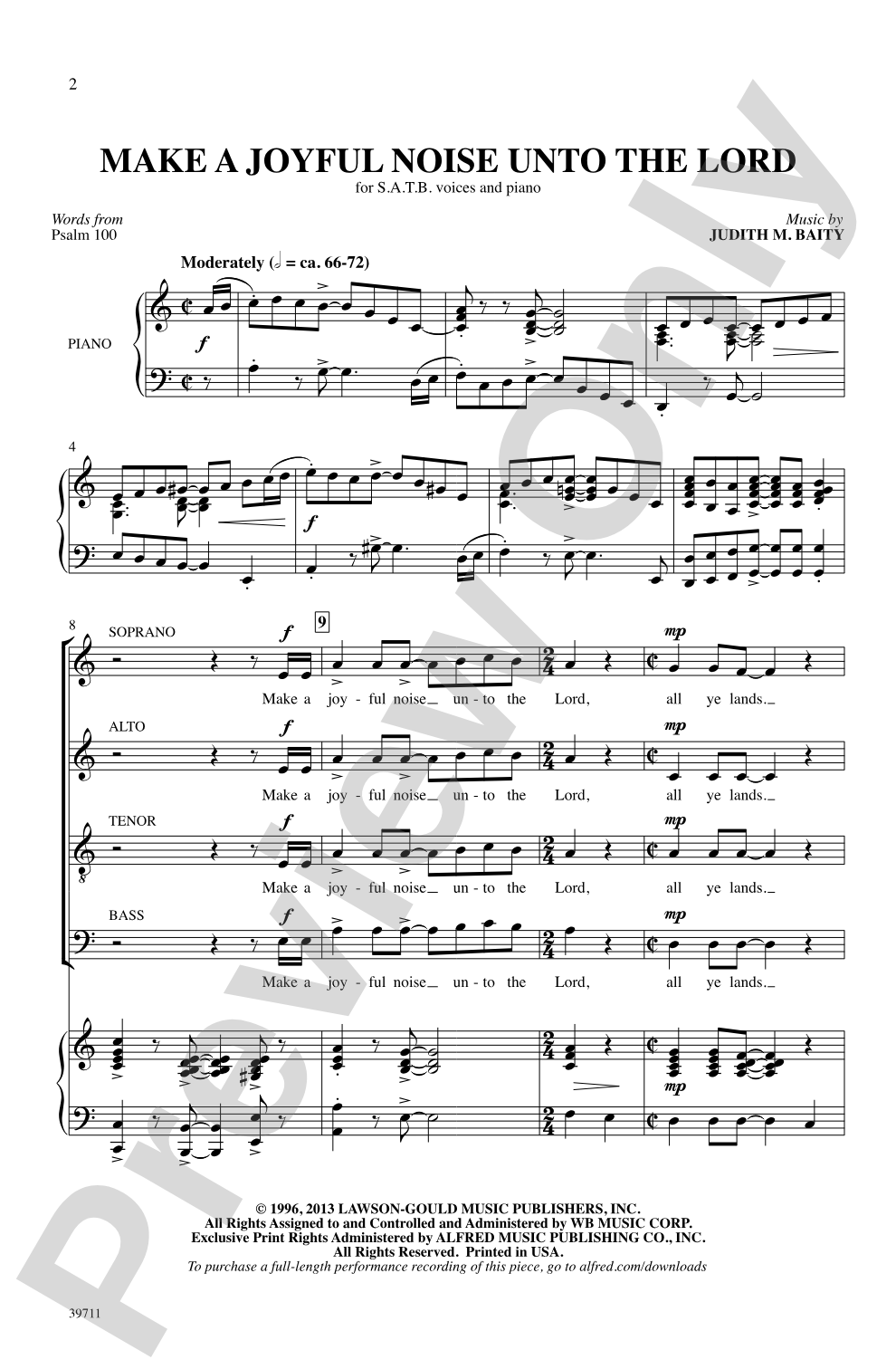
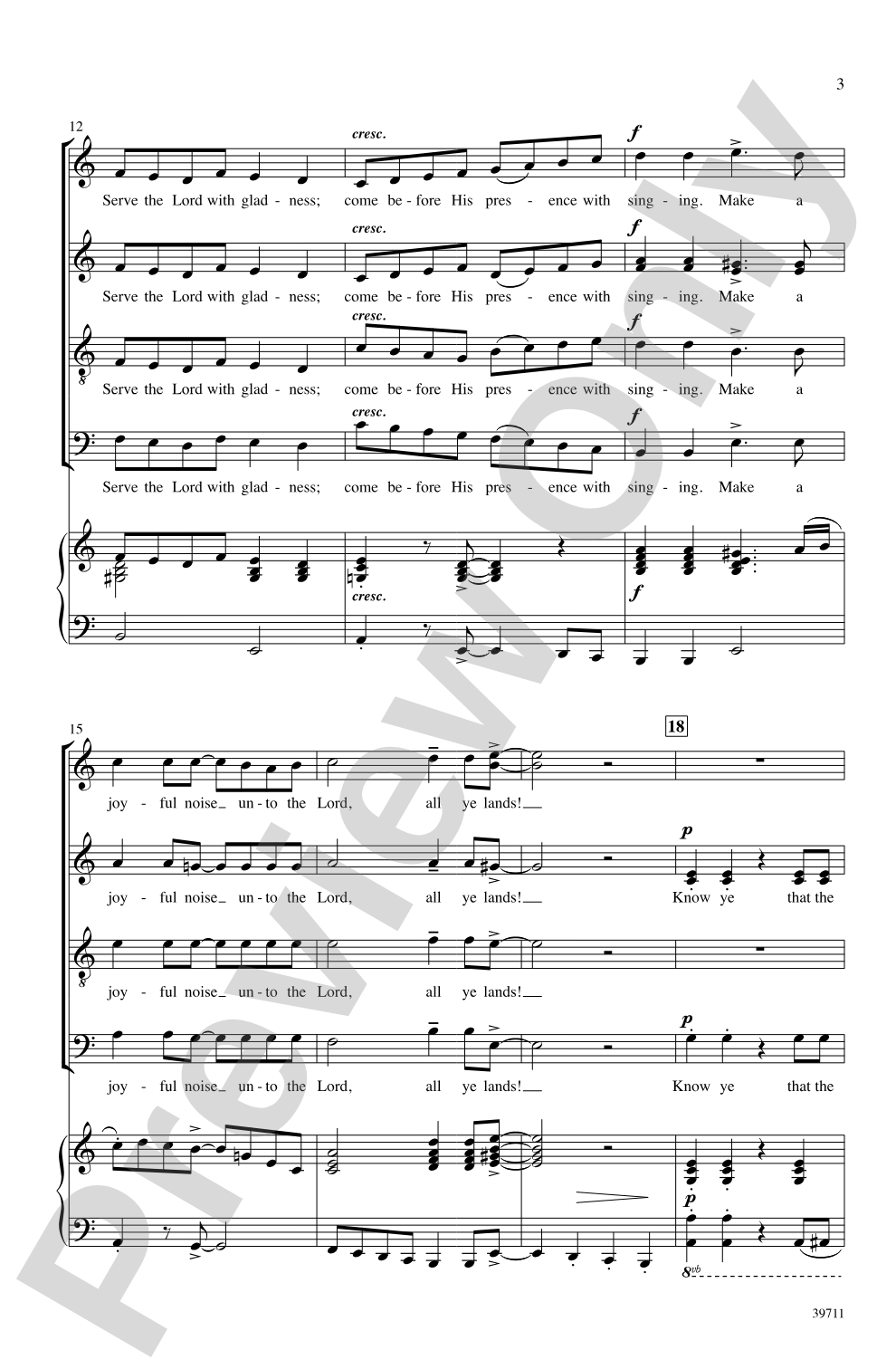
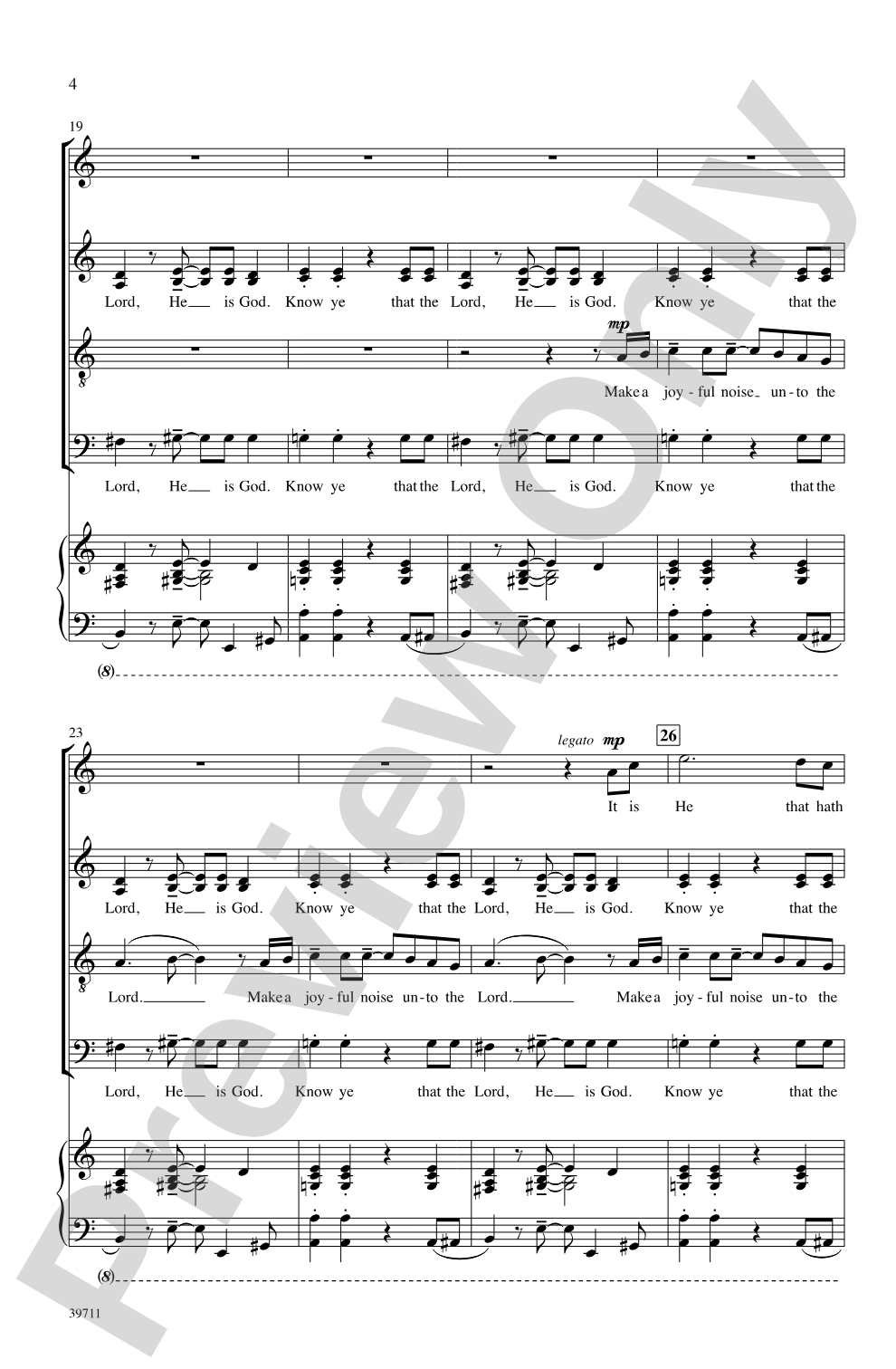
This mixed-meter, non-traditional setting of Psalm 100 is simultaneously uplifting and exciting! Utilizes a wide range of dynamics, an impressive vocal layering effect, some divisi voice parts, and a driving, gospel-influenced piano accompaniment.


Make a Joyful Noise Unto the Lord: SATB Choral Octavo isn't in MakeMusic Cloud just yet...but it could be. Let us know you'd like to see it, and you'll help shape what comes next. In the meantime, start a free trial and dive into thousands of interactive titles your students can play along with today.
Request This Title
Tell us you want it.
Start Your Free Trial
Explore everything that's ready to play right now.
Sample Audio
1
Audio File
--:--
0:00
0:00
Sample Video
No sample videos found.
Additional Details
Series:
Lawson-Gould
Publisher:
Alfred Music
Page Count:
16
SKU:
00-PO-0001555
More about this title
About the Composer: Judith Baity
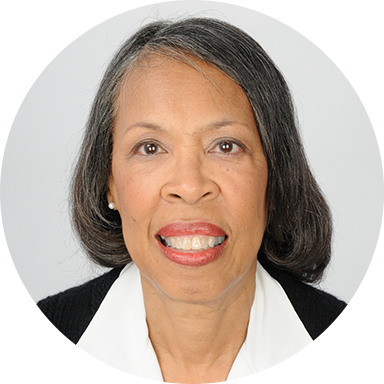
Judith Baity brings decades of experience in sacred music direction to her work as a composer and arranger. A native of Milwaukee with degrees from the University of Wisconsin-Milwaukee, Michigan State University, and the University of Southern California, she has established herself across multiple genres including choral music, jazz, contemporary gospel, and children's repertoire. Her piano compositions earned recognition as 1992 National Conference of Piano Pedagogy winners, and her orchestral work "Mary McLeod Bethune Suite" premiered at Bethune-Cookman College in 2003.
Beyond her compositional output, Baity has shaped music education as both an accomplished accompanist and piano instructor. Her 2007 Kwanzaa recording for children, Nguzo Saba, gained recognition among family music resources. She served as Artist-in-Residence at the Buckley School in Sherman Oaks, California in 2009, where she composed the school's official song.
Why we love this
Baity writes with a clear grasp of what energizes a choir. The mixed-meter construction and gospel-influenced accompaniment give this psalm setting contemporary muscle without losing the text's reverent foundation. Directors will appreciate the accessible divisi writing and dynamic range, which rewards careful preparation with genuinely stirring moments.
What to expect
Rhythmic energy meets jubilation. The piece lifts listeners with its driving accompaniment and dynamic vocal writing while maintaining the contemplative core of the psalm text. Moments of layered harmony create an almost orchestral fullness from voices alone.
Who it's for
This octavo works best for choirs with solid part independence and some experience navigating meter changes. Adult community choirs, church choirs with intermediate-advanced capabilities, and high school choirs ready for contemporary sacred writing will find it rewarding.
How to get the most out of it
- Balance the vocal layering by bringing out inner voices during divisi passages. Rehearse each section independently first, then layer them gradually so clarity remains intact even as texture builds.
- Let the piano anchor the driving rhythm. The gospel influence in the accompaniment will naturally push the tempo forward; make sure singers lock into that pulse rather than fighting it.
- Shape dynamics deliberately across the full range. Wide dynamic shifts demand precision from the ensemble; mark cues for the sudden drops and builds so the choir moves together.
How to use it
Position this as a high-energy second-half opener in a sacred concert, especially if paired with more traditional psalm settings. It also serves well as a festival piece or as the climactic moment in a program exploring contemporary approaches to liturgical texts.
Skills your students will build
- Reading and sustaining mixed meters (combination of time signatures within a single piece)
- Blending divisi voice parts while maintaining individual line clarity
- Responding to dynamic shifts across a wide range (soft to powerful)
- Locking ensemble pulse with a driving accompaniment pattern
- Balancing independence with ensemble cohesion in complex vocal layering