

Make a Joyful Noise: SAB Choral Octavo
Words and music by Kirby Shaw
Level: Moderate
Item: 00-PO-0006816
$1.60
Minimum order quantity: 20 copies
Pickup currently not available
Related Items
Make a Joyful Noise: Choral Instrumental Parts |
$15.00
|
View | |
Make a Joyful Noise: SATB Choral Octavo |
$1.60
|
View | |
Make a Joyful Noise: SAB Choral Octavo |
$1.60
|
View | |
Make a Joyful Noise: 2-Part Choral Octavo |
$1.60
|
View | |
Make a Joyful Noise: Choral Instrumental Parts |
$15.00
|
View | |
Make a Joyful Noise: Choral Octavo SoundTrax CD |
$21.95
|
View |
Description
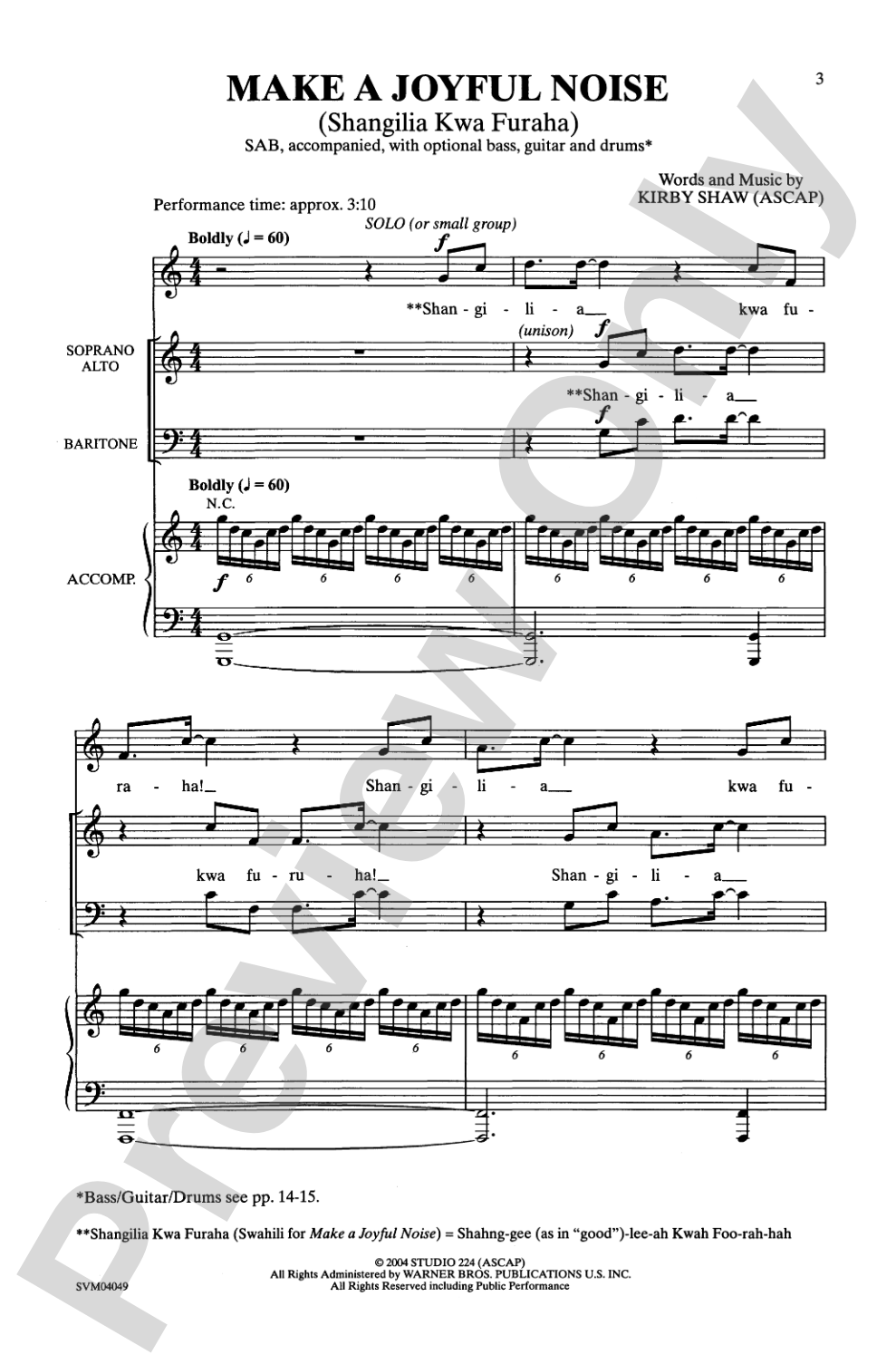
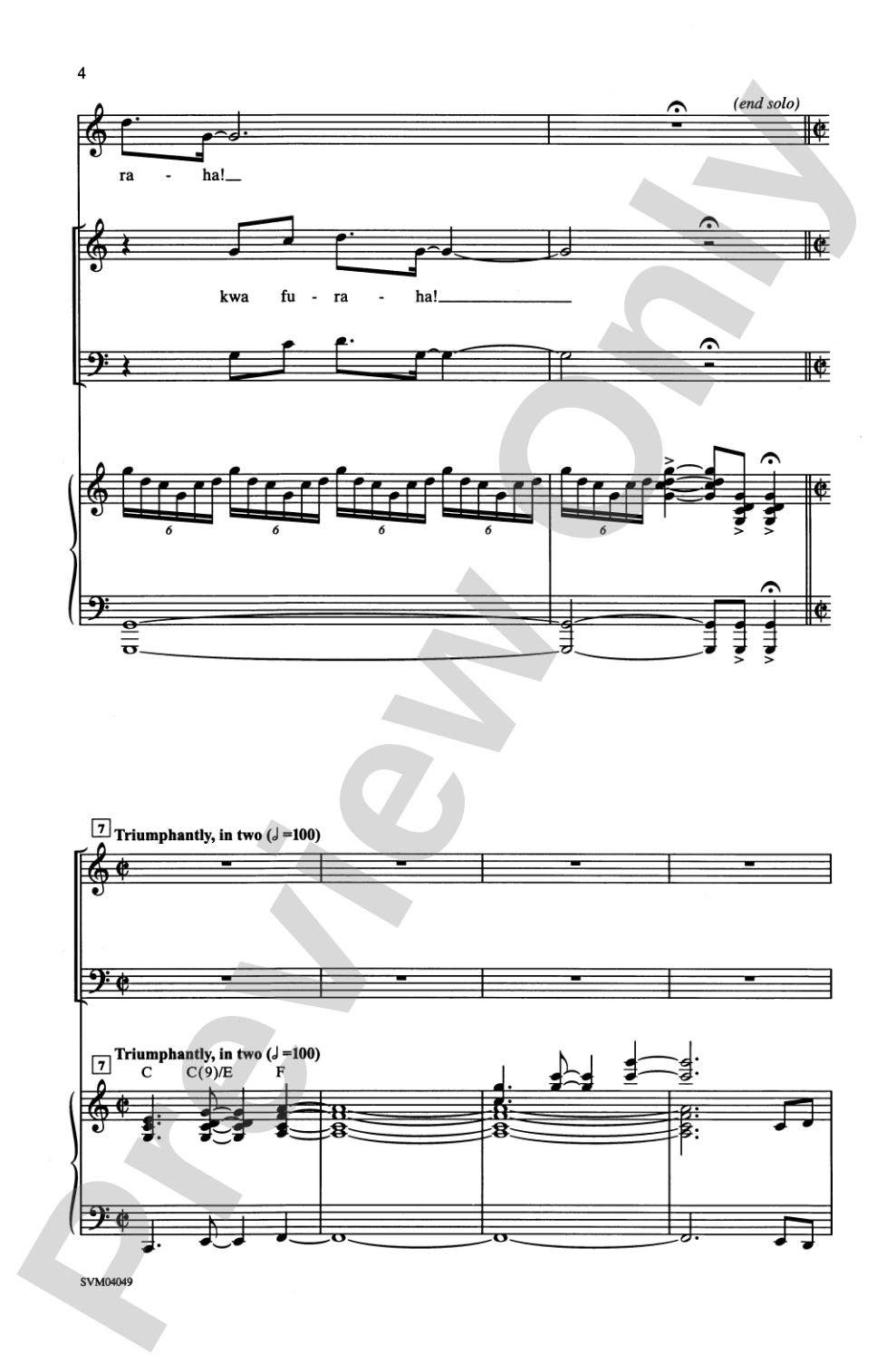
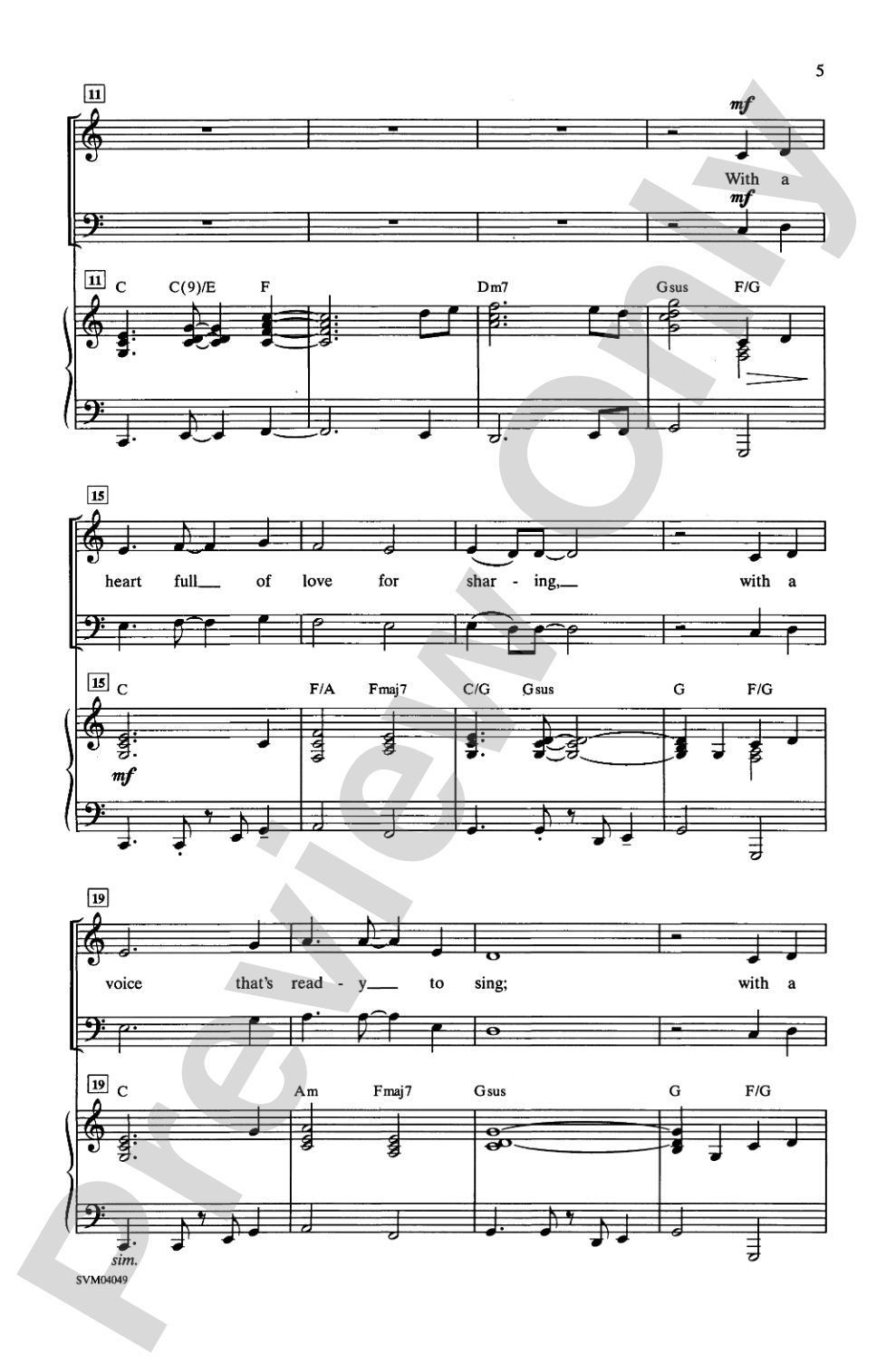
Your choirs will make many a "joyful noise" with this bold and energetic African style original from Kirby Shaw. The Swahili text is easily learned and brings with it a strong message of hope and caring. If you're looking for an opener or maybe a theme selection for your next concert, this is it.


Discover MakeMusic Cloud: thousands of interactive titles your students can play along with today.
Sample Audio
No sample audio found.
Sample Video
No sample videos found.
Additional Details
Series:
Alfred Archive Edition: Studio PR Catalog
Publisher:
Alfred Music
Page Count:
16
SKU:
00-PO-0006816
More about this title
About the Composer: Kirby Shaw

Kirby Shaw's influence on choral music education spans five decades and six continents. He holds degrees in Music Education and Choral Composition from San Jose State University and a doctorate in Choral Conducting from the University of Washington. His career includes foundational work directing award-winning vocal jazz ensembles at College of the Siskiyous, Colorado State University, and the University of Missouri at Kansas City, where his collaborative approach to teaching became known for its infectious energy and depth of musical knowledge.
With more than 2,500 choral compositions and arrangements in circulation, Shaw's catalog has sold nearly 20 million copies worldwide and earned multiple ASCAP awards. He has mentored singers across styles, worked with artists like Bobby McFerrin and Al Jarreau, and overseen the production of numerous educational recordings. Currently directing the Jefferson State Choral Coalition at Southern Oregon University, Shaw continues to create music that reaches choirs at every level.
Why we love this
Shaw has written a piece that functions equally well as a concert opener or a showcase selection, giving you programming flexibility without sacrificing musical substance. The African-influenced harmonic language and rhythmic drive sit naturally in a moderately skilled choir, and the Swahili text carries genuine emotional weight rather than feeling like window dressing. Most importantly, it delivers the kind of contagious energy that Shaw is known for, lifting the energy in your rehearsal room and creating a memorable moment for your audience.
What to expect
The music radiates warmth and forward motion, grounded in African rhythmic language that feels both authentic and accessible. It carries an unironic hopefulness that reads as genuine rather than saccharine, with the kind of buoyant energy that can lift a concert or reset the mood in a rehearsal.
Who it's for
This piece serves choirs at the intermediate level seeking repertoire with style and substance. It works for groups building confidence in world music contexts or choirs wanting to program something with immediate emotional impact and celebratory character.
How to get the most out of it
- Establish the rhythmic groove early in rehearsal by having the choir snap or clap the underlying pulse while singing. This anchors the African style and prevents the piece from losing momentum.
- Work the Swahili text in isolation before layering it with harmony. Accurate pronunciation grounds the cultural authenticity and helps singers feel connected to the message.
- Balance your SAB voicing so the soprano and alto parts remain distinct; Shaw's writing often uses the parts to create movement and color rather than doubling for fullness.
- Let the recorded accompaniment drive the first few rehearsals, then gradually reduce your reliance on it as the choir internalizes the rhythmic feel and harmonic progression.
How to use it
Open your winter or spring concert with this selection to establish an energetic, welcoming tone and signal that your singers are engaged and present. It also serves as a strong thematic choice for a concert centered on world cultures or hope-focused programming, where its message of caring and its vibrant musical language reinforce your larger concert arc.
Skills your students will build
- Pronunciation and phrasing of Swahili text
- Rhythmic independence in African-influenced compositional language
- Balancing mixed SAB voicing to hear individual harmonic color
- Interpreting syncopated rhythms with clarity and stylistic authenticity