

Major Scale Pro, Book 2: An Introduction to Major Scales Beginning on Black Keys
An Introduction to Major Scales Beginning on Black Keys
By Melody Bober, Gayle Kowalchyk, and E. L. Lancaster
Level: Early Intermediate / Intermediate
Item: 00-PB-0001109
$9.99
Pickup currently not available
Related Items
Major Scale Pro, Book 2: Piano Book |
$9.99
|
View |
Description
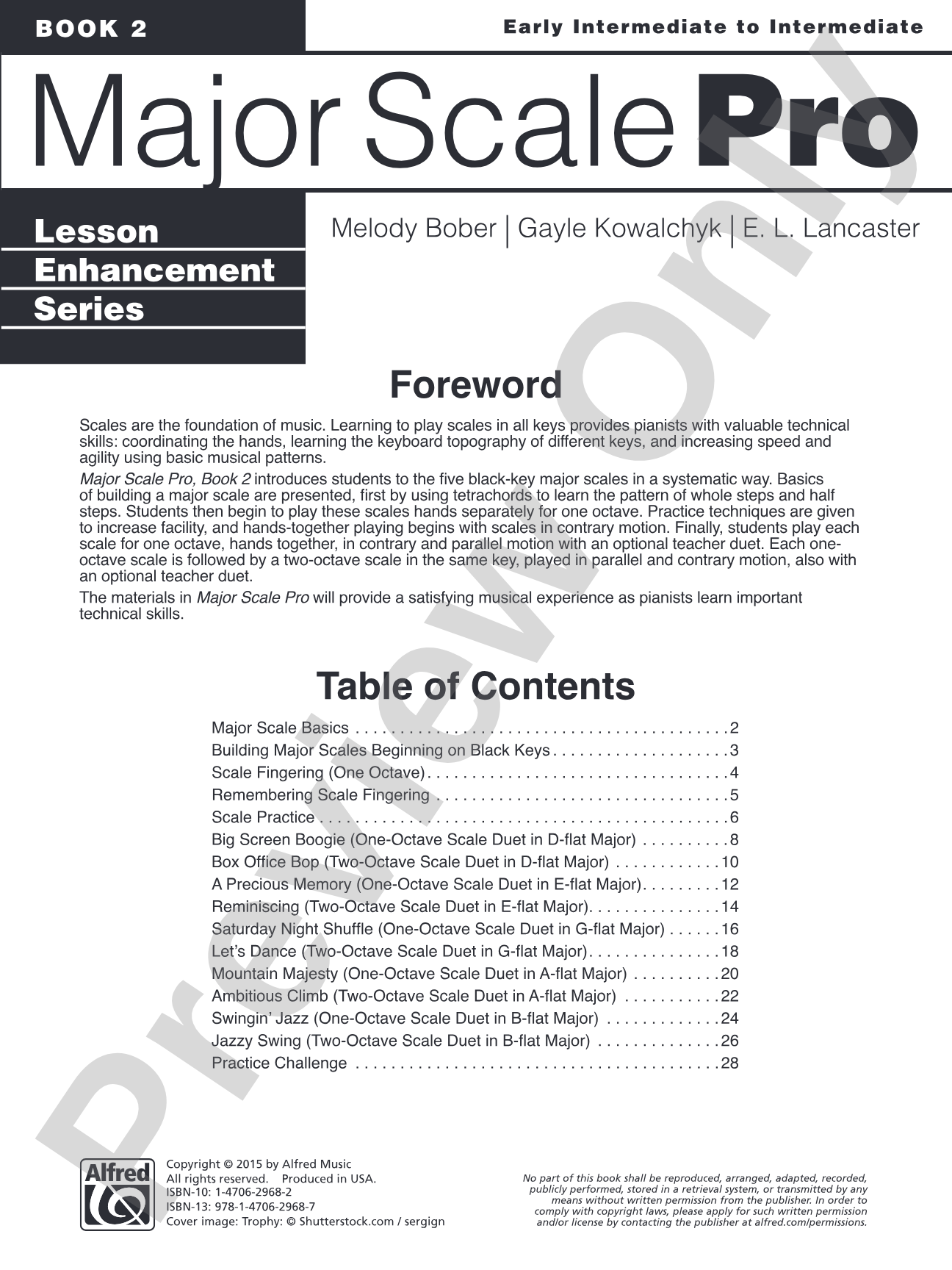
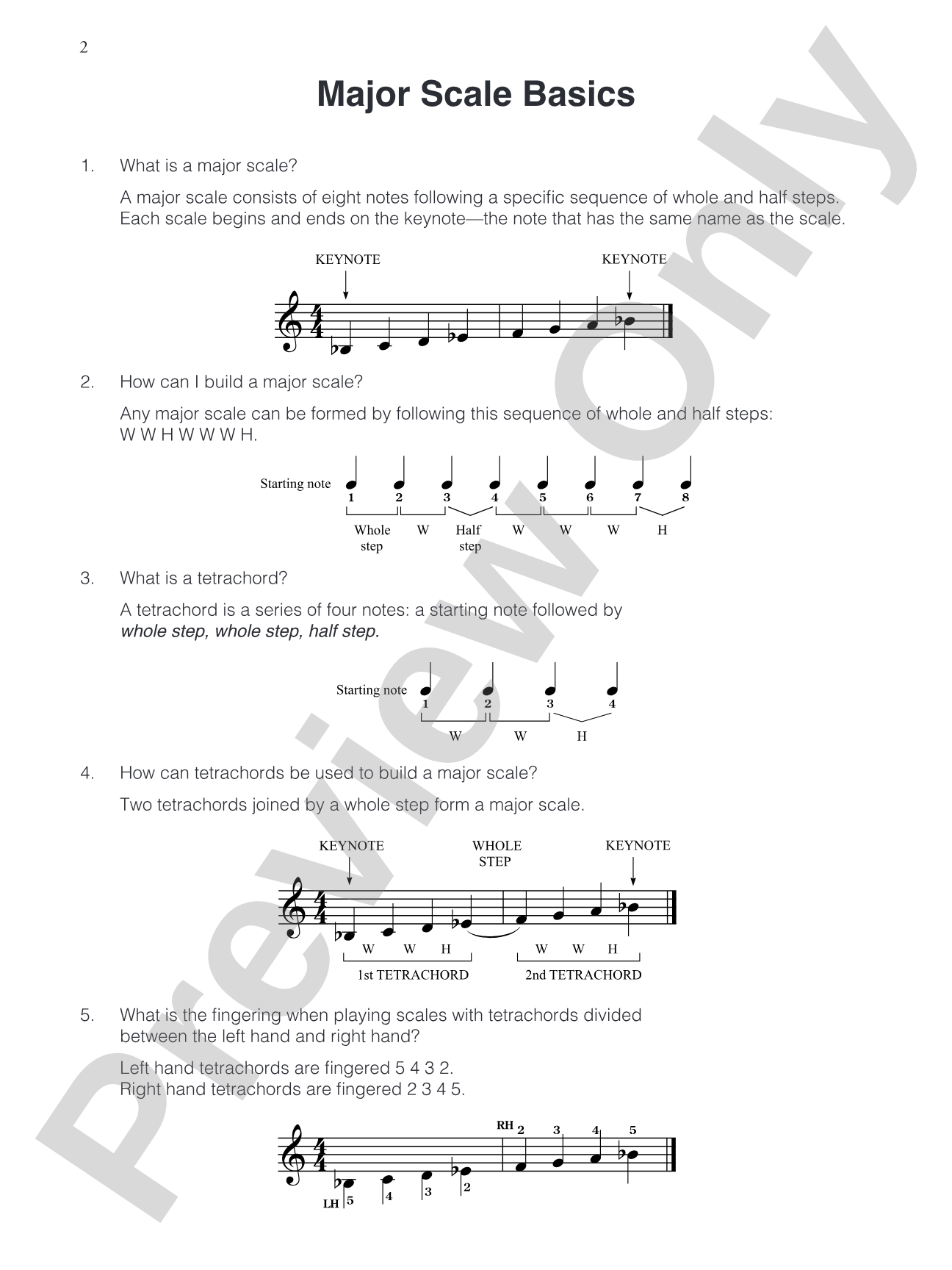
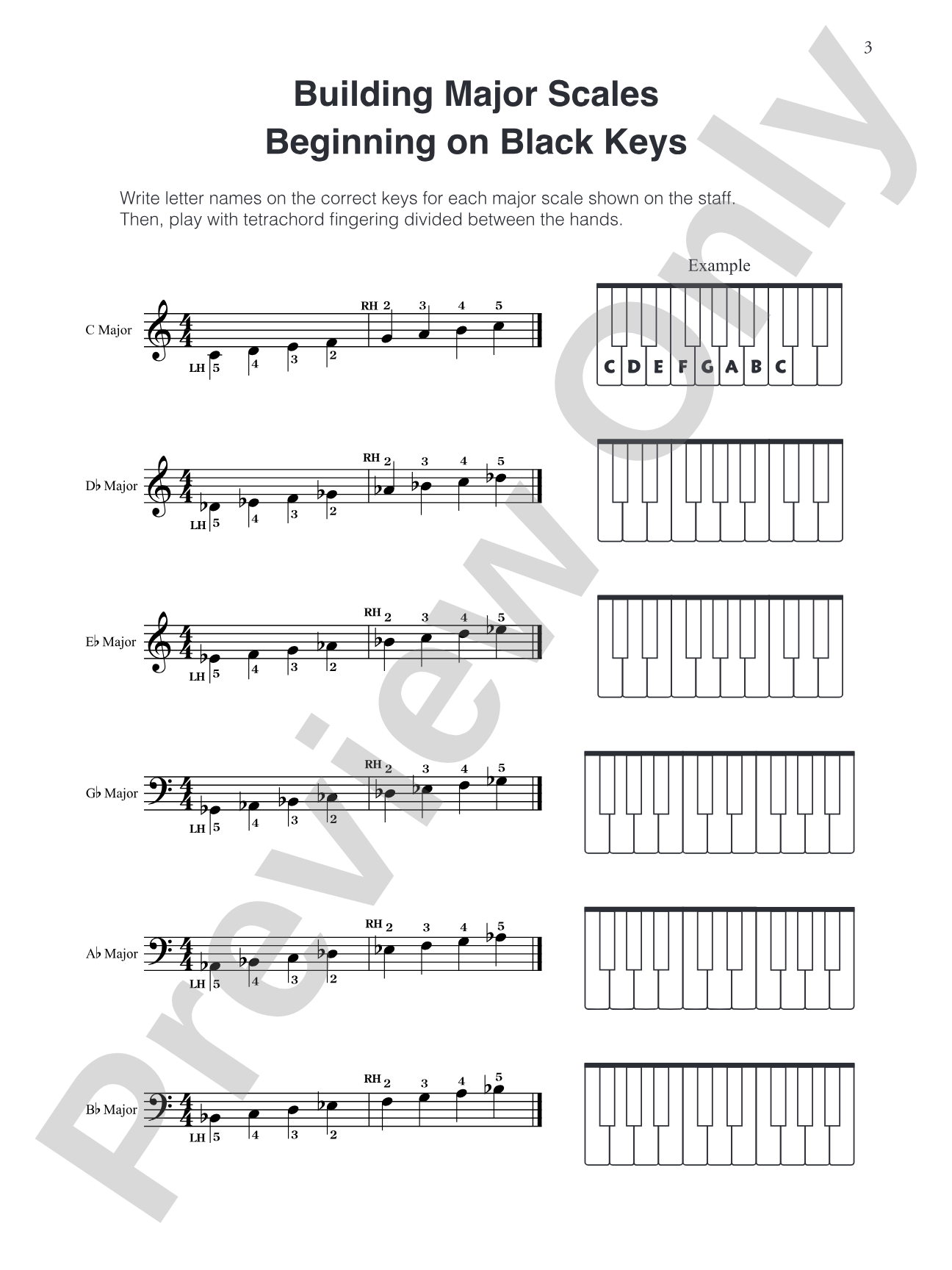
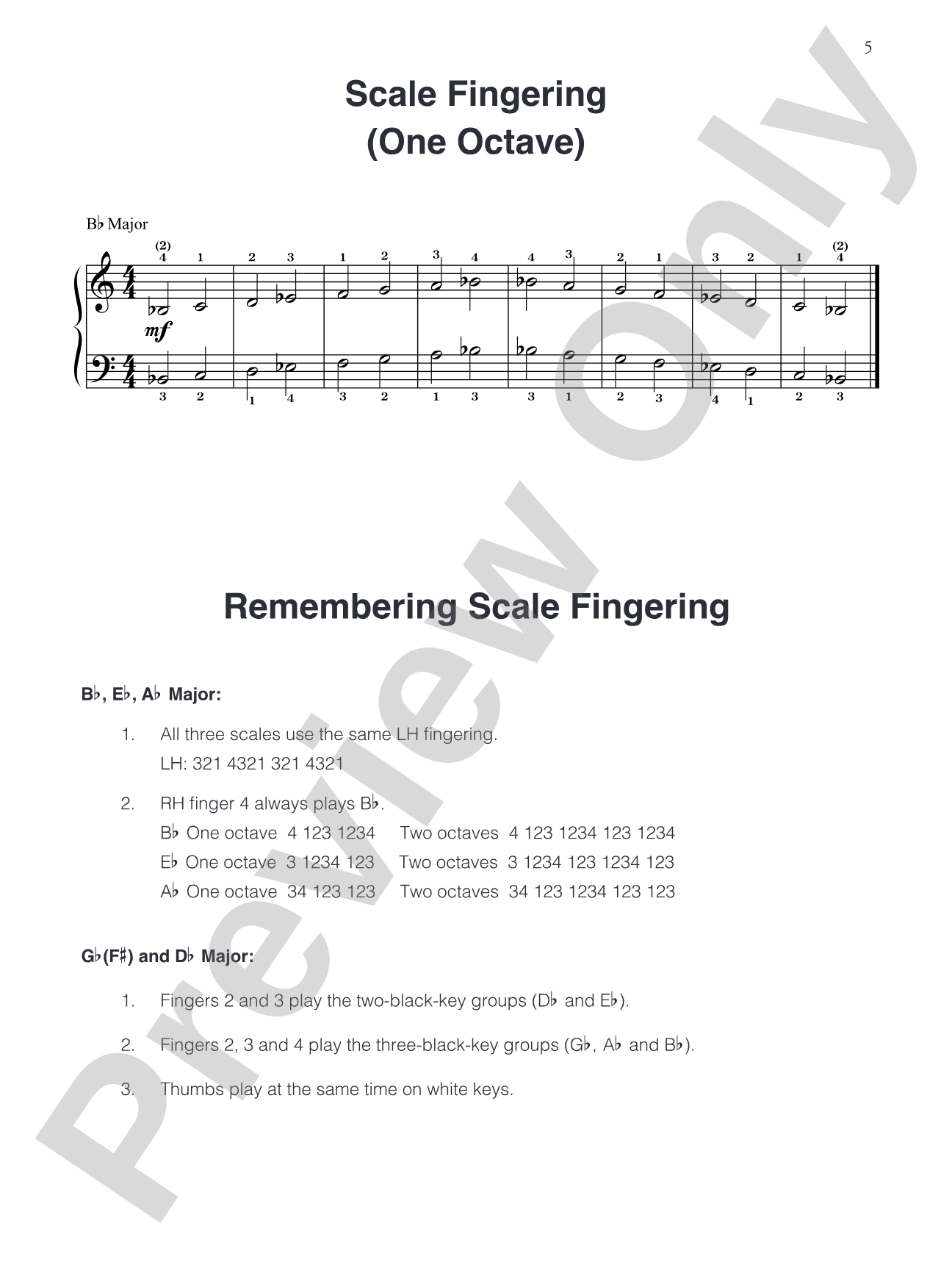
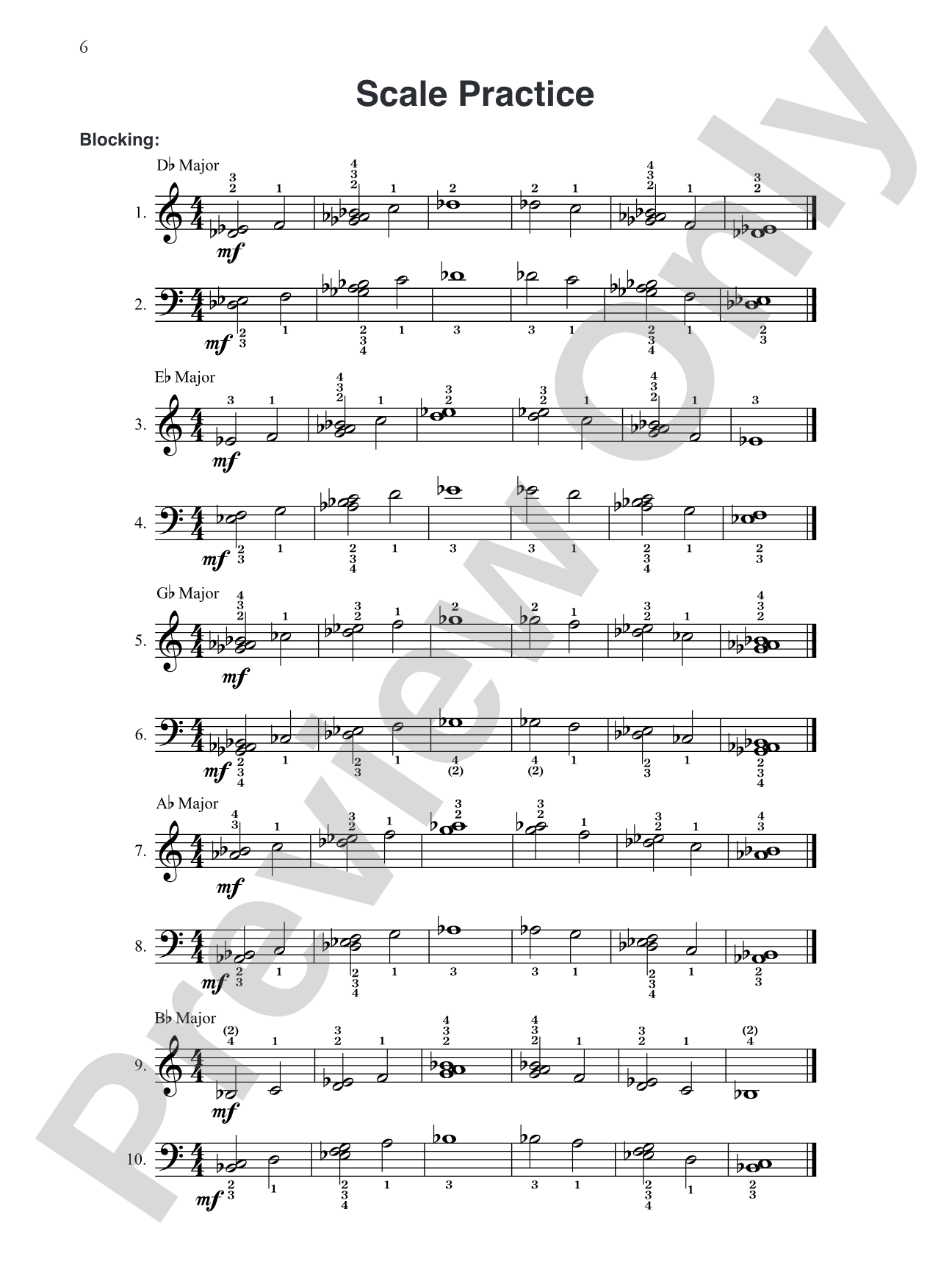
Major Scale Pro, Book 2 introduces students to the five black-key major scales in a systematic way. Basics of building a major scale are presented, first by using tetrachords to learn the pattern of whole steps and half steps followed by playing one-octaves scale hands separately. Optional teacher duets are included for both one-octave and two-octave scales.


Major Scale Pro, Book 2: An Introduction to Major Scales Beginning on Black Keys isn't in MakeMusic Cloud just yet...but it could be. Let us know you'd like to see it, and you'll help shape what comes next. In the meantime, start a free trial and dive into thousands of interactive titles your students can play along with today.
Request This Title
Tell us you want it.
Start Your Free Trial
Explore everything that's ready to play right now.
Sample Audio
No sample audio found.
Sample Video
No sample videos found.
Additional Details
Series:
Lesson Enhancement Series
Publisher:
Alfred Music
Page Count:
28
SKU:
00-PB-0001109
More about this title
About the Composer: Melody Bober

Melody Bober's approach to piano composition stems directly from her dual expertise in music education and performance. She holds a bachelor's degree in music education from the University of Illinois at Urbana-Champaign and a Master of Arts in piano performance from Minnesota State University, Moorhead, where she studied with pianists Joel Shapiro and Andrew Froelich. Her mentors also included Mary Hoffman in music education and Tony Caramia in jazz, influences that shape her teaching-centered writing.
With two decades of public school teaching experience, university-level instruction, and an active private studio, Bober understands exactly where students stumble and what motivates them to practice. She brings that knowledge into every piece she writes. Her work as a church pianist, accompanist, and former music director further grounds her compositions in practical musicianship. Bober is a frequent clinician at conventions and workshops for piano teachers across North America and continues to reside in Minnesota.
Why we love this
Bober and her co-authors dismantle the black-key scale mystery by building each scale systematically using tetrachords before moving to full octaves. The optional teacher duets transform scale practice from isolated drilling into genuine musical partnership, which keeps students engaged and reminds them why they're learning this material. Thirty-two pages give students room to solidify these five scales without feeling rushed.
What to expect
Learning black-key scales feels like solving a puzzle that finally makes sense. Once students grasp the tetrachord pattern, the five scales stop seeming arbitrary and become logical; playing them feels more assured and capable.
Who it's for
Early intermediate to intermediate pianists ready to expand beyond white-key scales. This book suits students who have solid hand position, basic five-finger patterns, and comfort with one-octave scales in the major keys on white keys.
How to get the most out of it
- Play tetrachords hands separately first, emphasizing the whole-half step pattern out loud as you go; this auditory reinforcement helps the pattern stick in memory.
- Record yourself playing the one-octave scales and listen back without the book in front of you; this develops independence from visual cues and strengthens aural awareness.
- Use the teacher duets to establish a steady pulse; the accompaniment provides a harmonic anchor that prevents students from rushing or dragging between the tetrachord sections.
How to use it
Assign this as technique work alongside repertoire at the early intermediate level. The scaffolded approach means students can work through the book over several weeks or months without needing supplementary scale materials. Pair it with pieces in black-key-friendly keys to reinforce what students are learning.
Skills your students will build
- Identifying whole steps and half steps within a tetrachord pattern
- Building major scales on black keys (F sharp, C sharp, G sharp, D sharp, A sharp) hands separately and hands together
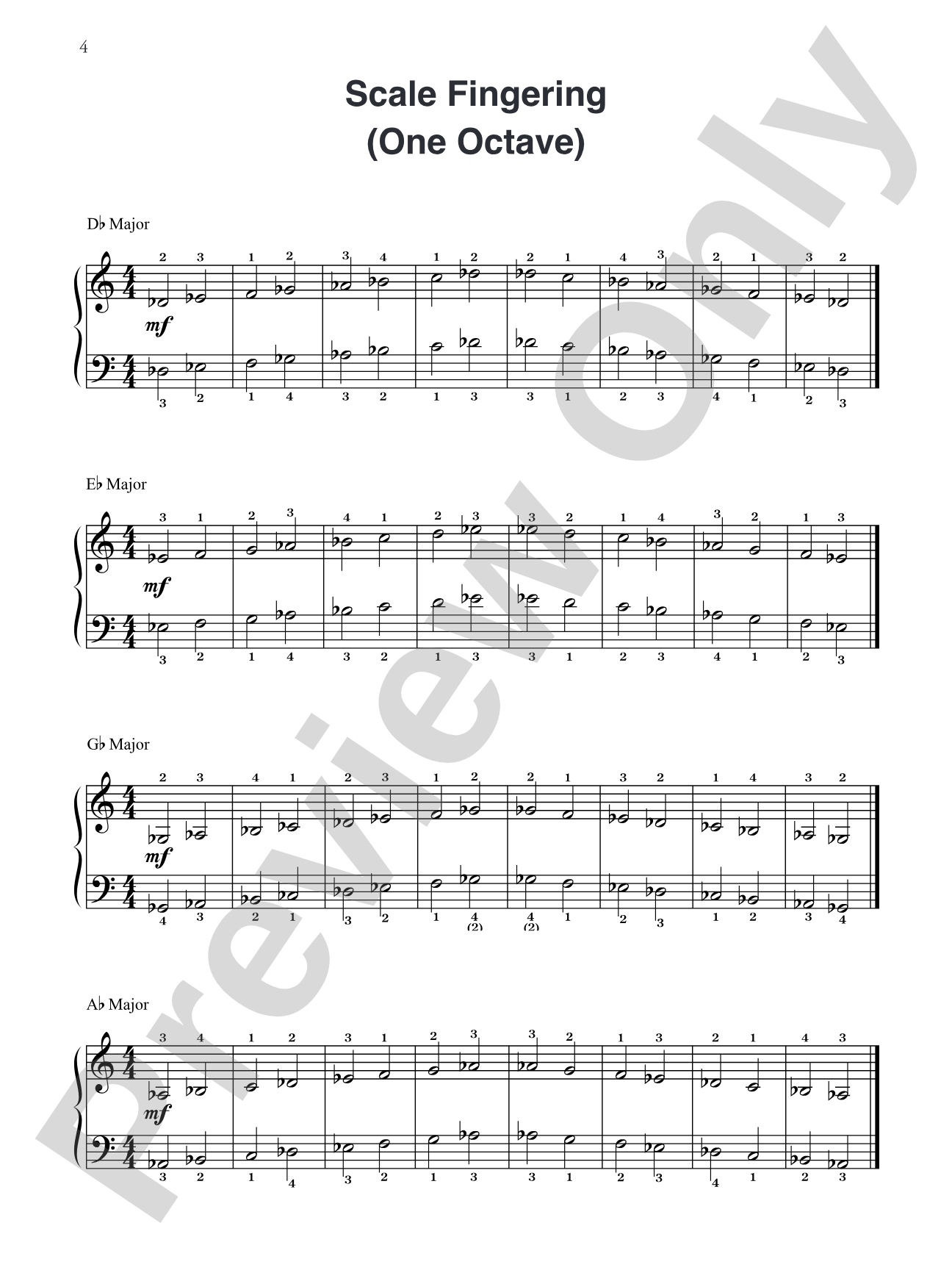
- Reading and playing one-octave and two-octave scales with proper fingering
- Listening to and responding to harmonic accompaniment while playing scales
- Understanding the intervallic structure of major scales across different key centers