Majestic March Cover Image

Majestic March: String Orchestra Conductor Score

$7.00 USD
Sale price  $7.00 USD Regular price 
Skip to product information
Majestic March Cover Image

Majestic March: String Orchestra Conductor Score

Arr. Loreta Fin

Grade: 3

Item: 76-30165S

$7.00
Shipped

One moment…

Description
Excellent elementary or beginning high school ensemble. Dotted rhythms are used in all the parts with diverse dynamic range evident throughout.

Majestic March: String Orchestra Conductor Score isn't in MakeMusic Cloud just yet...but it could be. Let us know you'd like to see it, and you'll help shape what comes next. In the meantime, start a free trial and dive into thousands of interactive titles your students can play along with today.

Sample Pages

Sample Audio
No sample audio found.
Sample Video
Additional Details
Series: Wilfin String Orchestra: Young String Ensemble Series
Publisher: Wilfin Music
Page Count: 12
UPC: 038081327006
SKU: 76-30165S

More about this title

About the Arranger: Loreta Fin
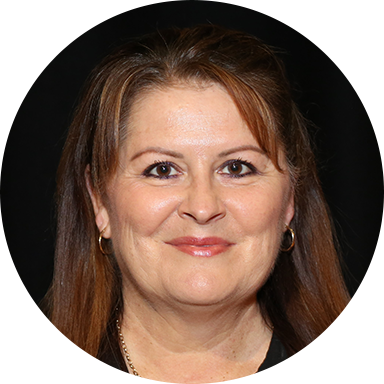
Loreta Fin

Loreta Fin studied at the Sydney Conservatorium of Music and spent decades as a performing musician, serving as Principal Viola with the Queensland Pops Orchestra and first violinist with the Sydney Youth Orchestra. Her career has spanned chamber and orchestral performance alongside significant leadership roles in music education, including 30 years directing strings at Somerville House School in Brisbane.

Fin's contributions to string music education are extensive and widely recognized. She has presented at national conferences in Australia and the United States, adjudicated major competitions across Australia, and served multiple terms as State and National President of the Australian Strings Association. Her output includes over 100 published string orchestra works distributed internationally by Alfred Music. In recent years, she has conducted state and national honours ensembles programs, earned nomination for an ARIA Best Teacher award, and received the National Award for Services to Music and String Teaching from AUSTA.

Why we love this

Fin writes with a conductor's eye for balance and a string pedagogue's instinct for what young players can handle. The dotted rhythms appear across all parts rather than clustering in one section, which distributes the challenge evenly and keeps every stand engaged. The dynamic range gives conductors real material to shape and teaches ensembles something beyond the basics.

What to expect

A piece with forward momentum and ceremonial character. The march form gives it clarity and accessibility, while the rhythmic detail and dynamic variety prevent it from sounding simple or generic. Young players feel like they are making real music decisions, not just reading dots.

Who it's for

String directors working with elementary or early high school orchestras looking for a piece that builds rhythmic sophistication without demanding advanced technique. This score serves groups ready to work with dotted rhythms across multiple parts and to navigate varying dynamic landscapes.

How to get the most out of it

  • Bring out the dotted rhythms as an ensemble gesture rather than letting them blur into straight rhythms. A clear, unified attack on the short note keeps the march character crisp.
  • Shape the dynamic changes deliberately; they are spaced throughout the score for effect, not accident. Use them to build architecture rather than treating them as arbitrary shifts.
  • Balance your string sections carefully in rehearsal so the texture remains transparent even during full-ensemble passages. Young orchestras often muddy marches by pulling dynamics up everywhere at once.

How to use it

Program this as an opener or closer on a concert where you want to establish confidence and ensemble unity without overshadowing what comes next. At the Grade 3 level, it works equally well as a contest piece or as a rehearsal-room confidence builder earlier in the year.

Skills your students will build

  • Articulating dotted rhythms across mixed parts
  • Reading and responding to dynamic contrasts in real time
  • Maintaining ensemble rhythmic precision in march meter
  • Balancing independent rhythmic lines while serving the larger harmonic structure

You May Also Like