

Mahler's Mysterious March: String Orchestra Conductor Score & Parts
Variations on a Theme from Symphony No. 1
By Gustav Mahler / arr. Jim Palmer
Grade: 1.5
Item: 00-PK-0007691

$55.00
Pickup currently not available
Buy Extra Parts (Digital PDF Download)
Parts Added to Cart!
Related Items
Mahler's Mysterious March: String Orchestra Conductor Score |
$8.00
|
View |
Description
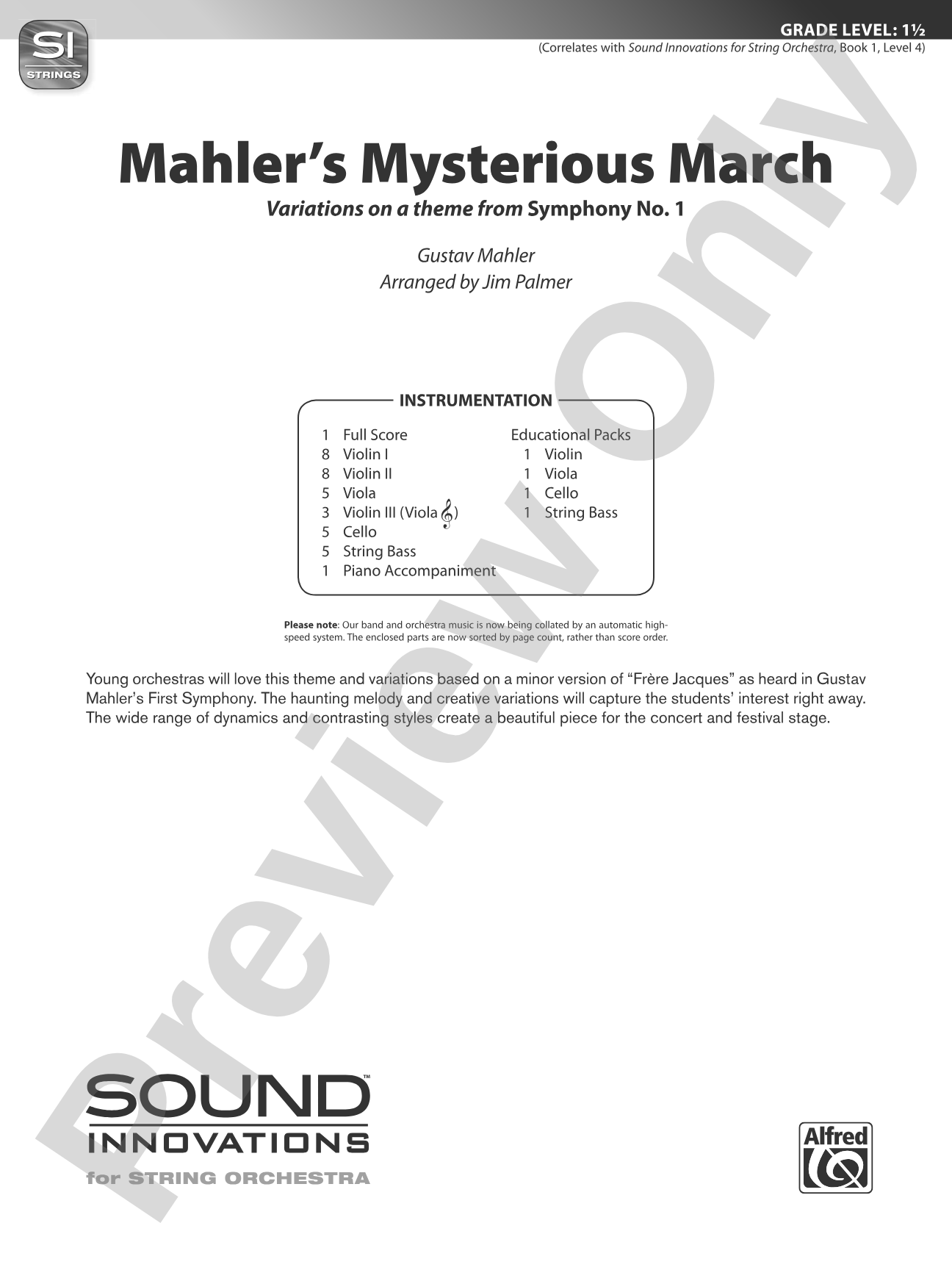
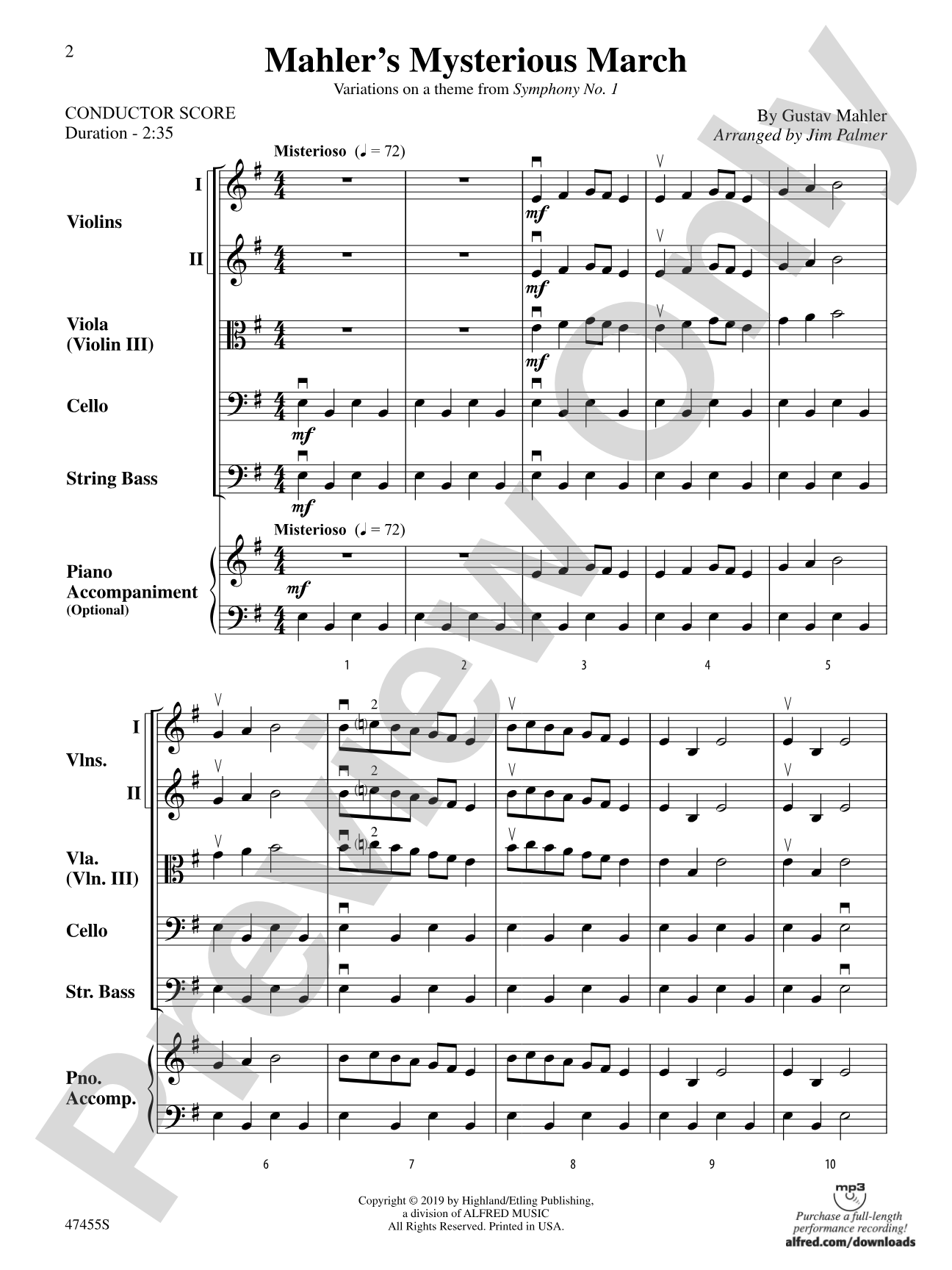
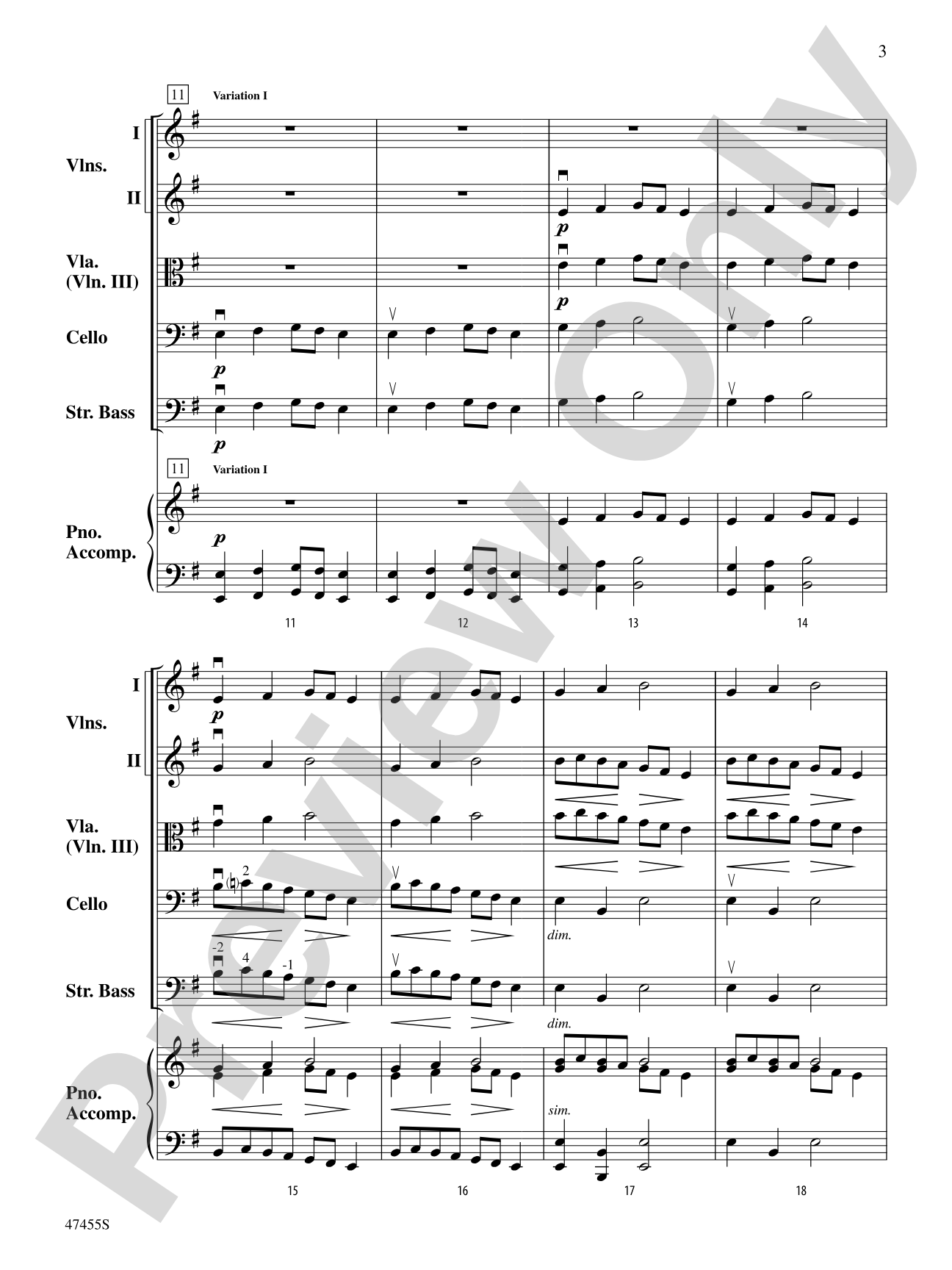
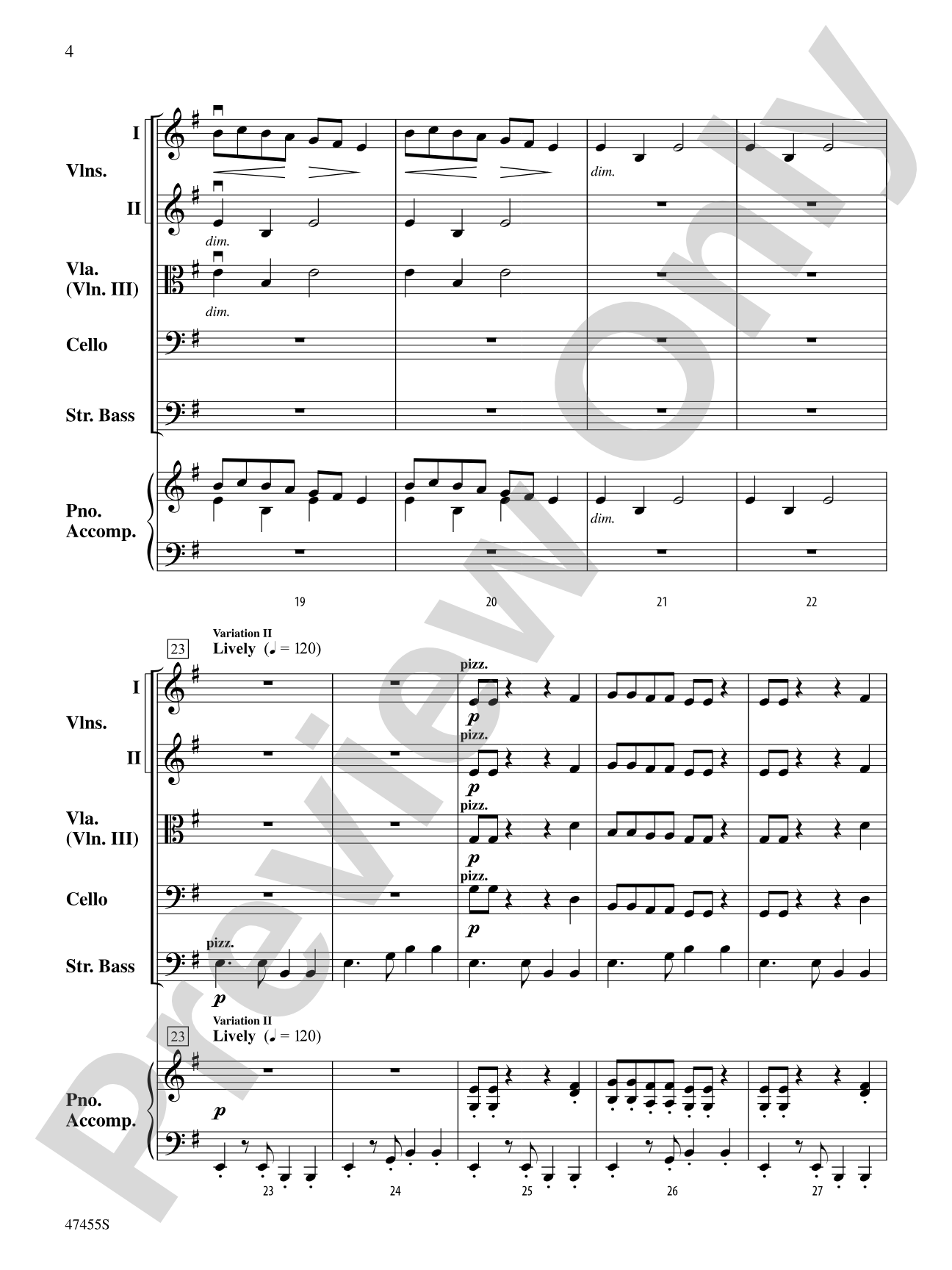
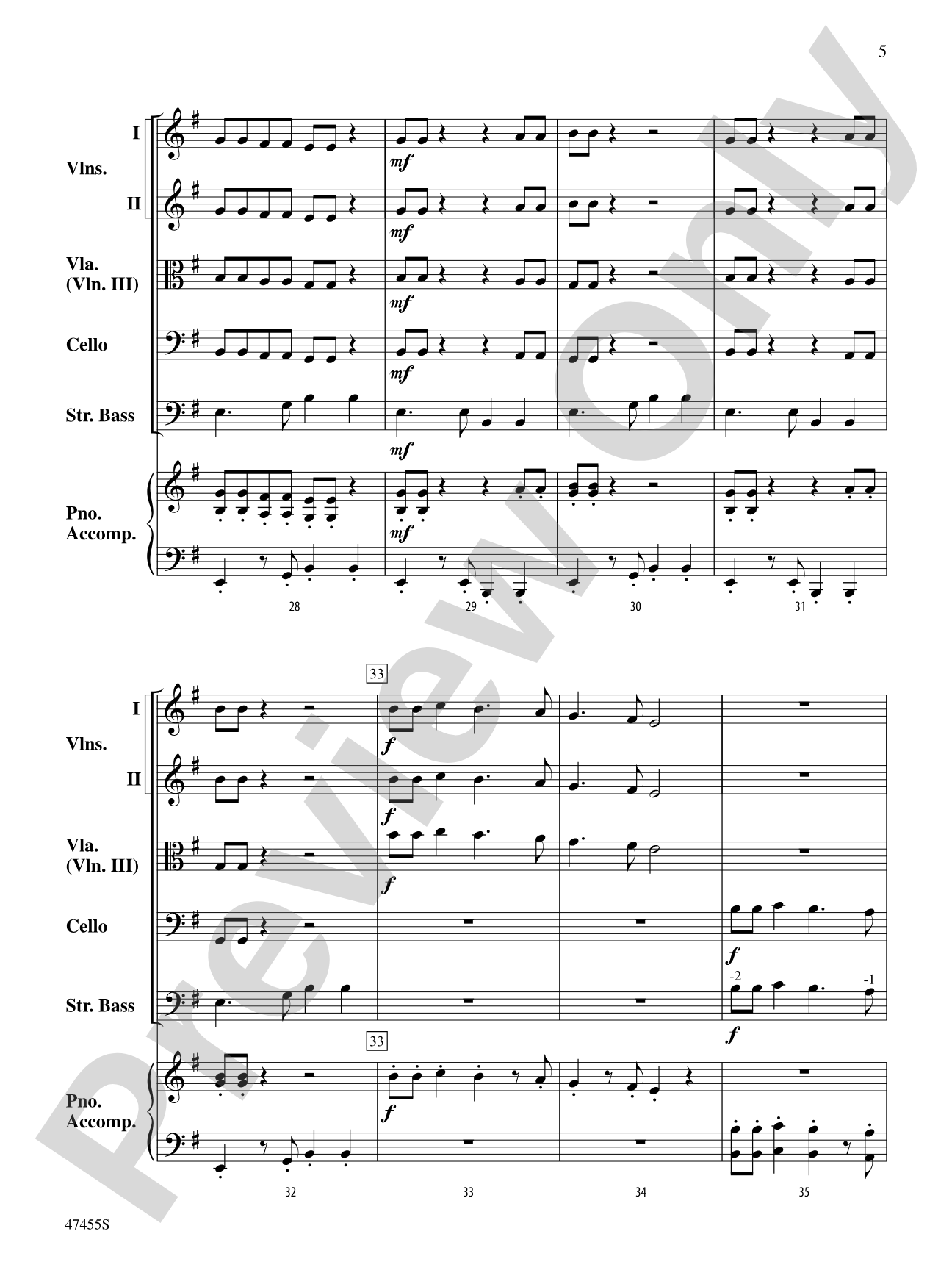
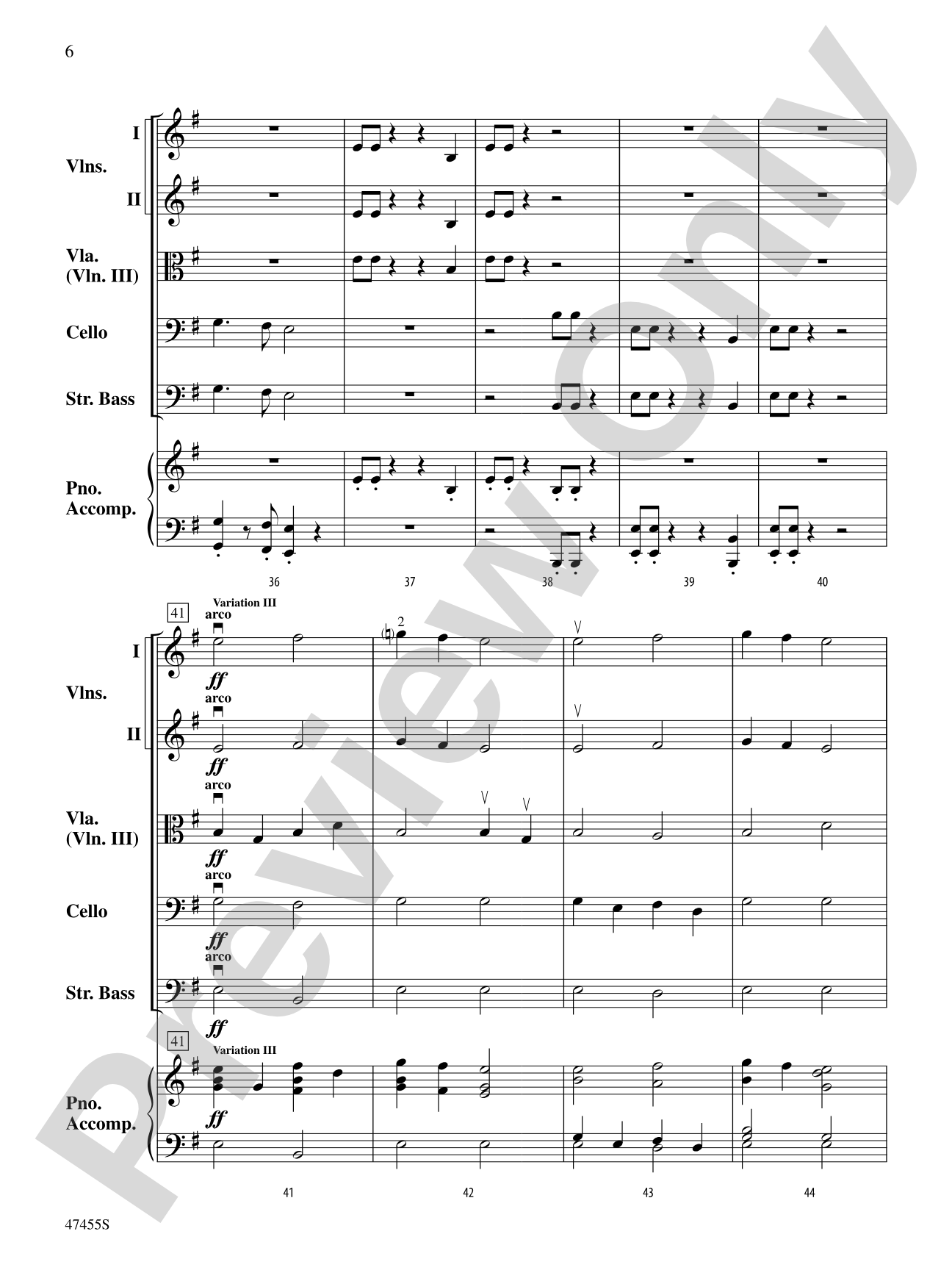
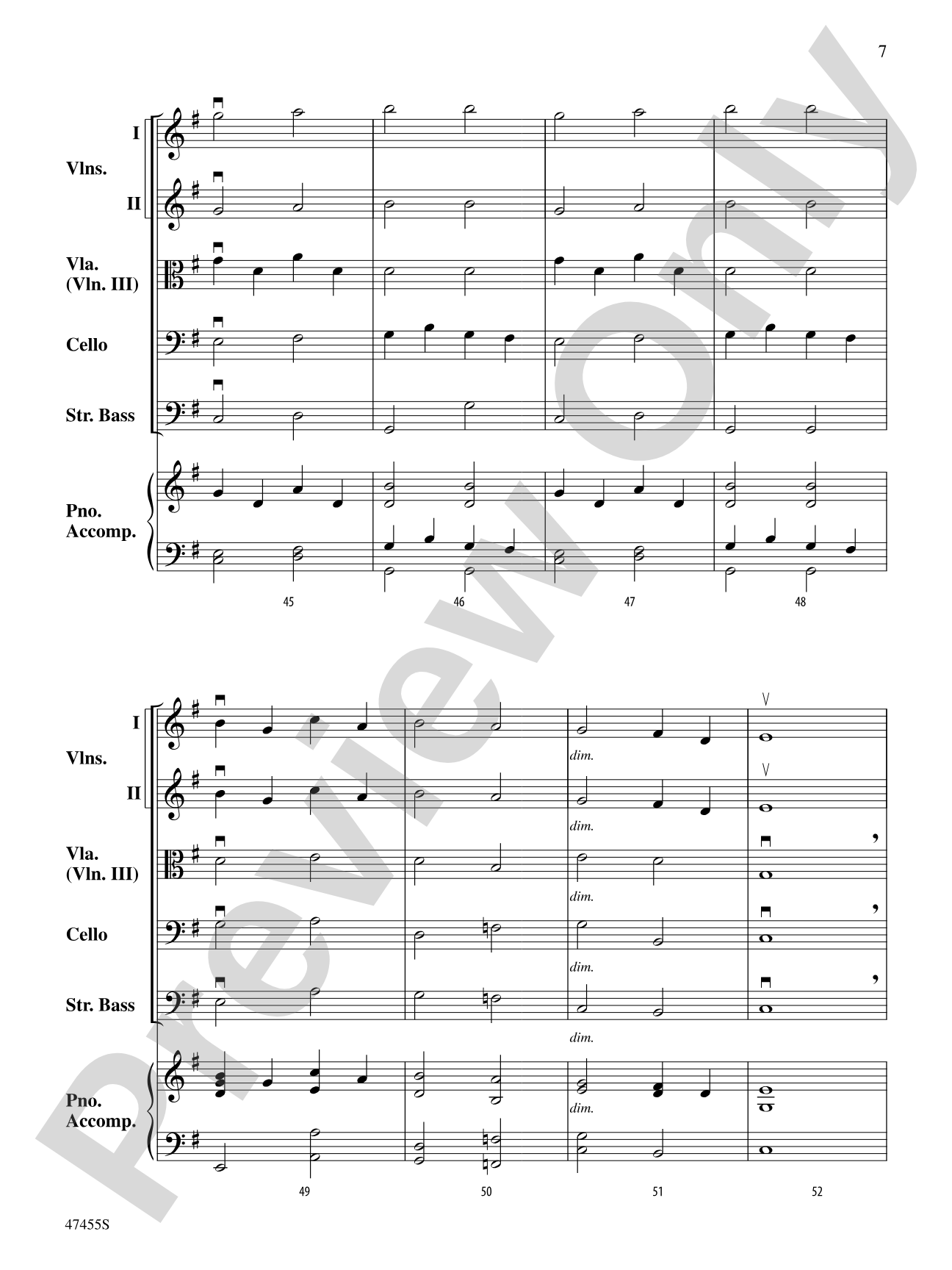
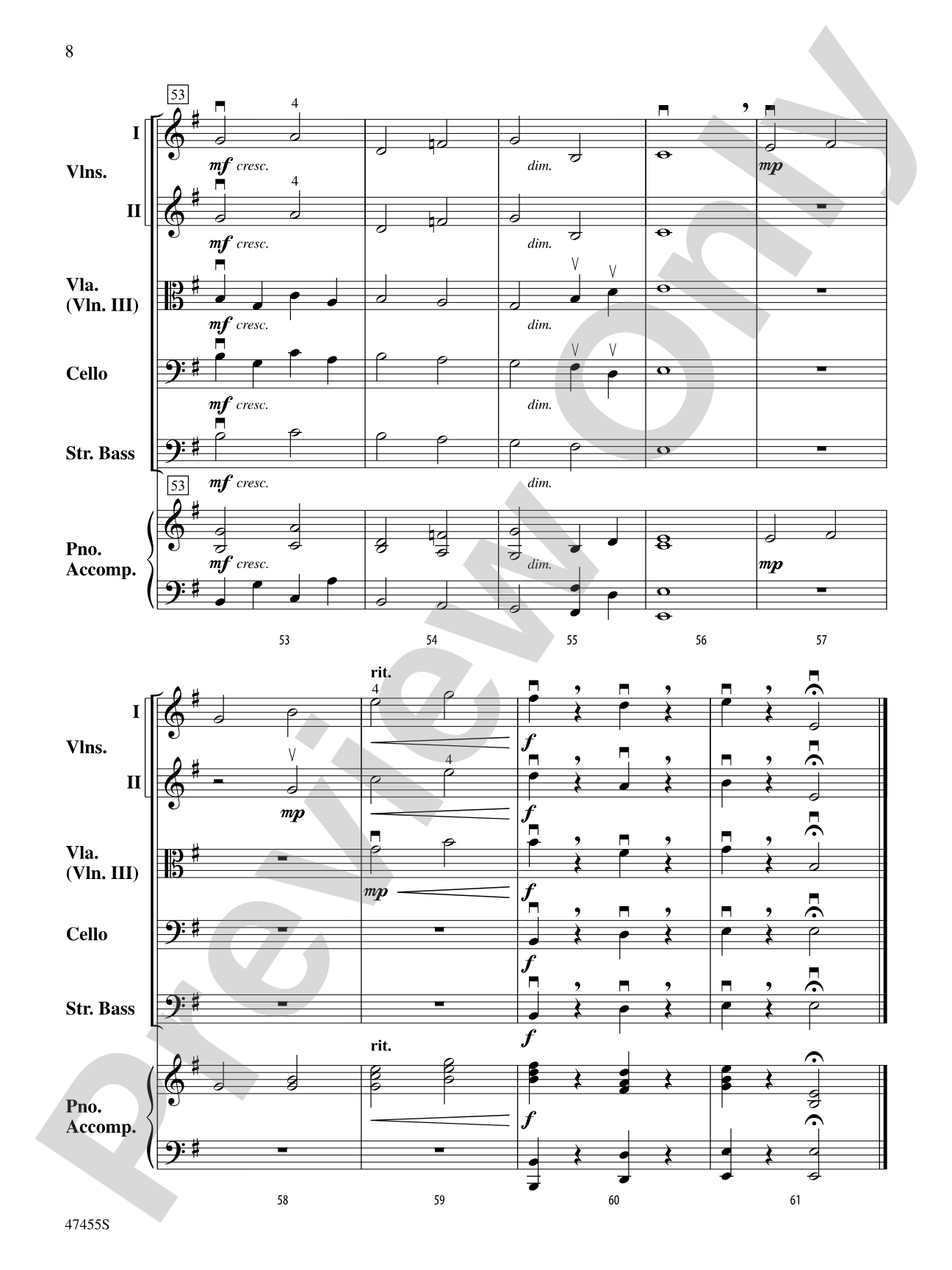
This piece is based on a minor version of "Frère Jacques," as heard in Gustav Mahler's first symphony. The haunting melody and creative variations will immediately capture the students' interest. The wide range of dynamics and contrasting styles in this theme and variation setting create a beautiful piece for the concert and festival stage. (2:45) Correlates to Sound Innovations, Book 1, Level 4.


Don't just read it, hear it, play along with it, and watch your students grow with it. In MakeMusic Cloud, Mahler's Mysterious March: String Orchestra Conductor Score & Parts comes alive with professional accompaniment, adjustable tempo, and built-in practice tools that turn solo practice into real progress.
Open in the Player
Jump straight in and assign it today.
Start Your Free Trial
Open this title and explore the full library in minutes.
Sample Audio
1
Audio File
--:--
0:00
0:00
Sample Video
Additional Details
Series:
Sound Innovations for String Orchestra
Publisher:
Alfred Music
Page Count:
88
SKU:
00-PK-0007691
More about this title
About the Composer: Gustav Mahler
Gustav Mahler (1860-1911) composed ten symphonies that fundamentally reshaped the genre, blending late Romantic lyricism with innovative orchestration and structural ambition. His First Symphony, completed in 1888, stands as one of the most performed works in the orchestral repertoire and introduces themes that recur throughout his compositional life, including the darkly comic transformation of "Frère Jacques" that forms the foundation of this arrangement.
Why we love this
Jim Palmer's arrangement strips away the orchestral grandeur of Mahler's original while preserving the piece's psychological depth and dark humor. String orchestras at this level rarely encounter masterwork material that feels genuinely sophisticated rather than simplified, and this score delivers both accessibility and artistic integrity.
What to expect
The piece opens with an eerie, almost funereal quality as the minor-key melody unfolds against spare accompaniment. As variations accumulate, energy and complexity build; stylistic shifts keep listeners engaged while the familiar tune remains a tether, creating the unsettling beauty Mahler originally intended.
Who it's for
String orchestras in grades 1.5-2 seeking concert and festival repertoire that combines educational value with genuine artistic substance. This works well for ensembles that have developed secure intonation and basic sectional independence but are not yet ready for advanced chamber music or large-scale classical forms.
How to get the most out of it
- Shape the opening minor-key rendition of "Frère Jacques" with a legato, almost funeral quality; the contrast with later variations depends on this stillness at the start.
- Balance the divisi passages carefully so that inner voices remain audible without overwhelming the principal melody; mark box numbers or cue points during sectional rehearsals.
- Observe the dynamic range fully, especially sudden shifts between sections; these contrasts are essential to the theme and variation architecture and prevent the piece from feeling monotonous.
- Coordinate articulation across all sections during rhythmic variations; slight inconsistency in tonguing or bowing will blur the clarity of the thematic transformations.
How to use it
This works exceptionally well as a bridge between lighter contemporary pieces and the classical symphonic repertoire on concert programs. Its 2:45 duration and intermediate difficulty make it ideal for festival competition, or it can anchor a "Masterworks" themed concert that explores how composers reinterpret familiar melodies.
Skills your students will build
- Sustaining focused tone color across dynamic shifts (pianissimo to forte)
- Executing clear articulation during rhythmic variations and style changes
- Balancing divisi passages while maintaining part independence
- Responding to conductor cues and sudden textural transitions
- Recognizing and performing thematic transformation in a variation form