Mahler: Fourteen Songs including Nine from "Des Knaben Wunderhorn", High Voice (German) Sheet Music Preview

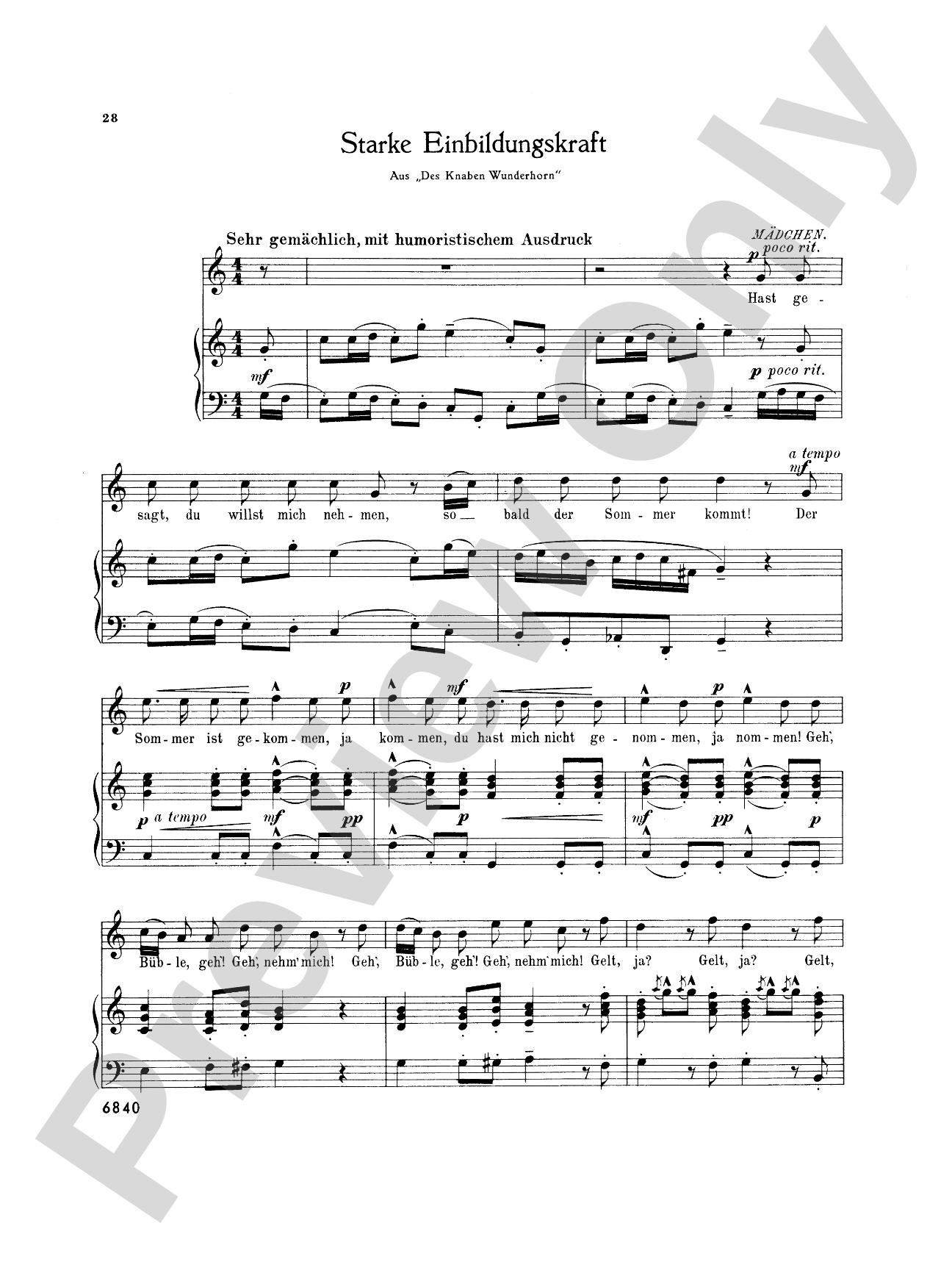
Mahler: Fourteen Songs including Nine from "Des Knaben Wunderhorn", High Voice (German)

For High Voice and Piano

By Gustav Mahler

Item: 00-PC-0011570

Digital Download
$0.99
Description
A collection of songs for High Voice, composed by Gustav Mahler.

Don't just read it, hear it, play along with it, and watch your students grow with it. In MakeMusic Cloud, Mahler: Fourteen Songs including Nine from "Des Knaben Wunderhorn", High Voice (German) comes alive with professional accompaniment, adjustable tempo, and built-in practice tools that turn solo practice into real progress.

Sample Audio
No sample audio found.
Sample Video
Additional Details
Series: Kalmus Edition
Publisher: Alfred Music
Page Count: 48
SKU: 00-PC-0011570

More about this title

About the Composer: Gustav Mahler

Gustav Mahler (1860-1911) was an Austrian composer and conductor whose symphonies and song cycles reshaped the musical landscape of the late Romantic era. His vocal writing combined the intimacy of German Lied with orchestral ambition, and his settings of folk poetry reveal a deep sensitivity to text and emotional nuance. For singers and voice teachers, Mahler's output remains essential repertoire that demands both technical control and expressive maturity.

Why we love this

These 14 songs give high voice singers access to some of the most rewarding Mahler repertoire without requiring the full symphonic scope of his orchestral cycles. Nine selections from Des Knaben Wunderhorn bring folk-like directness and narrative richness to the recital stage, while the additional five songs deepen the collection's emotional range. This is Mahler at his most vocally generous, with melodies that soar and piano accompaniments that tell their own story.

What to expect

These songs oscillate between folk-like simplicity and sophisticated emotional complexity. There is warmth and intimacy alongside moments of wistfulness, irony, and deep melancholy, all rendered in Mahler's characteristic blend of popular melodic gesture and richly layered harmony. The high voice part sits comfortably for lyric singers while providing ample opportunity for expressive coloring and vocal beauty.

Who it's for

High voice singers preparing for art song recitals, voice students working toward advanced repertoire, and singers seeking substantial Mahler material without the demands of orchestration. This collection serves intermediate to advanced singers comfortable with German language sung diction and Romantic-era vocal writing.

How to get the most out of it

  • Shape long phrases with the arc of the text rather than the breath. Mahler often extends single thought across multiple measures; let the poetry guide your phrasing rather than splitting at convenient resting points.
  • Balance the high voice's lyrical quality with the interpretive weight these songs demand. Avoid pure, beautiful tone at the expense of dramatic clarity; these characters have stories to tell.
  • Collaborate closely with your accompanist on tempo flexibility and character changes. Mahler's songs often shift tone within a single piece, and ensemble flexibility makes the emotional transitions land.
  • Mark the accompaniment's role in your score. The piano frequently carries thematic material and harmonic color that deepens the voice's message; understanding the full texture improves your interpretive choices.

How to use it

Feature these songs across a season of recital programming, mixing individual selections with contrasting repertoire to showcase Mahler's range. An all-Mahler recital draws serious lieder audiences; alternatively, program individual songs alongside earlier German song traditions or contemporary settings of similar texts to highlight Mahler's place in the continuum of German vocal music.

Skills your students will build

  • German language sung diction and text expression
  • Phrasing long vocal lines across multiple measures without sacrificing musical logic
  • Managing dramatic expression within lyrical vocal production
  • Interpreting Romantic-era song cycles and narrative song contexts
  • Collaborative listening and ensemble balance with piano accompaniment

You May Also Like