
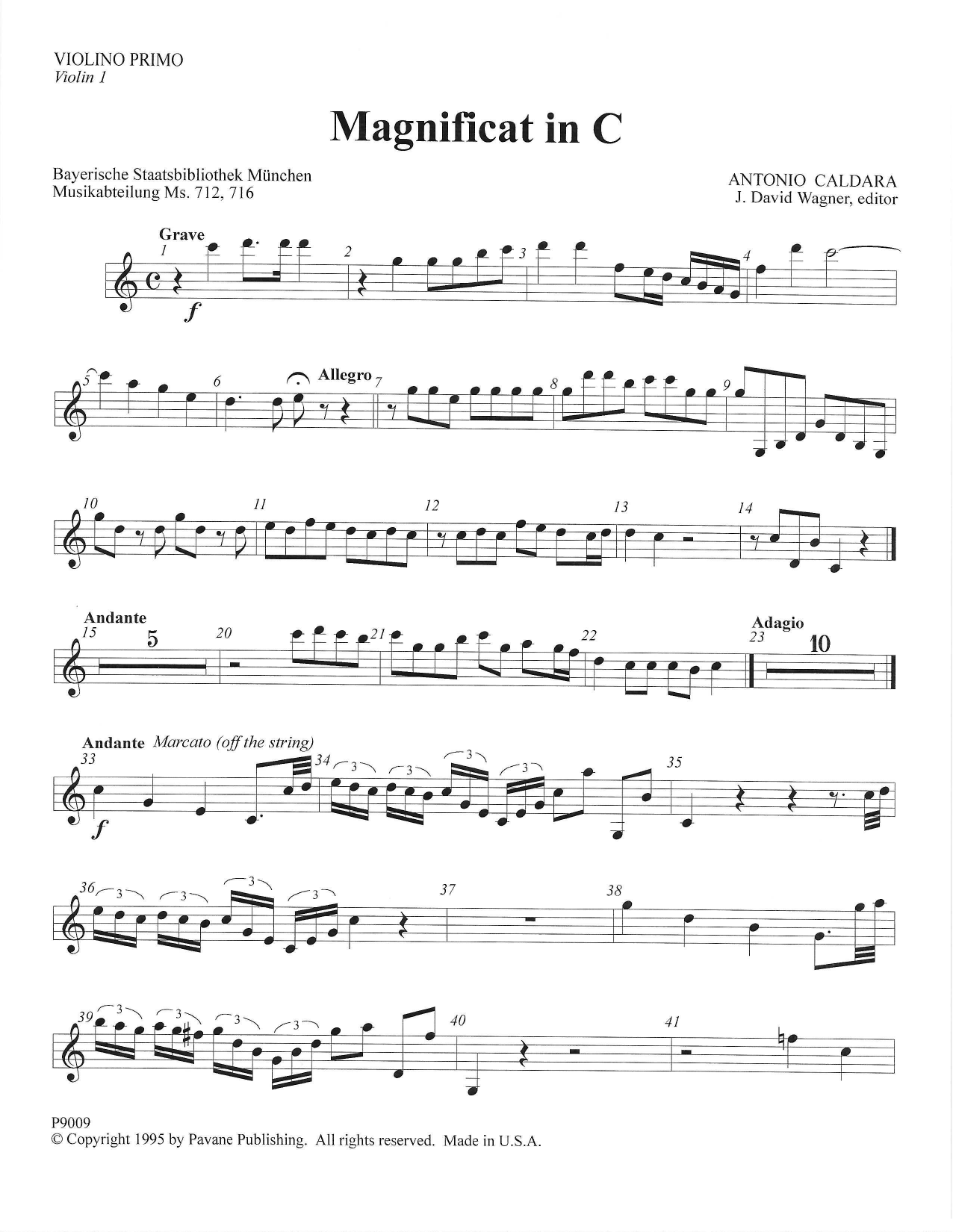

Magnificat In C: Choral Instrumental Pak
By Antonio Caldara / Arranged by J. David Wagner
Item: 35-PK01341622
$20.00
Pickup currently not available
Buy Extra Parts (Digital PDF Download)
Parts Added to Cart!
Description
Magnificat In C Set Of Parts 2tpt/2vn/timp/vc/bs/bc


Magnificat In C: Choral Instrumental Pak isn't in MakeMusic Cloud just yet...but it could be. Let us know you'd like to see it, and you'll help shape what comes next. In the meantime, start a free trial and dive into thousands of interactive titles your students can play along with today.
Request This Title
Tell us you want it.
Start Your Free Trial
Explore everything that's ready to play right now.
Sample Audio
No sample audio found.
Sample Video
No sample videos found.
Additional Details
Publisher:
Hal Leonard
SKU:
35-PK01341622
More about this title
About the Composer: Antonio Caldara
Antonio Caldara (1670-1736) was a prolific Italian Baroque composer whose output spanned opera, sacred music, and instrumental works. He spent formative years in Venice and Rome before securing positions at the Habsburg courts in Barcelona, Vienna, and Mantua, where he composed extensively for both liturgical and ceremonial occasions. His sacred works, including numerous settings of the Magnificat, exemplify the Baroque synthesis of rhetorical text expression and musical craftsmanship that made him one of the most performed composers of his era.
Caldara's compositional voice sits comfortably between the grand gestures of Vivaldi and the contrapuntal sophistication of northern traditions. His choral writing balances accessibility with harmonic substance, making his works valuable for ensembles seeking Baroque repertoire that rewards careful preparation without requiring virtuosic technical demands.
Why we love this
Wagner's arrangement opens Caldara's Magnificat to ensembles with modest instrumental resources. The doubled trumpet and violin parts create textural fullness while the continuo foundation stays lean, making this workable for directors who have singers and a handful of capable players but lack the depth of a period orchestra.
What to expect
Caldara's C major Magnificat projects clarity and light without sacrificing harmonic richness. The text unfolds with Baroque poise, ornamental enough to feel ceremonial yet straightforward enough to keep attention on the words themselves.
Who it's for
Choirs with modest instrumental forces who want to program substantial Baroque sacred music. This arrangement works for church musicians planning liturgical performances, concert programming that reaches for early music repertoire, or ensembles seeking a Magnificat that fits between smaller unaccompanied settings and full orchestral versions.
How to get the most out of it
- Balance the continuo carefully; harpsichord or organ should support without overwhelming the bass line, which carries harmonic weight.
- Shape phrases through harmonic rhythm rather than text declamation alone; Caldara's harmonic palette moves with purpose in this key.
- Treat the trumpet and violin doublings as reinforcement of choral lines, not independent counterpoint; they should blend into the overall texture.
- Maintain rhythmic precision in the instrumental writing; Baroque figured bass requires the ensemble to hear the harmonic motion clearly.
How to use it
Pair this with other Baroque sacred works in a concert exploring the Magnificat across composers, or program it as the centerpiece of a liturgical service where instrumental resources are available seasonally. Its moderate length and clear harmonic language make it approachable for ensembles building toward larger sacred works.
Skills your students will build
- Singing with continuo accompaniment and responding to harmonic movement
- Balancing choral tone with instrumental doublings
- Performing Baroque text underlay and phrasing conventions
- Reading figured bass notation and understanding harmonic function