
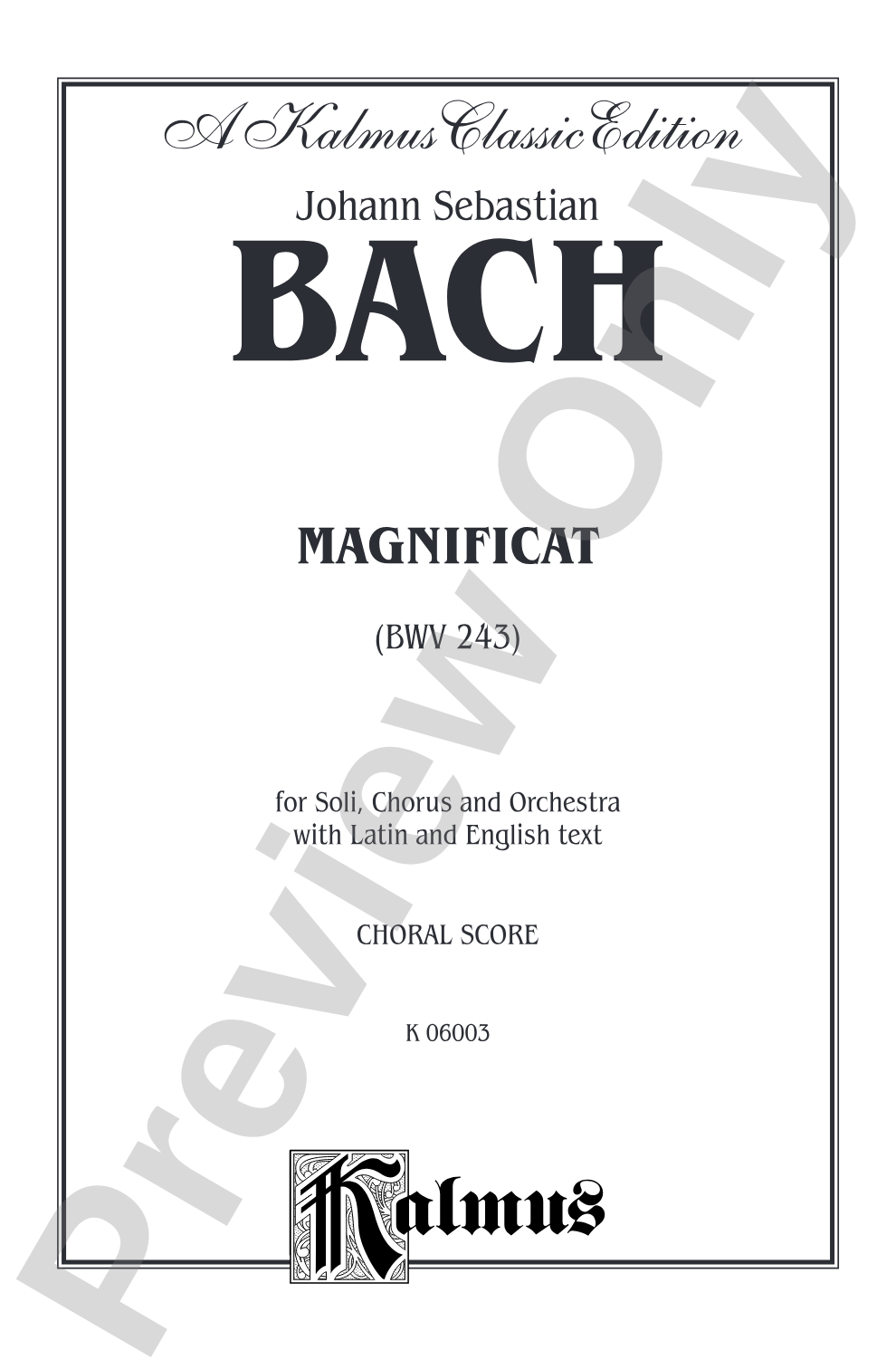
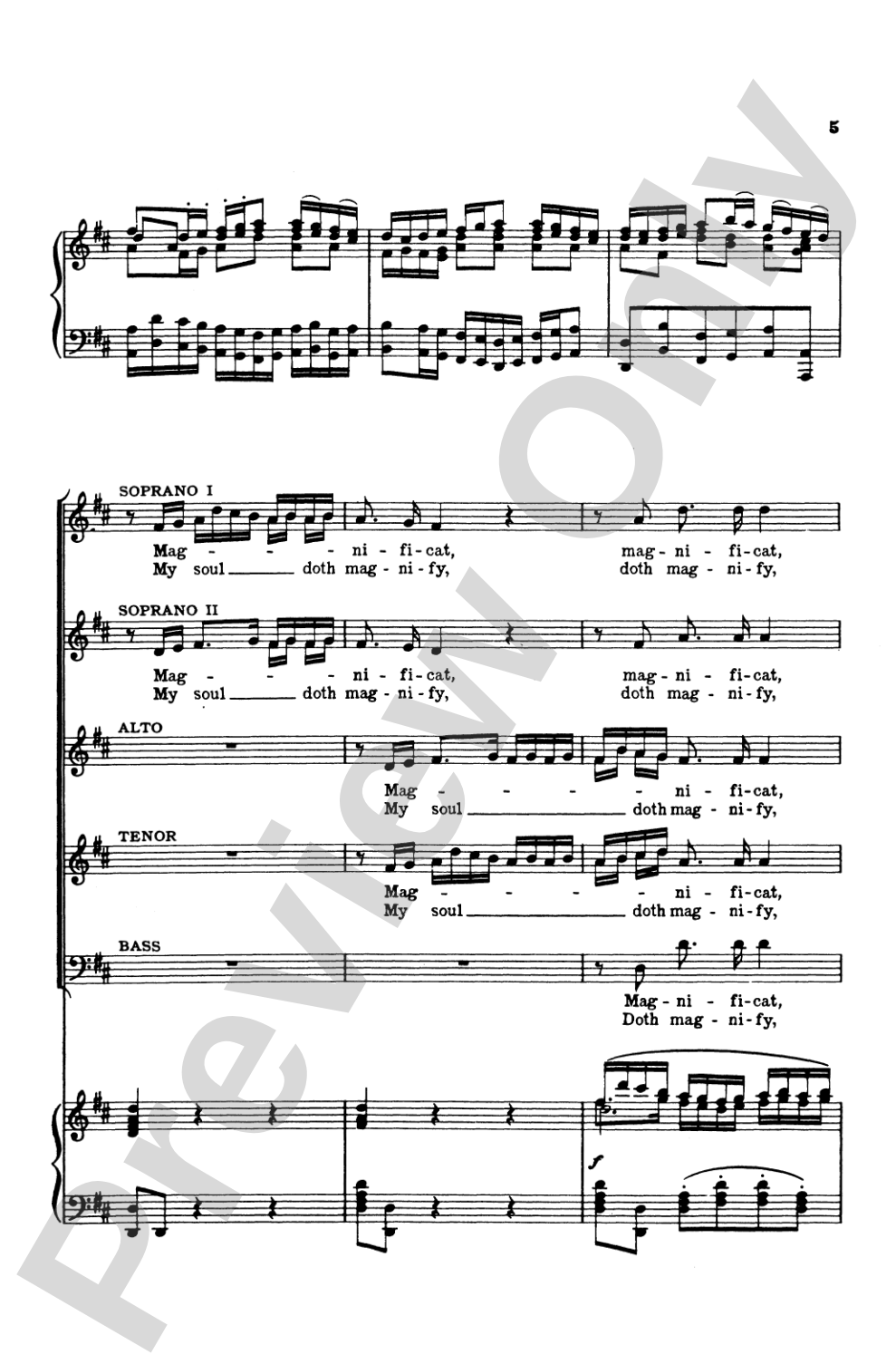
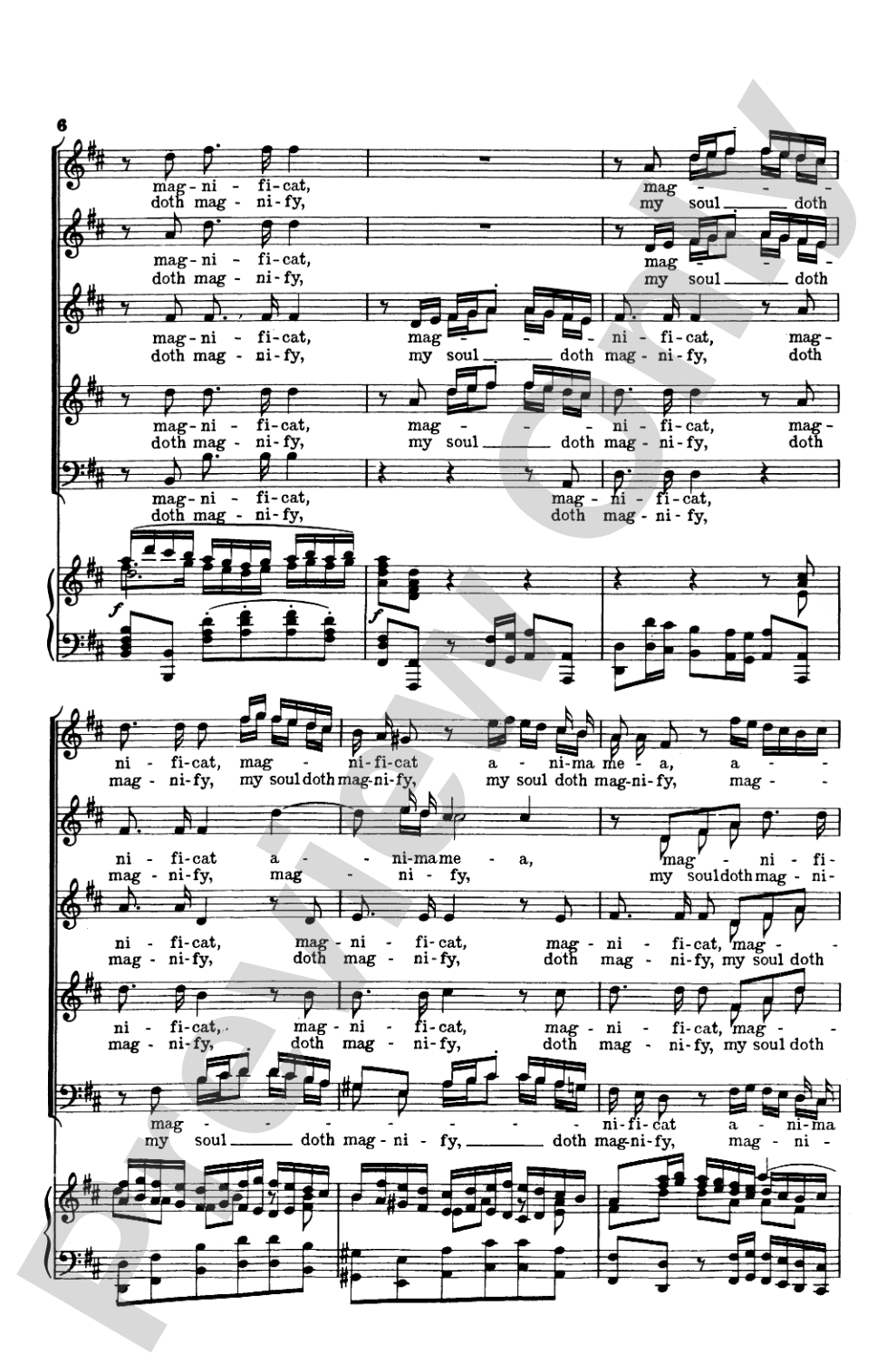
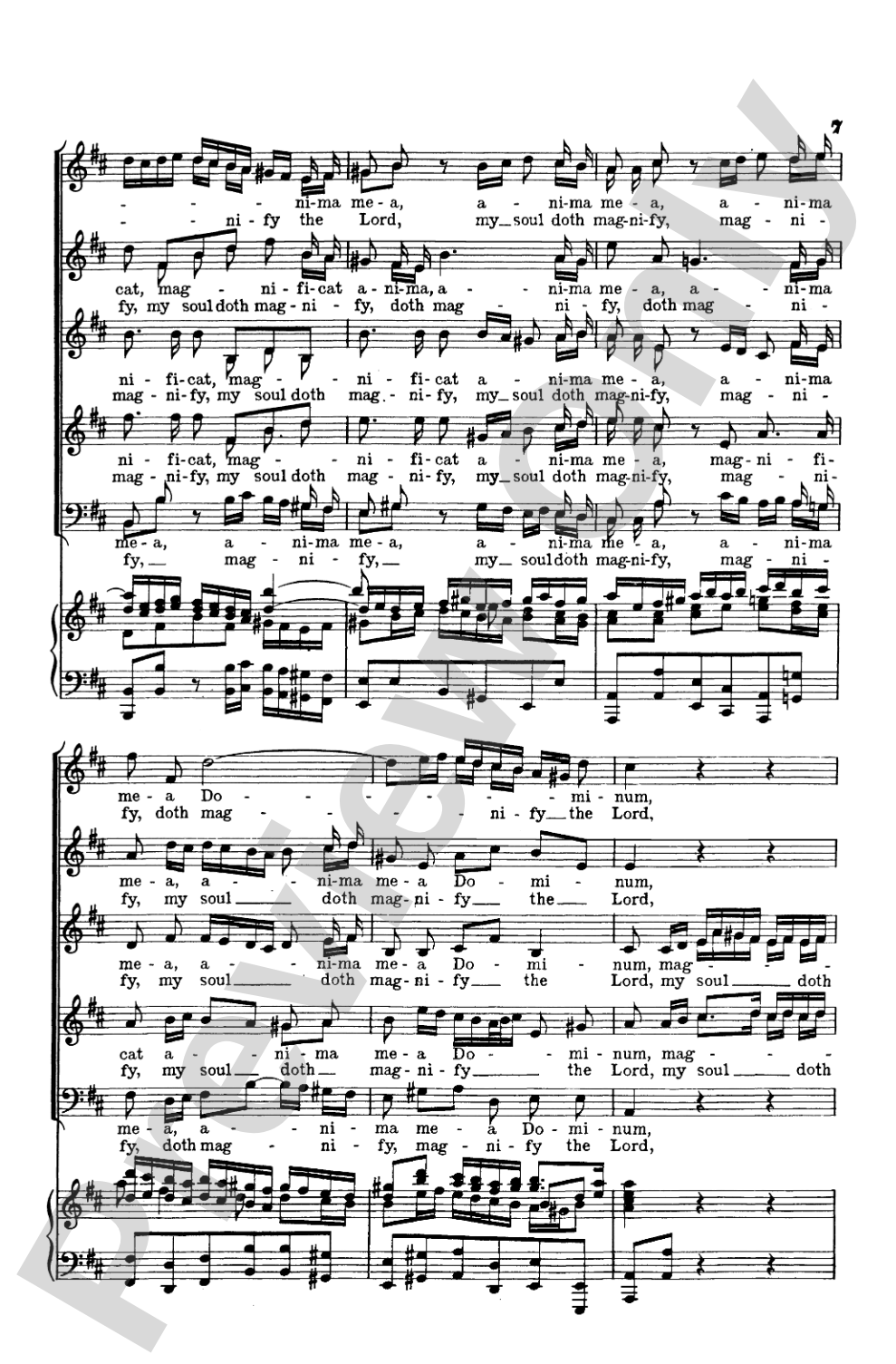
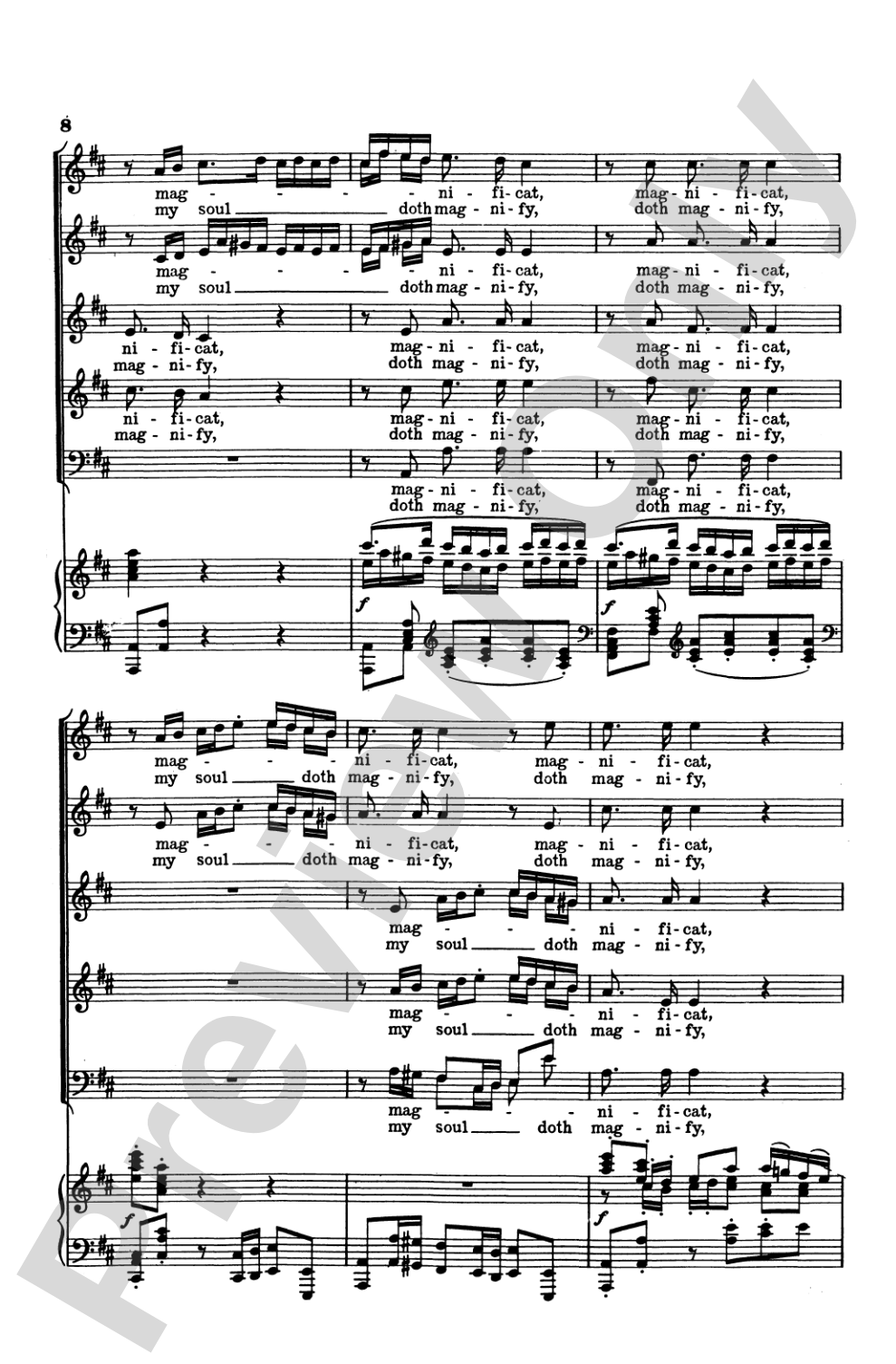
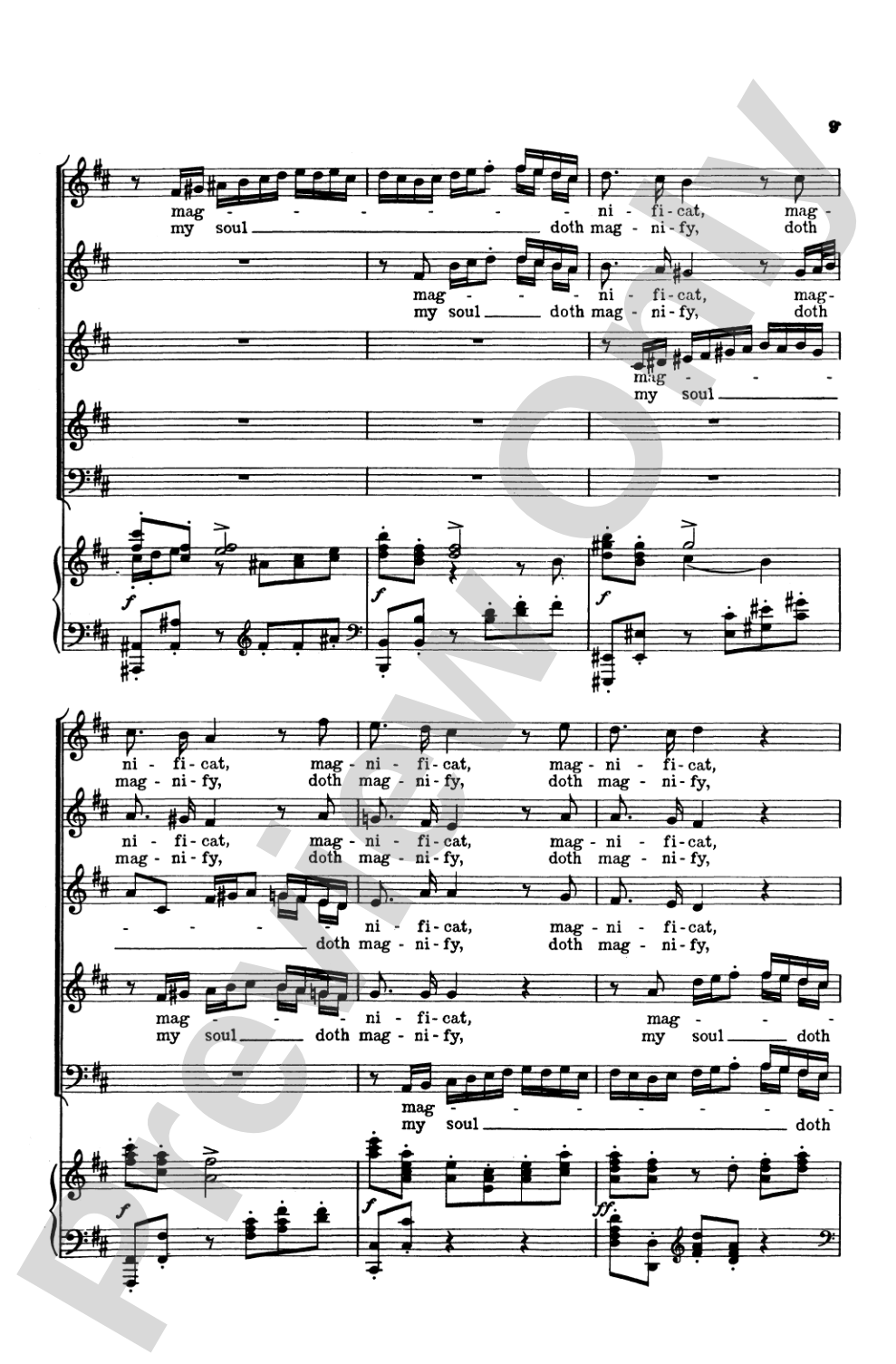
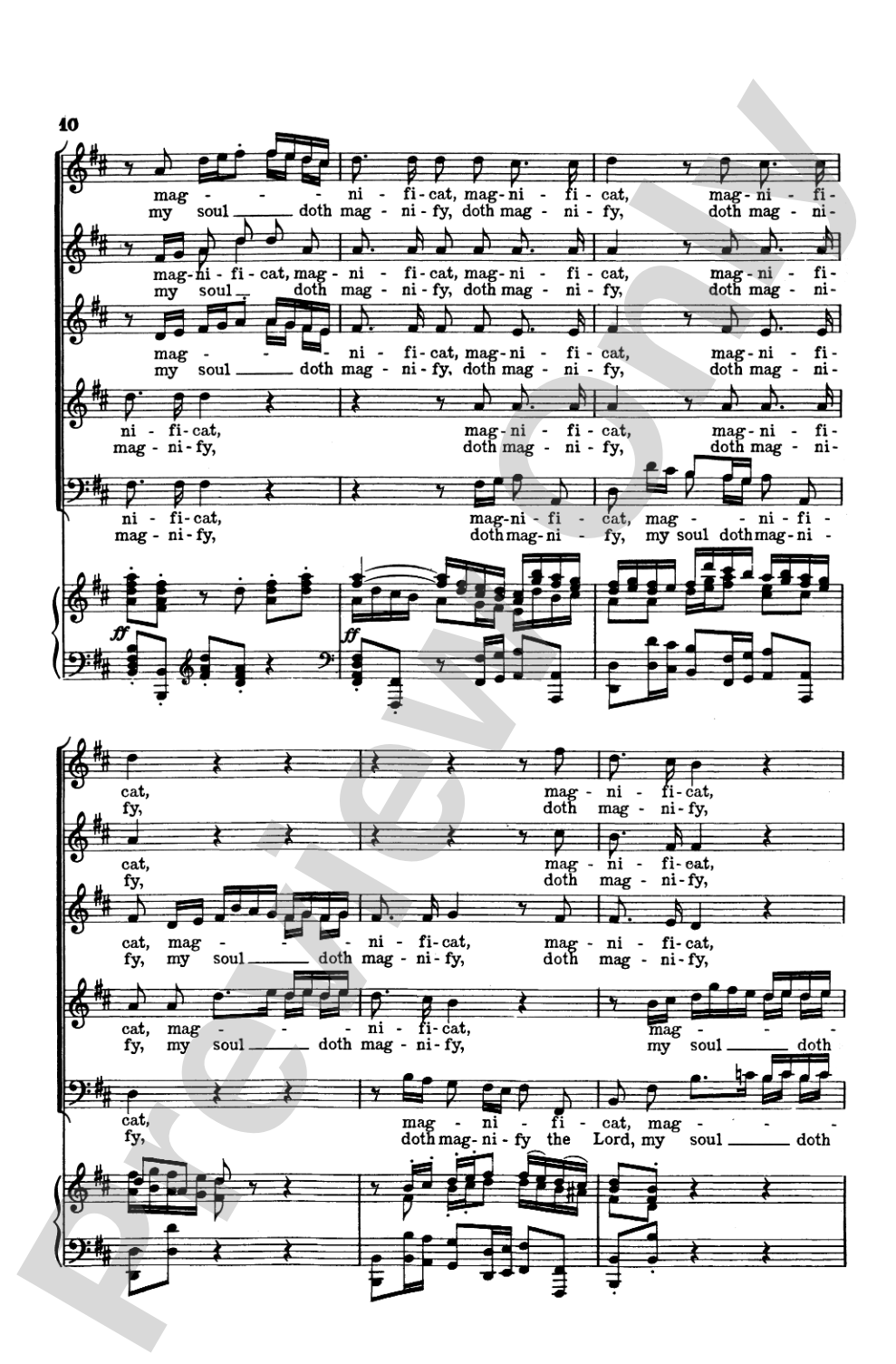
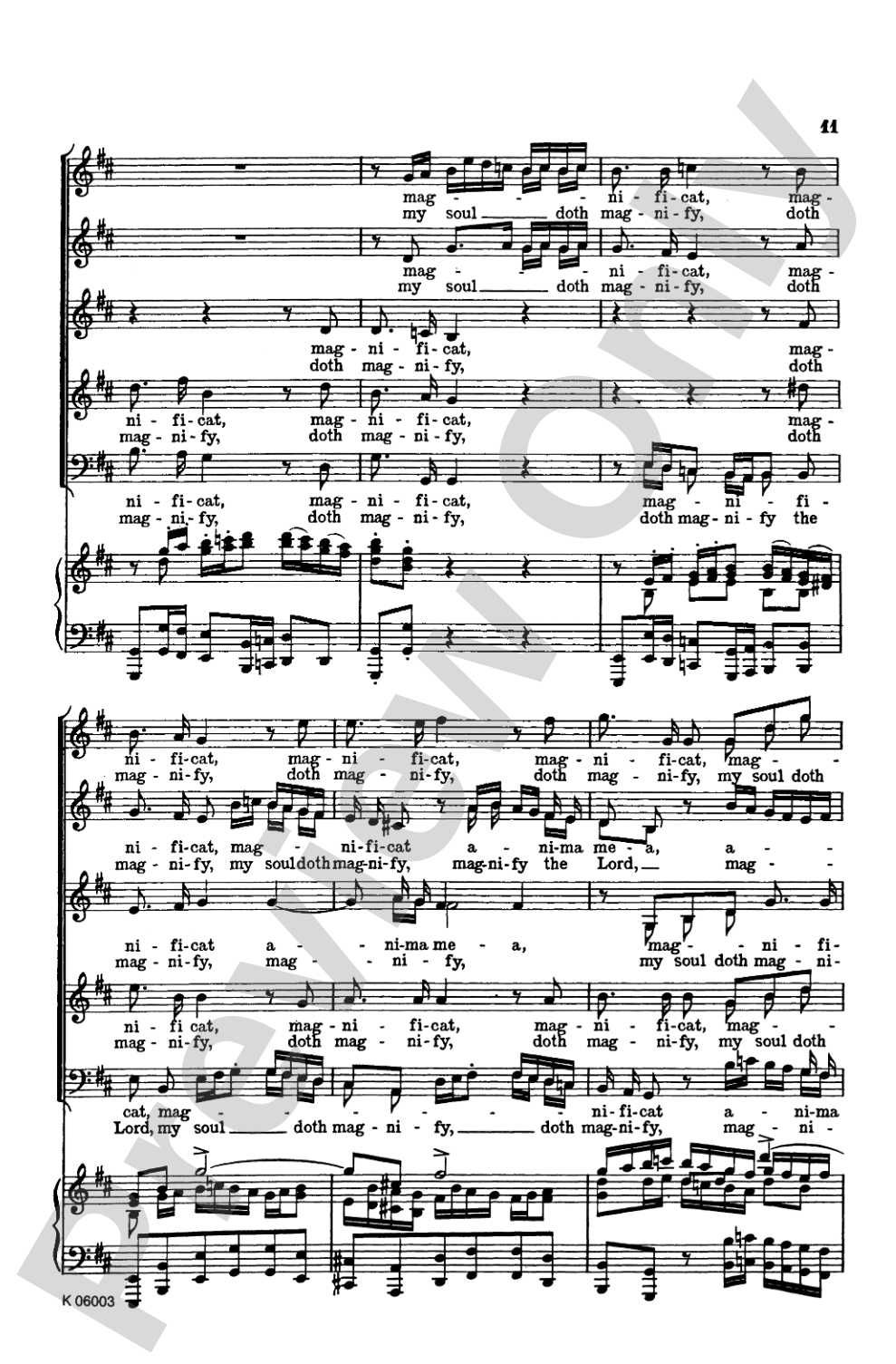
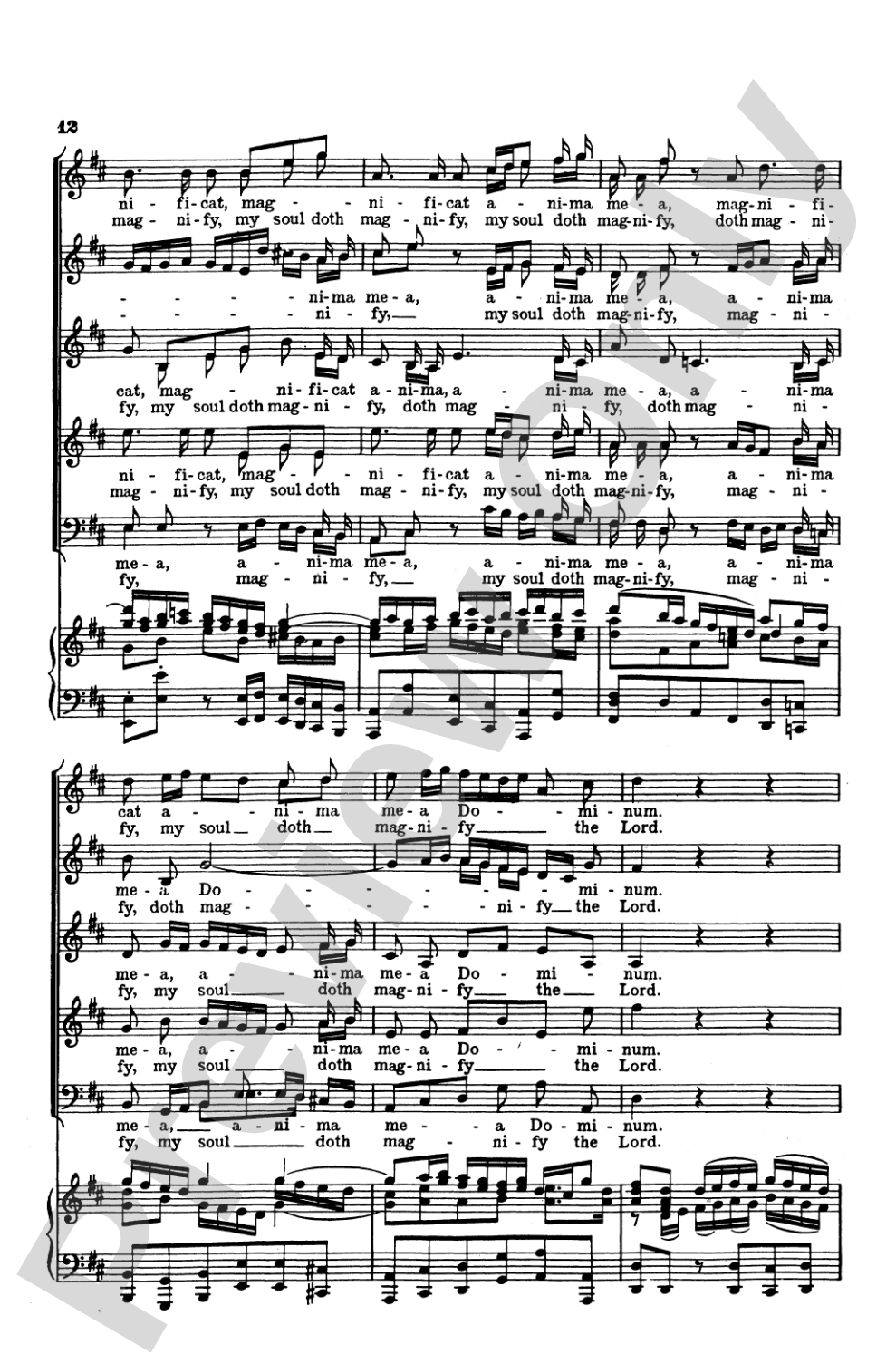

Magnificat (BWV 243): Choir
By Johann Sebastian Bach
Item: 00-PB-0001152
$9.99
Pickup currently not available
Related Items
Magnificat (BWV 243): SAATB with SATB Soli Choral Book |
$9.99
|
View |
Description
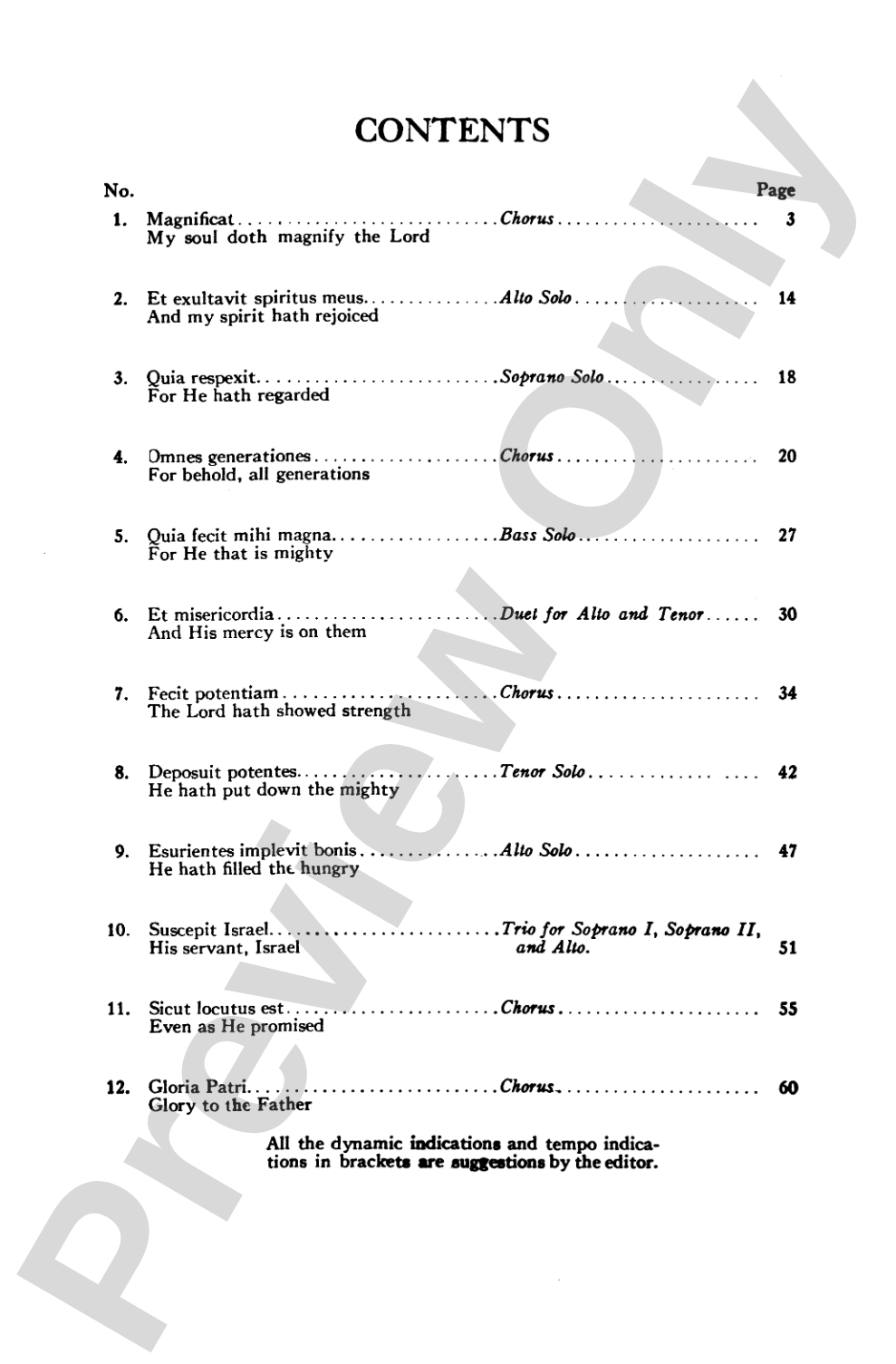
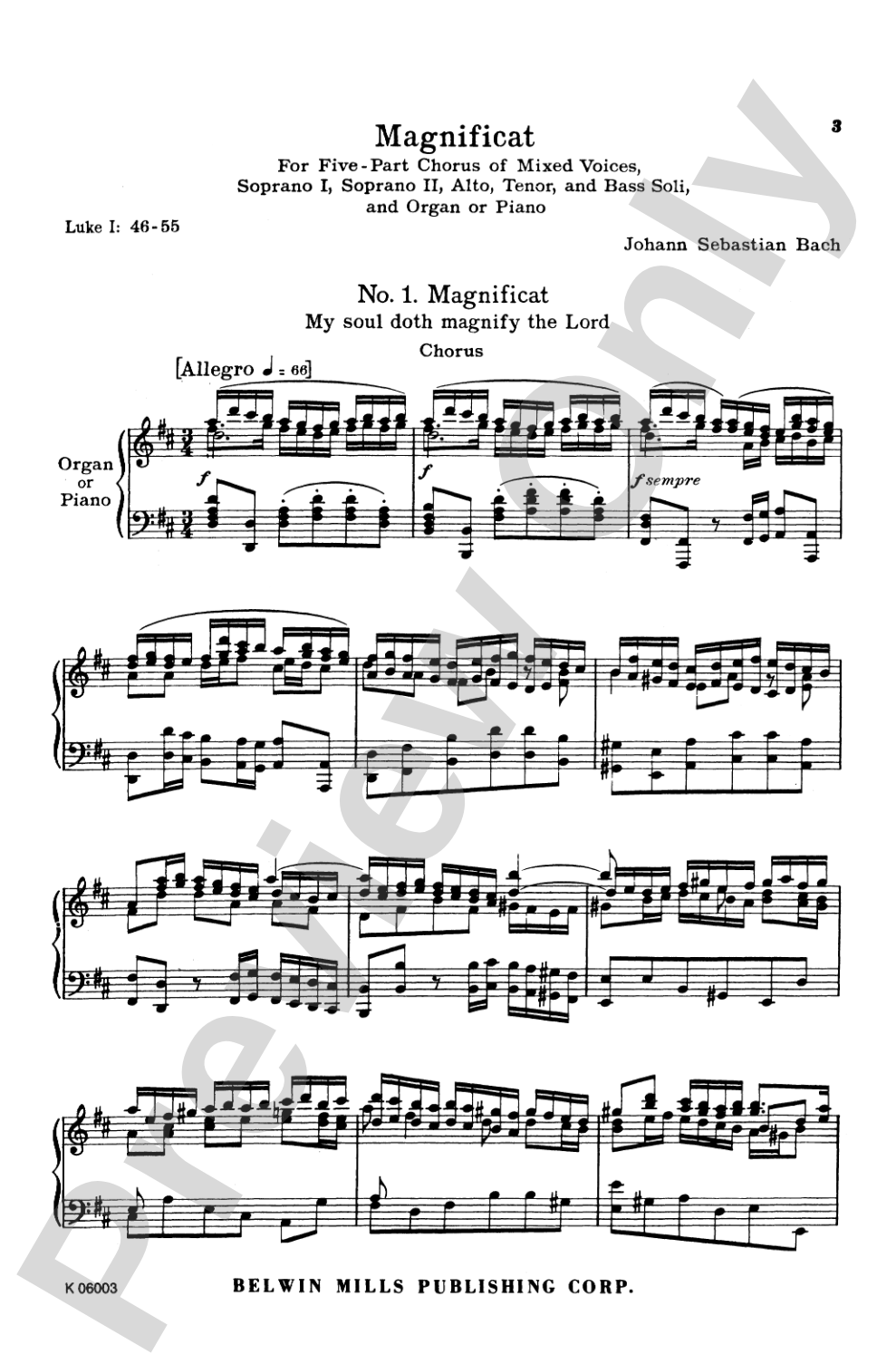
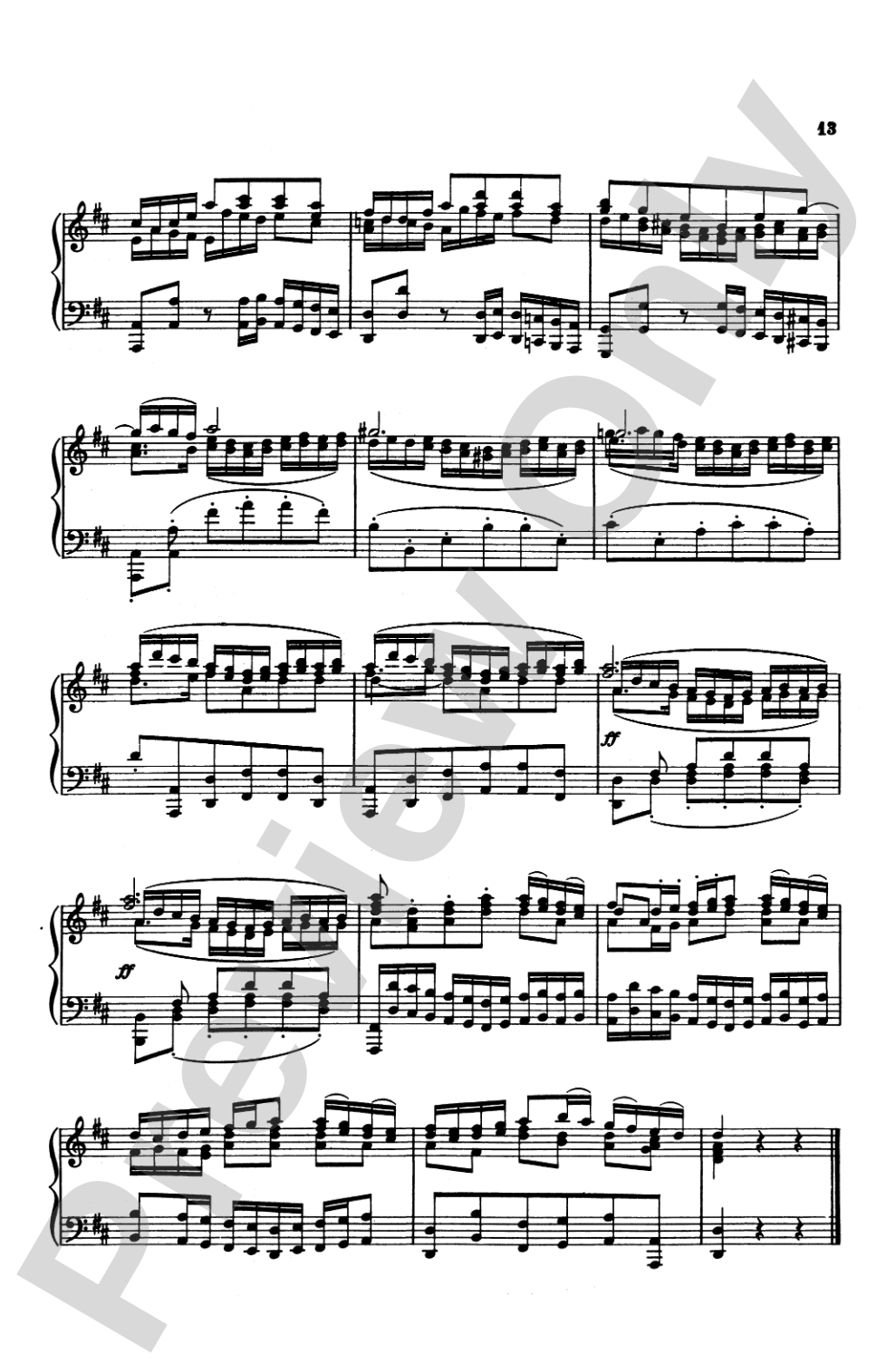
In Leipzig, in 1723, Bach composed an initial version of the "Magnificat" in E-flat Major for Christmas Vespers that year, with added Latin text related to Christmas. And then in 1733, Bach composed a version without the interpolated texts, and transposed it to D Major, for the Marian Feast of the Visitation. This choral score is of the newer D Major version, in English and Latin texts, with piano accompaniment, 66 pages.


Magnificat (BWV 243): Choir isn't in MakeMusic Cloud just yet...but it could be. Let us know you'd like to see it, and you'll help shape what comes next. In the meantime, start a free trial and dive into thousands of interactive titles your students can play along with today.
Request This Title
Tell us you want it.
Start Your Free Trial
Explore everything that's ready to play right now.
Sample Audio
No sample audio found.
Sample Video
No sample videos found.
Additional Details
Series:
Kalmus Edition
Publisher:
Alfred Music
Page Count:
68
SKU:
00-PB-0001152
Instrumentation:
Orch.
More about this title
About the Composer: Johann Sebastian Bach
Johann Sebastian Bach (1685-1750) spent his final 27 years in Leipzig as Cantor of St. Thomas Church, a position that demanded he compose and direct a constant stream of sacred music for the city's churches. This responsibility pushed him to create some of the Baroque era's most structurally ambitious and harmonically sophisticated vocal works, including the Mass in B Minor, the St. Matthew Passion, and the Magnificat.
Bach's approach to large-scale choral writing established a template that composers studied for centuries. He balanced elaborate counterpoint with text clarity, gave individual vocal lines musical substance rather than relegating them to mere harmony, and used instrumental forces to frame and complement the choir's work. His technical mastery and expressive range make his choral scores enduring teaching tools for understanding voice leading, harmonic function, and the architecture of extended forms.
Why we love this
The D Major version captures Bach at his most architecturally assured: nine movements that build emotional and harmonic weight while remaining performable by capable high school and college choirs. The two-version history itself offers rich context for singers to understand how composers revise their own work, and the English/Latin bilingual text opens programming possibilities across different concert settings and liturgical calendars.
What to expect
Radiant and architectural. D Major yields brightness and openness; Bach's counterpoint unfolds logically but never predictably, and the text (whether in Latin or English) emerges through layered, interlocking voices rather than declarative unison. There's intimacy within the grandeur, reflection within the celebration.
Who it's for
This score suits college and advanced high school choirs with solid sightreading skills and familiarity with Baroque counterpoint and text underlay conventions. It works equally well in academic concert settings, liturgical environments, and specialized early music programs.
How to get the most out of it
- Secure the text underlay before rehearsal begins. Bach's melismas and rhythmic density can obscure syllable placement, so mark where text breaks occur in each voice part to prevent muddiness.
- Isolate the inner voices (alto and tenor) early. These lines carry harmonic and structural weight that often gets buried; singing them independently with text builds confidence and intonation.
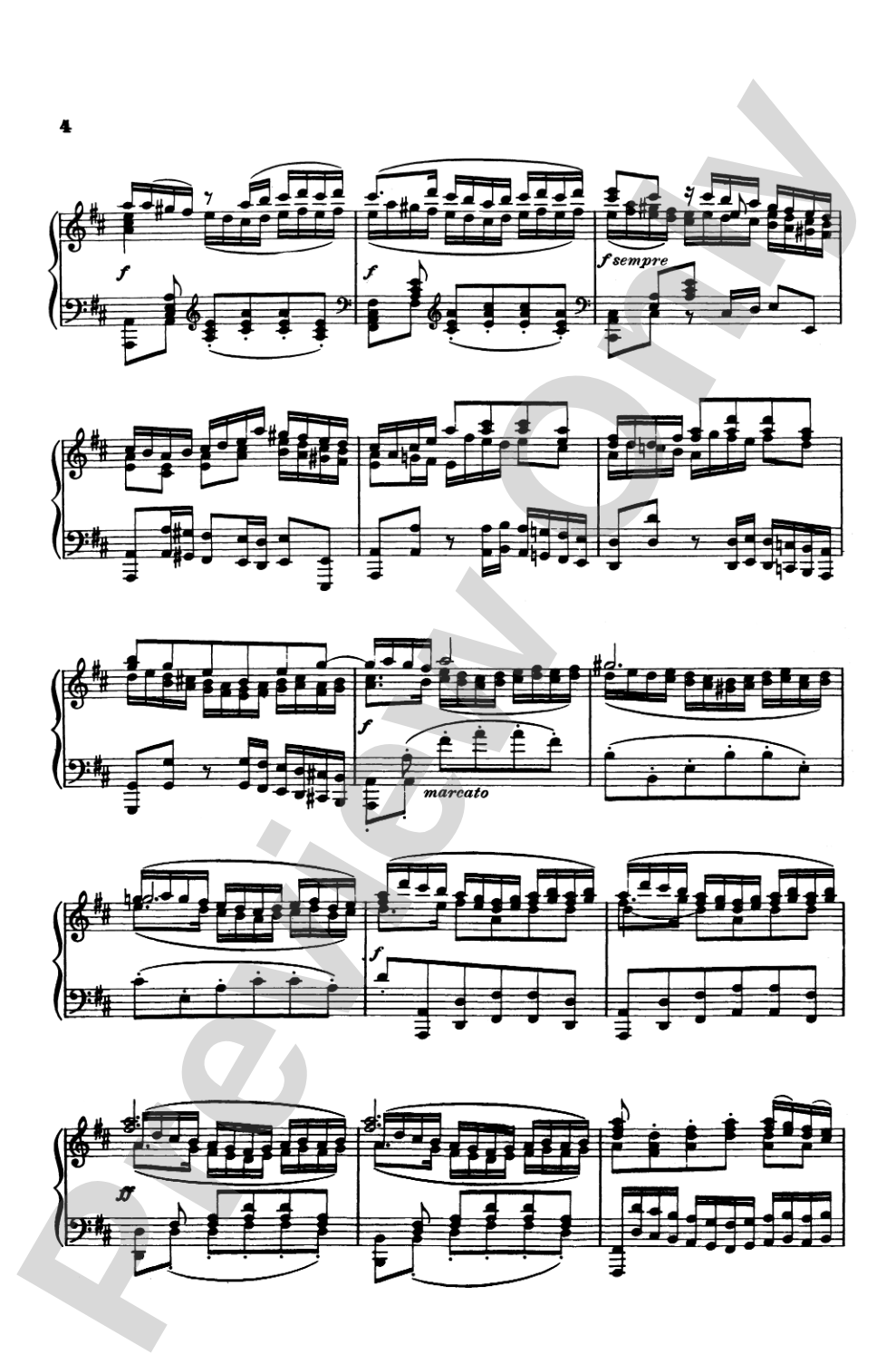
- Shape the arpeggiated figurations in the continuo with the same care you give to vocal phrasing. The keyboard part isn't mere harmonic filler; its rhythmic character influences how the choir sits within the harmonic progression.
- Attend to fermata placement and length. Bach uses them structurally to mark cadential and formal boundaries, not just as breath marks. Let them breathe where the form requires it.
How to use it
This anchors a spring concert or a dedicated Bach program, pairing naturally with smaller sacred works by Bach or his contemporaries. It also serves liturgical seasons that honor Mary's role, making it suitable for advent, Candlemas, or Marian feast day services in church settings.
Skills your students will build
- Reading Baroque text underlay across multiple voice parts
- Balancing independence of line with harmonic cohesion in dense counterpoint
- Managing sustained passages and harmonic rhythm in D Major tonality
- Responding to structural fermatas and cadential articulation
- Coordinating with continuo accompaniment for rhythmic and harmonic clarity