Magnificat And Nunc Dimittis In D Sheet Music Preview

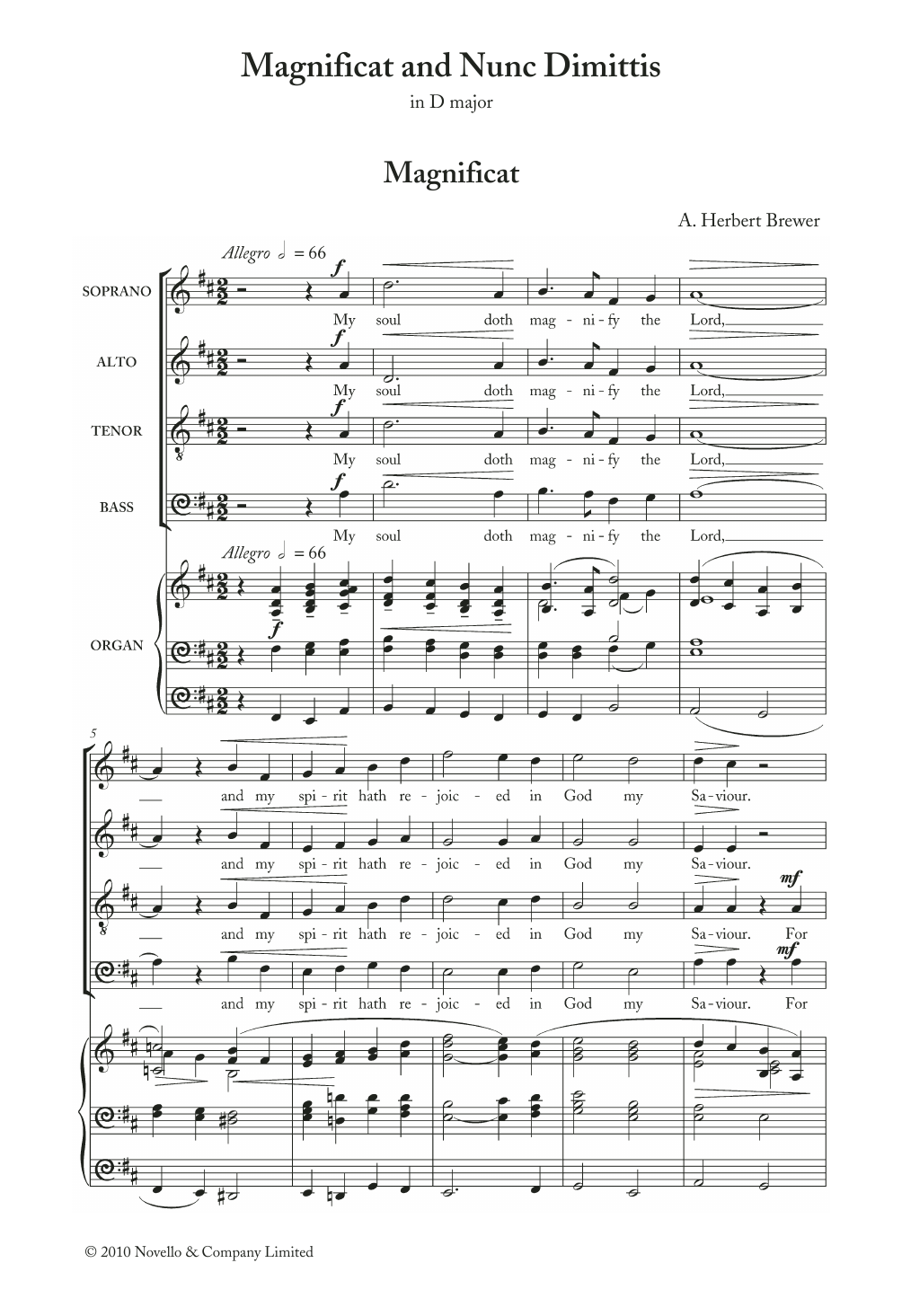
Magnificat And Nunc Dimittis In D: SATB Choral Octavo

As performed by Herbert Brewer

Item: 35-DS00345742

Digital Download
$2.99
Description

Magnificat And Nunc Dimittis In D: SATB Choral Octavo isn't in MakeMusic Cloud just yet...but it could be. Let us know you'd like to see it, and you'll help shape what comes next. In the meantime, start a free trial and dive into thousands of interactive titles your students can play along with today.

Sample Audio
No sample audio found.
Sample Video
Additional Details
Publisher: Hal Leonard
Page Count: 15
SKU: 35-DS00345742

More about this title

About the Artist: Herbert Brewer

Herbert Brewer (1844-1927) was an English organist and composer whose output centered on sacred choral music. His role as organist at Gloucester Cathedral for over four decades positioned him as a significant voice in Anglican church music, and he contributed substantially to the cathedral's musical life during a period of renewed interest in English liturgical repertoire.

Brewer's compositional approach reflected the ecclesiastical demands of his time. His settings of canticles and service music were designed for practical use by church choirs of varying abilities, balancing musical substance with singability. This pragmatic orientation has kept his works in active circulation among cathedral and parish choirs.

Why we love this

This is sturdy, unpretentious Anglican repertoire that works beautifully as an evening prayer service or as part of a choral concert. Brewer writes idiomatically for voices in a way that feels grateful to sing, and the D major tonality gives the music natural brightness without requiring extreme tessituras.

What to expect

Contemplative and anchored, with the steady harmonic motion of Anglican tradition. The music unfolds without urgency, inviting listeners into prayer rather than demanding attention; moments of fuller scoring emerge naturally from the text rather than through dramatic gestures.

Who it's for

SATB choirs with moderate sight-reading skills who perform sacred music regularly. This works equally well for cathedral or collegiate ensembles and for community choirs looking for liturgically appropriate material with genuine musical substance.

How to get the most out of it

  • Let the harmonic language breathe. Brewer's part writing creates natural voice leading; avoid pressing the tempo in passages where the inner voices carry important melodic interest.
  • Shape phrases toward text cadences rather than musical barlines. The liturgical text has its own weight, and respecting that phrasing will clarify the sectional architecture.
  • Engage the sopranos on the opening Magnificat statement. This melody sets the character for the entire work and deserves a warm, grounded attack.

How to use it

Pair this with other canticle settings to create an Evensong context within a concert, or use it as the centerpiece of a sacred music program exploring English choral tradition. At 15 pages, it's substantial enough to anchor a half-program without overwhelming other offerings.

Skills your students will build

  • Singing sustained harmonic progressions without losing intonation
  • Balancing outer and inner voice melodies
  • Responding to liturgical text as structural and expressive guide
  • Executing clean part independence in four-part writing

You May Also Like