Magnificat And Nunc Dimittis In D Sheet Music Preview

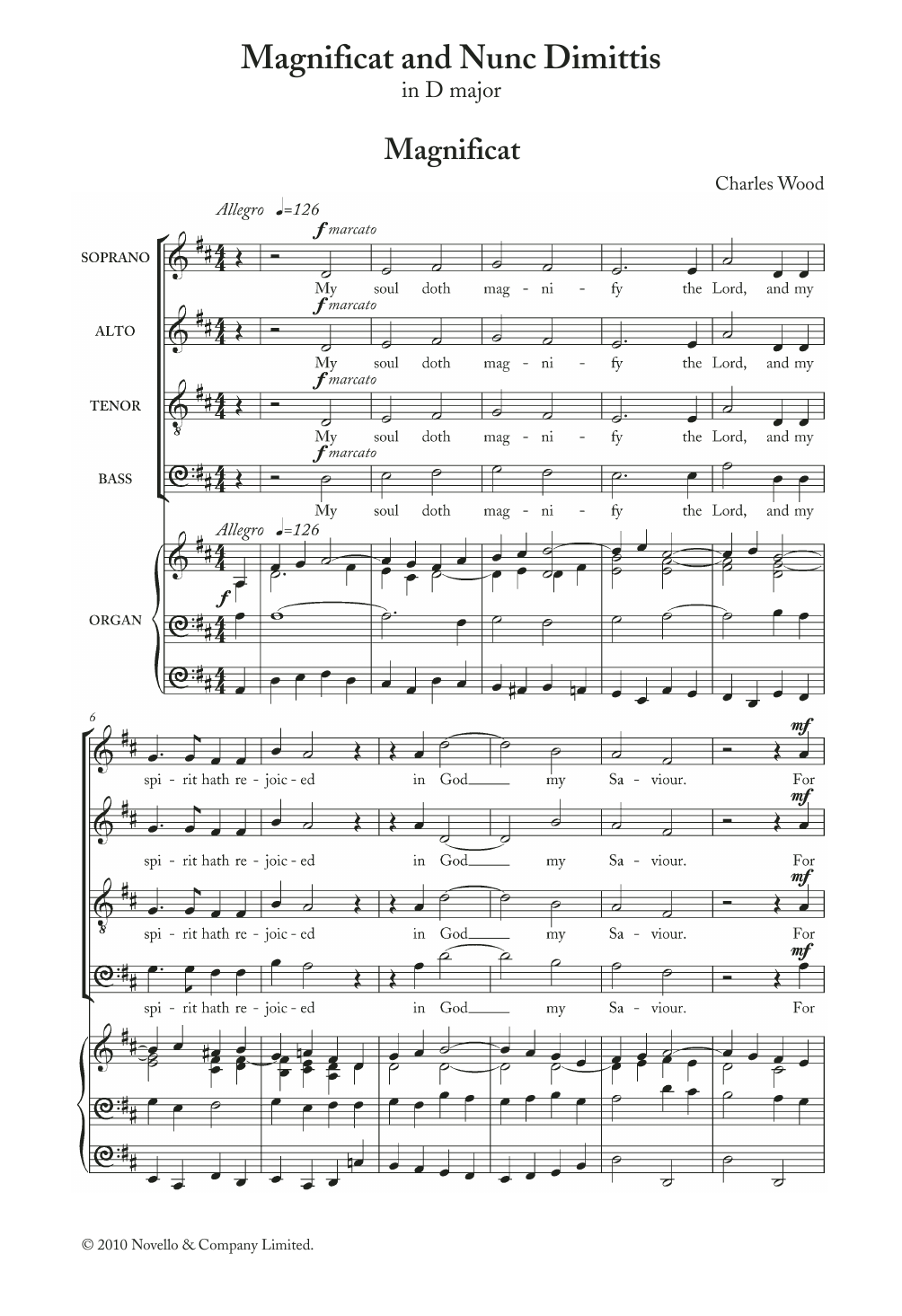
Magnificat And Nunc Dimittis In D: SATB Choral Octavo

As performed by Charles Wood

Item: 35-DS00345740

Digital Download
$2.99
Description

Magnificat And Nunc Dimittis In D: SATB Choral Octavo isn't in MakeMusic Cloud just yet...but it could be. Let us know you'd like to see it, and you'll help shape what comes next. In the meantime, start a free trial and dive into thousands of interactive titles your students can play along with today.

Sample Audio
No sample audio found.
Sample Video
Additional Details
Publisher: Hal Leonard
Page Count: 15
SKU: 35-DS00345740

More about this title

About the Artist: Charles Wood

Charles Wood (1866-1926) was a British composer and organist whose output spanned sacred and secular choral music, chamber works, and songs. Trained at Cambridge and deeply rooted in the Anglican tradition, Wood held the position of Organist at St. John's College, Cambridge, where he became a central figure in English musical life during the late 19th and early 20th centuries. His choral works remain staples of cathedral and concert repertoire, valued for their craftsmanship and emotional directness.

Wood's sacred writing demonstrates complete command of voice leading and harmonic language. His settings of canticles, like this Magnificat and Nunc Dimittis, reflect the liturgical contexts for which they were composed while reaching beyond mere functional music to achieve genuine artistic substance. For music educators, his work offers students access to sophisticated counterpoint and harmonic thinking within manageable vocal ranges.

Why we love this

Wood's D major setting balances technical substance with genuine singability, making it an ideal choice for choirs ready to move beyond unison or simple part-writing but not yet prepared for the extreme demands of later 20th-century music. The harmonic language is clear enough for singers to hear their function within the texture, yet sophisticated enough to reward careful rehearsal with moments of real beauty. Programming this alongside Byrd or Tallis gives singers a sense of the evolution of English choral writing across centuries.

What to expect

Wood's harmonic language unfolds with a clarity and warmth that feels rooted in place. The D major tonality rings with brightness, yet the voice-leading often moves through minor inflections and chromatic passing tones that prevent the music from feeling purely diatonic or obvious. Singing this feels like inhabiting a well-lit architectural space, one where every structural element is visible and purposeful.

Who it's for

This setting works well for SATB choirs with intermediate musicianship who have solid foundational skills in part-reading and intonation. It suits church music programs, academic choirs, and community ensembles looking to expand their sacred repertoire. The 15-page length and four-part writing make it accessible without being trivial.

How to get the most out of it

  • Establish the D major tonality early through warm-ups in the key; the piece demands confident intonation throughout its 15 pages, and a solid tonal center anchors everything that follows.
  • Shape the opening phrases of the Magnificat with deliberate breath points to clarify the textual syntax. Wood's phrasing respects the liturgical text, and respecting that articulation makes the harmonic progressions more transparent.
  • Balance full sections against moments where one voice carries primary material. Mark these moments in rehearsal and ensure singers understand when they are supporting versus leading the musical line.
  • Approach the Nunc Dimittis as a quieter, more intimate movement; the contrast with the Magnificat's fuller texture becomes powerful only if the second canticle truly shifts in dynamic and character.

How to use it

These canticles work beautifully as a complete liturgical offering in a concert setting, or as part of a longer program exploring English sacred music from Wood's era. If programming a concert around texts of praise and prayer, this pairing of Magnificat and Nunc Dimittis provides a satisfying arc from jubilation to peaceful acceptance. The piece also fits naturally into services or school chapel programs where sung canticles are part of the liturgy.

Skills your students will build

  • Four-part voice leading with attention to harmonic function
  • Sight-reading in soprano, alto, tenor, and bass clefs across multiple key areas
  • Phrase shaping and text-painting in sacred English verse
  • Sustaining intonation over longer harmonic progressions
  • Interpreting dynamic and expressive markings as architectural rather than arbitrary choices

You May Also Like