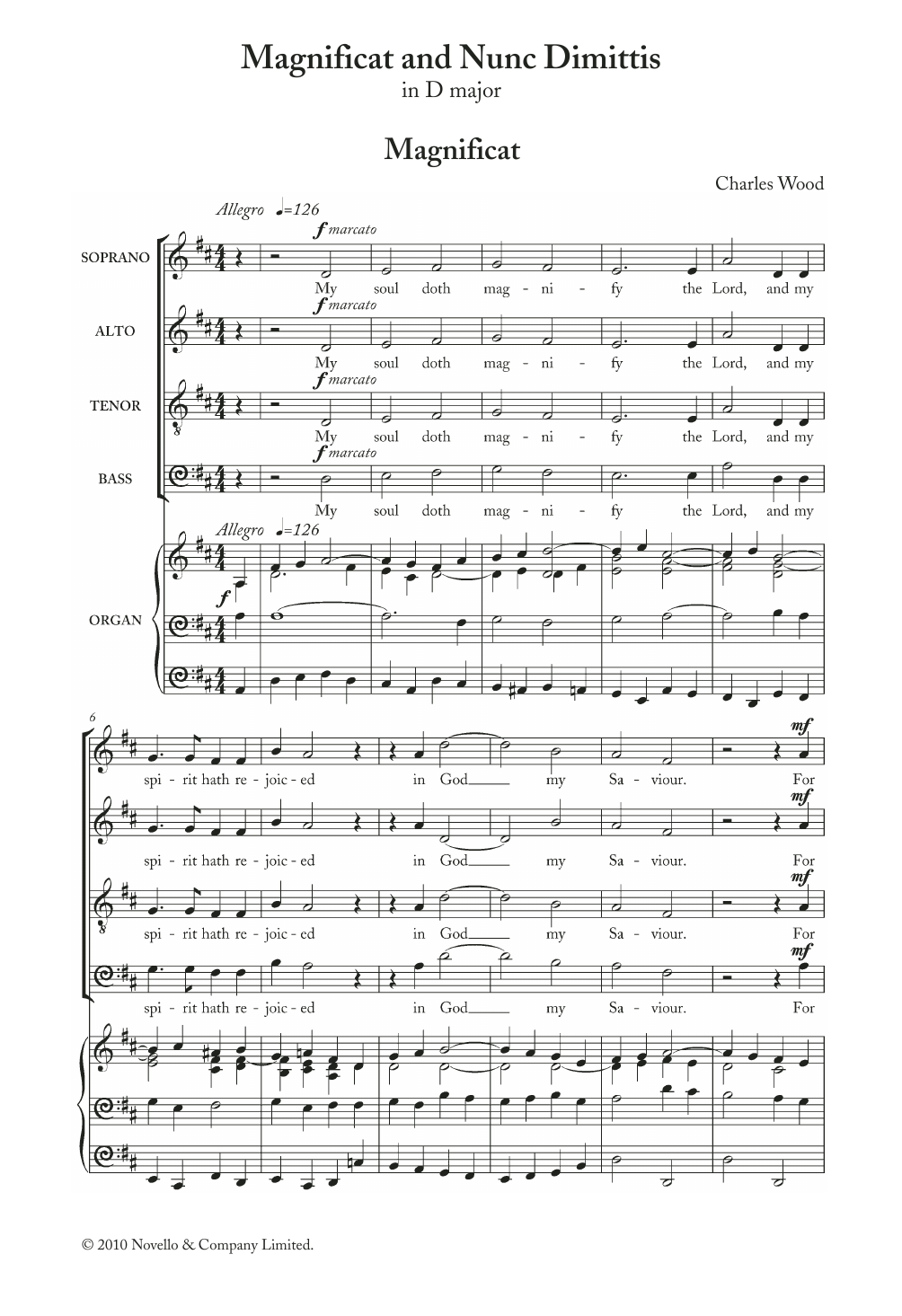
Magnificat And Nunc Dimittis In D Sheet Music Preview

Magnificat And Nunc Dimittis In D: Choral Octavo

By Charles Wood

Item: 35-DS00339748

Digital Download
$2.99
Description

Magnificat And Nunc Dimittis In D: Choral Octavo isn't in MakeMusic Cloud just yet...but it could be. Let us know you'd like to see it, and you'll help shape what comes next. In the meantime, start a free trial and dive into thousands of interactive titles your students can play along with today.

Sample Audio
No sample audio found.
Sample Video
Additional Details
Publisher: Hal Leonard
Page Count: 15
SKU: 35-DS00339748

More about this title

About the Composer: Charles Wood

Charles Wood (1866-1926) was one of Britain's most prolific church musicians, composing over 60 anthems and service settings that defined the English cathedral tradition. His harmonic language balances Romantic warmth with the clarity required for liturgical use, making his works staples in Anglican services for more than a century.

Why we love this

Wood's setting captures the majesty and intimacy of these Canticles with writing that sounds both noble and surprisingly singable. The D major tonality lets voices shine without excessive stratification, and the harmonic architecture gives your choir moments of genuine emotional weight without demanding virtuosic technique.

What to expect

Wood's Magnificat and Nunc Dimittis unfolds with the stately grace of a processional hymn, yet beneath the formal surface lie moments of genuine warmth and spiritual reflection. The D major key gleams without shrillness, and the harmonic progressions create a sense of forward motion even in reflective passages.

Who it's for

This setting works beautifully for choirs with solid musicianship and a liturgical or concert context that values traditional English sacred music. It suits intermediate to advanced ensembles looking to expand their choral repertoire beyond contemporary anthems.

How to get the most out of it

  • Establish a clear harmonic foundation in the organ part; Wood's voice leading often depends on listeners hearing the underlying chord progression, especially in cadential moments.
  • Shape the text-driven phrasing rather than metering out each bar mechanically. The liturgical text dictates the breathing, not the bar line.
  • Balance the upper voices carefully in passages where sopranos and altos carry the melodic interest. The inner parts anchor the harmonic structure and must remain audible.

How to use it

Include this as part of a service music program or concert devoted to English church music. It pairs naturally with other Anglican settings or can anchor a concert exploring different national approaches to the Canticles.

Skills your students will build

  • Reading divided soprano and alto parts in open scoring
  • Sustaining intonation through chromatic voice leading
  • Balancing text projection with choral blend
  • Interpreting liturgical phrasing conventions in Anglican music

You May Also Like