
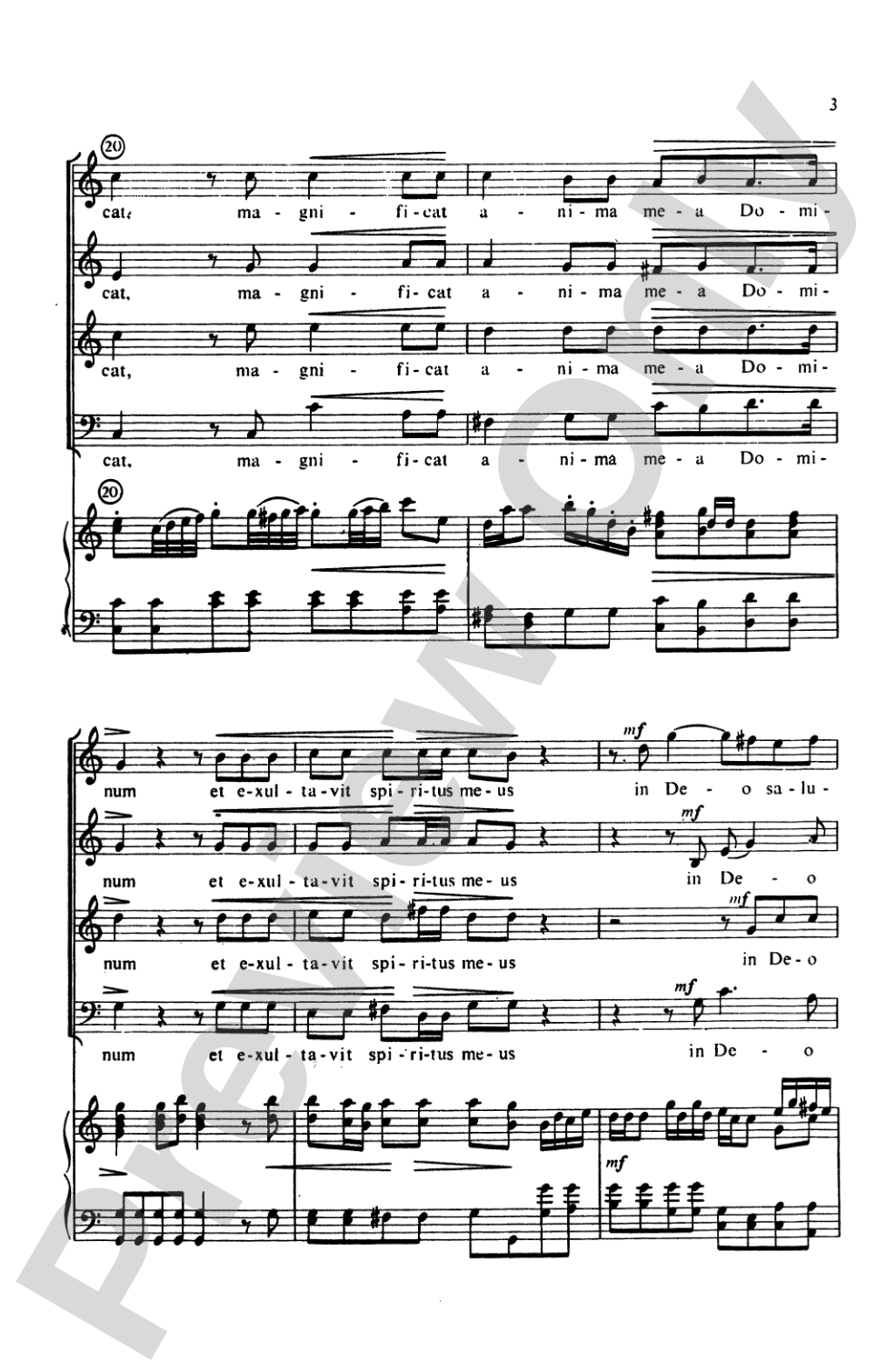
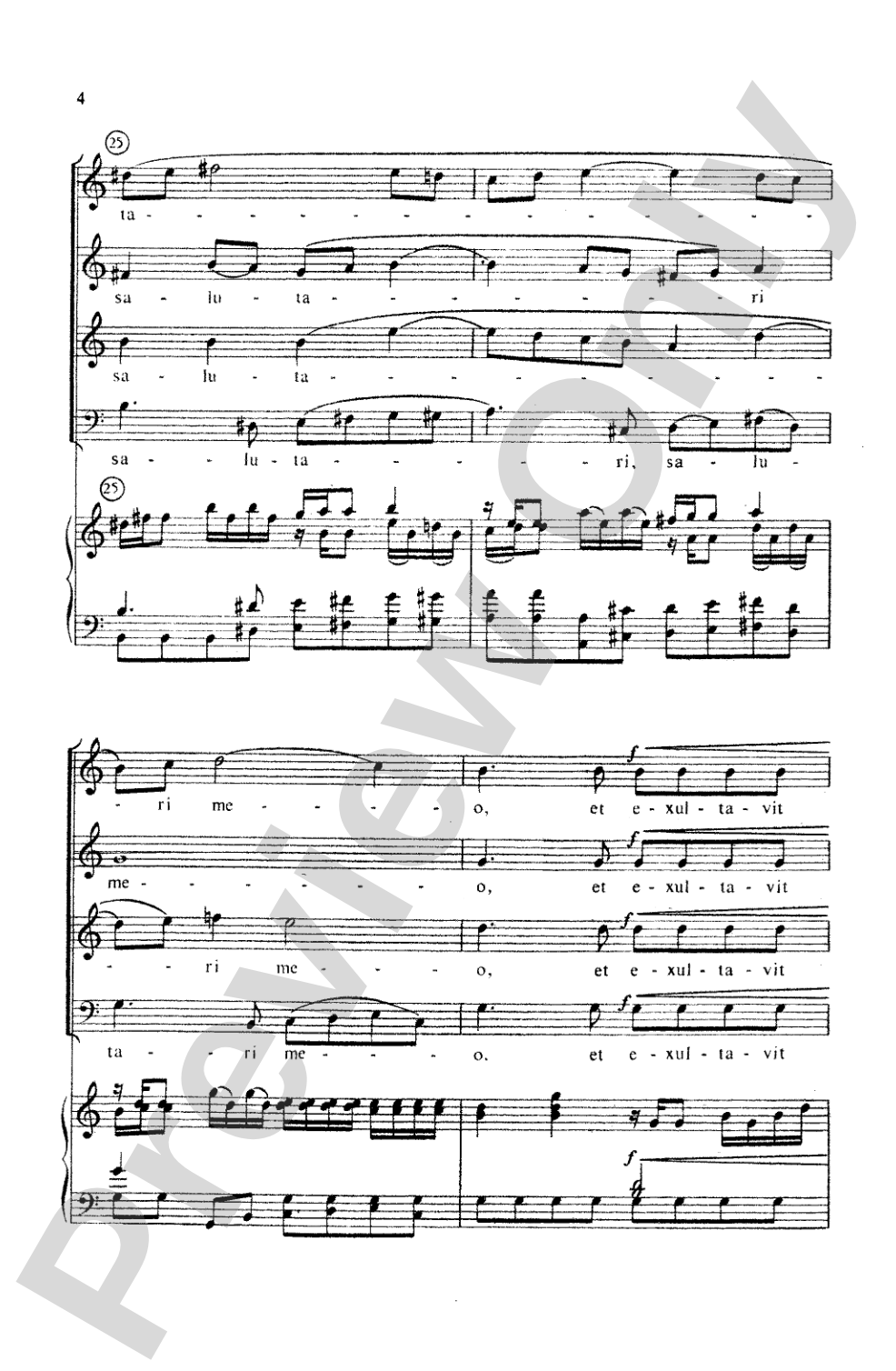
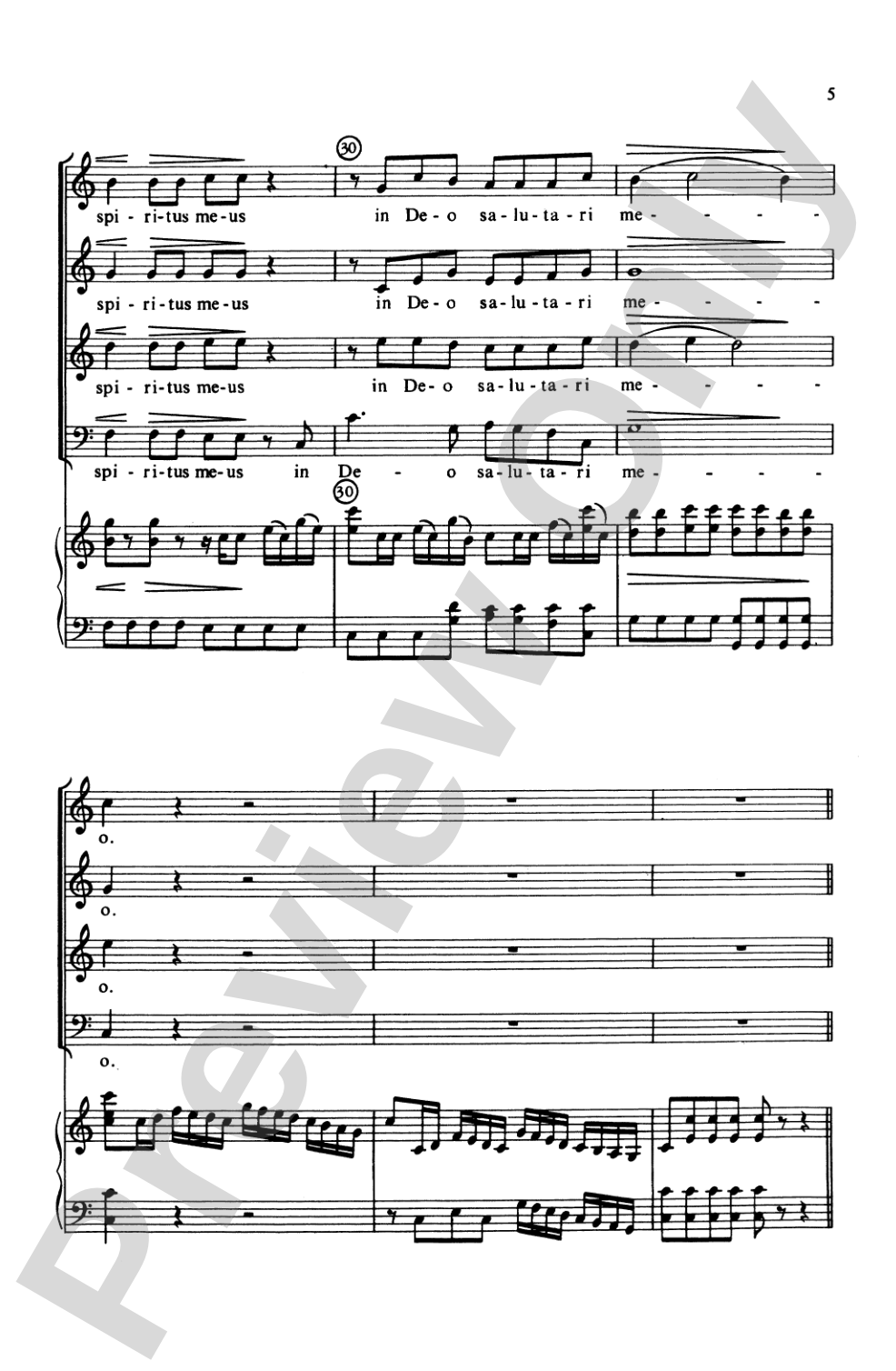
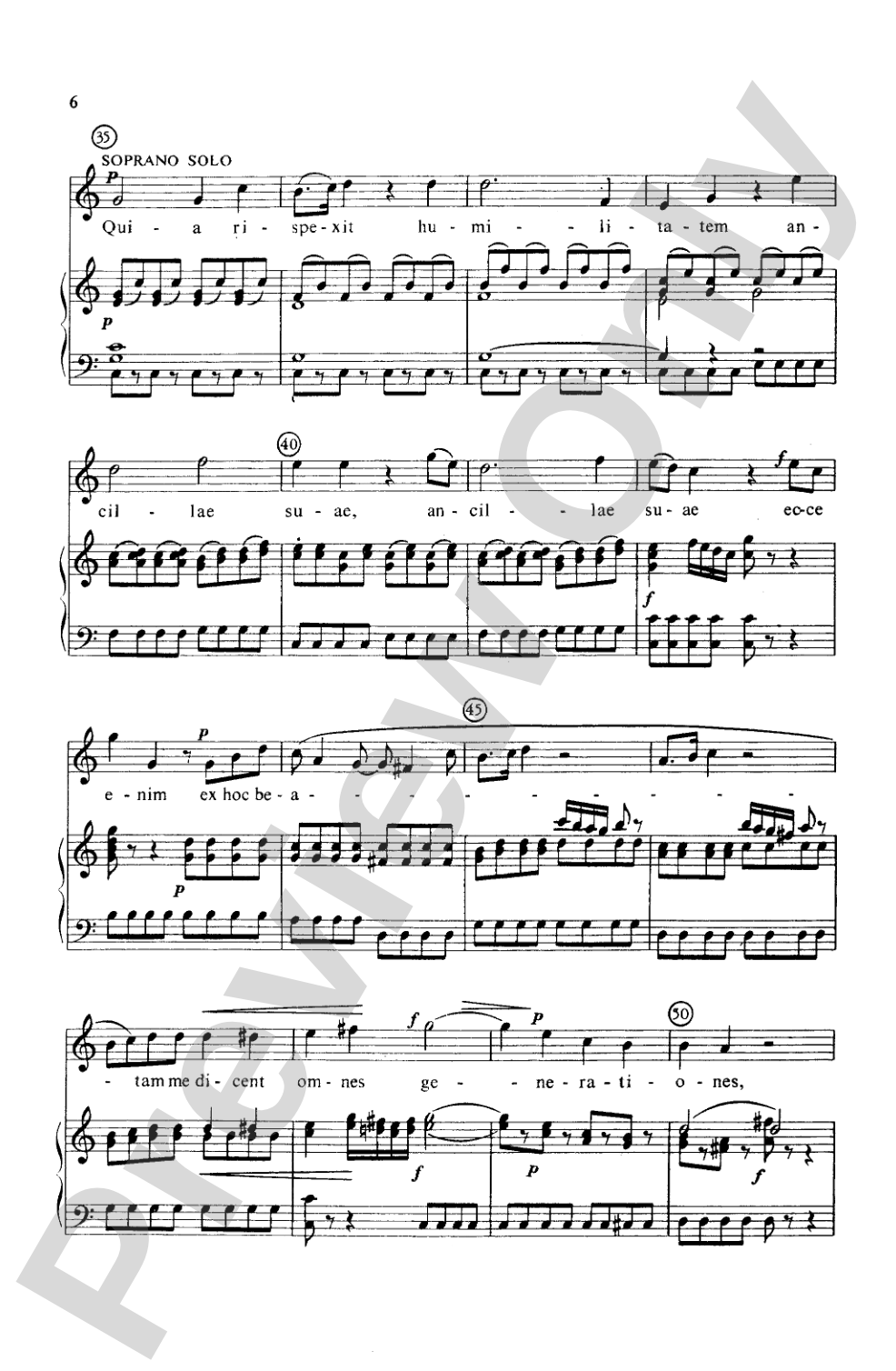

Magnificat: SATB Choral
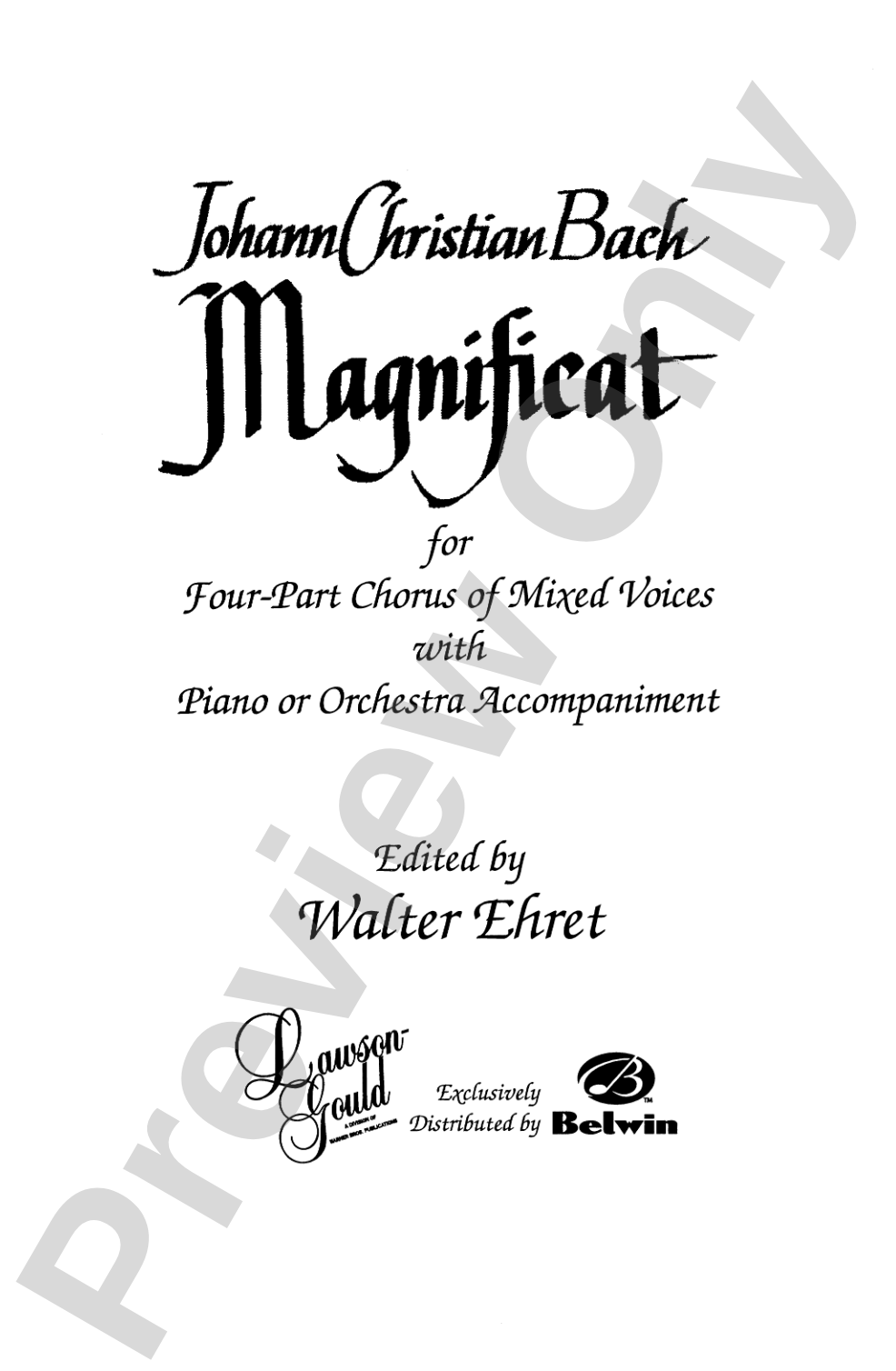
By Johann Christian Bach / ed. Walter Ehret
Item: 00-PO-0007646
$4.95
Minimum order quantity: 20 copies
Pickup currently not available
Related Items
Magnificat: SATB Choral |
$4.95
|
View |
Description
Orchestra parts available for rent: 2 Oboes, 2 Horns, Strings. Go to presser.com/request-rental.


Magnificat: SATB Choral isn't in MakeMusic Cloud just yet...but it could be. Let us know you'd like to see it, and you'll help shape what comes next. In the meantime, start a free trial and dive into thousands of interactive titles your students can play along with today.
Request This Title
Tell us you want it.
Start Your Free Trial
Explore everything that's ready to play right now.
Sample Audio
No sample audio found.
Sample Video
No sample videos found.
Additional Details
Series:
Lawson-Gould
Publisher:
Alfred Music
Page Count:
36
SKU:
00-PO-0007646
More about this title
About the Composer: Johann Sebastian Bach
Johann Sebastian Bach (1685, 1750) stands as one of the two or three most influential composers in Western music history. Working primarily in Germany as a church musician, court composer, and educator, he synthesized the musical languages of his time into works of extraordinary structural rigor and emotional depth. His output spans every major genre except opera, and his influence on harmonic language, counterpoint, and orchestration shaped music for centuries to come.
For choral directors, Bach represents the gold standard of vocal writing. His understanding of how voices move through space, how they interweave without losing independence, and how they serve both text and musical structure remains unmatched. Teaching a Bach work teaches singers how to listen, balance, and sustain phrase integrity while navigating complex harmonic landscapes.
Why we love this
This edition gives your choir access to one of music history's essential sacred works without requiring the full orchestral apparatus to realize Bach's vision powerfully. The SATB texture sits comfortably for collegiate and advanced high school ensembles, and the 36-page score allows singers to engage with authentic counterpoint and harmonic sophistication at a manageable scope. When you're ready to add orchestra (oboes, horns, and strings available for rent), you have a piece that scales from choir-only performances to full Bach splendor.
What to expect
The Magnificat unfolds with both jubilation and reverence, moving from dramatic proclamation to intricate polyphonic weaving and back again. Bach's harmonic language creates moments of luminous stillness alongside passages of almost architectural grandeur, inviting singers and listeners into a spiritual and intellectual world. The work breathes with a sense of purpose and inevitability that only emerges when the ensemble commits fully to the precision and expression the score demands.
Who it's for
This score suits advanced high school choirs or collegiate ensembles with strong sight-reading skills and exposure to Baroque counterpoint. Directors planning a concert with significant choral programming will find it both musically substantial and achievable with 8, 10 weeks of focused rehearsal.
How to get the most out of it
- Establish clear voice independence in the fugal sections by having singers mark their individual line before attempting vertical balance; Bach's counterpoint only speaks when each voice has rhythmic and melodic integrity.
- Shape the longer phrases with subtle dynamic arcs rather than maintaining uniform volume; this prevents the work from sounding mechanical and mirrors the harmonic movement.
- Balance the demands of Latin text clarity with Bach's motivic writing by rehearsing diction in isolation, then weaving it back into the musical line so neither element overwhelms the other.
- Pay attention to the harmonic rhythm and allow it to guide pacing; rushing through Bach's chord changes flattens the sense of arrival and resolution he carefully constructed.
How to use it
Consider programming this as a concert centerpiece in a spring choral concert or Easter service, where it can anchor a program of sacred music from multiple eras. The scale and prestige of the Magnificat also makes it ideal for a dedicated Bach concert or lecture-recital exploring the composer's sacred choral output. If orchestra parts are added, this becomes a major collaborative event with instrumental partners, elevating both choral and orchestral ensembles in a shared artistic goal.
Skills your students will build
- Reading and performing Baroque counterpoint and fugal writing
- Sustaining independent vocal lines within four-part harmony
- Latin text declamation and clarity within complex musical textures
- Understanding harmonic rhythm and shape in tonal music
- Blend and balance across SATB voices in polyphonic texture