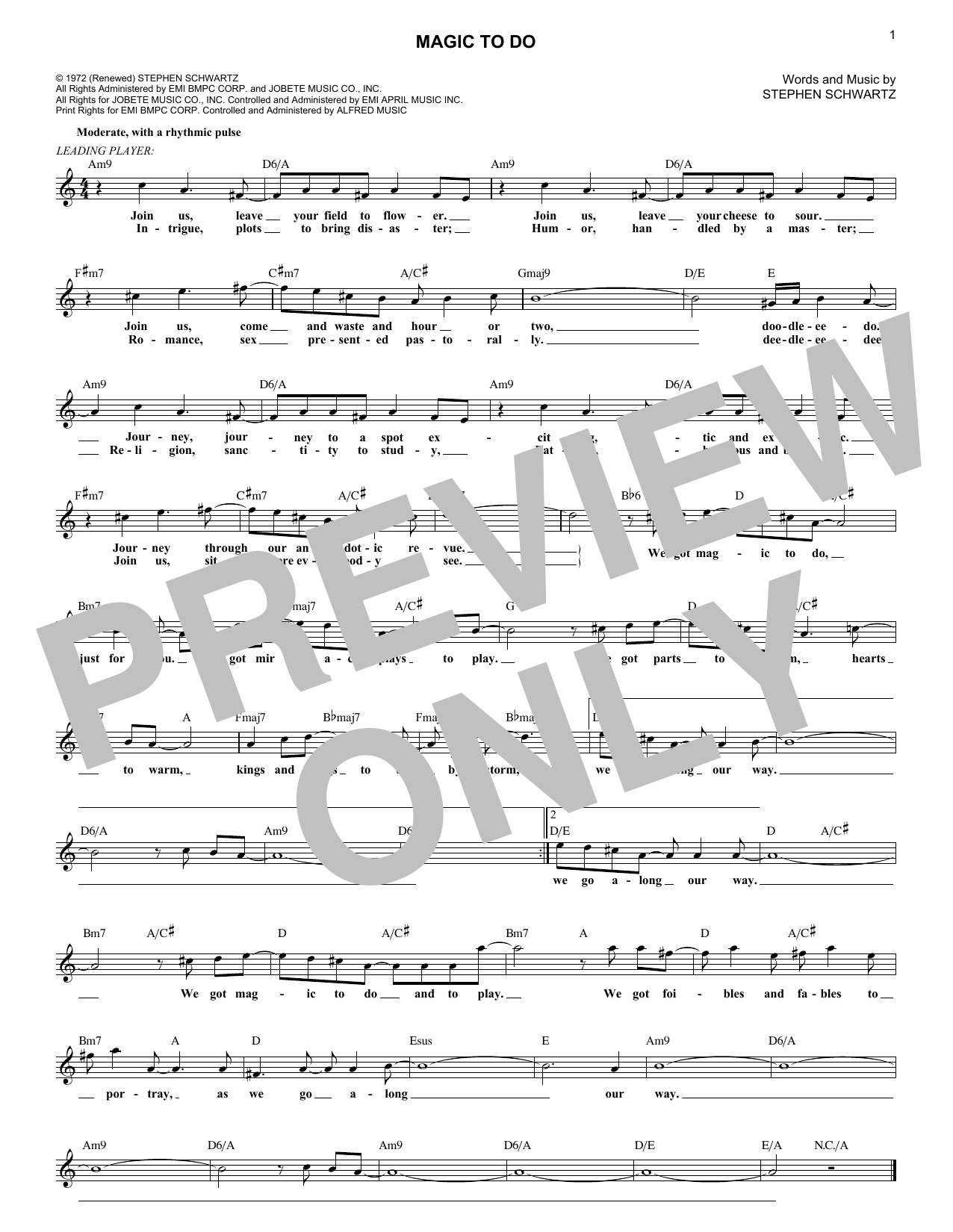
Magic To Do Sheet Music Preview

Magic To Do: Lead Sheet / Fake Book

Item: 35-DS00410923

Digital Download
$3.99
Description

Magic To Do: Lead Sheet / Fake Book isn't in MakeMusic Cloud just yet...but it could be. Let us know you'd like to see it, and you'll help shape what comes next. In the meantime, start a free trial and dive into thousands of interactive titles your students can play along with today.

Sample Audio
No sample audio found.
Sample Video
Additional Details
Publisher: Hal Leonard
Page Count: 1
SKU: 35-DS00410923

More about this title

About the Creator: Stephen Sondheim

Stephen Sondheim composed the score for Pippin, which premiered on Broadway in 1972. His work on the show demonstrated his gift for writing character-driven songs that advance narrative while remaining deeply singable. Sondheim's influence on musical theater composition remains unmatched, and Pippin stands as one of his most frequently performed works in both professional and educational settings.

Why we love this

Lead sheets cut through the complexity and let singers focus on what makes this song special: the conversational phrasing and the way the melody sits so naturally in the voice. The single-page format works perfectly for rehearsals where you need quick reference without hunting through a full score.

What to expect

Engaging and character-forward, with a melody that invites conversation. The song settles comfortably in a conversational register while maintaining the theatrical sophistication you expect from Sondheim.

Who it's for

Vocalists preparing auditions or concert selections will appreciate having the essentials in one clean page. This format also works well for music theory or arranging classes exploring Sondheim's harmonic language.

How to get the most out of it

  • Shape the melody conversationally rather than lyrically. This song lives in speech rhythm, so lean into the natural cadence of the text and let the music follow.
  • Balance the harmonic movement underneath the voice line without letting the accompaniment overwhelm the lyrical storytelling.
  • Find the character's emotional directness. There's charm here, but it comes from sincerity, not winking at the audience.

How to use it

Use this for solo recitals, audition preparation, or as part of a Broadway survey concert. It's compact enough for master classes or coachings where you want to drill interpretation without page turns.

Skills your students will build

  • Interpreting Sondheim's conversational lyrical phrasing
  • Reading lead sheet chord symbols and realizing harmonies
  • Shaping melody through text-driven rather than purely musical impulses
  • Building character through song within a theatrical context

You May Also Like