Mademoiselle De Paree Sheet Music Preview

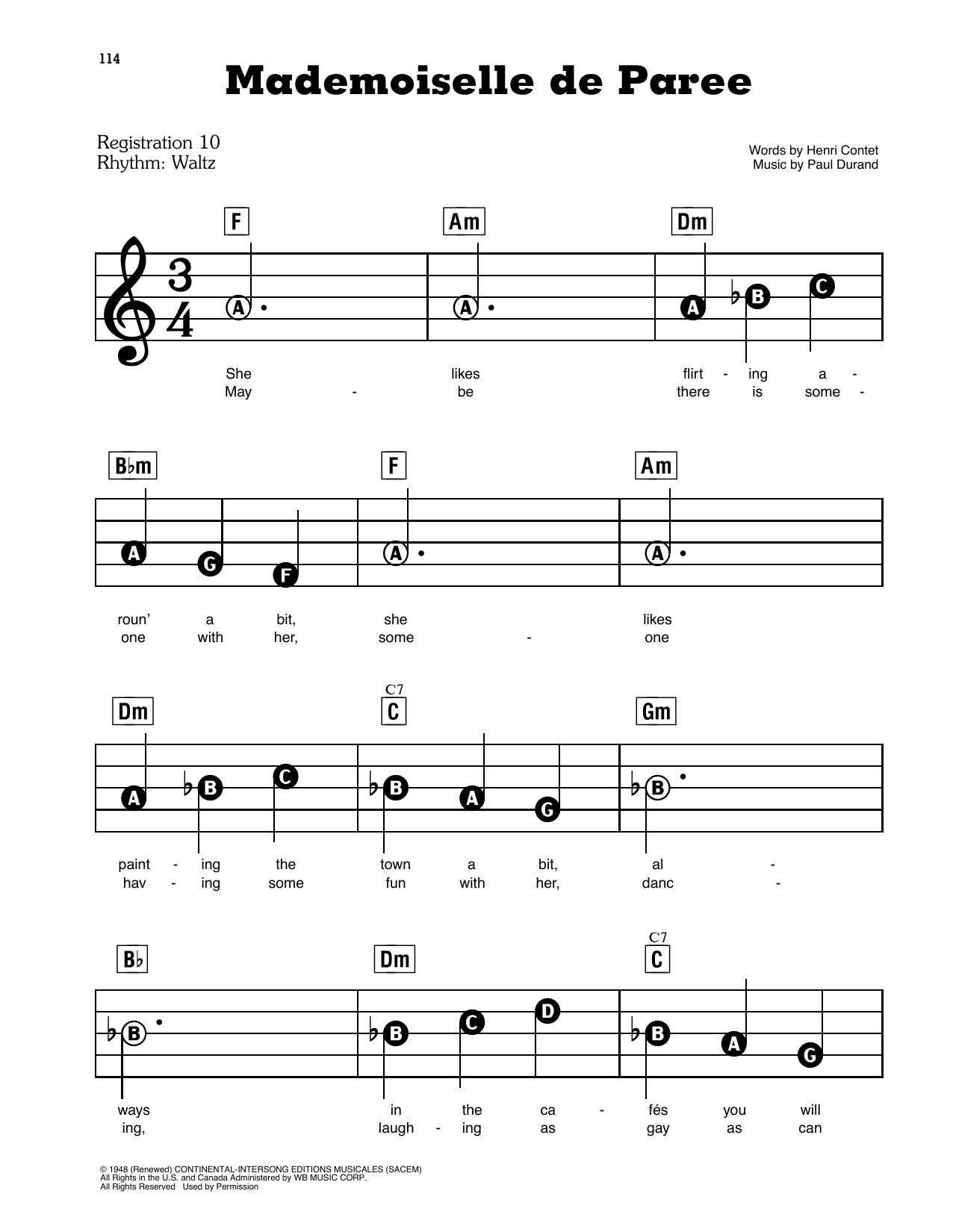
Mademoiselle De Paree: E-Z Play Today

As performed by Henri Contet

Item: 35-DS00499803

Digital Download
$4.99

One moment…

One moment…

Description

Mademoiselle De Paree: E-Z Play Today isn't in MakeMusic Cloud just yet...but it could be. Let us know you'd like to see it, and you'll help shape what comes next. In the meantime, start a free trial and dive into thousands of interactive titles your students can play along with today.

Sample Audio
No sample audio found.
Sample Video
Additional Details
Publisher: Hal Leonard
Page Count: 2
SKU: 35-DS00499803

More about this title

About the Artist: Henri Contet

Henri Contet (1904–1971) was a French composer and lyricist who bridged classical training and popular song. His gift for melody made him a fixture in mid-twentieth-century French chanson, and his works remain accessible entry points for pianists exploring the intersection of classical form and popular idiom.

Why we love this

E-Z Play editions strip away unnecessary complexity without sacrificing the song's charm, making this French standard genuinely playable for intermediate pianists. The melody sings naturally under the fingers, and students can focus on phrasing and character rather than wrestling with the page.

What to expect

Elegant and gently nostalgic. The piece evokes a Parisian café scene, with a melody that carries both lightness and romantic longing. It sounds more sophisticated than it plays.

Who it's for

Pianists in their second or third year of study who are ready for standard repertoire but benefit from simplified notation. Teachers introducing students to French popular song and the lyrical piano traditions that shaped twentieth-century composition.

How to get the most out of it

  • Let the melody breathe as a vocalist would. Resist the urge to rush; Parisian sophistication lives in the space between notes.
  • Balance the accompaniment so it never crowds the right-hand line. The left hand supports, not competes.
  • Explore subtle tempo flexibility in the phrases. A slight ritardando at phrase endings captures the wistfulness the title suggests.

How to use it

Pair this with other early twentieth-century French or American standards in a recital celebrating popular song traditions. It works equally well as a solo piece or as accompaniment for a vocalist exploring chanson repertoire.

Skills your students will build

  • Phrasing across multi-bar melodies
  • Accompaniment texture and voice balance
  • Interpreting song form and lyrical content without text
  • Tempo control and rubato in popular idioms

You May Also Like