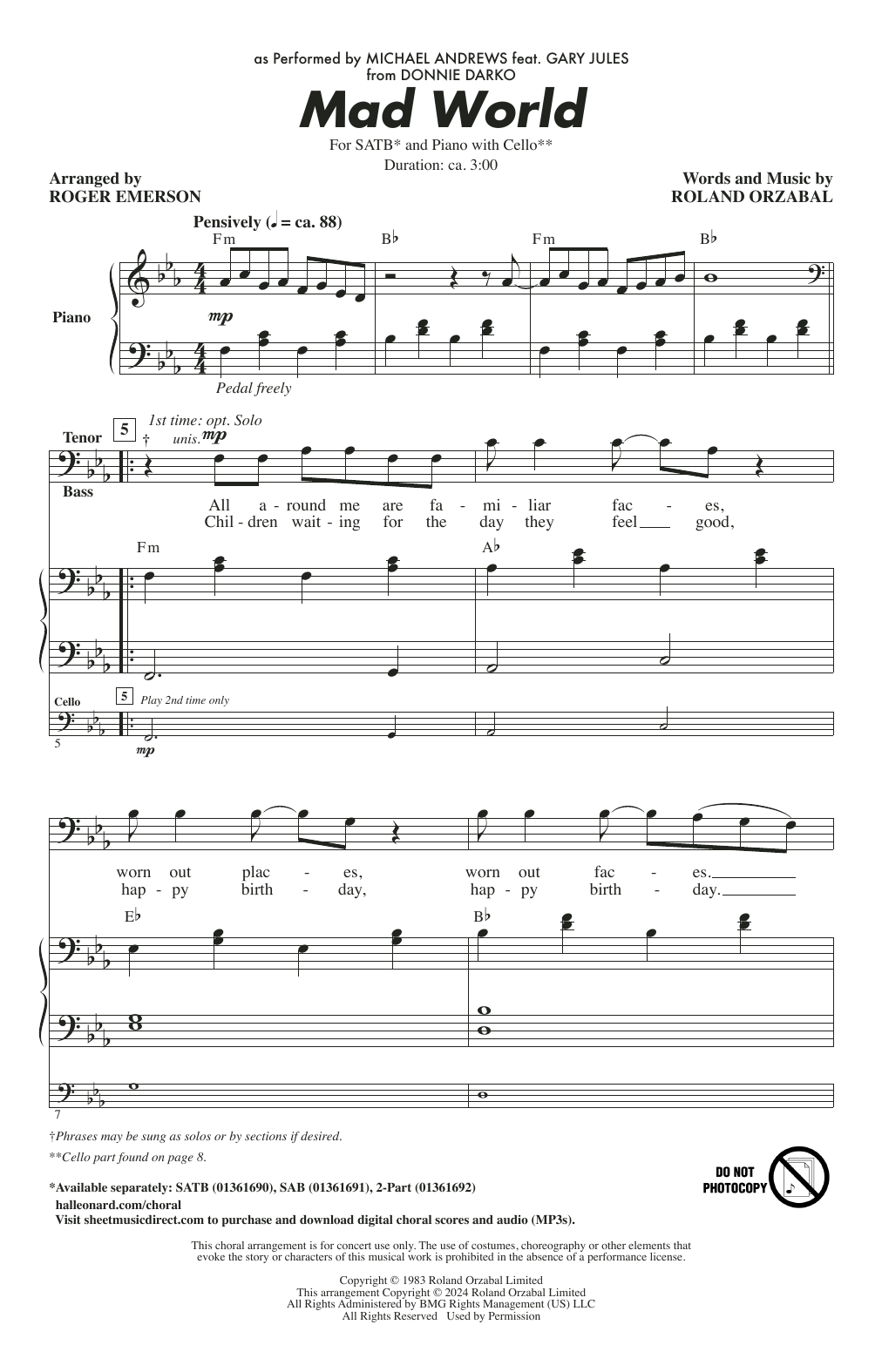
Mad World (arr. Roger Emerson) Sheet Music Preview

Mad World (arr. Roger Emerson): SATB Choral Octavo

As performed by Michael Andrews Feat. Gary Jules / Arranged by Roger Emerson

Item: 35-DS01478807

Digital Download
$2.99
Description

Mad World (arr. Roger Emerson): SATB Choral Octavo isn't in MakeMusic Cloud just yet...but it could be. Let us know you'd like to see it, and you'll help shape what comes next. In the meantime, start a free trial and dive into thousands of interactive titles your students can play along with today.

Sample Audio
No sample audio found.
Sample Video
Additional Details
Publisher: Hal Leonard
Page Count: 7
SKU: 35-DS01478807

More about this title

About the Artist: Michael Andrews Feat. Gary Jules

Michael Andrews is a composer and arranger whose work spans film, television, and popular music. His 2001 collaboration with Gary Jules on "Mad World" became a defining moment in alternative pop, offering a haunting reinterpretation of Tears for Fears' 1985 original. The track's sparse arrangement and emotional restraint made it a fixture in independent film and a touchstone for artists seeking authenticity over polish.

Why we love this

Roger Emerson's arrangement captures the song's essential fragility while giving choral voices room to breathe. The piece respects the original's emotional weight without requiring dramatic vocal gymnastics, making it accessible for singers who connect with contemporary material but need support navigating modern harmonic language.

What to expect

Ethereal and introspective, with a gentle fatalism running through the text. The arrangement floats between major and minor territories, creating a sense of uncertainty that mirrors the lyrics' quiet existential questioning.

Who it's for

Choirs comfortable with contemporary repertoire and looking for material that engages students without requiring belting or rhythm section energy. This works well for mixed ensembles seeking accessible entry points into alternative and indie music.

How to get the most out of it

  • Restrain the dynamic range throughout. This song lives in understated spaces; a mezzo-forte high point will feel like shouting if the foundation stays too soft.
  • Shape phrases around the lyrics rather than harmonic cadences. The text drives the architecture here more than chord changes do.
  • Balance the alto and tenor lines carefully in the verses; they often carry harmonic color that tenors and sopranos can mask without intention.
  • Use the recorded accompaniment to establish the sparse, deliberate tempo. Rushing even slightly destroys the song's meditative quality.

How to use it

Pair this with other contemporary art songs or indie pop arrangements for a concert exploring how modern songwriters approach emotional depth. It also serves as an effective contrast piece on programs heavy with classical or Broadway material, offering younger singers repertoire that feels genuinely connected to their world.

Skills your students will build

  • Sustaining soft dynamics without losing vocal support
  • Reading contemporary harmonic language built on minor modality and open chord structures
  • Shaping musical phrases according to lyrical content rather than traditional cadential landmarks
  • Blending in sparse textures where each voice part is exposed
  • Navigating emotional authenticity and restraint in performance

You May Also Like