
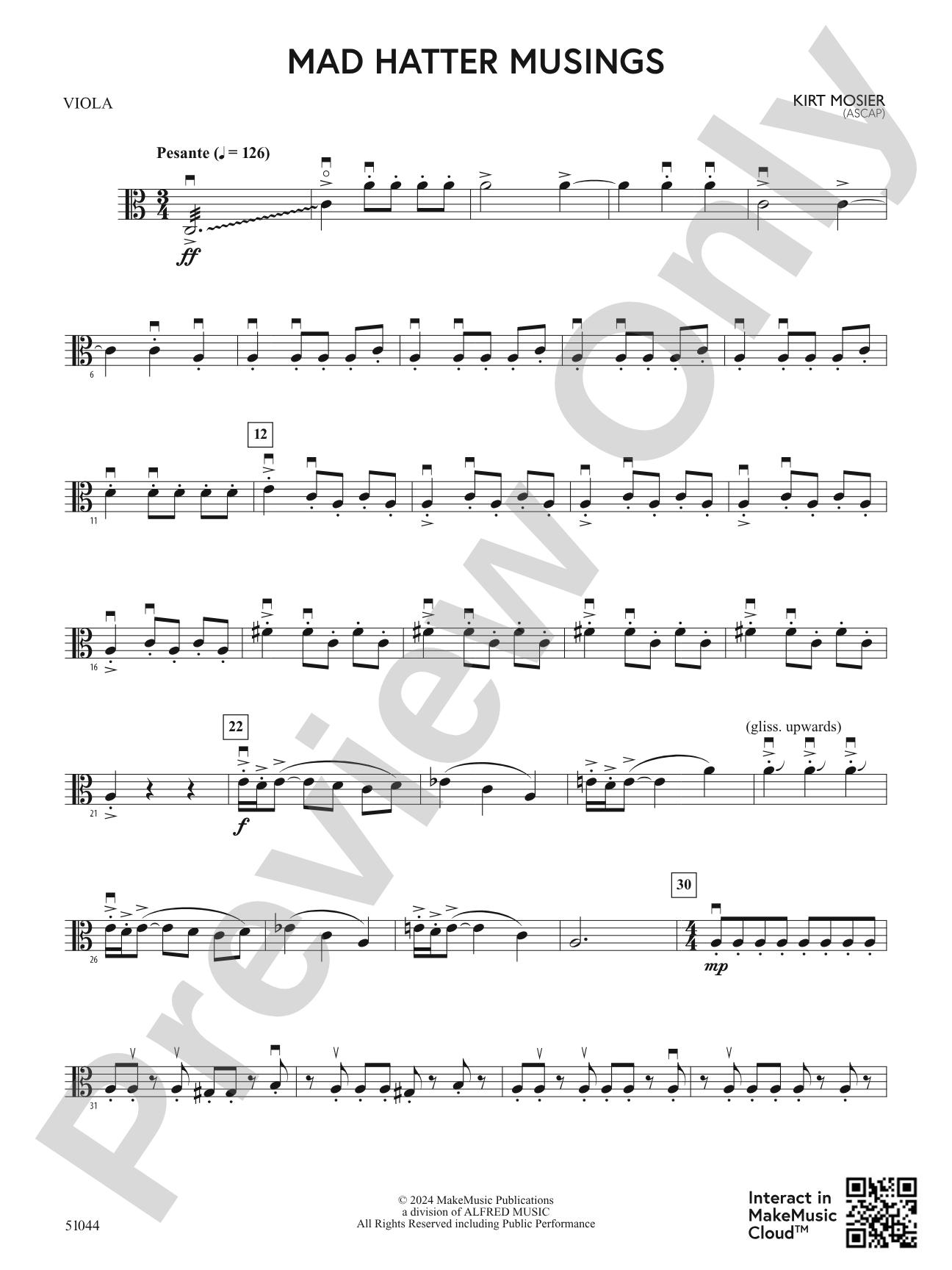

Mad Hatter Musings: Viola
By Kirt Mosier
Grade: 3.5
Item: 00-PC-0019246_VA1
$3.00
Pickup currently not available
Description
Inspired by Alice's Adventures in Wonderland by Lewis Carroll, Mad Hatter Musings delves into the mind of a character who has been forever trapped in time and has lost a grip on reality after living a never-ending tea party. Kirt Mosier infuses the work with contemporary harmonies, rhythms, and melodic figures that inspire imagination. (3:30)


Don't just read it, hear it, play along with it, and watch your students grow with it. In MakeMusic Cloud, Mad Hatter Musings: Viola comes alive with professional accompaniment, adjustable tempo, and built-in practice tools that turn solo practice into real progress.
Open in the Player
Jump straight in and assign it today.
Start Your Free Trial
Open this title and explore the full library in minutes.
Sample Audio
1
Audio File
--:--
0:00
0:00
Sample Video
Additional Details
Series:
MakeMusic Symphony Strings
Publisher:
MakeMusic Publications
SKU:
00-PC-0019246_VA1
More about this title
About the Composer: Kirt Mosier

Kirt Mosier works as both conductor and composer, bringing wit and warmth to orchestras and audiences across the globe. His conducting engagements have taken him to Carnegie Hall, Vienna's MuTH, the Harpa in Reykjavik, and the Sydney Opera House, among many others. He has won national composition awards for Baltic Dance (1993) and American Reel (2004), and in 2010 received a commission from the Portland Ballet Company to compose an original score for The Legend Of Sleepy Hollow.
Mosier serves as artistic director of the Youth Symphony of Kansas City and associate conductor of the Lee's Summit Symphony. He previously taught orchestration at the University of Missouri Kansas City Conservatory and directed orchestras in the Raytown and Lee's Summit school districts. He founded the Digital Media Technology program at Summit Technology Academy, where his students have earned national recognition and moved into professional careers. Mosier is a sought-after speaker for school districts and organizations throughout the United States.
Why we love this
Mosier captures the Mad Hatter's fractured psyche through genuinely inventive orchestration rather than cartoon caricature. The contemporary harmonies and rhythmic language keep players engaged while remaining fully accessible at Grade 3.5, and the programmatic clarity makes this equally effective as a concert centerpiece or festival selection.
What to expect
Unsettling and whimsical at once, like watching someone trapped in thought spirals that loop back on themselves. The contemporary harmonies create moments of unease alongside moments of strange beauty, capturing the peculiar loneliness of someone lost in their own world.
Who it's for
String orchestras at the intermediate level seeking repertoire that blends literary sophistication with accessible scoring. This works equally well for ensembles building a concert program or preparing a festival entry that demands both musicianship and imagination.
How to get the most out of it
- Lean into the rhythmic restlessness. These patterns should feel slightly off-kilter and unsettled rather than metrically locked; that tension is what sells the character.
- Balance the melodic lines across the section. The Mad Hatter's scattered thoughts weave through different instruments, so highlight when the narrative passes from violins to violas to cellos rather than letting one voice dominate.
- Explore dynamic contrast without overdoing it. The piece benefits from sudden shifts in color and volume that mirror the character's mental state, but these work best when they emerge from musical logic, not arbitrary markings.
How to use it
Position this as a substantial middle work in a concert that pairs well with Romantic-era standards; its modern language creates welcome contrast. Festival adjudicators appreciate the literary foundation and musical originality, making it a strong choice for competitive events where repertoire selection matters.
Skills your students will build
- Navigating contemporary harmonic language and extended techniques appropriate to string writing
- Maintaining rhythmic independence while responding to fluid meter and phrasing
- Balancing programmatic storytelling with musical coherence
- Executing dynamic contrast and timbral shifts that serve character development