Mack the Knife (from The Threepenny Opera) Sheet Music Preview

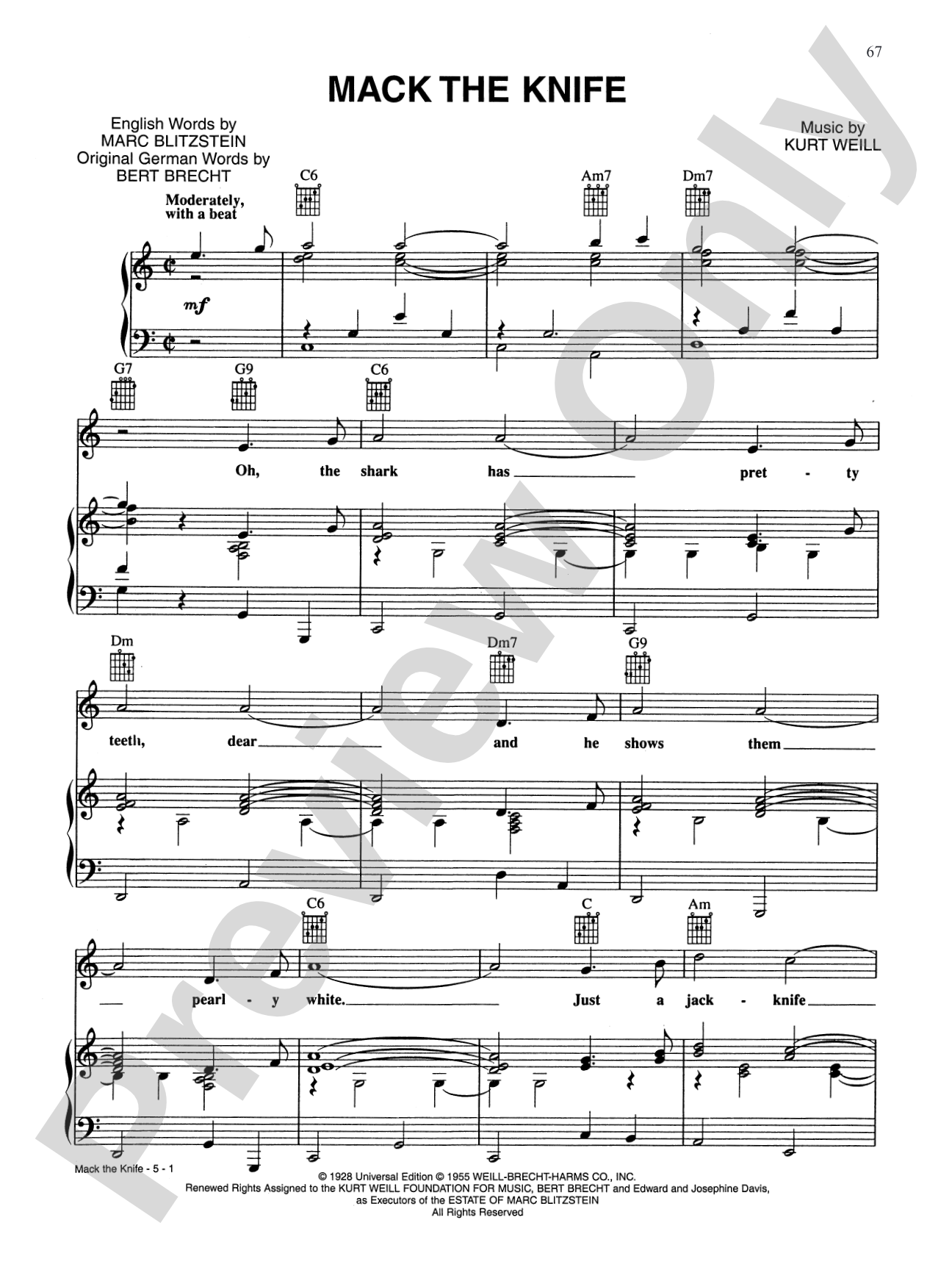
Mack the Knife (from The Threepenny Opera): Piano/Vocal/Chords

English words by Marc Blitzstein, original German words by Bertolt Brecht, music by Kurt Weill

Item: 00-PIP-000083

Digital Download
$3.99

One moment…

Description

Mack the Knife (from The Threepenny Opera): Piano/Vocal/Chords isn't in MakeMusic Cloud just yet...but it could be. Let us know you'd like to see it, and you'll help shape what comes next. In the meantime, start a free trial and dive into thousands of interactive titles your students can play along with today.

Sample Audio
No sample audio found.
Sample Video
Additional Details
Publisher: Alfred Music
Page Count: 4
SKU: 00-PIP-000083

More about this title

About the Composer: Kurt Weill

Kurt Weill (1900-1950) revolutionized musical theater by fusing classical composition with popular song idioms and political urgency. A student of Ferruccio Busoni in Berlin, Weill collaborated with librettist Bertolt Brecht to create works that challenged audiences intellectually while remaining deeply accessible, making him one of the most influential composers of the 20th century.

Weill's music bridges concert hall and stage with equal sophistication. His harmonic language draws from both Germanic expressionism and American jazz, creating pieces that feel simultaneously modern and timeless. For music educators, his works offer rich material for teaching functional harmony, theatrical interpretation, and the integration of song into larger dramatic structures.

Why we love this

This arrangement captures the menace and swagger of Weill's most iconic song in a format that serves both singers and pianists equally well. The piano part is sophisticated enough to hold its own during performance, with harmonic complexity that rewards focused practice while remaining playable for advancing pianists.

What to expect

Sly and unsettling, with the ease of someone recounting a crime over a drink. The piano pulses with chromatic tension beneath a vocal line that walks a tightrope between seduction and menace, creating an atmosphere both sophisticated and deeply theatrical.

Who it's for

Singers developing their musical theater toolkit and intermediate to advanced pianists who want a dramatic solo with theatrical weight. This works equally well for recital preparation, audition material, or singers exploring 20th century song repertoire in a vocal studio.

How to get the most out of it

  • Nail the rhythmic swagger early. The opening piano figures establish the song's character; lock in the syncopation and let the accompaniment breathe with a slight rubato that suggests danger rather than chaos.
  • Balance vocal storytelling with the song's dark humor. This is a character piece about a predator, not a romantic ballad. Commit to the narrative voice and let the lyrics guide your phrasing.
  • Lean into the chromatic movement in the harmony. Weill uses unexpected chord shifts to create dissonance and unease. Highlight these moments through tone color and tempo shape rather than playing them apologetically.
  • Work the transition between verse and refrain carefully. The shift in energy and texture is dramatic; use pedal and dynamic contrast to make the move feel inevitable rather than abrupt.

How to use it

Include this in a recital exploring 20th century song or American musical theater, perhaps paired with other Weill arrangements or contrasted against folk and art song traditions. It also works as a standalone piece for mature singers comfortable with dramatic interpretation and morally complex characters.

Skills your students will build

  • Interpreting chromatic harmony and jazz-inflected chord progressions
  • Balancing narrative voice with musical line
  • Coordinating complex rhythmic figures between voice and piano
  • Understanding theatrical character development through song
  • Managing pedal for harmonic resonance in 20th century idioms

You May Also Like