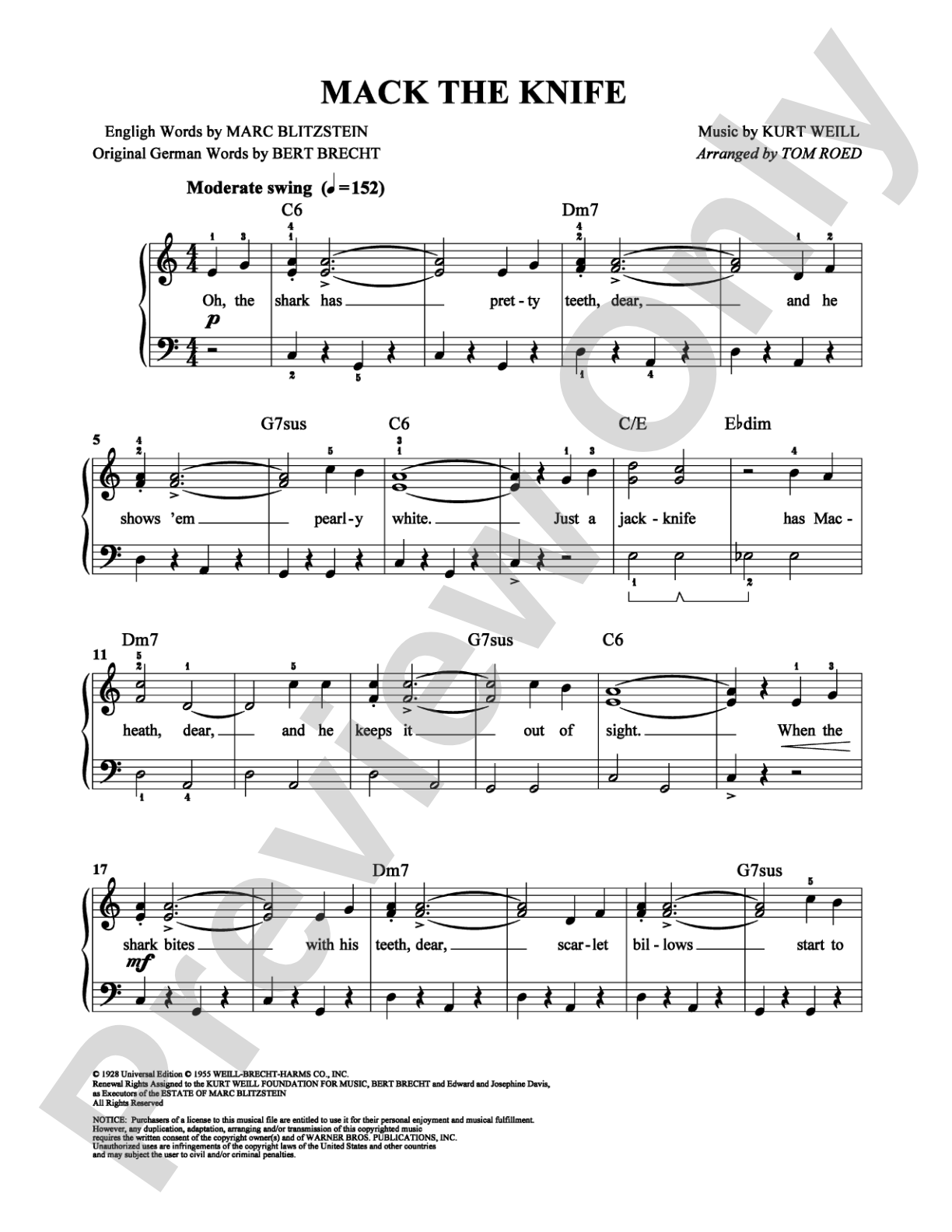
Mack the Knife: Easy Piano Digital Sheet Music

Mack the Knife: Easy Piano Digital Sheet Music

Kurt Weill

Item: 00-PS-0008470

Digital Download
$3.99
Description

Mack the Knife: Easy Piano Digital Sheet Music isn't in MakeMusic Cloud just yet...but it could be. Let us know you'd like to see it, and you'll help shape what comes next. In the meantime, start a free trial and dive into thousands of interactive titles your students can play along with today.

Sample Audio
No sample audio found.
Sample Video
Additional Details
SKU: 00-PS-0008470

More about this title

About the Creator

Kurt Weill composed "The Threepenny Opera" in 1928 with librettist Bertolt Brecht, creating one of the most influential theatrical works of the twentieth century. "Mack the Knife" emerged as the show's breakout number, a darkly comedic ballad that has since transcended its original context to become a jazz standard and popular classic. Weill's gift for writing memorable melodies with sharp harmonic edges made the song instantly singable yet sophisticated enough to sustain countless interpretations across genres and decades.

Why we love this

This arrangement strips away unnecessary complexity without sacrificing the song's theatrical swagger. Piano students get immediate access to one of the most recognizable melodies in American musical theater, complete with enough harmonic content to feel satisfying but arranged at a level that builds genuine confidence.

What to expect

Smooth, slightly dangerous, and unapologetically theatrical. The melody has that classic torch song quality—knowing, sardonic, and easy to make your own once you find the rhythm beneath it.

Who it's for

Piano students at the early intermediate level who want to tackle a piece with real musical character and immediate recognition. This works equally well for recital preparation, jazz ensemble enhancement, or simply building confidence with standard repertoire.

How to get the most out of it

  • Keep the rhythm crisp and conversational. This isn't a ballad; the harmonic rhythm should feel like spoken dialogue set to music.
  • Pay attention to any syncopated passages. Lock in the groove so the melody sits naturally on top of the accompaniment rather than fighting it.
  • Let the left hand breathe. The accompaniment supports the melody, so resist the urge to overpower it with heavy pedal or forced dynamics.

How to use it

Pair this with other theatrical selections for a program that celebrates American songwriting, or use it as a palate cleanser between more formal classical works. It's also an excellent choice for jazz or popular music showcases where intermediate students need something that sounds more sophisticated than its technical demands suggest.

Skills your students will build

  • Navigating syncopated rhythms in a melodic context
  • Playing two-hand independence with uneven rhythmic figures
  • Interpreting swing and jazz-influenced articulation at an accessible level
  • Building confidence with standard tune melodies

You May Also Like