

Mack the Knife: SAB Choral Octavo
Music by Kurt Weill / arr. Russell Robinson
Item: 00-PO-0002522
$2.95
Minimum order quantity: 20 copies
One moment…
Description
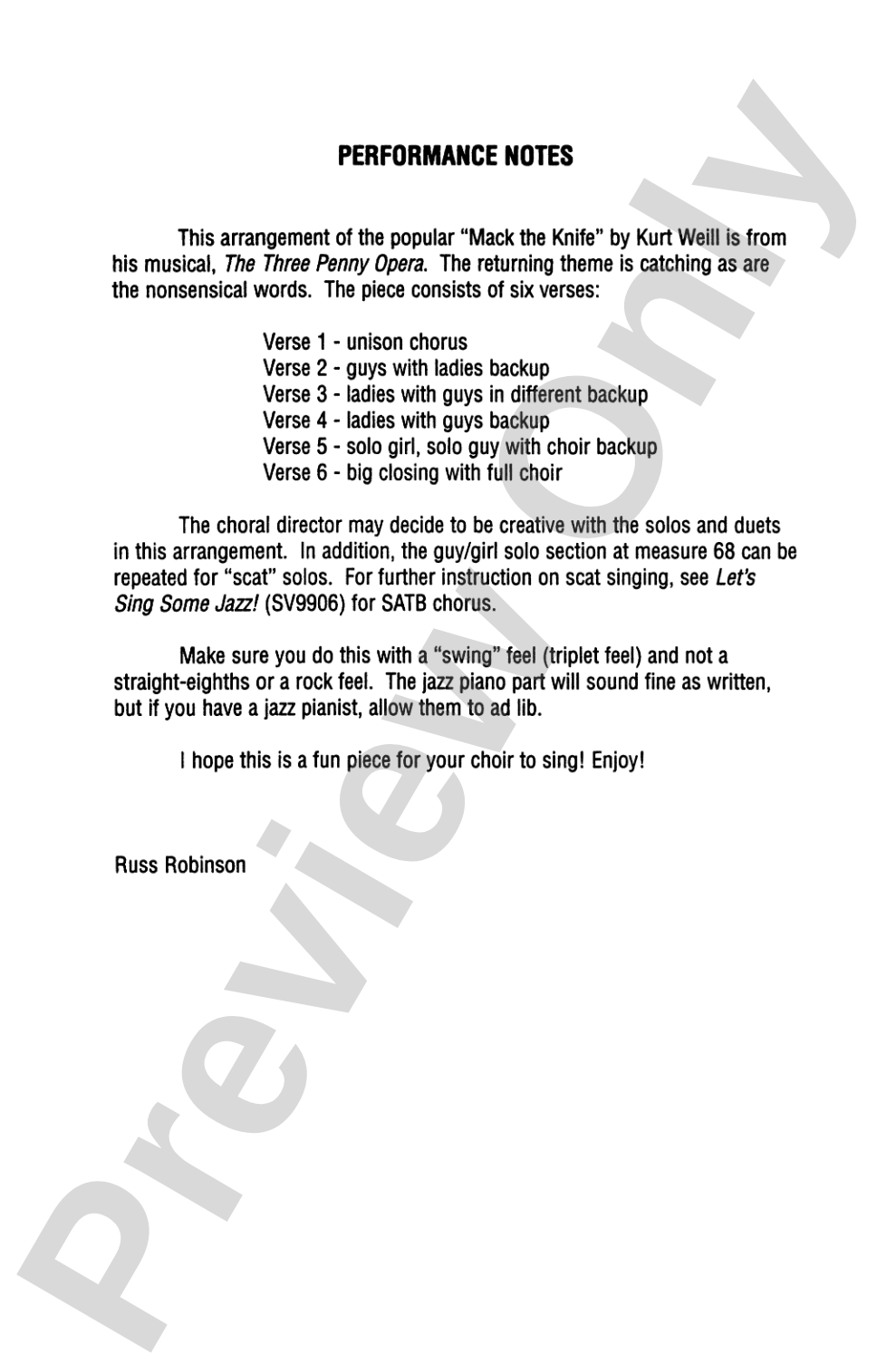
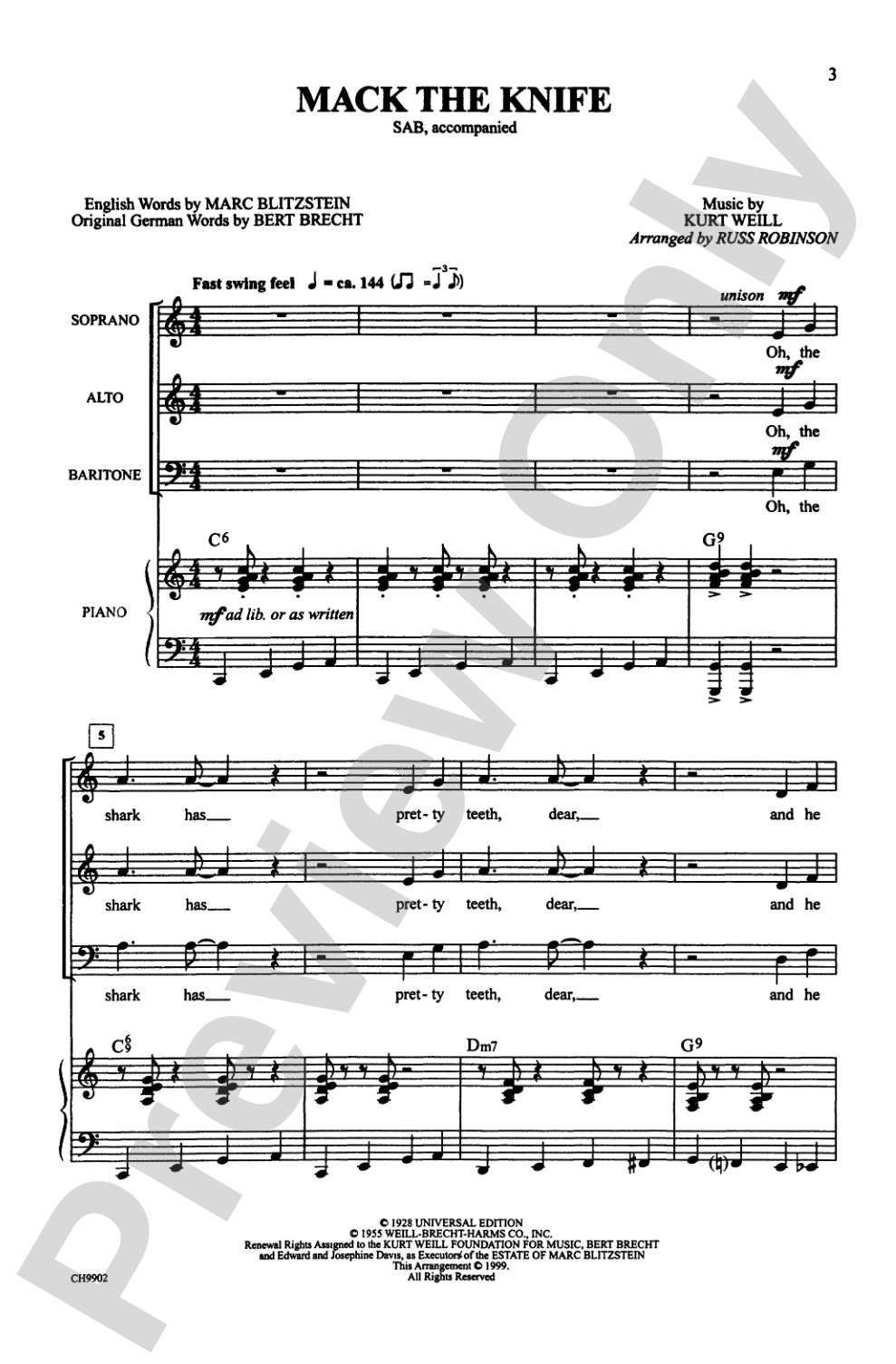
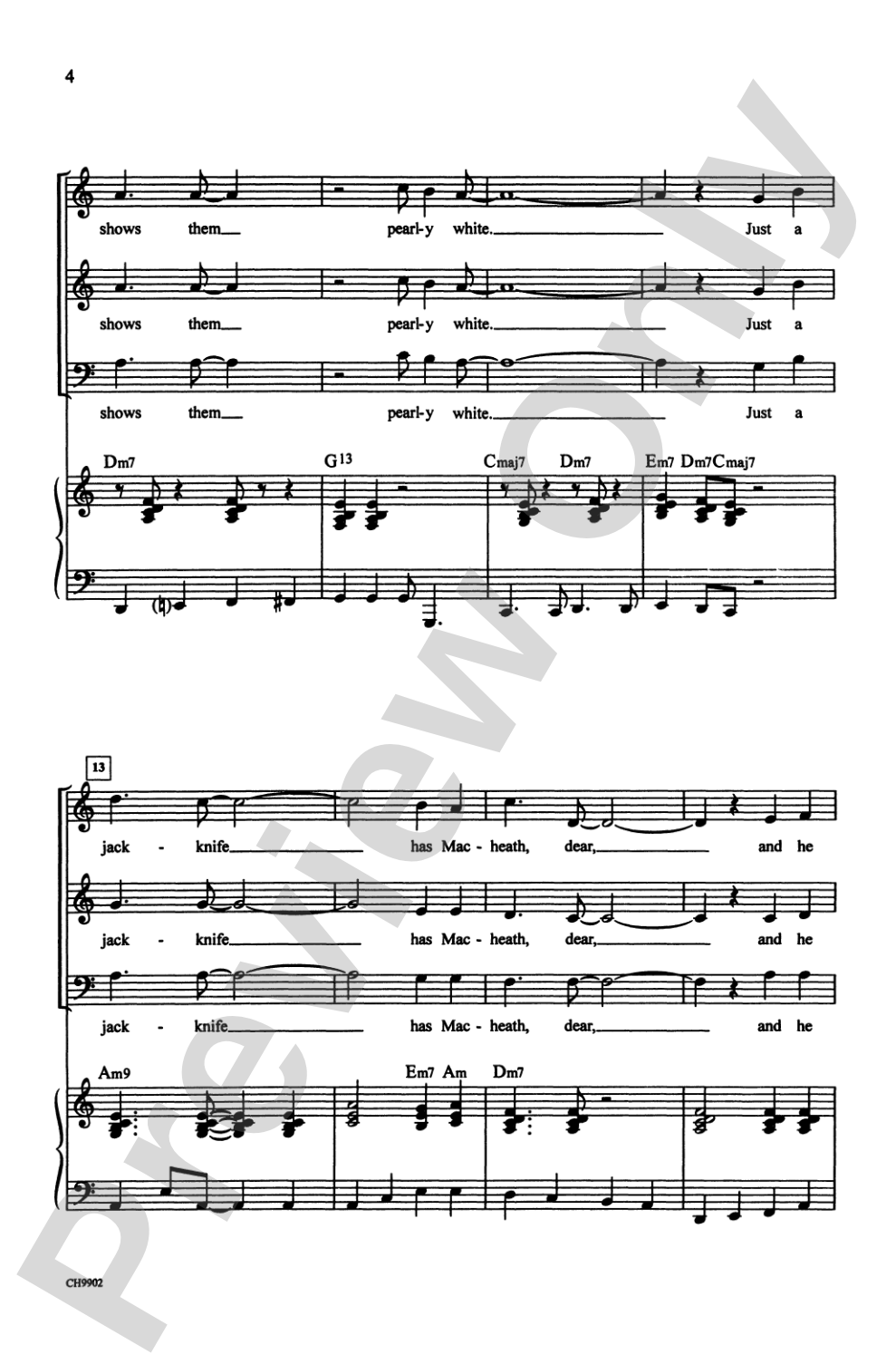
Written by Kurt Weill for his Threepenny Opera in 1926 and popularized by '50s heart-throb Bobby Darin and a host of other recording artists. Russ Robinson has created this easy-to-sing arrangement that will be welcome addition to any pops concert.


Mack the Knife: SAB Choral Octavo isn't in MakeMusic Cloud just yet...but it could be. Let us know you'd like to see it, and you'll help shape what comes next. In the meantime, start a free trial and dive into thousands of interactive titles your students can play along with today.
Request This Title
Tell us you want it.
Start Your Free Trial
Explore everything that's ready to play right now.
Sample Audio
No sample audio found.
Sample Video
No sample videos found.
Additional Details
Series:
Alfred Archive Edition: Alfred Pop Choral Series
Publisher:
Alfred Music
Page Count:
16
SKU:
00-PO-0002522
More about this title
About the Composer: Kurt Weill
Kurt Weill (1900-1950) was a German-American composer who fundamentally reshaped musical theater by fusing classical composition with popular idioms, jazz harmonies, and socially conscious storytelling. His collaboration with playwright Bertolt Brecht on works like The Threepenny Opera established him as a pioneer of modern opera, influencing generations of composers who followed. After emigrating to the United States in 1935, he continued composing for Broadway and film, proving that serious compositional craft and popular appeal were not mutually exclusive.
Weill's gifts for melody and harmonic sophistication made his songs enduringly singable across multiple interpretations and contexts. For music educators, his work demonstrates how accessible arrangements of sophisticated material can engage singers while maintaining artistic integrity.
Why we love this
Russ Robinson's SAB setting strips away the darkness of the original while preserving the song's irresistible swagger and character. Your singers will immediately connect with the material because the melody sits naturally in the voices, the rhythm grooves, and the narrative punch of the lyrics needs no explanation. This is a reliable crowd-pleaser that fills your pops concert with genuine musicianship, not just novelty.
What to expect
Urbane and darkly witty, even in this gentler guise. The minor-key foundation gives the piece an edge despite the straightforward arrangement, and the killer opening hook grabs attention instantly. Singers will feel the swagger of a character study set to a memorable tune, complete with just enough harmonic sophistication to keep things interesting.
Who it's for
This arrangement is designed for choirs with developing readers who want immediate success singing jazz-inflected popular music. It works equally well in high school choirs, community choruses, and college groups looking to add accessible pops material to their repertoire without sacrificing musical credibility.
How to get the most out of it
- Shape the melody with intentional inflection in the alto and soprano lines. This song lives in the space between conversational storytelling and jazz styling, so encourage singers to lean into the character rather than oversinging.
- Keep the rhythm section (if using the recorded accompaniment) crisp and slightly behind the beat for that swinging groove. The arrangement's energy depends on this forward-leaning rhythmic feel.
- Balance the part-writing carefully during tutti sections. The middle voice can easily get buried, so check that your altos are heard without drowning out the soprano melody.
- Emphasize the lyrical wit. Train singers to land on key words naturally, as if telling the story directly to the audience rather than performing it at them.
How to use it
Pair this with other Weill selections or 20th-century American songbook standards to create a "Great American Song" concert segment. It also stands beautifully as a standalone opener or closer for a pops show, where its theatrical punch and immediate audience recognition will anchor the concert's tone.
Skills your students will build
- Jazz phrasing and rhythmic flexibility within a pop idiom
- Balancing melody and inner voices in SAB voicing
- Character-driven interpretation and expressive control
- Singing across changing harmonic contexts (minor tonality with jazz influences)