
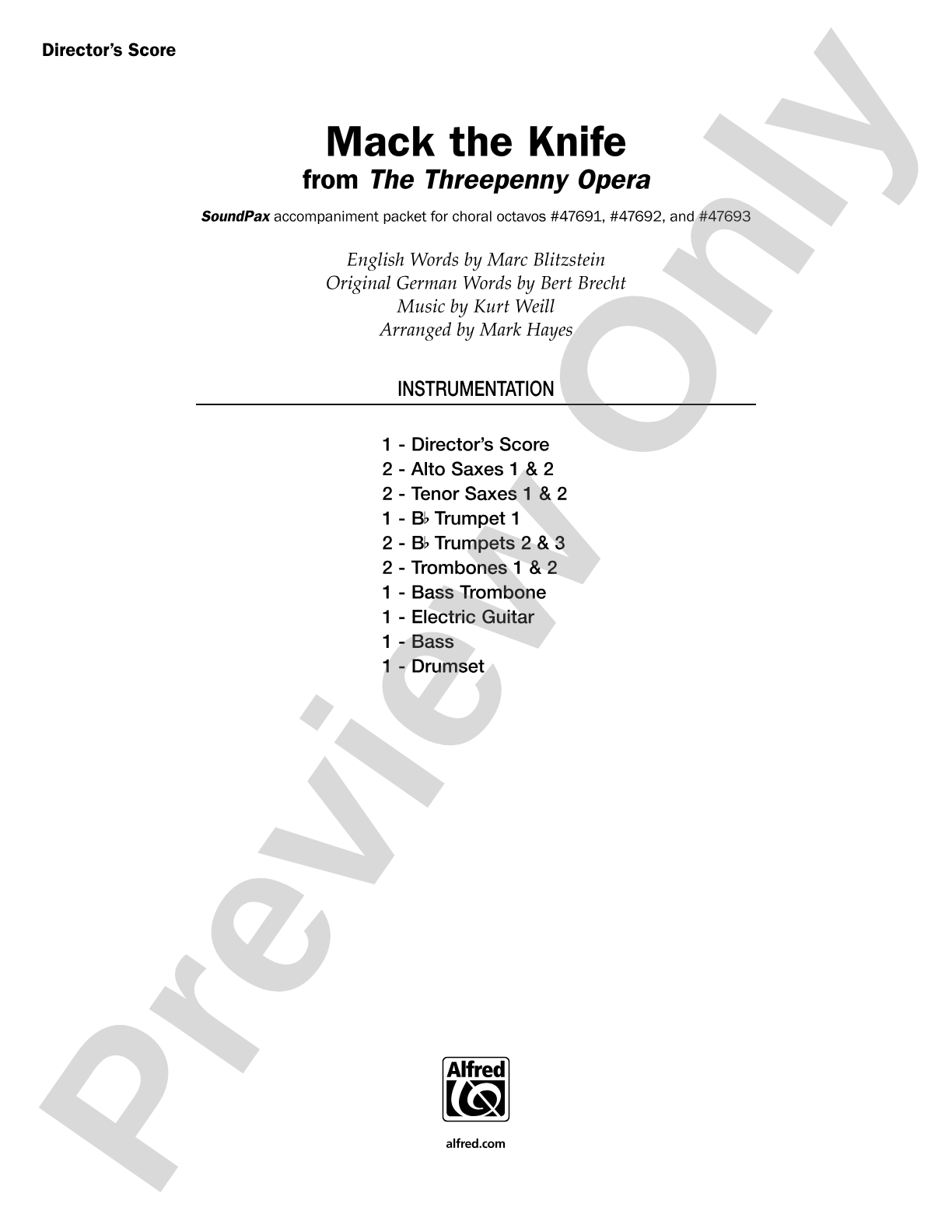
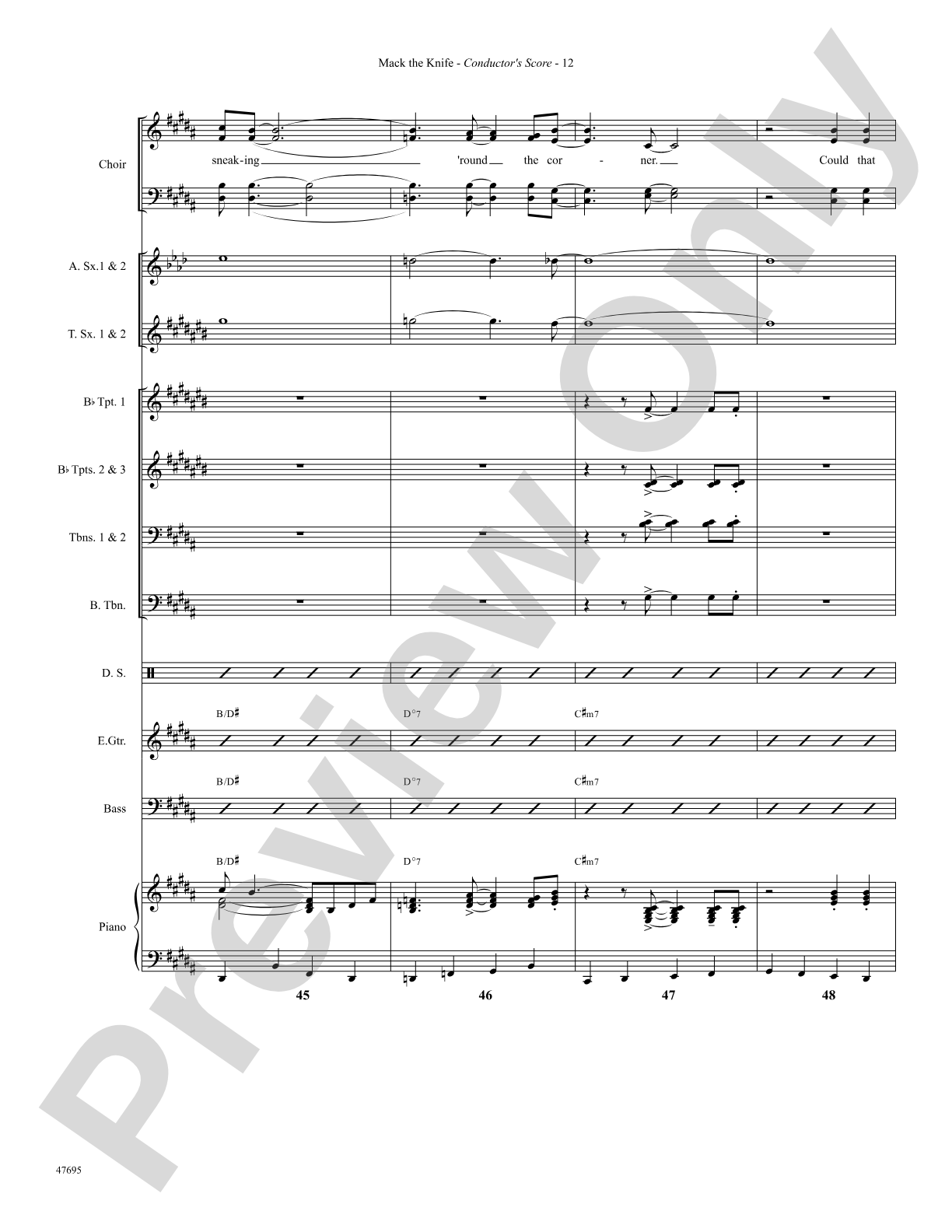
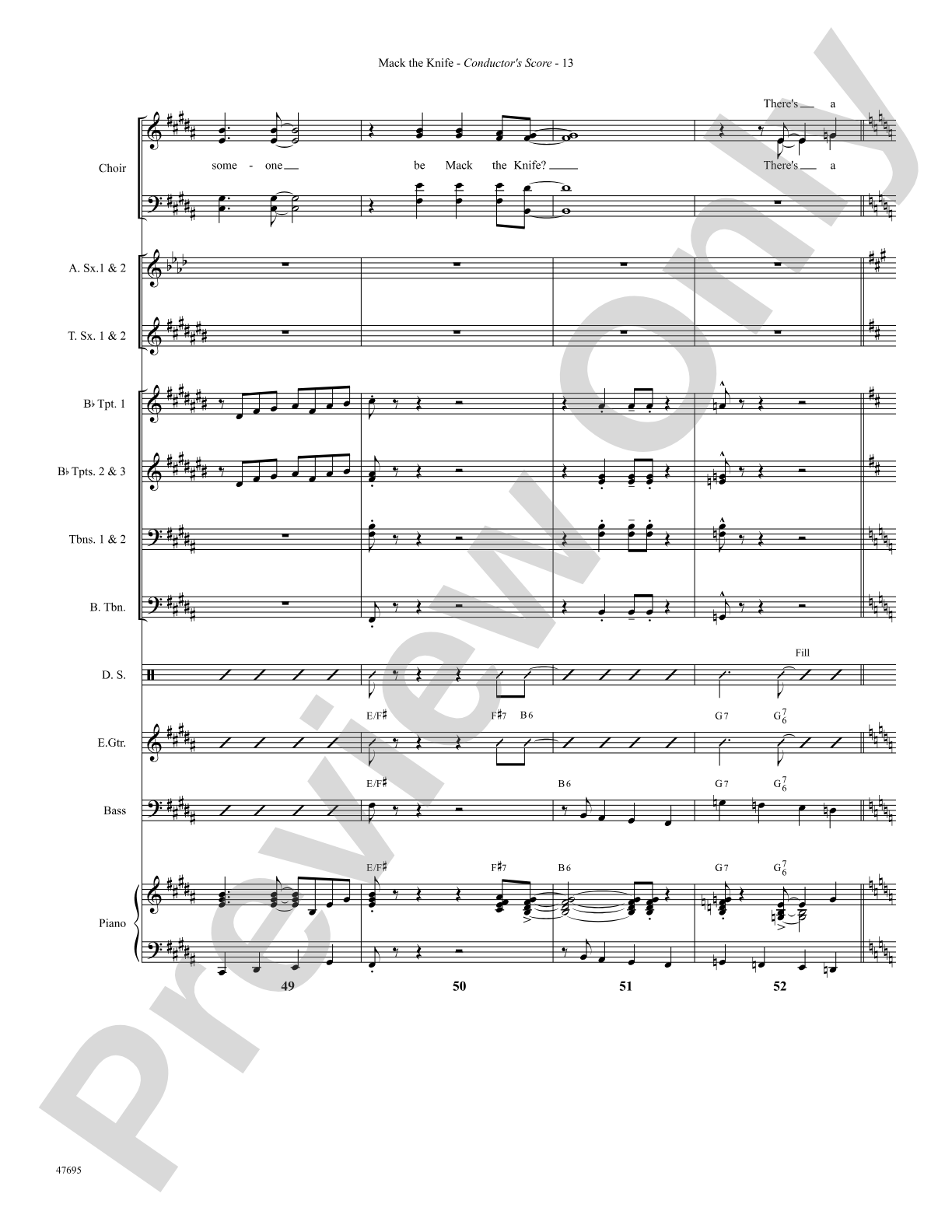
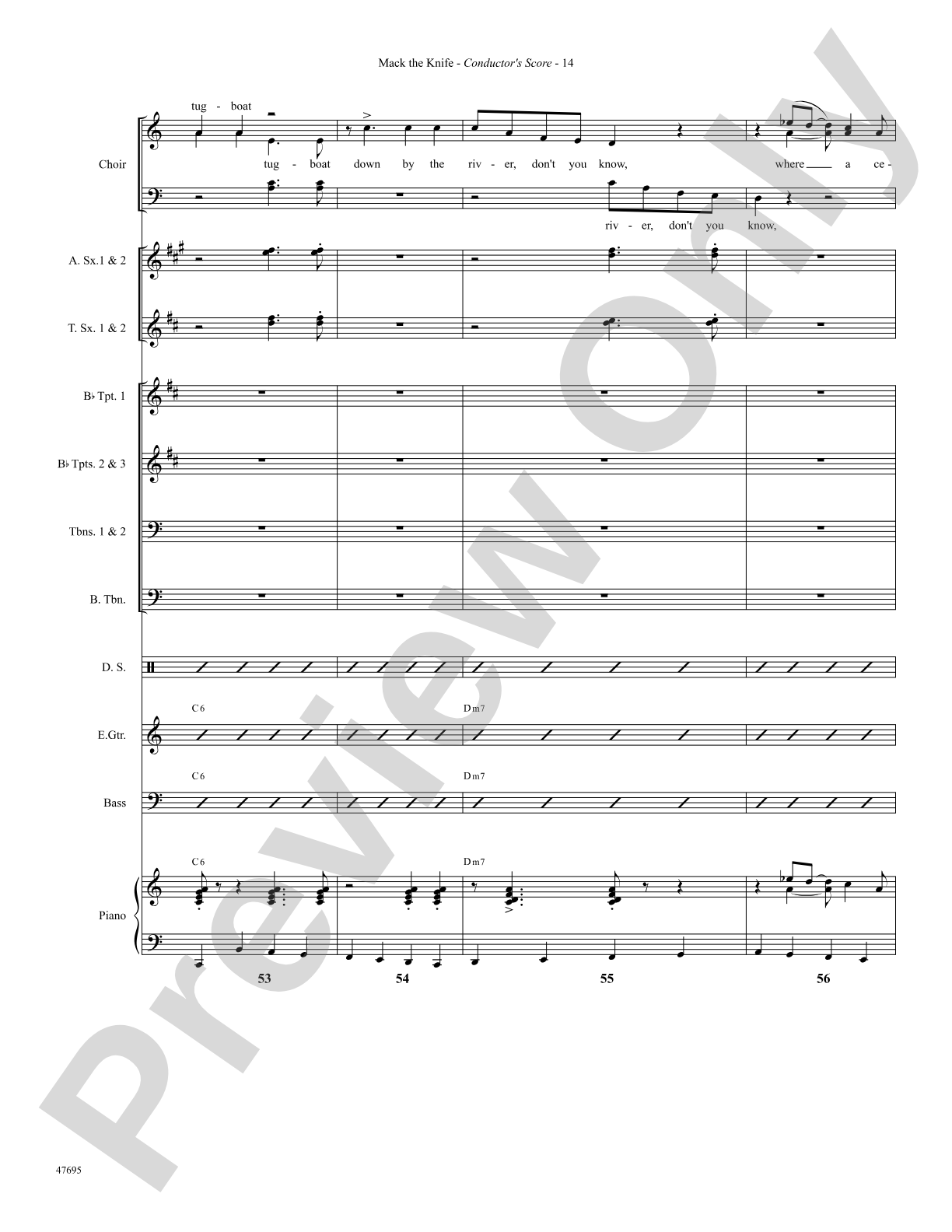
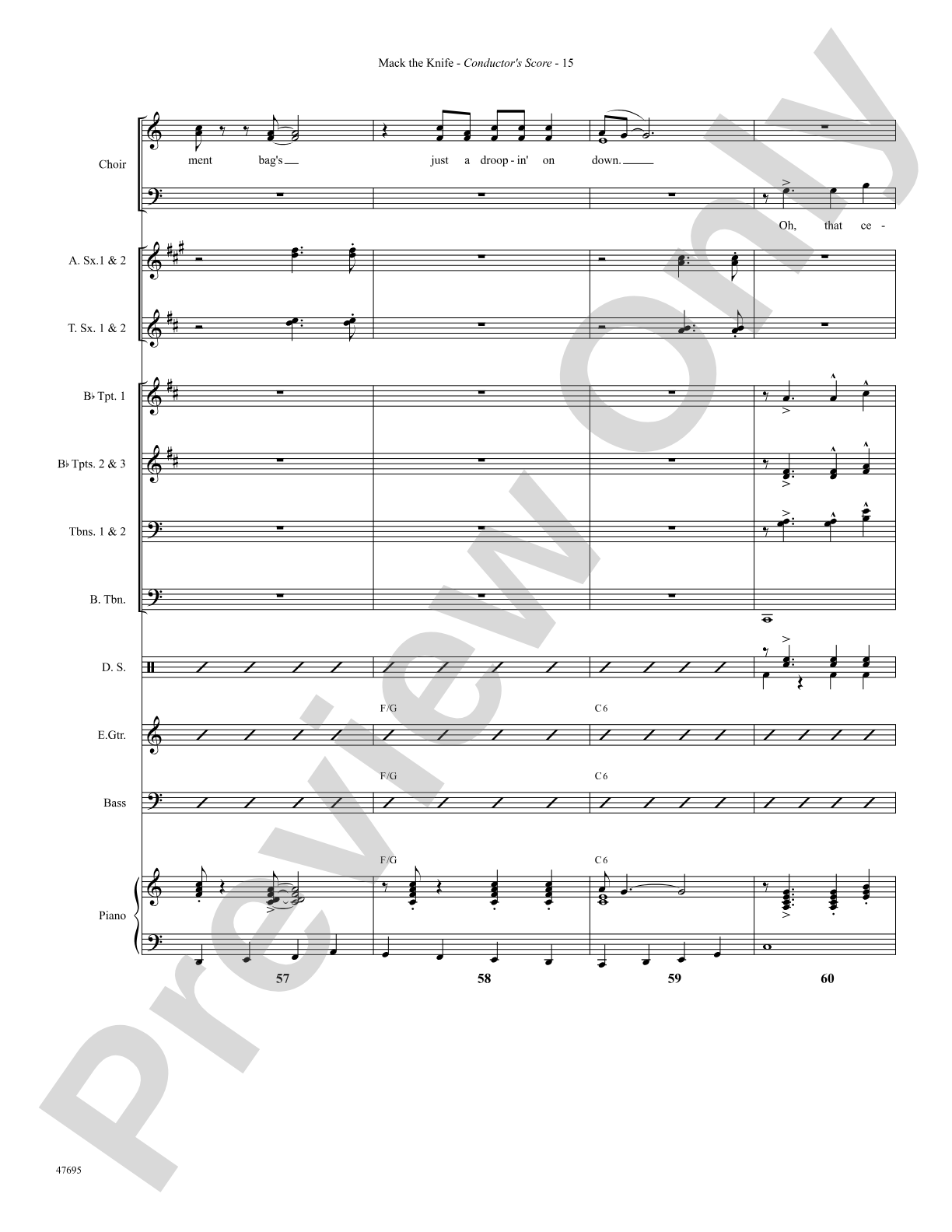
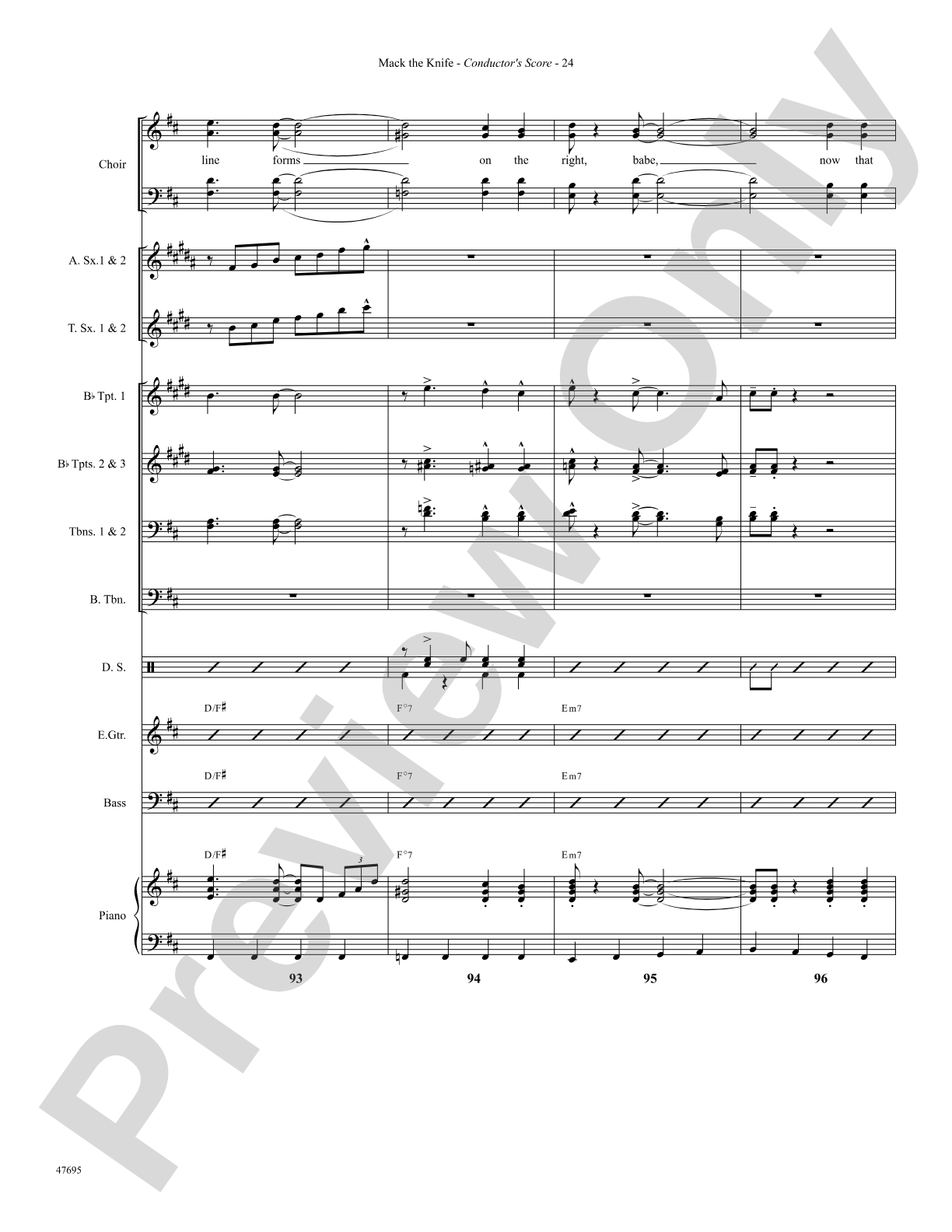
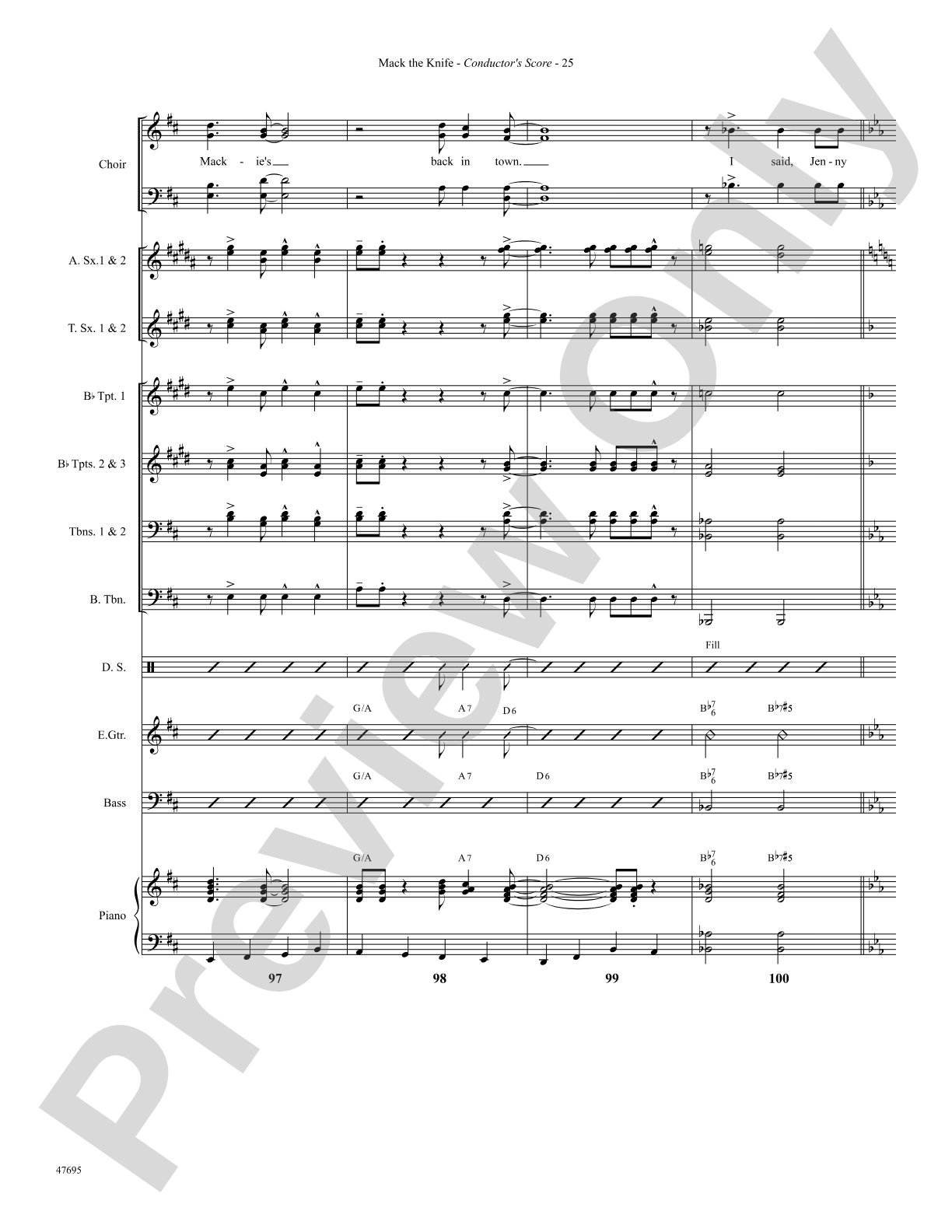
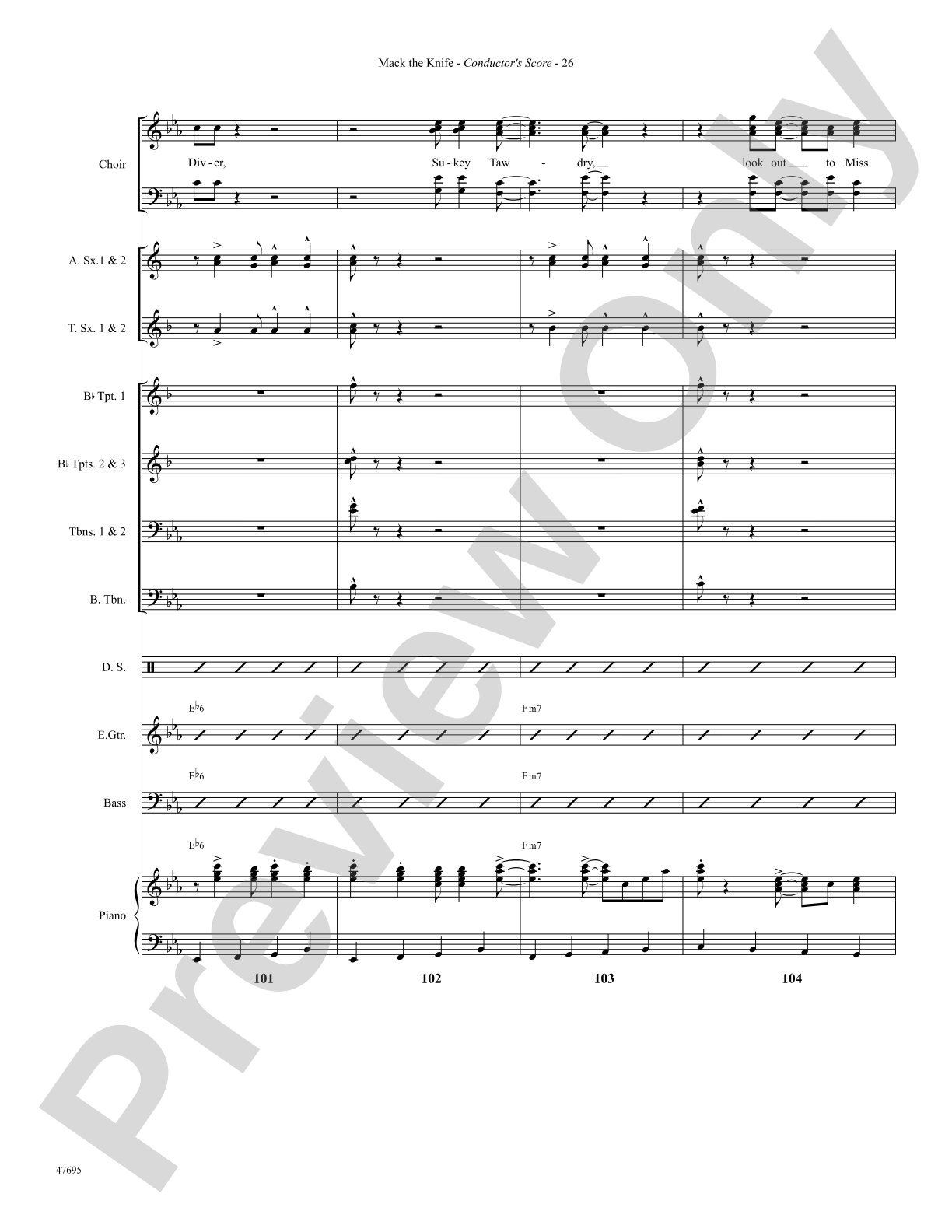
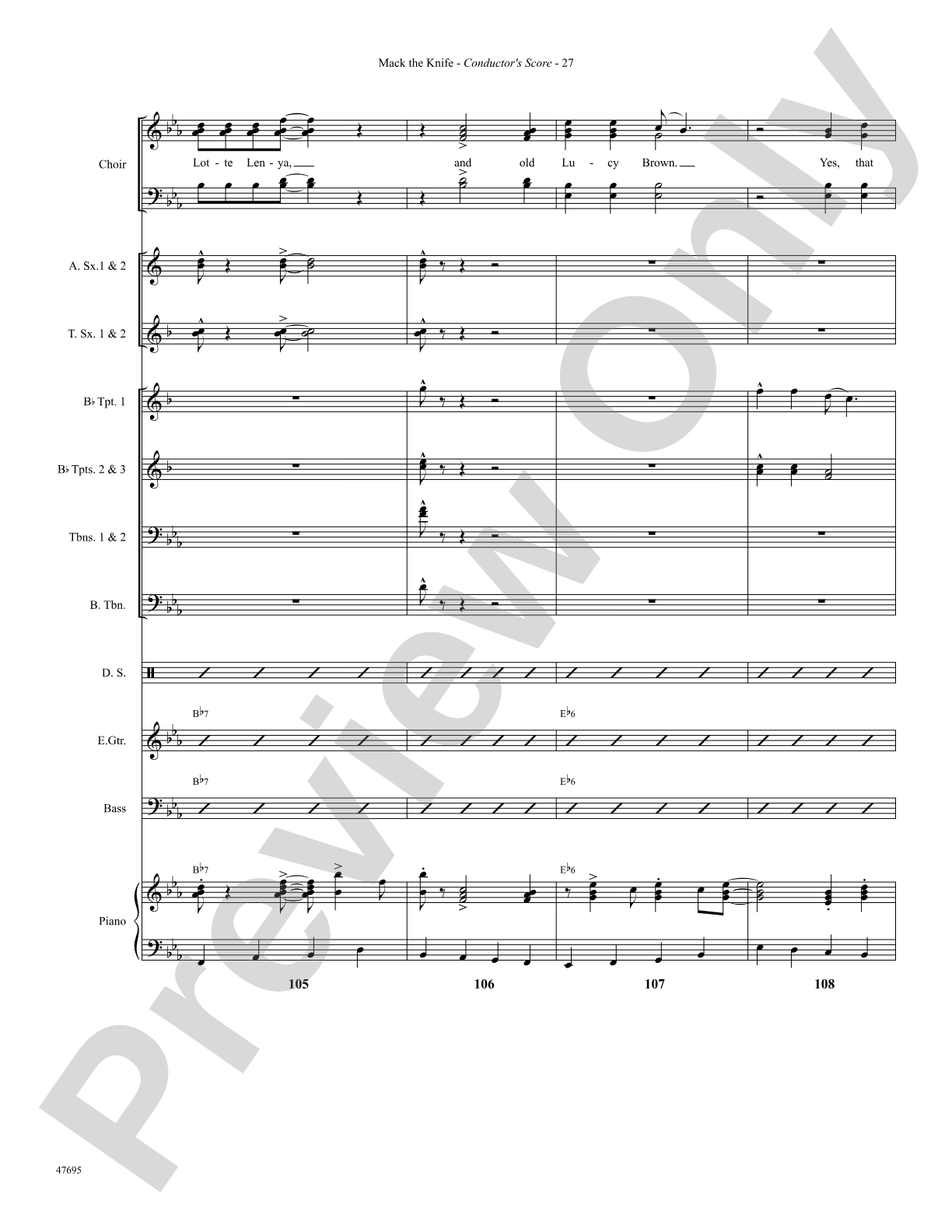

Mack the Knife: Choral SoundPax
from The Threepenny Opera
English Words by Marc Blitzstein, original German words by Bert Brecht, music by Kurt Weill / arr. Mark Hayes
Item: 00-PK-0008606
$35.00
One moment…
Related Items
Mack the Knife: Choral SoundPax |
$35.00
|
View |
Description
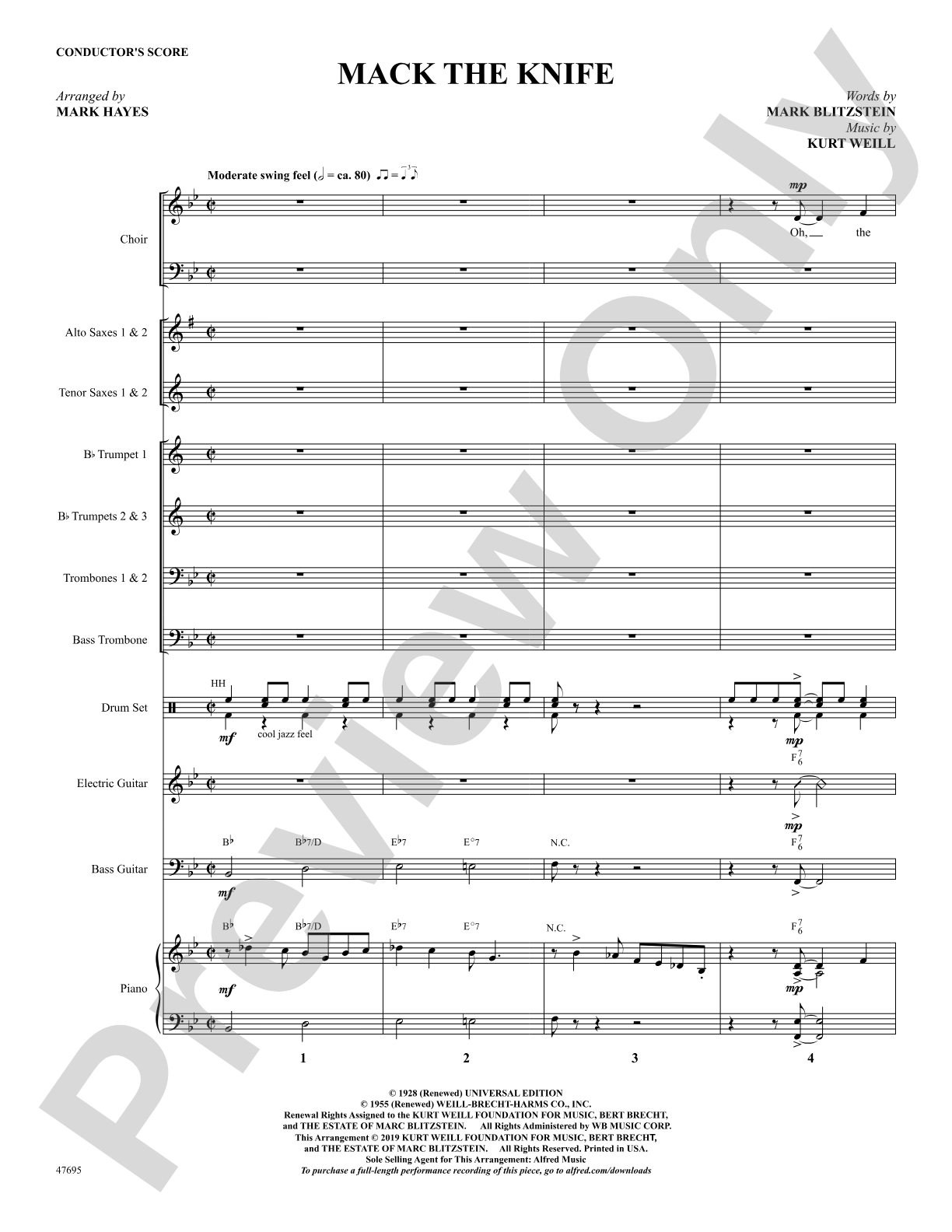
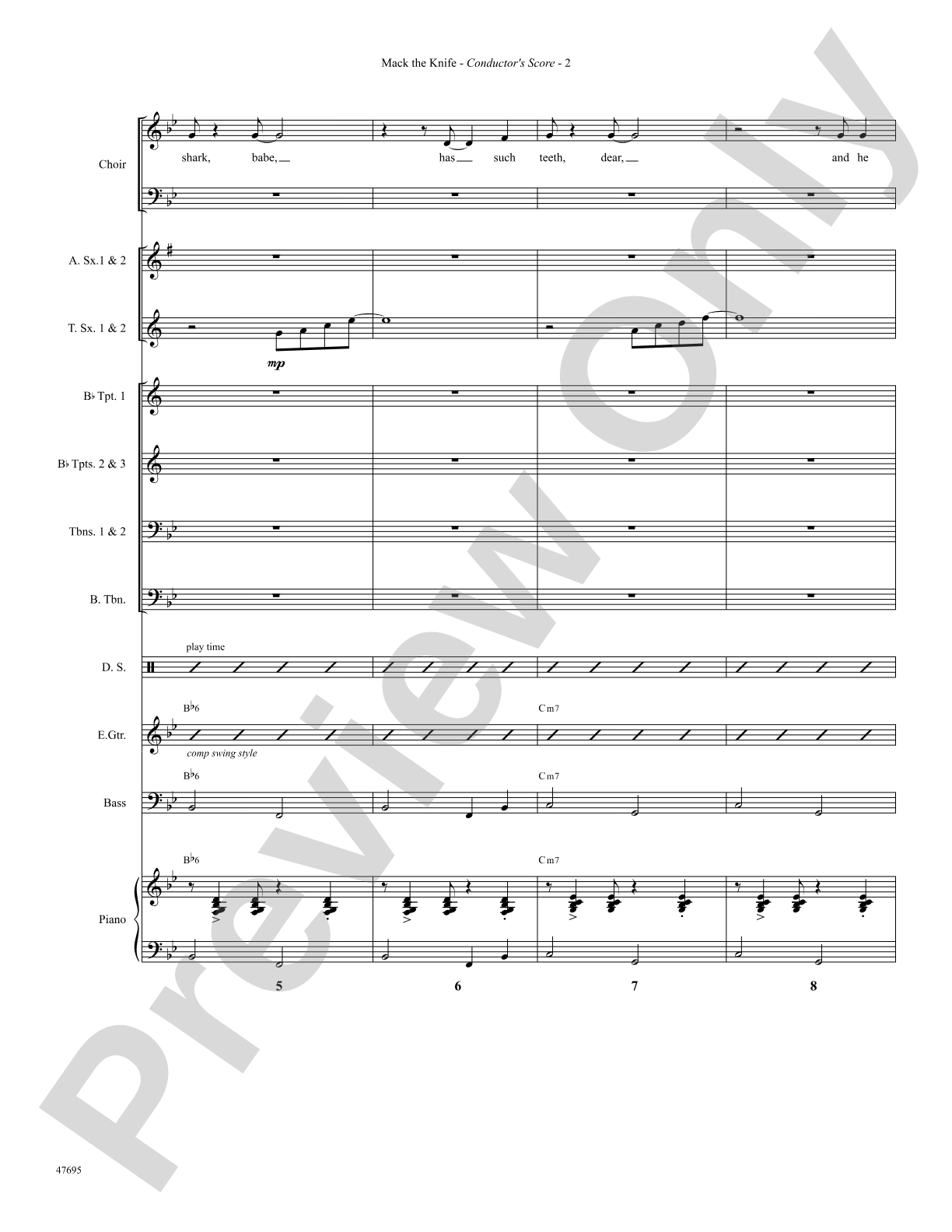
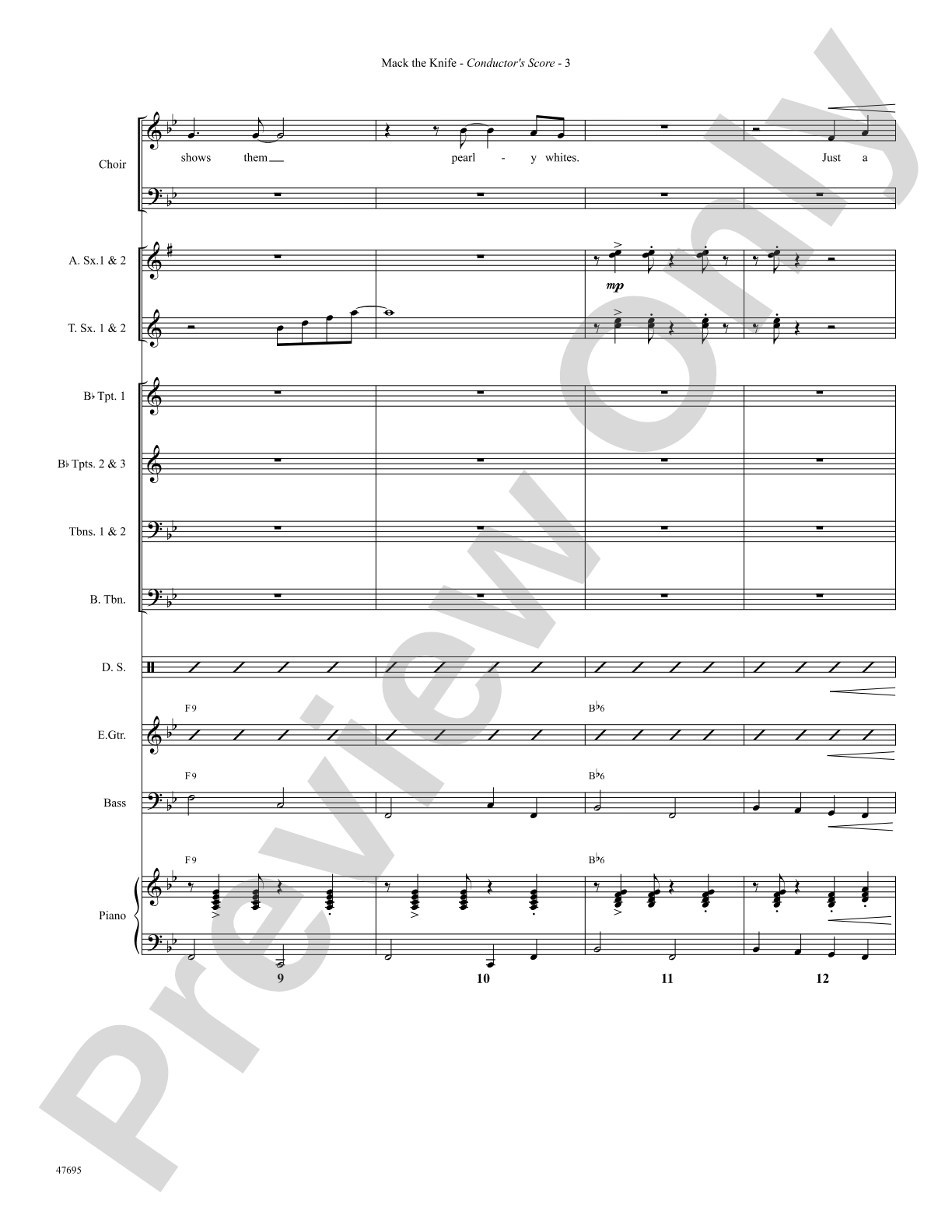
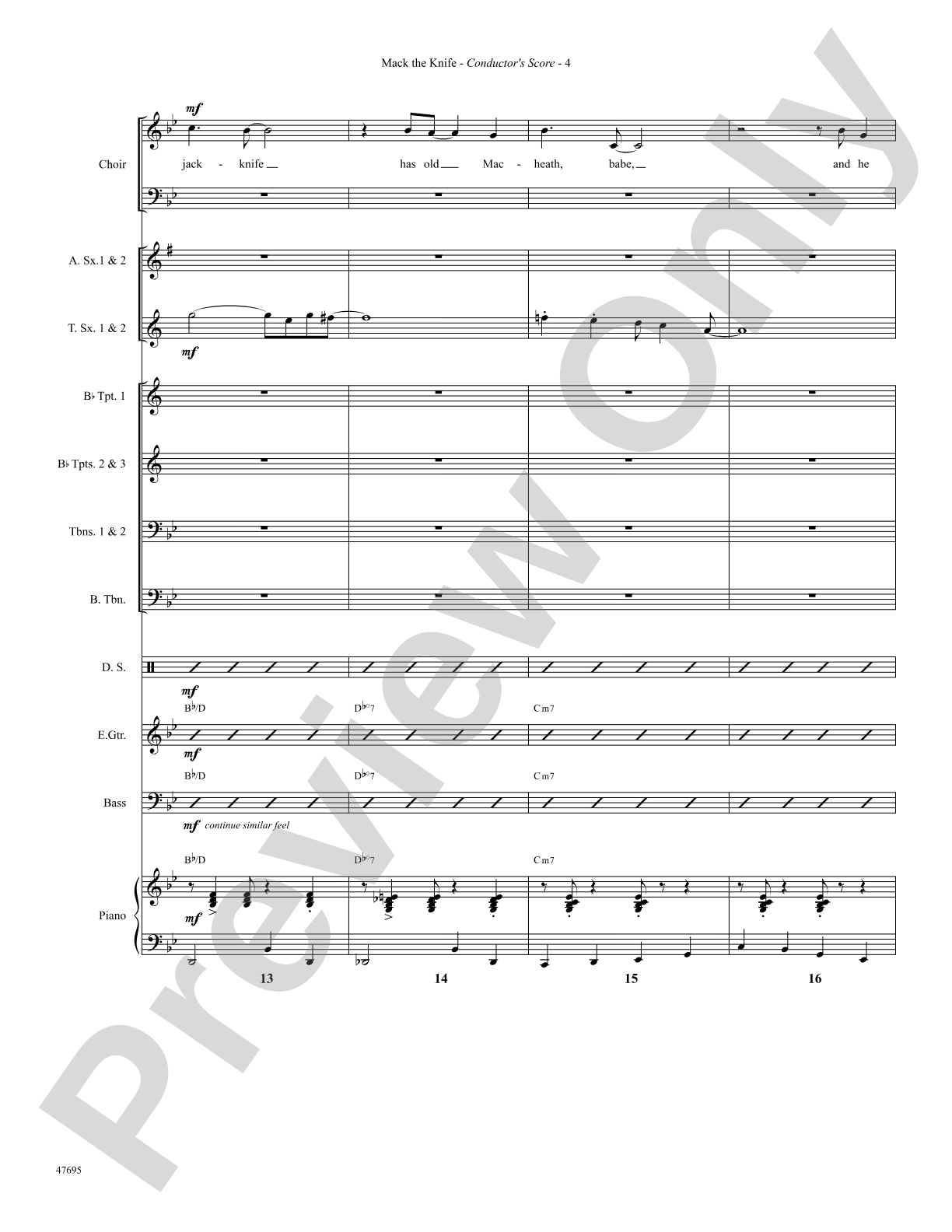
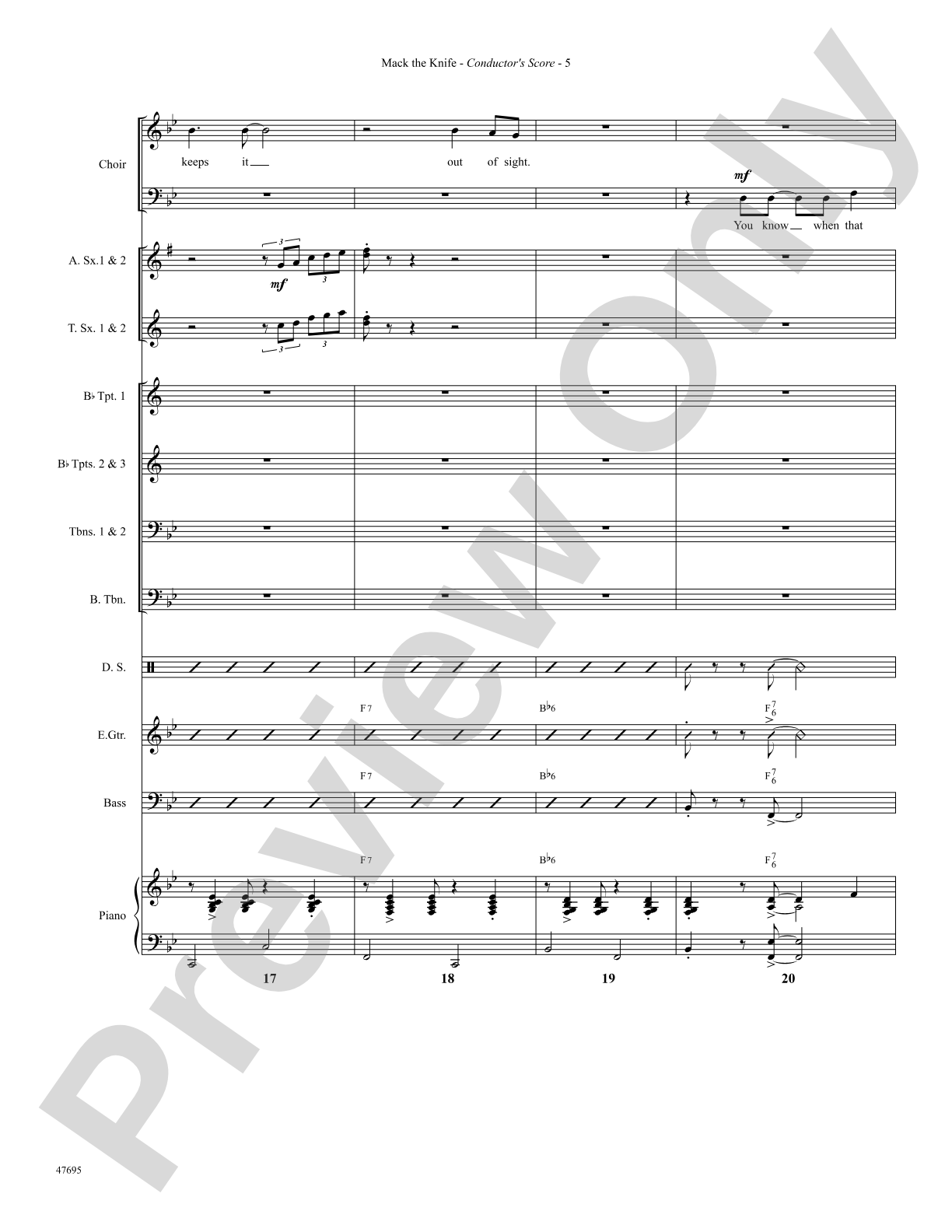
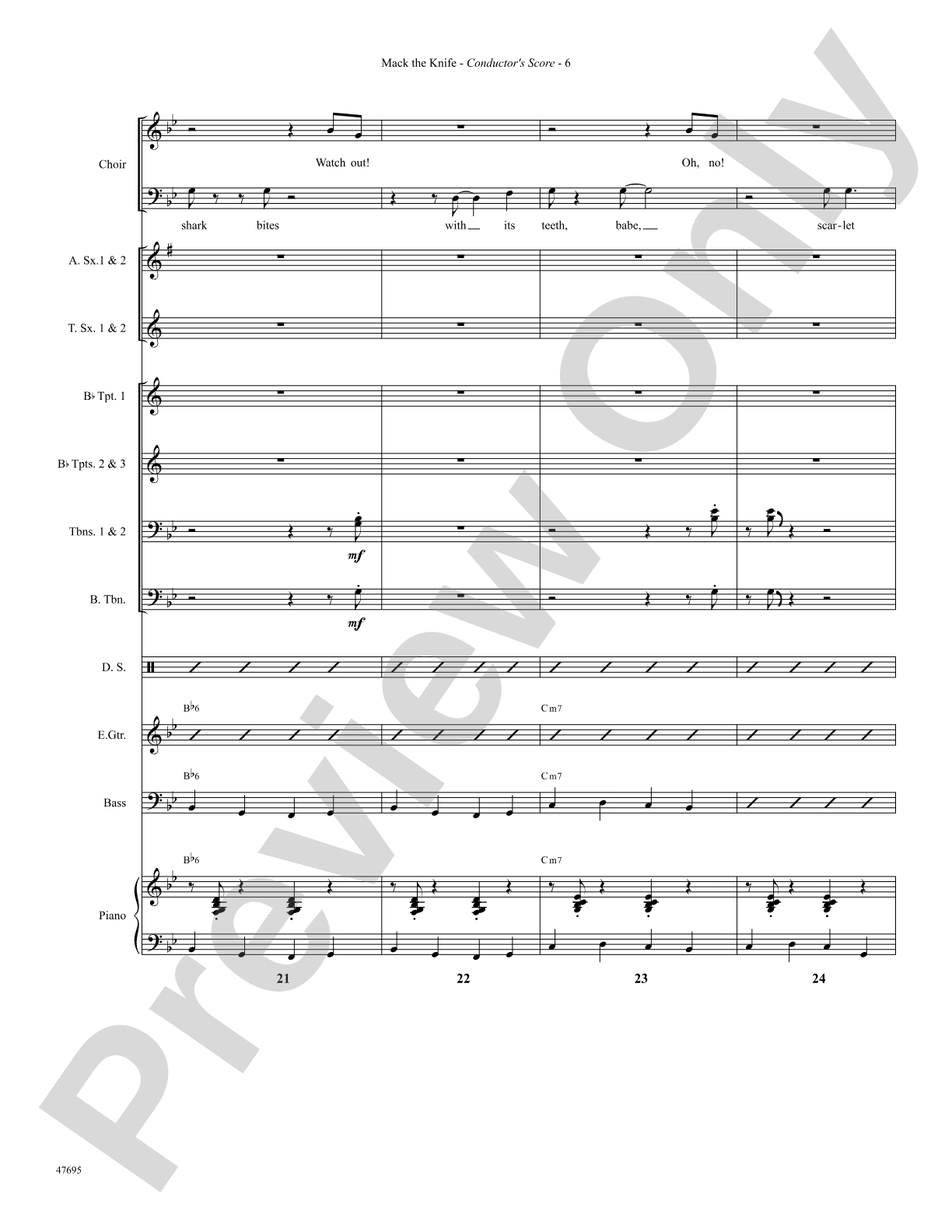
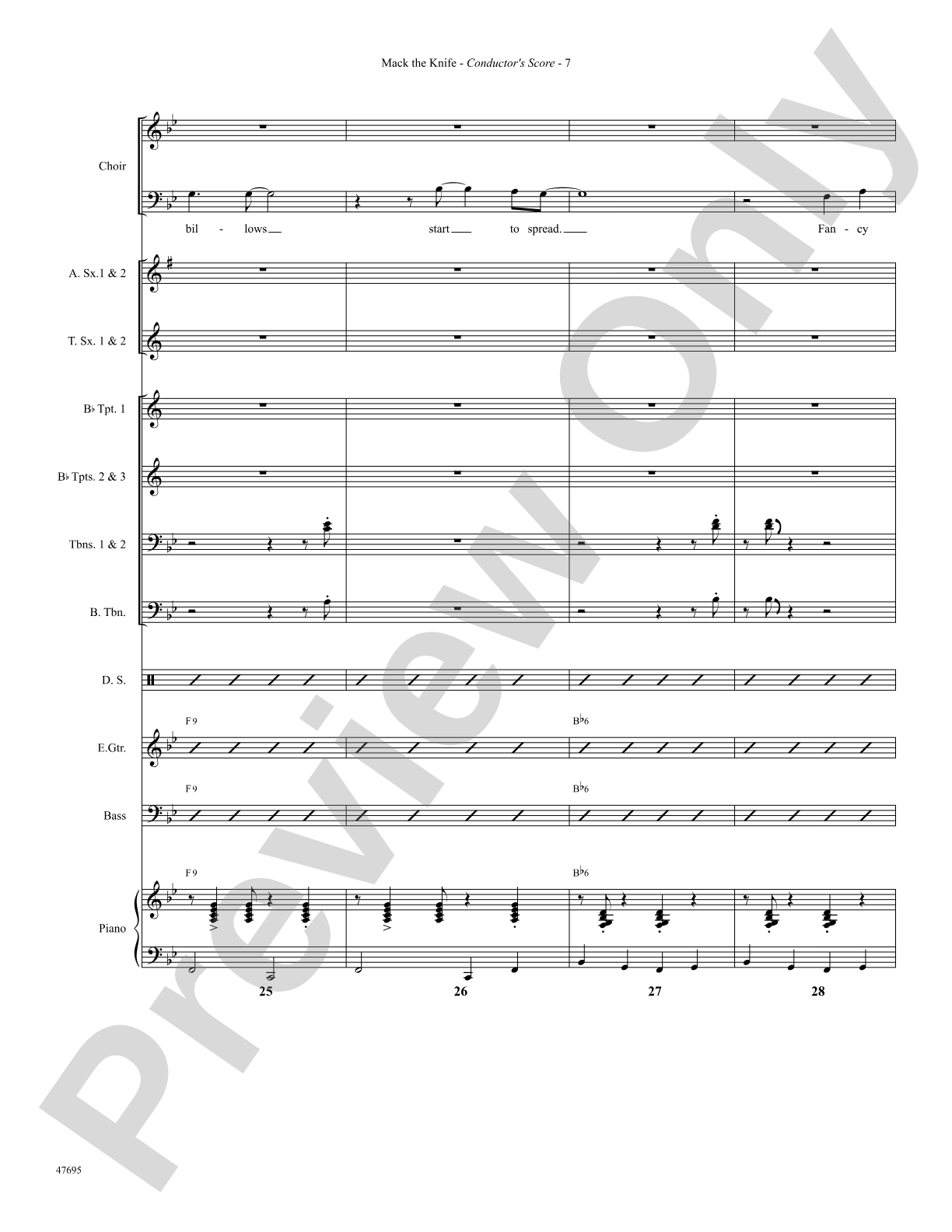
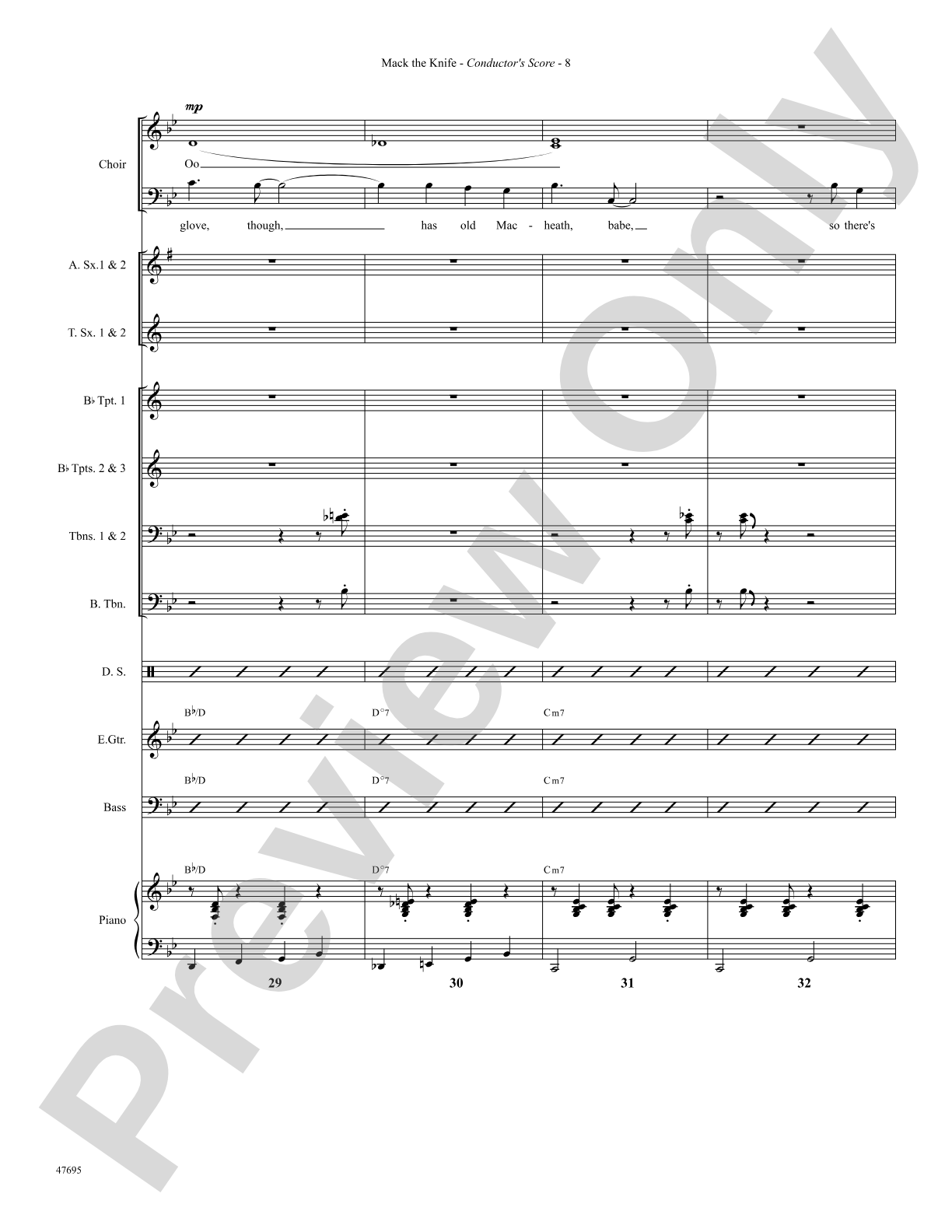
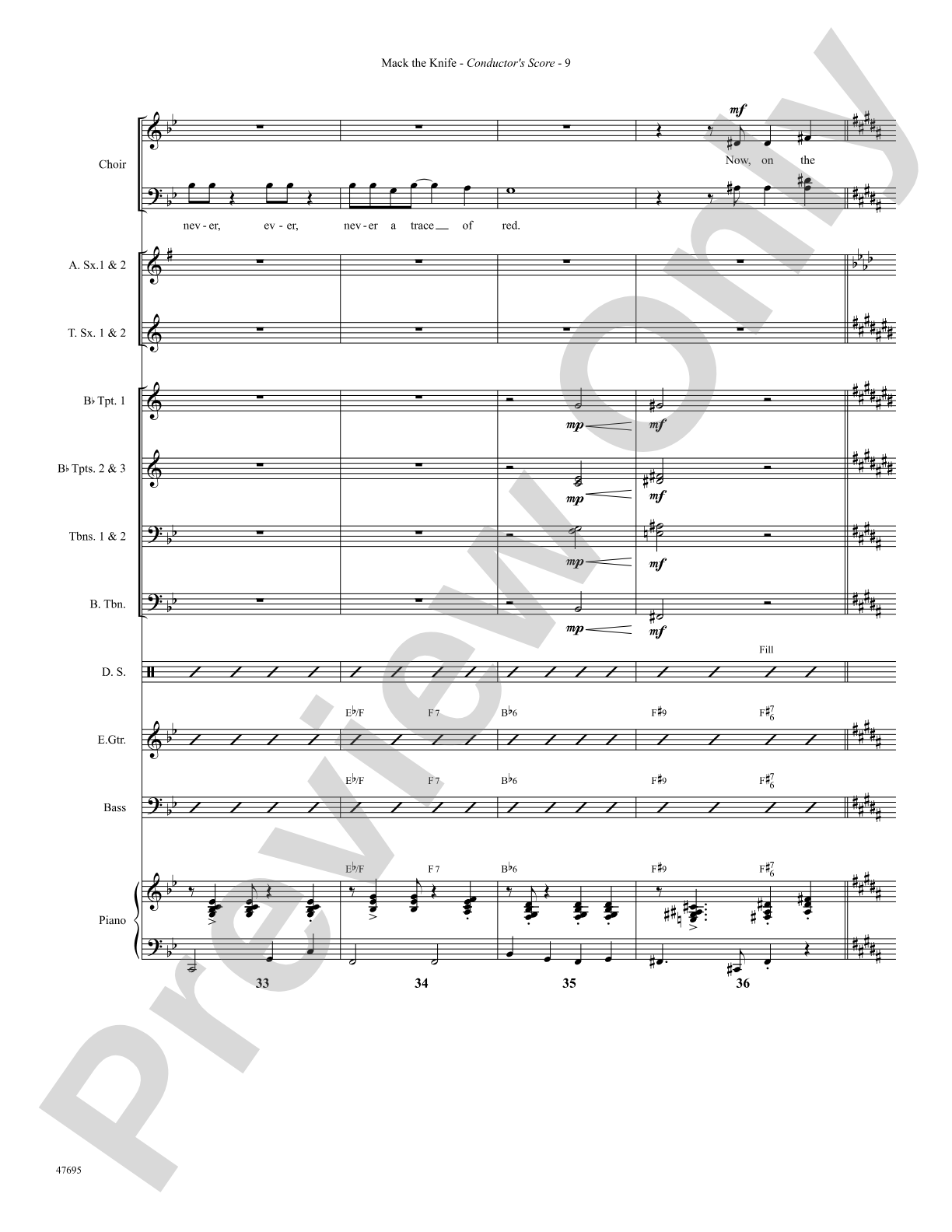
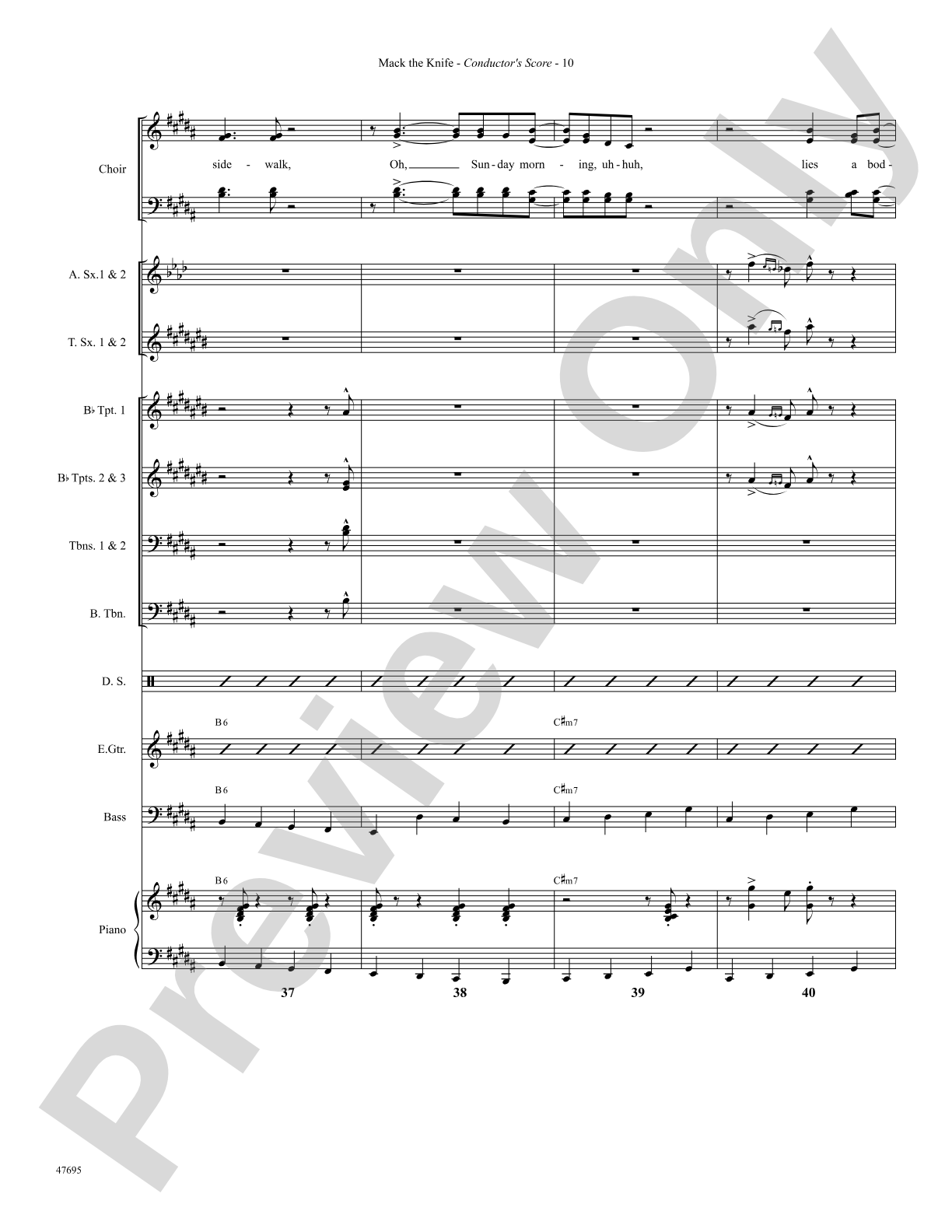
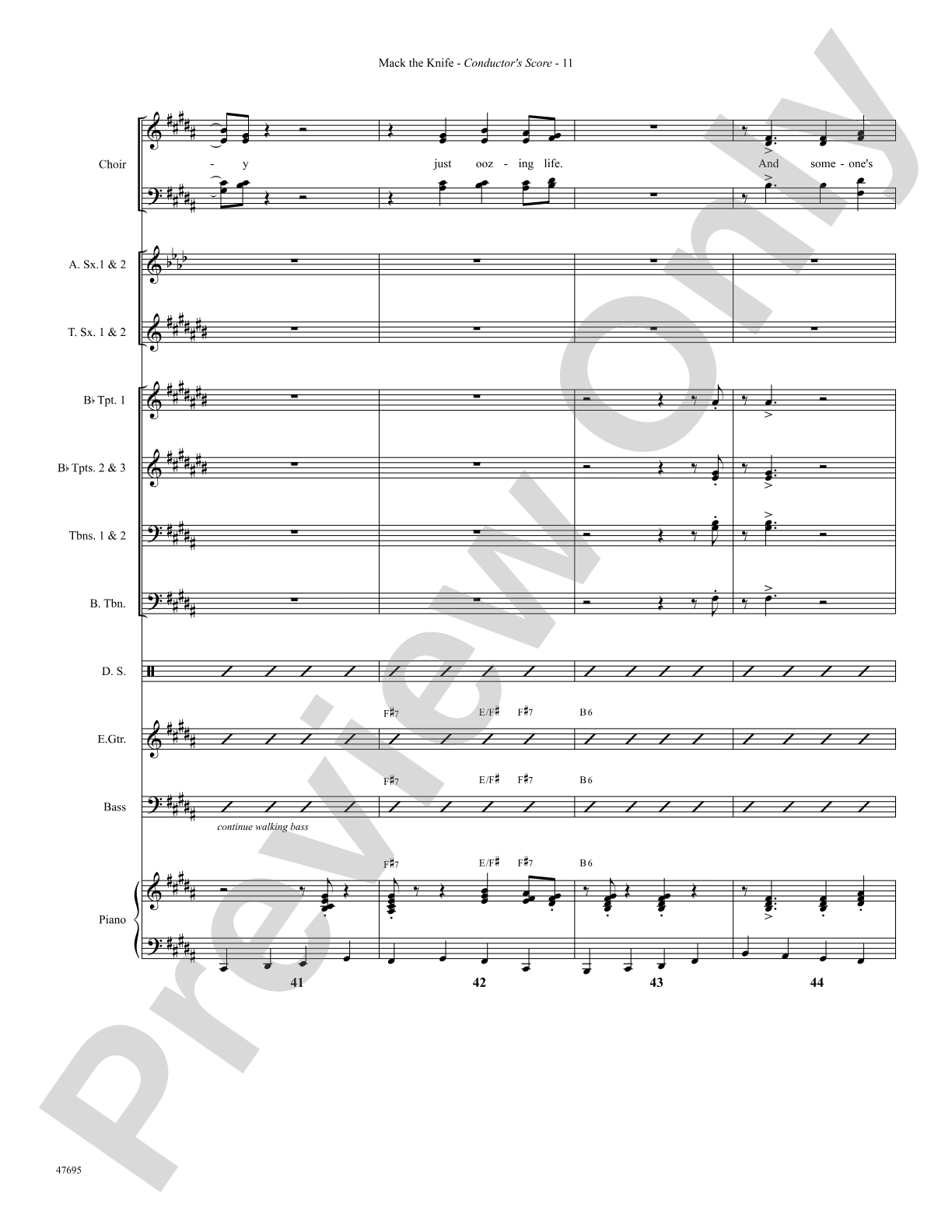
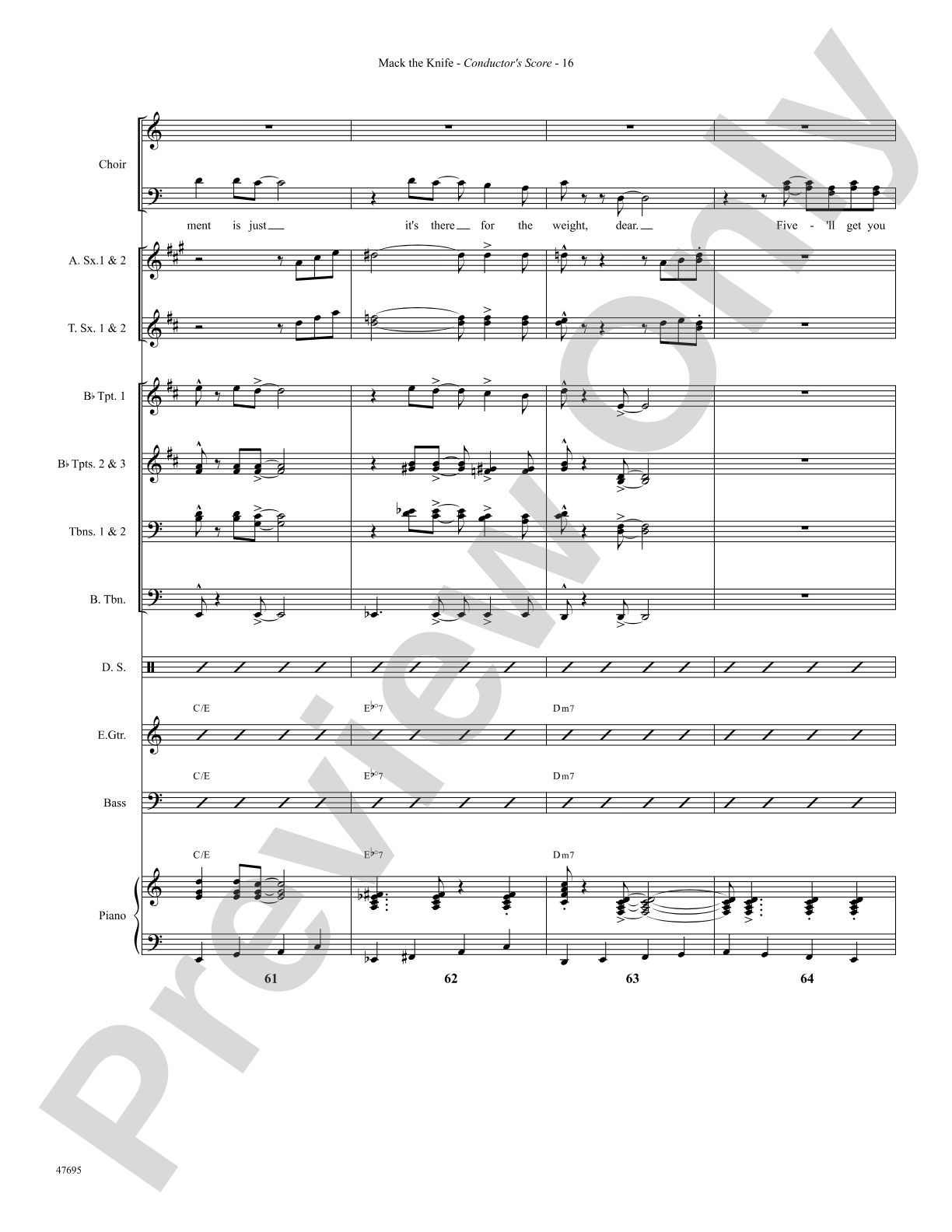
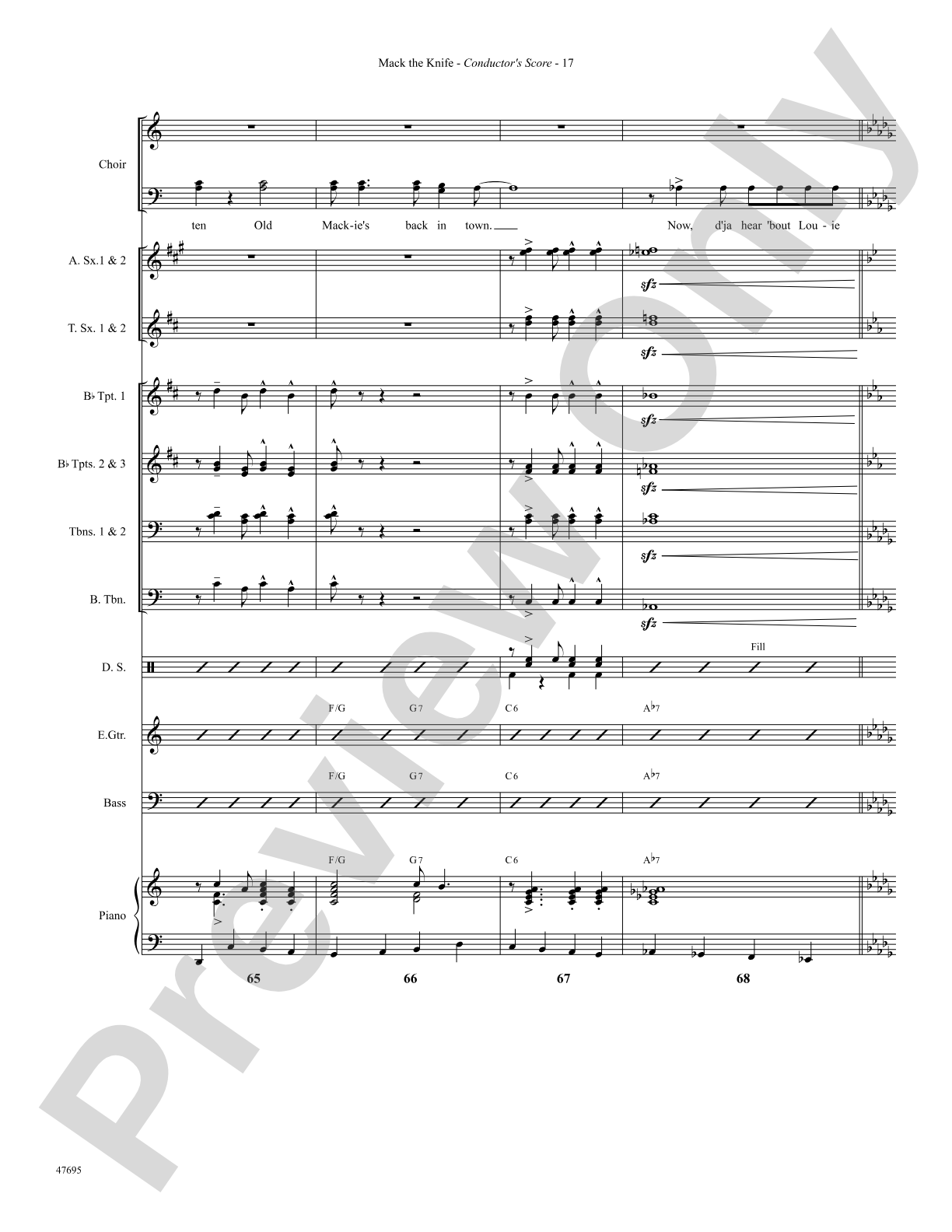
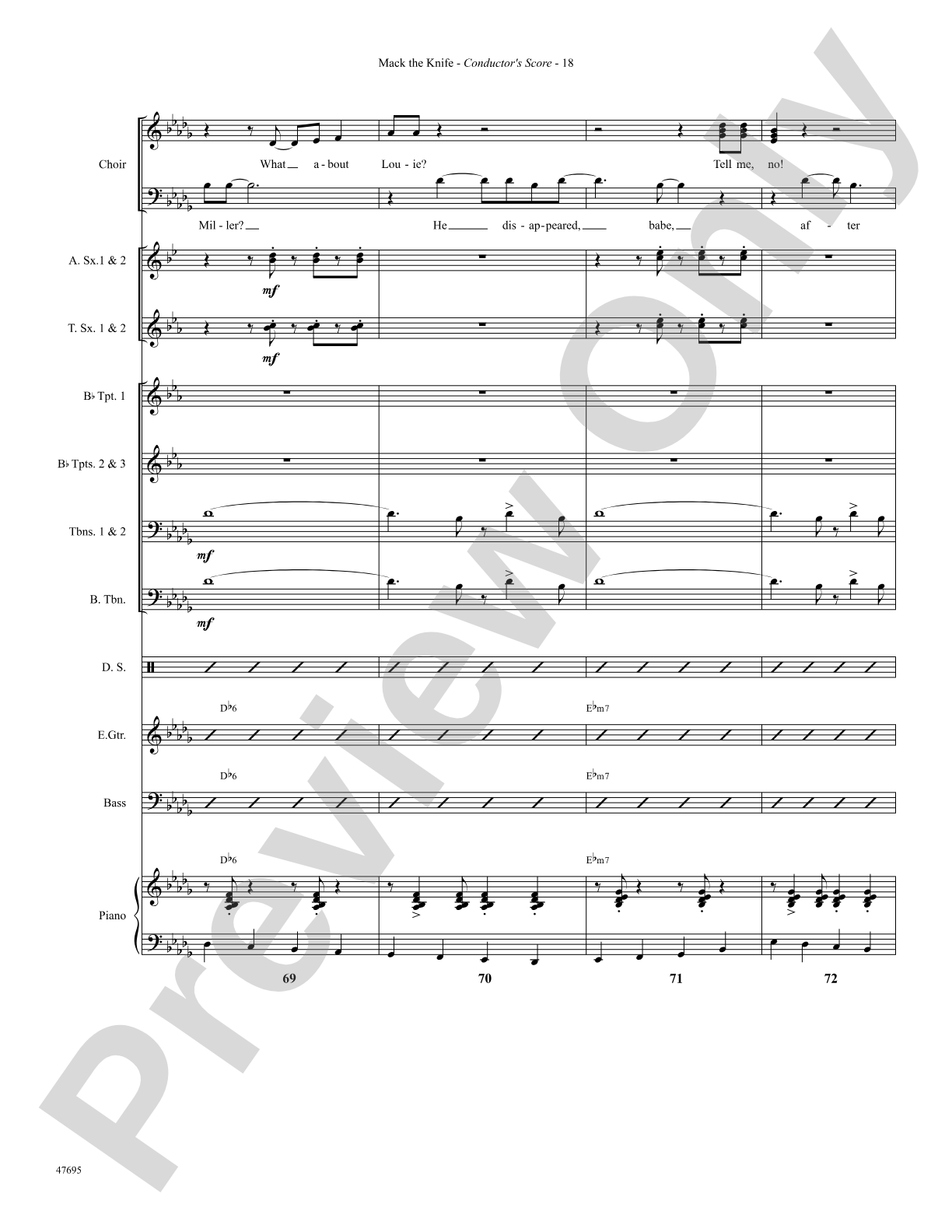
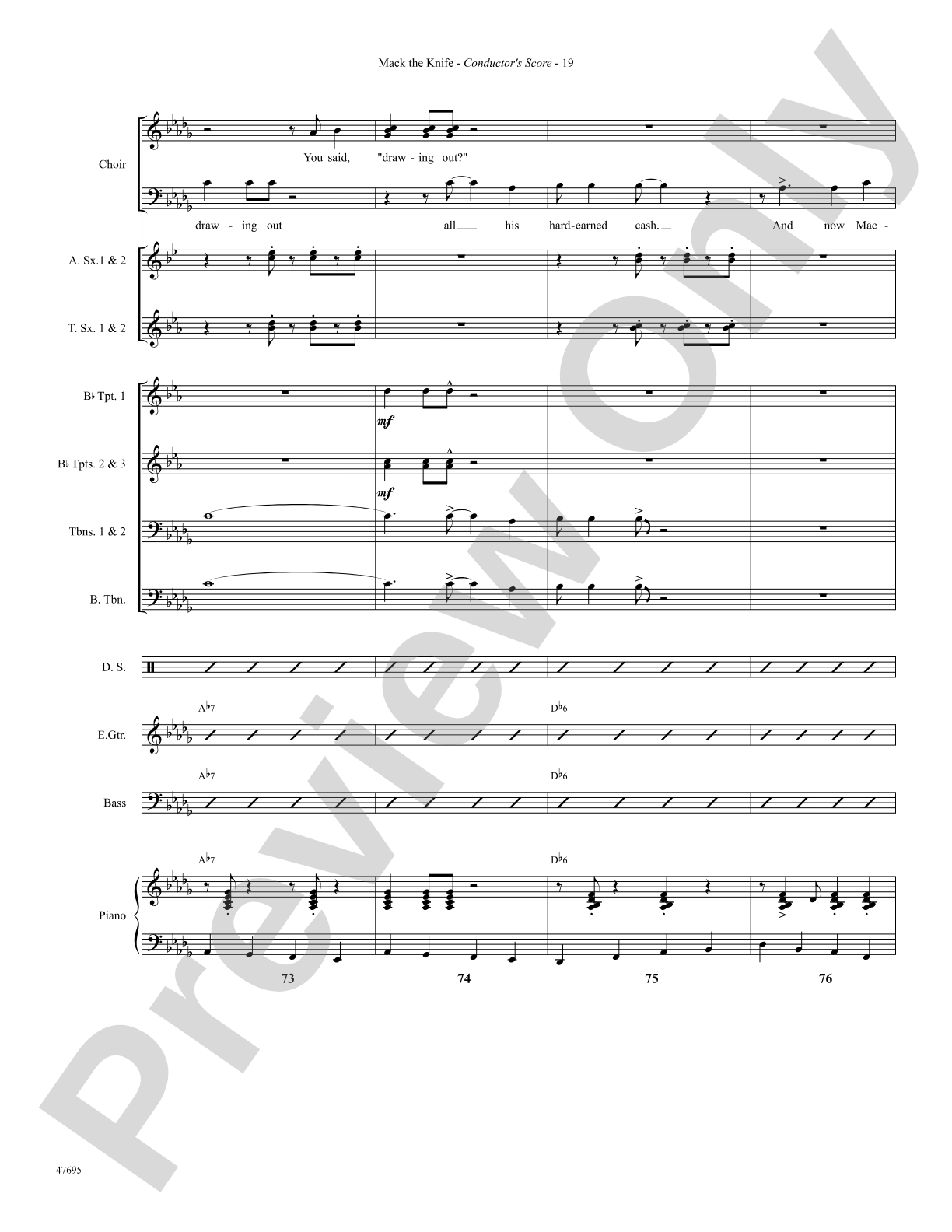
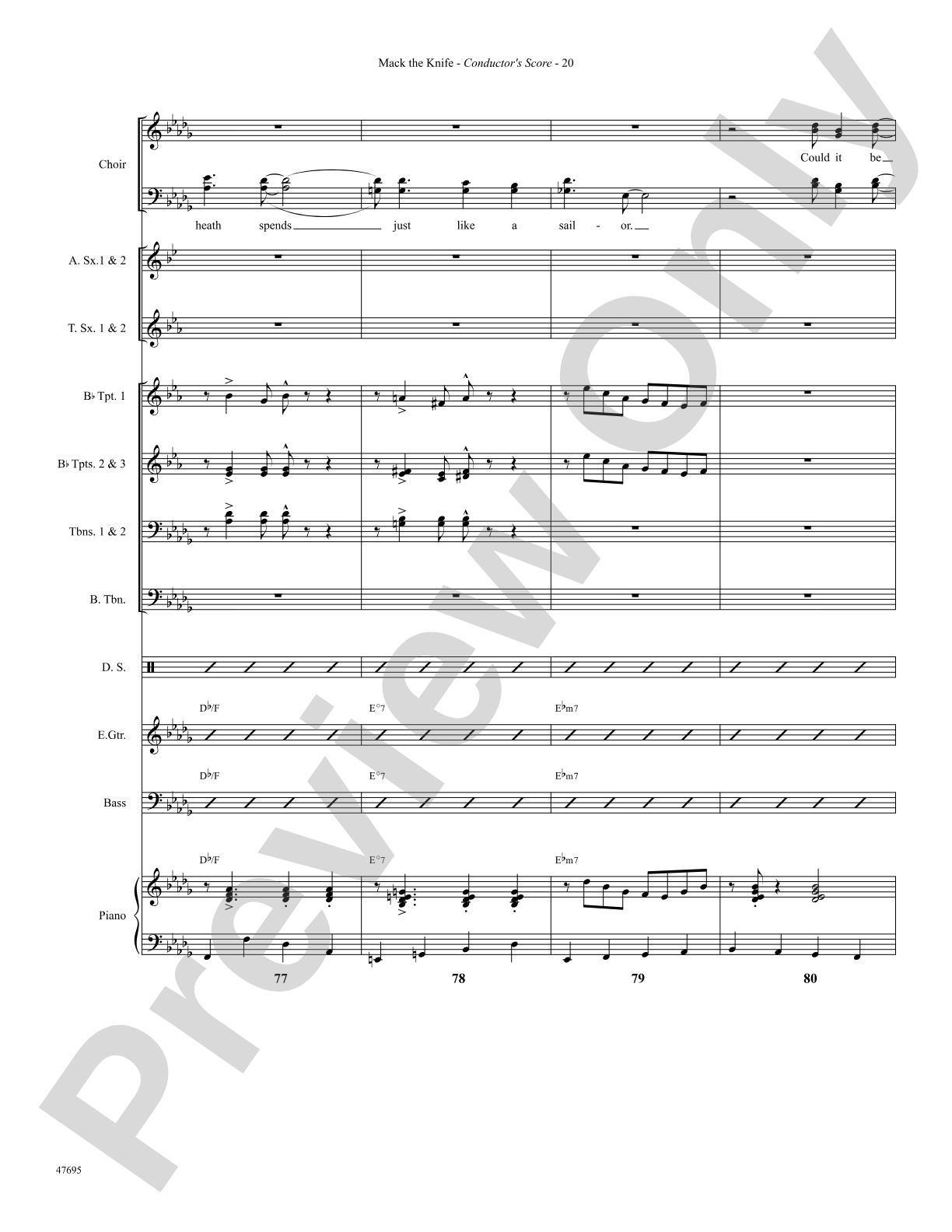
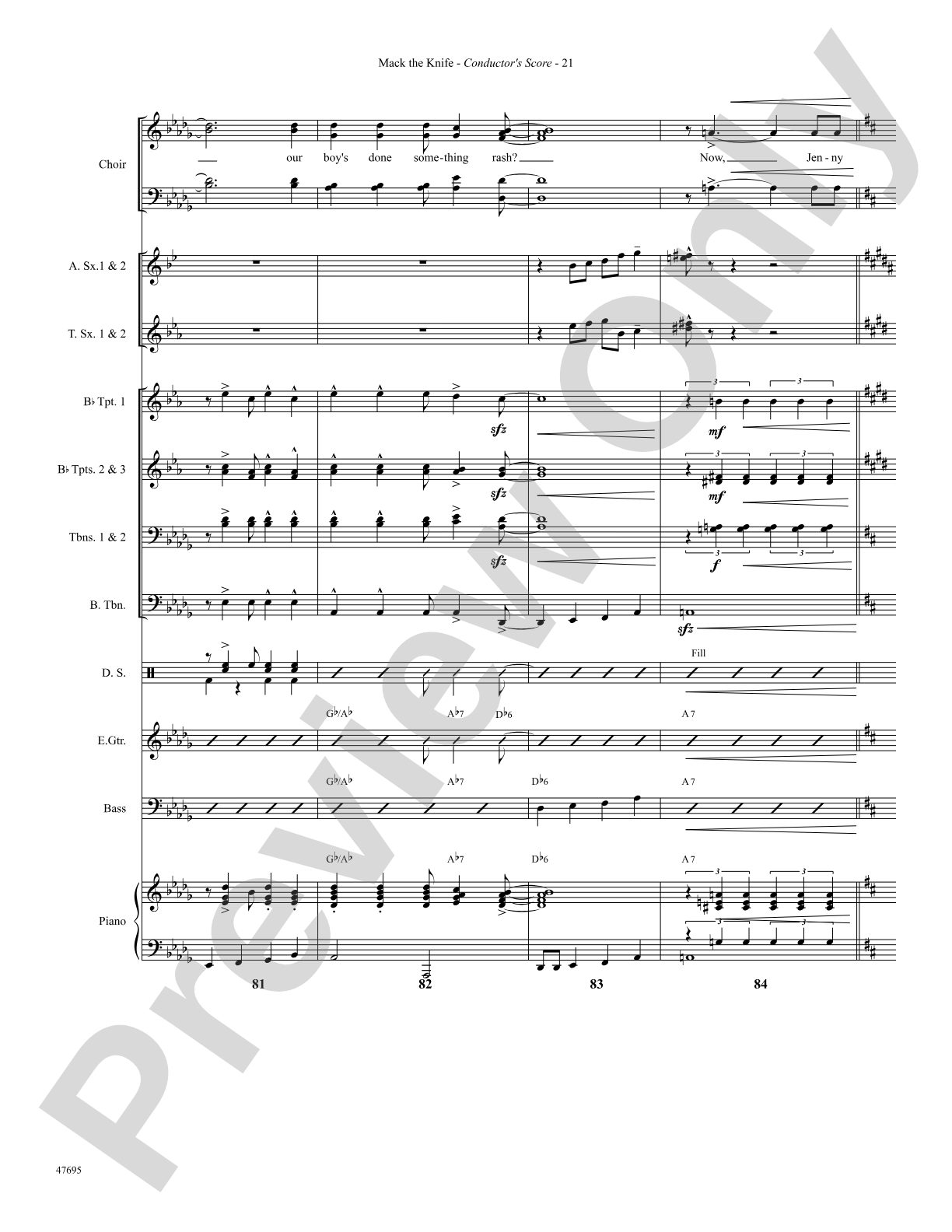
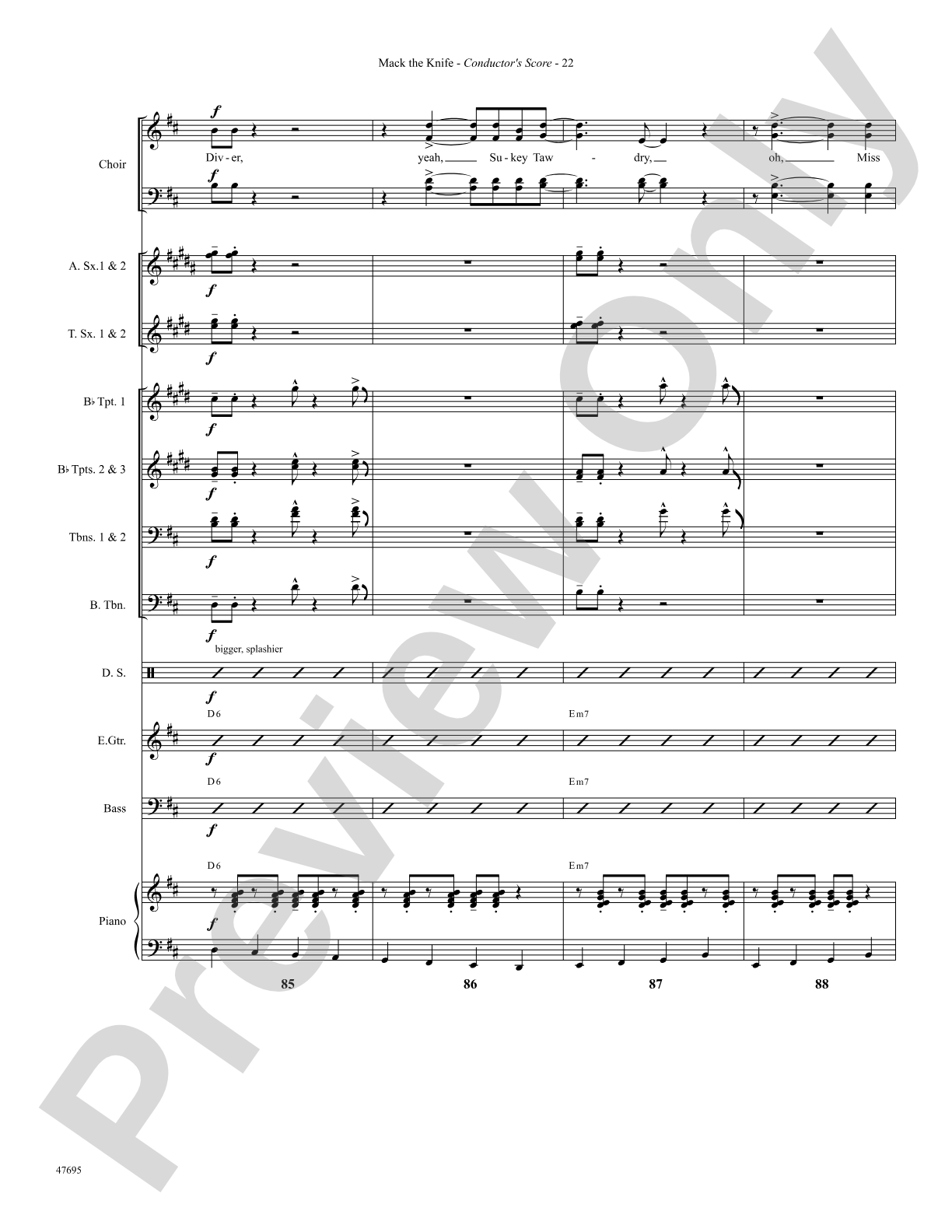
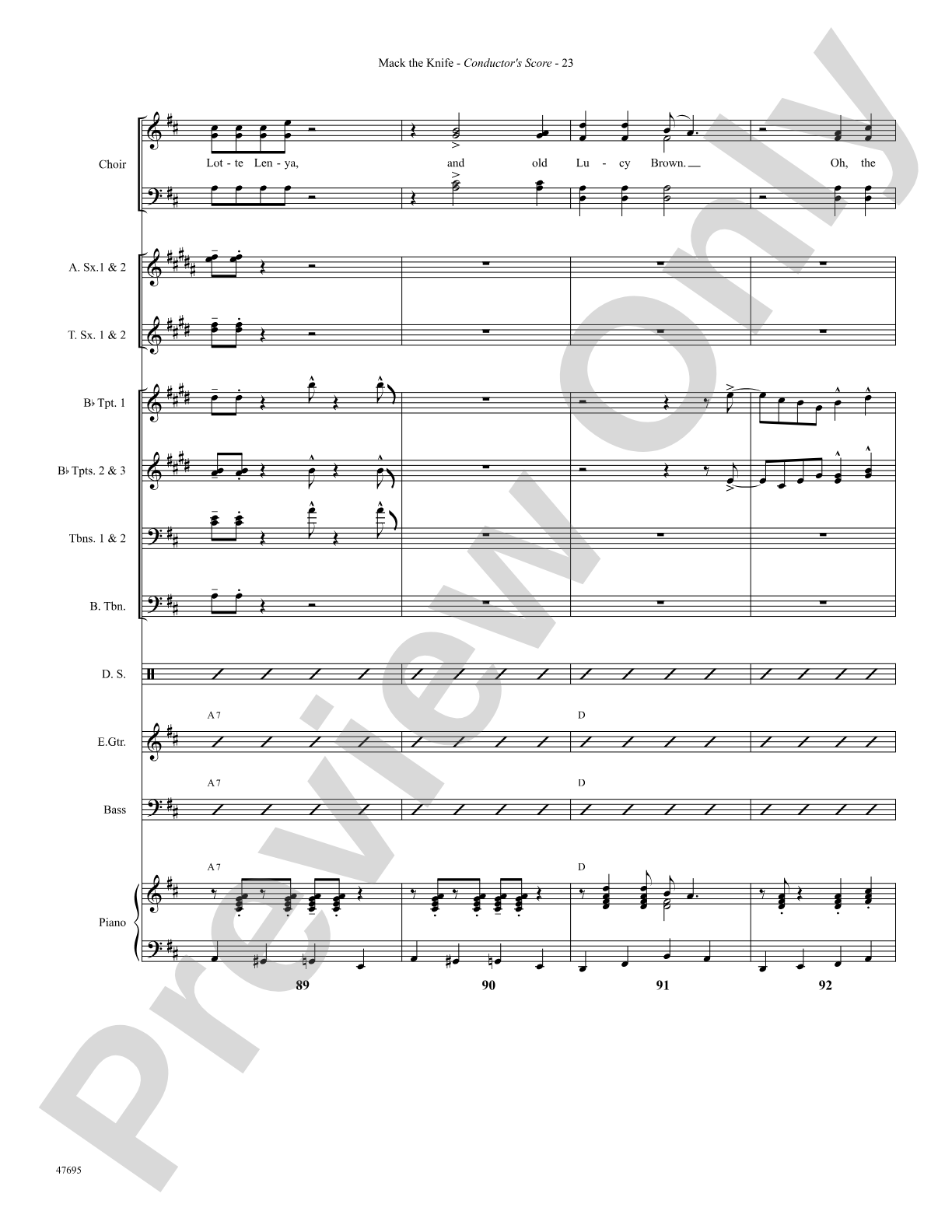
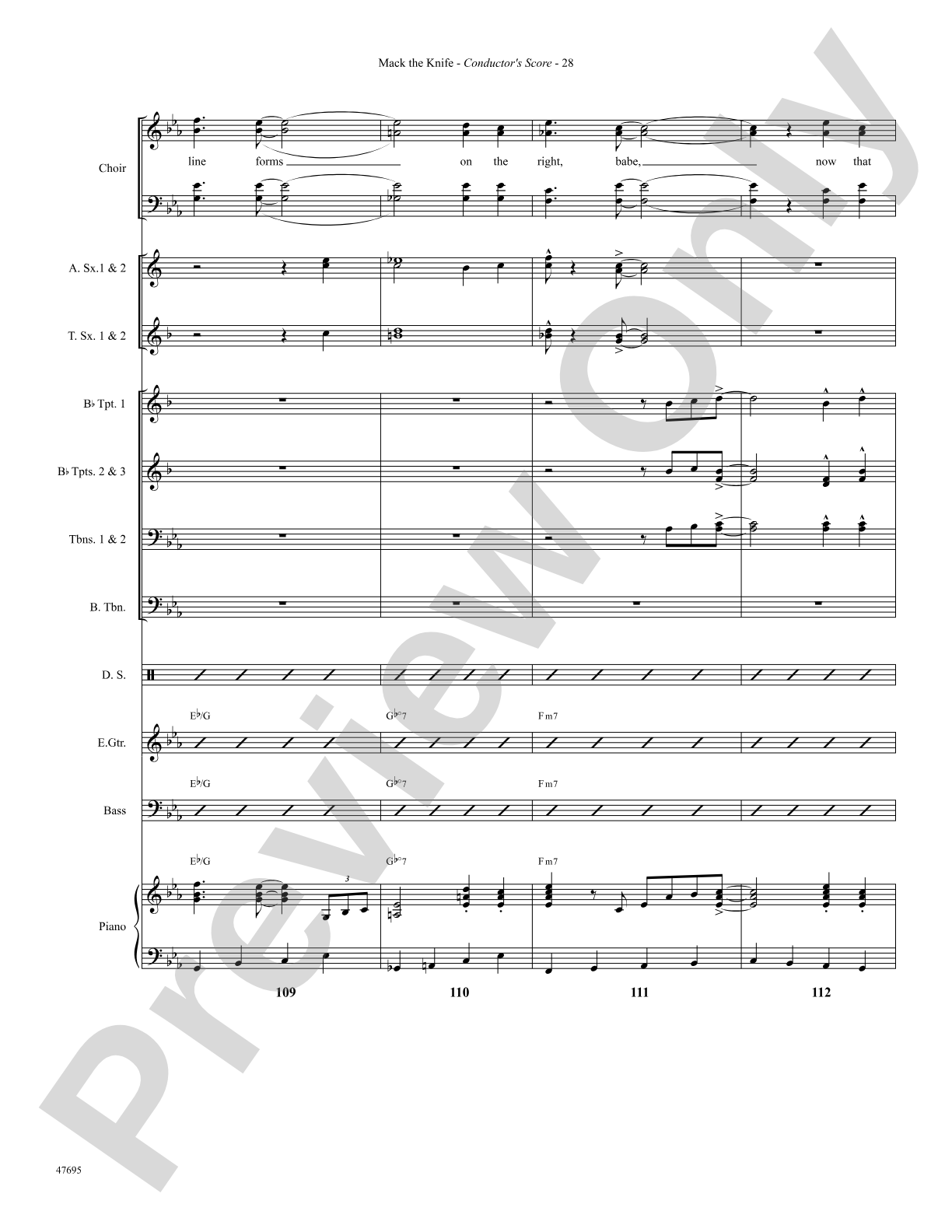
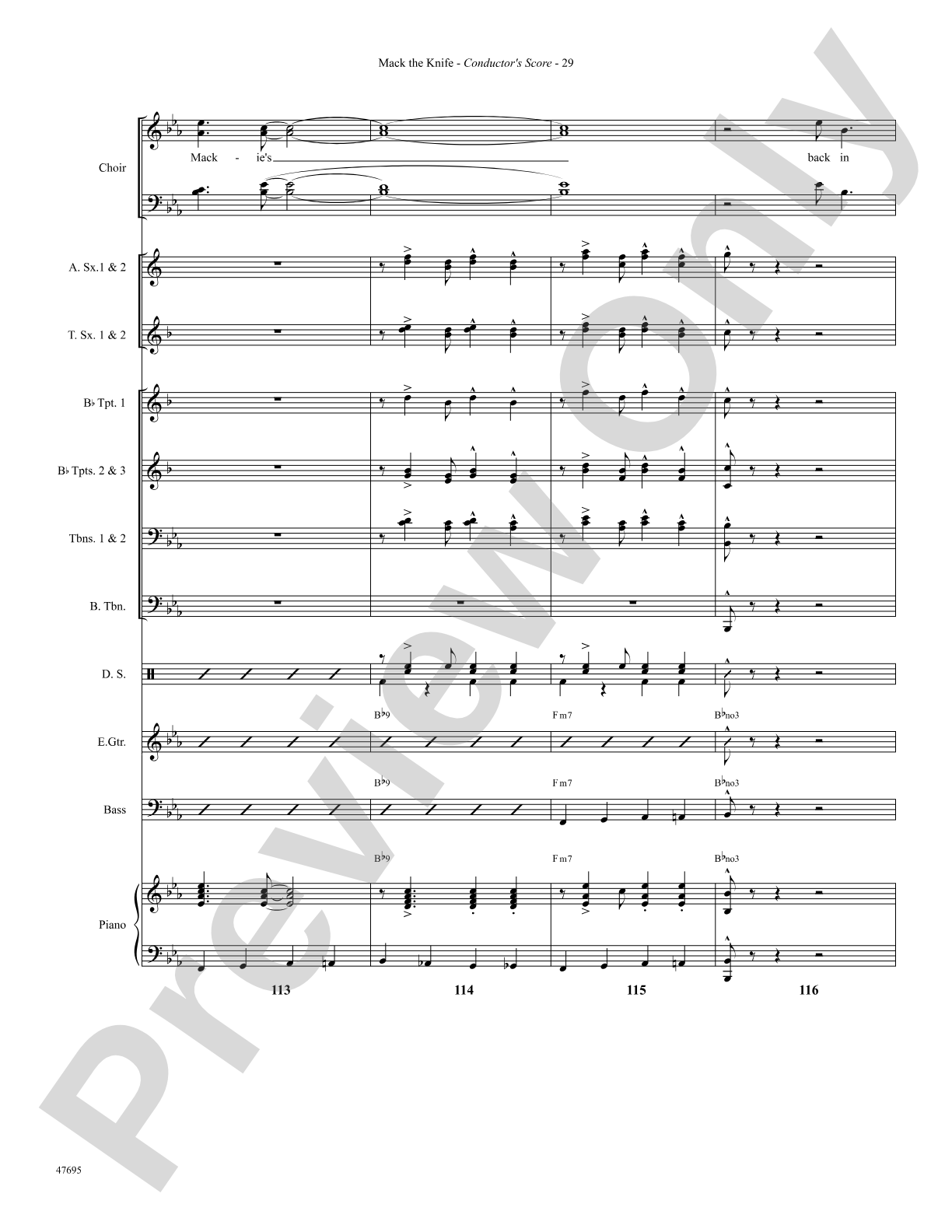
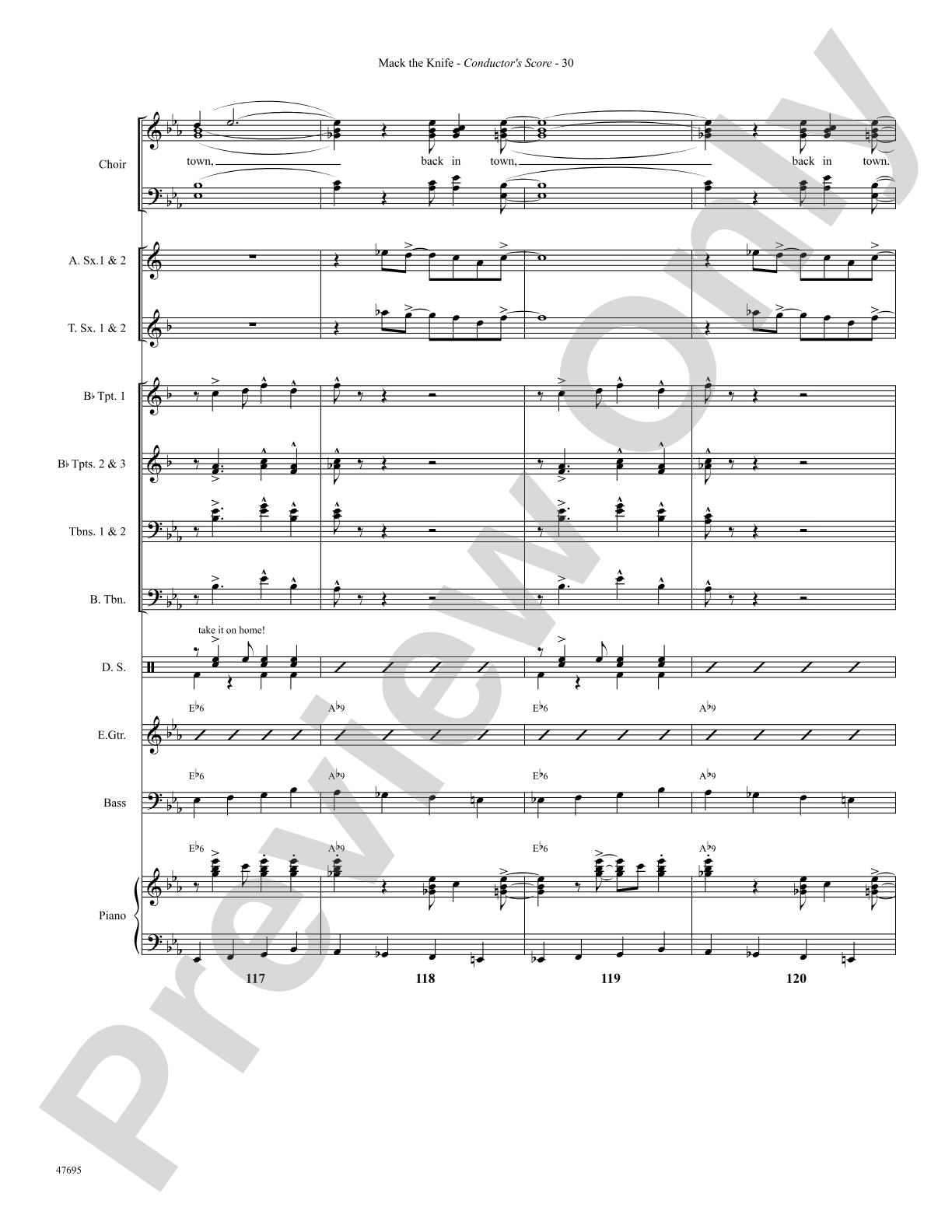
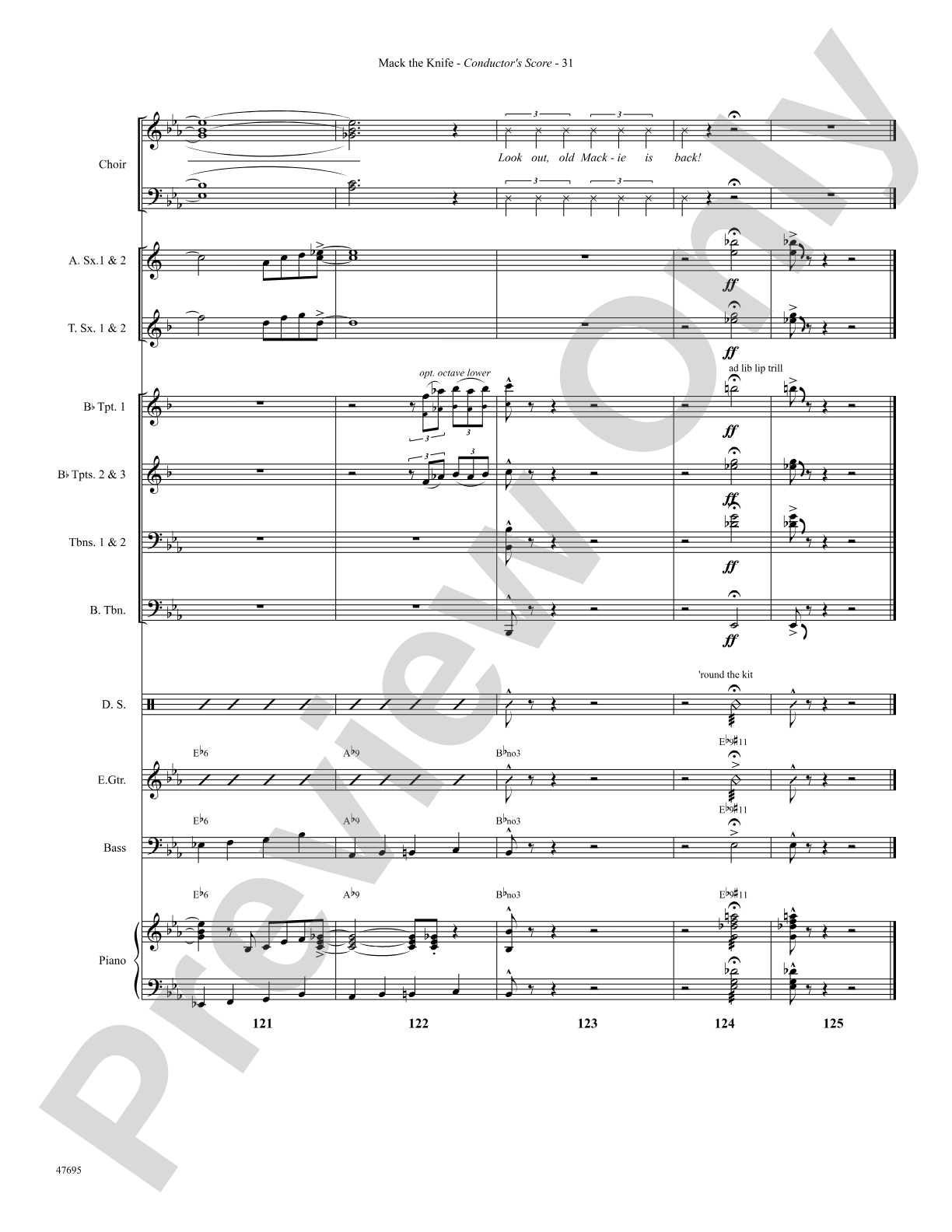
Originally written for The Threepenny Opera and famously covered by the likes of Louis Armstrong, Bobby Darin, and Frank Sinatra, this song has become one of the best-known jazz standards of the twentieth century. Mark's arrangement captures all the style of Kurt Weill's original score, building in excitement right to the very end. Perform with the swingin' piano accompaniment, add live horns and rhythm with the optional SoundPax, or check out our hip live-instrument SoundTrax CD.


Mack the Knife: Choral SoundPax isn't in MakeMusic Cloud just yet...but it could be. Let us know you'd like to see it, and you'll help shape what comes next. In the meantime, start a free trial and dive into thousands of interactive titles your students can play along with today.
Request This Title
Tell us you want it.
Start Your Free Trial
Explore everything that's ready to play right now.
Sample Audio
1
Audio File
--:--
0:00
0:00
Sample Video
No sample videos found.
Additional Details
Series:
Alfred Pop Choral Series
Publisher:
Alfred Music
Page Count:
52
SKU:
00-PK-0008606
More about this title
About the Composer: Kurt Weill
Kurt Weill (1900-1950) was a German-American composer whose theatrical works bridged classical training and popular idiom. His collaborations with lyricist Bertolt Brecht produced some of the twentieth century's most enduring stage music, including The Threepenny Opera, which introduced "Mack the Knife" to the world in 1928.
Weill's gift was his ability to write music that satisfied both artistic ambition and immediate accessibility. His melodies stick in the ear; his harmonies carry sophistication beneath the surface. For music educators, Weill's output represents a goldmine of repertoire that engages singers with recognizable material while introducing them to jazz idioms, theatrical style, and the composer's distinctive harmonic language.
Why we love this
Mark Hayes's arrangement preserves the cynical swagger of Weill's original while injecting the kind of contemporary energy that makes audiences lean forward. The optional SoundPax gives you flexibility: direct singers to nail the style with just piano, or layer in the swingin' horns and rhythm section for a genuine jazz ensemble feel. Programming a recognizable standard this well-crafted signals to your singers that they're doing real music, not watered-down pop.
What to expect
Menacing and playful at once. There's a predatory elegance to this music, a wit that doesn't wink but knows exactly what it's doing. The arrangement captures that tonal ambiguity: the melody is memorable enough to hum, yet the harmonic world underneath is sophisticated and surprisingly dark.
Who it's for
This arrangement serves choirs ready to tackle jazz style and theatrical idiom with confidence. You'll want singers who can handle swing eighth notes, who understand how to phrase across bar lines like jazz musicians, and who relish the edgy character of Weill's original.
How to get the most out of it
- Study the rhythmic elasticity of the original "Mack" recordings (Armstrong, Sinatra, or Darin). The sheet music sits on the page, but the jazz idiom demands that singers play with the beat, pushing and laying back rather than locking metronomically to the piano.
- Balance transparency in the lower voices during the verses. This song works best when the melody sits up front with clean harmonic support underneath, allowing each verse to build momentum naturally toward the chorus.
- If using the optional SoundPax, have singers rehearse with piano alone first to internalize the harmonic progression. Once the horns and rhythm enter, the choir shouldn't follow them; the choir is the song, and the accompaniment supports it.
- Shape the dynamic arc across the entire piece. Hayes marks the excitement building to the end, so resist the urge to hit forte too early. Save your energy for the final sections where the arrangement explicitly climbs.
How to use it
This works as a showstopper in a pops or jazz concert, especially alongside other Great American Songbook standards or twentieth-century musical theater. Consider it too for variety in a more formal program; Weill's music earned its place in concert halls, not just cabarets. The recognizable tune also makes it an excellent tool for public engagement and recruitment.
Skills your students will build
- Swing rhythm and jazz phrasing (laying back on beats, pushing ahead of the beat)
- Reading a jazz-influenced harmonic language with chromatic motion and blue notes
- Theatrical delivery and character work through music
- Balancing ensemble parts while maintaining clarity of line