
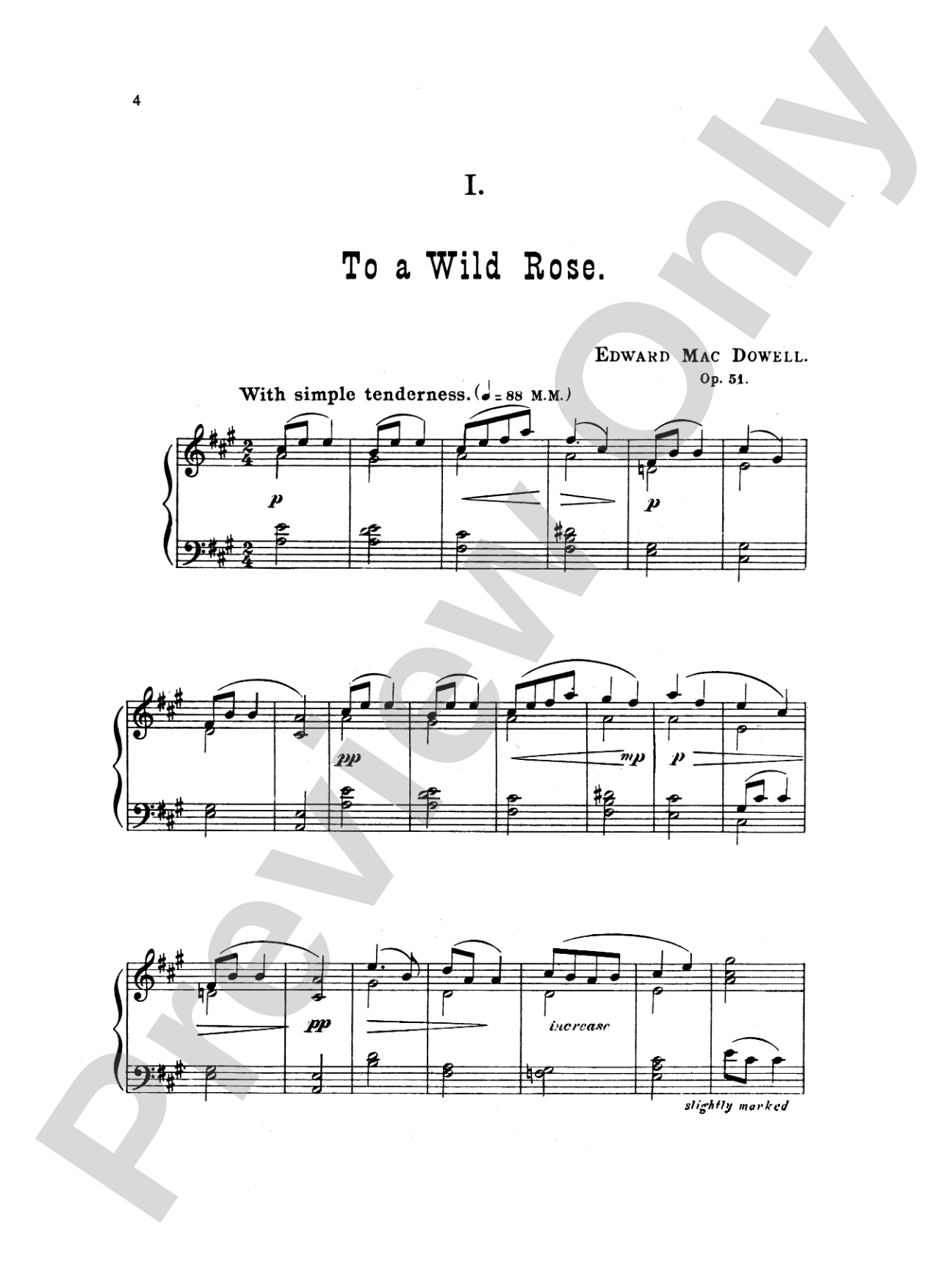
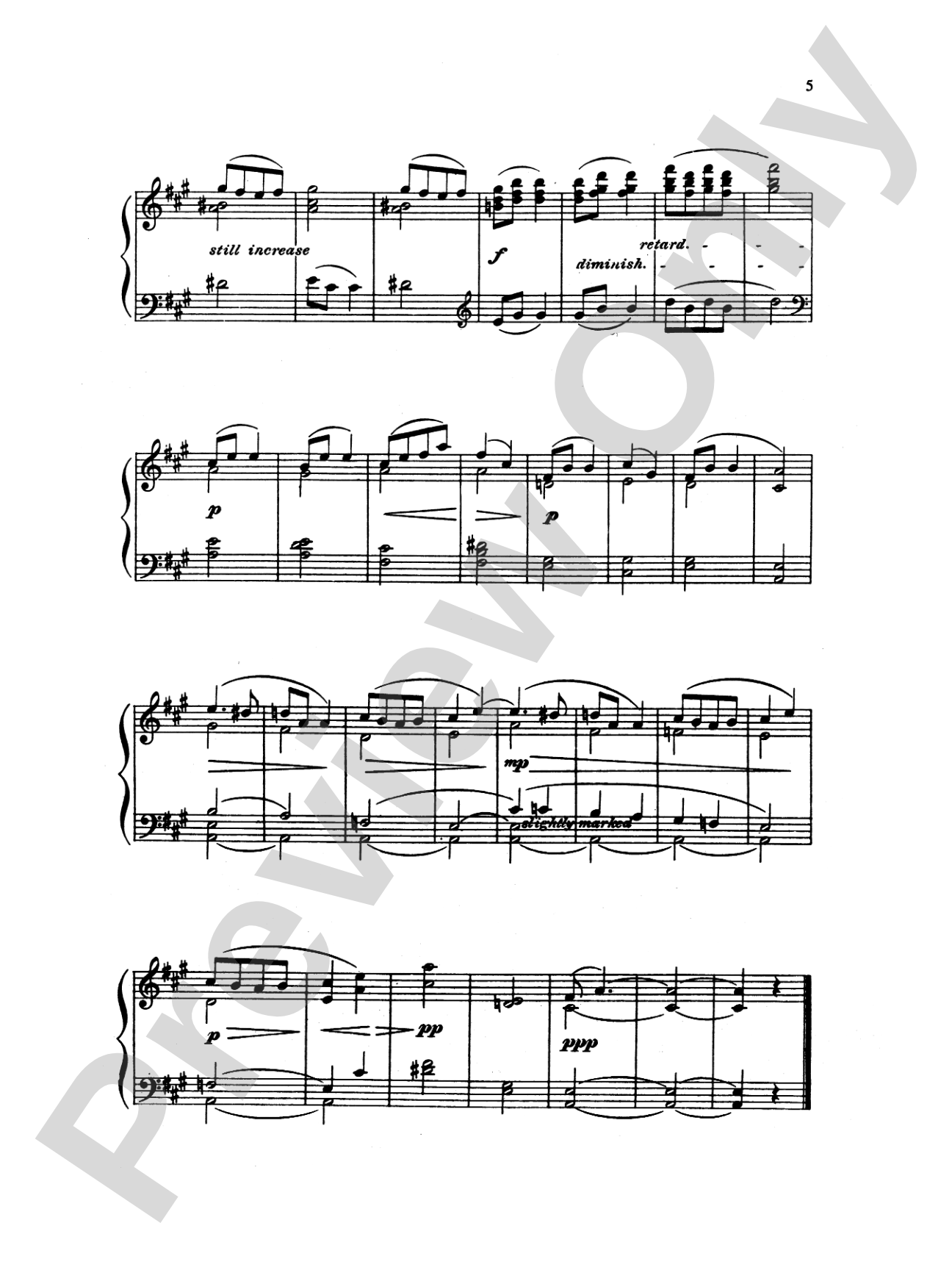

MacDowell: Woodland Sketches: Piano Book
By Edward MacDowell
Level: Intermediate / Advanced
Item: 00-PK-0003202

$9.99
Pickup currently not available
Buy Extra Parts (Digital PDF Download)
| Product | Price | Quantity |
|---|---|---|
| MacDowell: Woodland Sketches | $0.99 | |
| MacDowell: Woodland Sketches | $0.99 | |
| MacDowell: Woodland Sketches | $0.99 | |
| MacDowell: Woodland Sketches | $0.99 | |
| MacDowell: Woodland Sketches | $0.99 | |
| MacDowell: Woodland Sketches | $0.99 | |
| MacDowell: Woodland Sketches | $0.99 | |
| MacDowell: Woodland Sketches | $0.99 | |
| MacDowell: Woodland Sketches | $0.99 | |
| MacDowell: Woodland Sketches | $0.99 |
Parts Added to Cart!
Related Items
Woodland Sketches, Opus 51: Piano Book |
$9.95
|
View |
Description
A collection of Intermediate / Advanced piano solos composed by Edward MacDowell.


Don't just read it, hear it, play along with it, and watch your students grow with it. In MakeMusic Cloud, MacDowell: Woodland Sketches: Piano Book comes alive with professional accompaniment, adjustable tempo, and built-in practice tools that turn solo practice into real progress.
Open in the Player
Jump straight in and assign it today.
Start Your Free Trial
Open this title and explore the full library in minutes.
Sample Audio
No sample audio found.
Sample Video
No sample videos found.
Additional Details
Series:
Kalmus Edition
Publisher:
Alfred Music
Page Count:
32
SKU:
00-PK-0003202
More about this title
About the Composer: Edward MacDowell
Edward MacDowell (1860-1908) was the first American composer to gain international recognition, bridging European Romantic traditions with a distinctly American musical voice. He studied in Paris and Germany, absorbing the harmonic language of Liszt and Brahms, then returned to the United States where he composed prolifically, taught at Columbia University, and advocated fiercely for American musical independence.
Why we love this
Woodland Sketches captures MacDowell's gift for translating nature into intimate, lyrical miniatures that reward pianists with genuine musical substance rather than empty virtuosity. Each sketch stands alone as a complete thought, making this collection ideal for students developing interpretive maturity and understanding of form at the intermediate-advanced level. The writing sits comfortably under the hands while demanding real attention to pedaling, voice leading, and tonal color.
What to expect
These sketches evoke quiet wandering through a landscape that shifts with light and season. There is intimacy without sentimentality, nature observation without naïveté. The harmonic palette ranges from warm and lyrical to contemplative and slightly mysterious, all rendered in a voice that sounds thoroughly pianistic and deeply human.
Who it's for
Pianists in their third or fourth year of serious study, or adult amateurs comfortable with Romantic-era harmonic language and moderate technical demands. Teachers seeking accessible yet musically rewarding repertoire for recitals or studio albums will find multiple performance-ready pieces here.
How to get the most out of it
- Listen closely to the harmonic movement beneath surface melodies; MacDowell's progressions often shift colors subtly, and careful pedal changes will reveal layers other pianists might miss.
- Approach tempo as a flexible guide rather than a metronomic boundary; Romantic-era rubato belongs in these sketches, especially in moments of reflection or transition.
- Shape each sketch's opening gesture distinctly. MacDowell often establishes a mood or landscape in the first few measures, and committing fully to that character sets the stage for what follows.
- Balance the lyrical right-hand material against left-hand accompaniment patterns that often carry harmonic interest; resist the temptation to accompany too softly.
How to use it
Woodland Sketches works beautifully as a complete mini-recital or as individual pieces interspersed throughout a longer program. Several sketches pair naturally with other Romantic piano works, or you might select three or four contrasting pieces to create a focused set that demonstrates both MacDowell's range and your student's interpretive growth.
Skills your students will build
- Pedaling for harmonic color and resonance in Romantic repertoire
- Rubato and flexible phrasing within a lyrical melody
- Voice leading and motivic development across phrase boundaries
- Balancing independent left and right hand roles
- Interpreting programmatic content through musical choices