
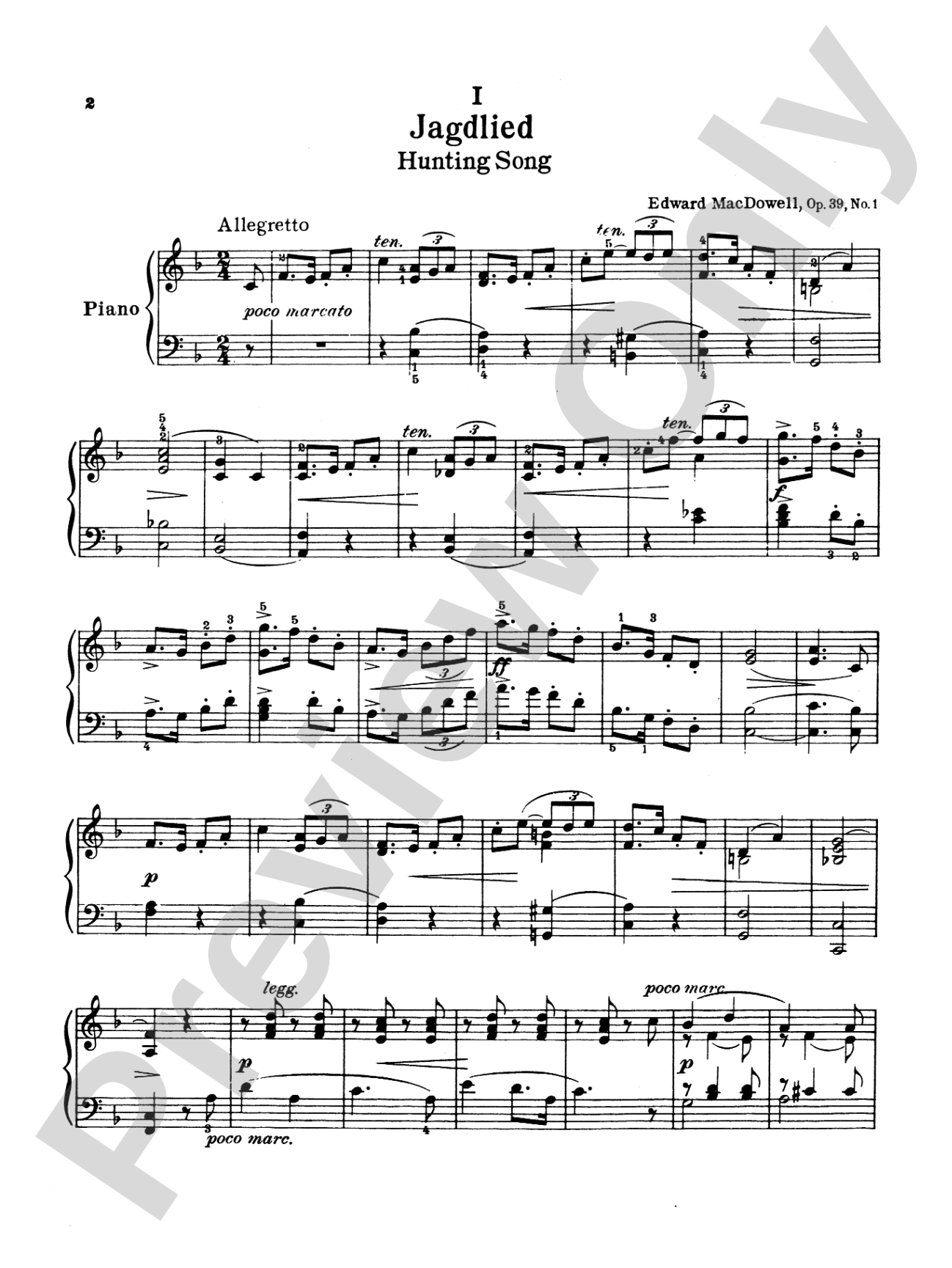
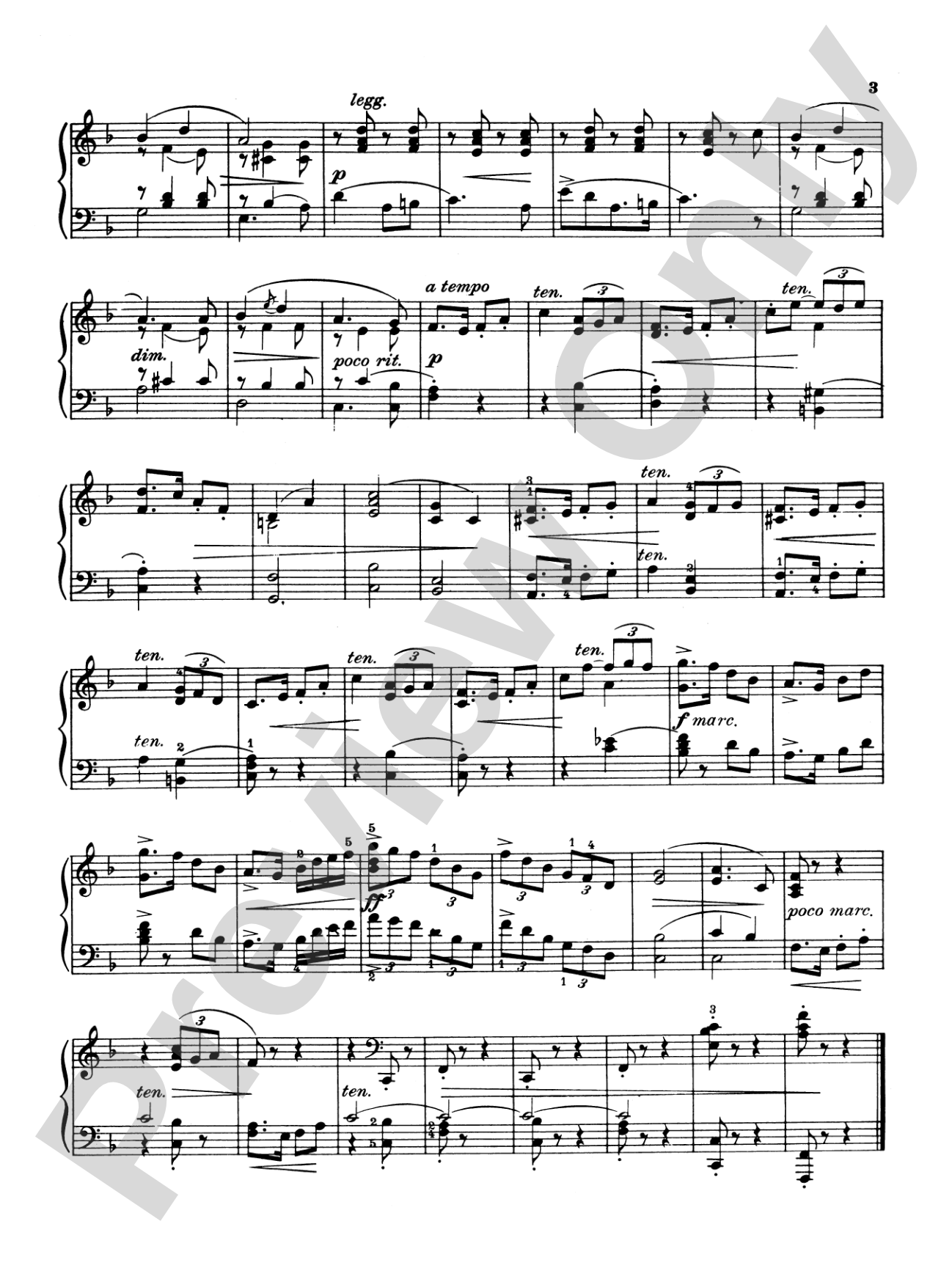

MacDowell: Twelve Etudes, Op. 39: Piano Book
By Edward MacDowell
Level: Advanced
Item: 00-PK-0003210

$10.99
Pickup currently not available
Buy Extra Parts (Digital PDF Download)
| Product | Price | Quantity |
|---|---|---|
| MacDowell: Twelve Etudes, Op. 39 | $0.99 | |
| MacDowell: Twelve Etudes, Op. 39 | $0.99 | |
| MacDowell: Twelve Etudes, Op. 39 | $0.99 | |
| MacDowell: Twelve Etudes, Op. 39 | $0.99 | |
| MacDowell: Twelve Etudes, Op. 39 | $0.99 | |
| MacDowell: Twelve Etudes, Op. 39 | $0.99 | |
| MacDowell: Twelve Etudes, Op. 39 | $0.99 | |
| MacDowell: Twelve Etudes, Op. 39 | $0.99 | |
| MacDowell: Twelve Etudes, Op. 39 | $0.99 | |
| MacDowell: Twelve Etudes, Op. 39 | $0.99 | |
| MacDowell: Twelve Etudes, Op. 39 | $0.99 | |
| MacDowell: Twelve Etudes, Op. 39 | $0.99 |
Parts Added to Cart!
Related Items
Twelve Etudes, Opus 39: Piano Book |
$10.95
|
View |
Description
Titles: Hunting Song * Alla Tarantella * Romance * Arabesque * In the Forest * Dance of the Gnomes * Idylle * Shadow Dance * Intermezzo * Melody * Scherzino * Hungarian.


Don't just read it, hear it, play along with it, and watch your students grow with it. In MakeMusic Cloud, MacDowell: Twelve Etudes, Op. 39: Piano Book comes alive with professional accompaniment, adjustable tempo, and built-in practice tools that turn solo practice into real progress.
Open in the Player
Jump straight in and assign it today.
Start Your Free Trial
Open this title and explore the full library in minutes.
Sample Audio
No sample audio found.
Sample Video
No sample videos found.
Additional Details
Series:
Kalmus Edition
Publisher:
Alfred Music
Page Count:
40
SKU:
00-PK-0003210
More about this title
About the Composer: Edward MacDowell
Edward MacDowell (1860-1908) was an American composer who brought European Romantic idioms into the concert hall while maintaining a distinctly personal voice. Trained in Paris and Frankfurt, he became one of the most performed American composers of his era, earning respect from contemporaries like Brahms and Grieg. His piano works remain central to advanced student repertoire, prized for their lyrical gift and structural sophistication.
Why we love this
MacDowell's Op. 39 etudes are too often overlooked in favor of his shorter character pieces, yet they offer advanced pianists a complete technical and musical education without the abstract difficulty of Liszt or the density of Brahms. Each etude pairs a specific technical challenge (rapid figurations, hand independence, rhythmic clarity) with genuine character and emotional arc. Performed well, they deserve a place in any serious pianist's recital repertoire.
What to expect
The collection sweeps across Romantic landscape: the vigor of a hunt through forest, the whirl of southern dance, intimate reverie, and shadowy introspection. MacDowell's harmonic language is warm and occasionally adventurous, never harsh, and the piano writing sings throughout even in its most virtuosic moments. The pieces feel like chapters of a musical diary, each emotionally distinct but unified by the composer's lyrical sensibility.
Who it's for
These etudes suit advanced pianists (Grade 10 and above, or third-year college students) who have mastered basic technical challenges and are ready to integrate technique with musical interpretation. They work equally well for recital preparation, studio teaching repertoire, and ensemble audition materials.
How to get the most out of it
- Attend closely to MacDowell's articulation marks and dynamic shadings; they are compositional, not ornamental. A phrase marked legato over staccato figures requires precise voicing to honor both layers.
- Establish the mood of each etude in the opening measures before technical work accelerates. "Hunting Song" opens with a specific character that must anchor the entire piece, not follow from it.
- Approach the faster etudes (Alla Tarantella, Dance of the Gnomes) with rhythmic definition rather than velocity. The character emerges from clarity of attack and shape, not speed alone.
- Use the printed score as a guide to voice leading in the left hand, especially in the more harmonic pieces like "Romance" and "Idylle." MacDowell's piano writing often rewards awareness of inner voices that accompany figuration.
How to use it
Program these as standalone recital pieces rather than as a complete set; the variety allows you to place individual etudes strategically across a program (a character piece before intermission, a more virtuosic one to open the second half). They pair naturally with other Romantic-era piano literature and can anchor a program focused on American composers or the nationalist movement in nineteenth-century music.
Skills your students will build
- Rapid scalar passages and hand independence under rhythmic figuration (Hunting Song, Alla Tarantella)
- Legato voicing and voice leading while maintaining accompaniment texture (Romance, Idylle)
- Rhythmic clarity and articulation control in quick double-note work (Dance of the Gnomes, Scherzino)
- Sustaining melodic line over broken-chord figuration (Melody, Intermezzo)
- Pedal control and harmonic color in sustained passages (Shadow Dance, Hungarian)