
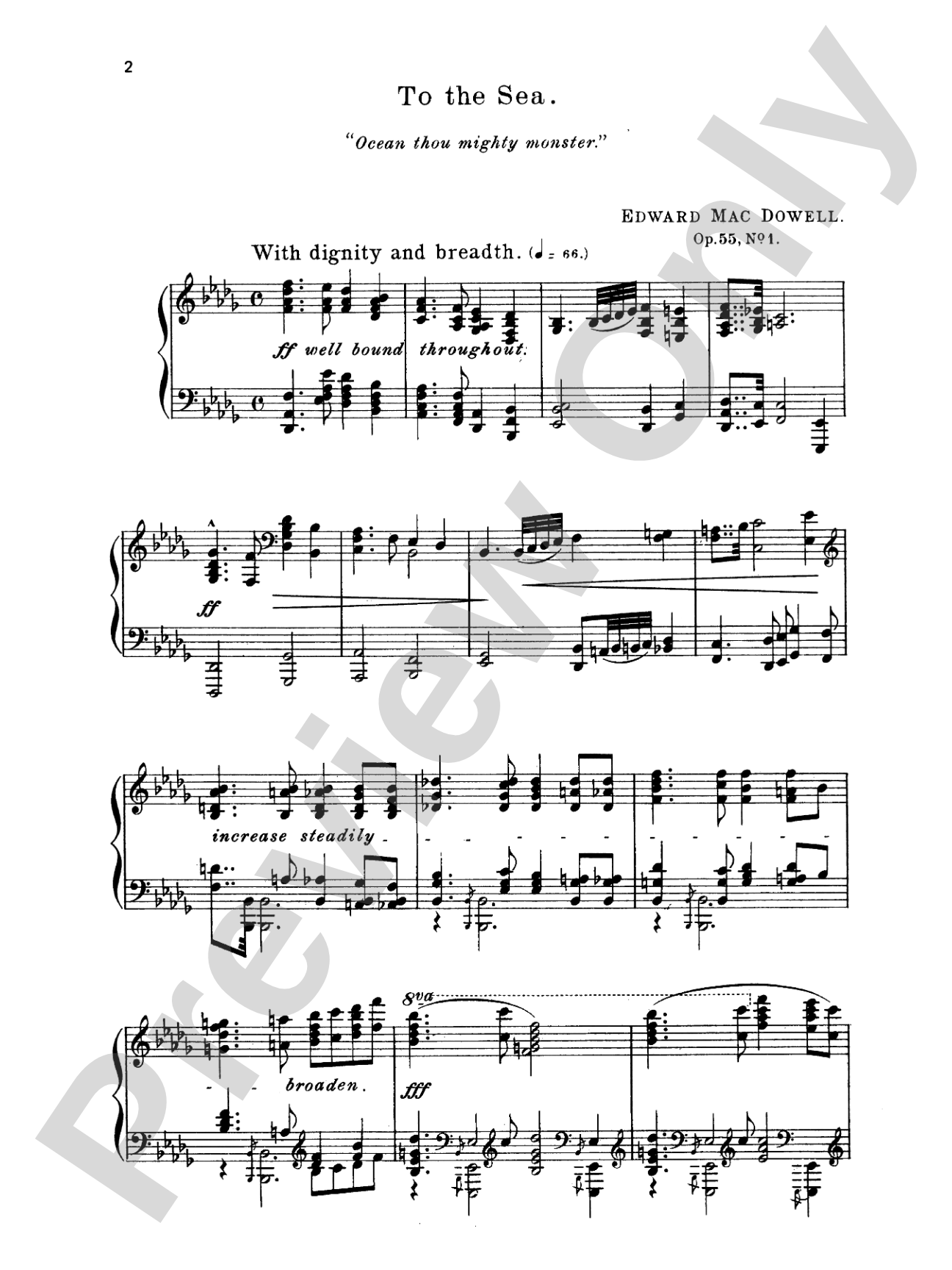
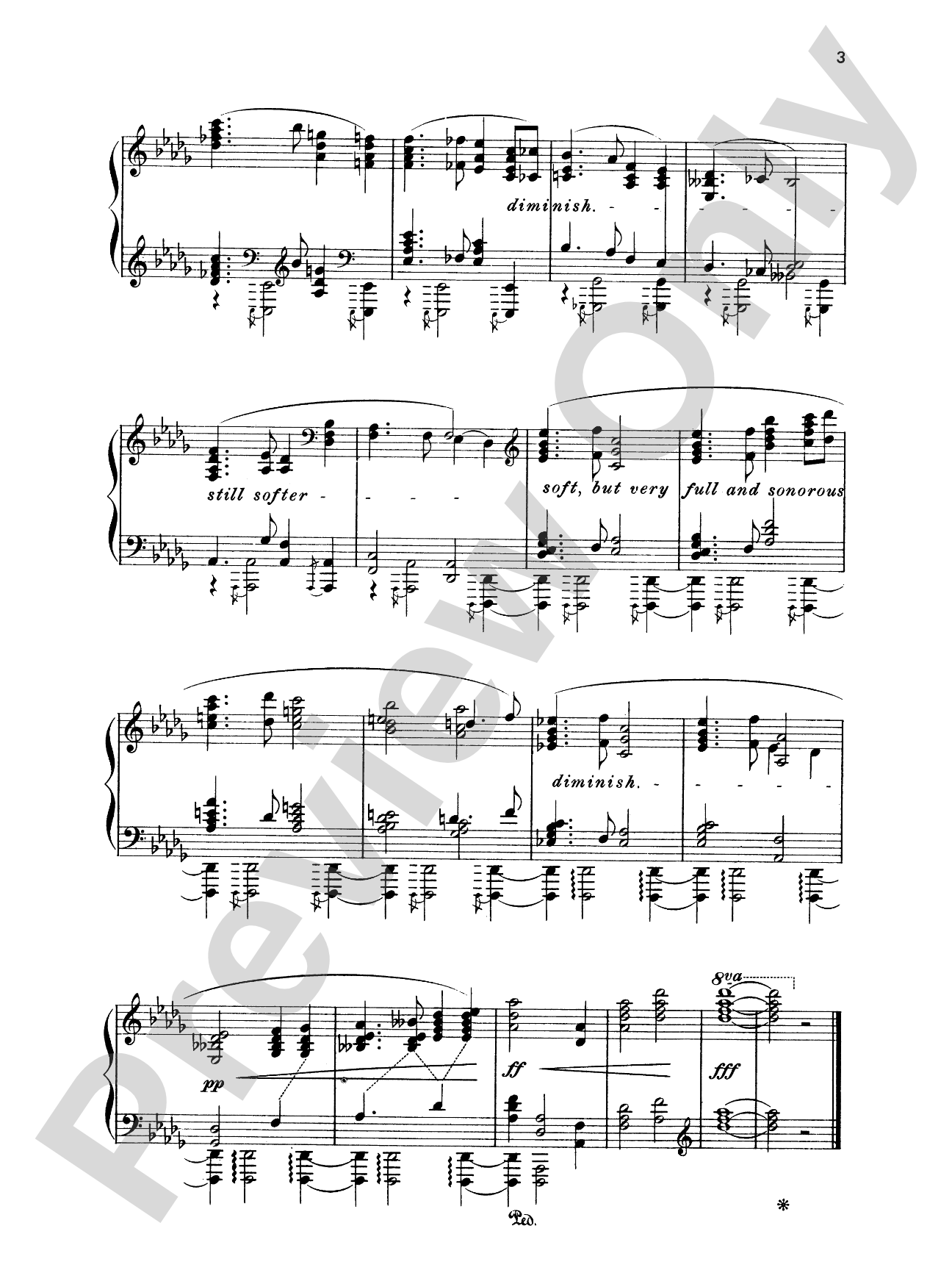

MacDowell: Sea Pieces: Piano Book
By Edward MacDowell
Item: 00-PK-0003203

$8.99
Pickup currently not available
Buy Extra Parts (Digital PDF Download)
| Product | Price | Quantity |
|---|---|---|
| MacDowell: Sea Pieces | $0.99 | |
| MacDowell: Sea Pieces | $0.99 | |
| MacDowell: Sea Pieces | $0.99 | |
| MacDowell: Sea Pieces | $0.99 | |
| MacDowell: Sea Pieces | $0.99 | |
| MacDowell: Sea Pieces | $0.99 | |
| MacDowell: Sea Pieces | $0.99 | |
| MacDowell: Sea Pieces | $0.99 |
Parts Added to Cart!
Related Items
Sea Pieces, Opus 55: Piano Book |
$8.95
|
View |
Description
A collection of piano solos composed by Edward MacDowell.


Don't just read it, hear it, play along with it, and watch your students grow with it. In MakeMusic Cloud, MacDowell: Sea Pieces: Piano Book comes alive with professional accompaniment, adjustable tempo, and built-in practice tools that turn solo practice into real progress.
Open in the Player
Jump straight in and assign it today.
Start Your Free Trial
Open this title and explore the full library in minutes.
Sample Audio
No sample audio found.
Sample Video
No sample videos found.
Additional Details
Series:
Kalmus Edition
Publisher:
Alfred Music
Page Count:
24
SKU:
00-PK-0003203
More about this title
About the Composer: Edward MacDowell
Edward MacDowell (1860-1908) was an American composer and pianist whose career bridged European Romantic traditions and the emerging classical voice of the United States. A student of the Leipzig Conservatory, he spent formative years in Germany and France before returning to establish himself as both a virtuoso performer and prolific composer, eventually founding and directing the music department at Columbia College in New York.
MacDowell's gift lay in accessible yet sophisticated composition. His piano works balance technical demands with lyrical accessibility, making them valuable bridges between standard repertoire and more ambitious concert works. He composed extensively for piano throughout his career, viewing the instrument as a natural vehicle for American Romantic expression.
Why we love this
Sea Pieces offers pianists genuine Romantic composition without requiring virtuoso athleticism. MacDowell's writing is pianistic and idiomatic, with expressive harmonic language that feels fresh to modern ears while remaining rooted in 19th-century sensibility. For teachers seeking concert-level repertoire at the intermediate-to-advanced transition, this collection provides both pedagogical depth and satisfying musical substance.
What to expect
These piano pieces evoke the impressionistic qualities suggested by their title, with impressionistic harmonic language and lyrical melody set over shimmering accompaniment figures. They conjure both the restless motion of water and moments of serene stillness, inviting pianists to explore color and nuance within structured Romantic forms.
Who it's for
Pianists working at the intermediate-advanced level will find pieces that challenge interpretive maturity without excessive technical hurdles. Teachers looking for concert repertoire that introduces American Romantic voice and expands students beyond the standard canon will value this collection's musicality and accessibility.
How to get the most out of it
- Shape phrases by subtle weight distribution rather than tempo fluctuation; MacDowell's rubato works best when the underlying pulse remains steady beneath the rubato line.
- Attend to his dynamic markings and textural changes as signposts for structural architecture; they guide harmonic movement as much as they shape expression.
- Balance pedal use carefully—these pieces often shimmer with resonance, but too much blur obscures voice leading and harmonic clarity.
How to use it
Program Sea Pieces on student or community recitals alongside works by contemporaries like Amy Beach or John Philip Sousa to contextualize American classical composition. Individual pieces also serve well as encores or transitions within a larger recital program that builds from Classical to late Romantic repertoire.
Skills your students will build
- Managing harmonic rhythm and voice leading in Romantic-era chromatic language
- Dynamic control and tonal coloration through sensitive pedal work
- Interpreting expressive rubato while maintaining structural coherence
- Understanding late 19th-century American compositional style and idiom