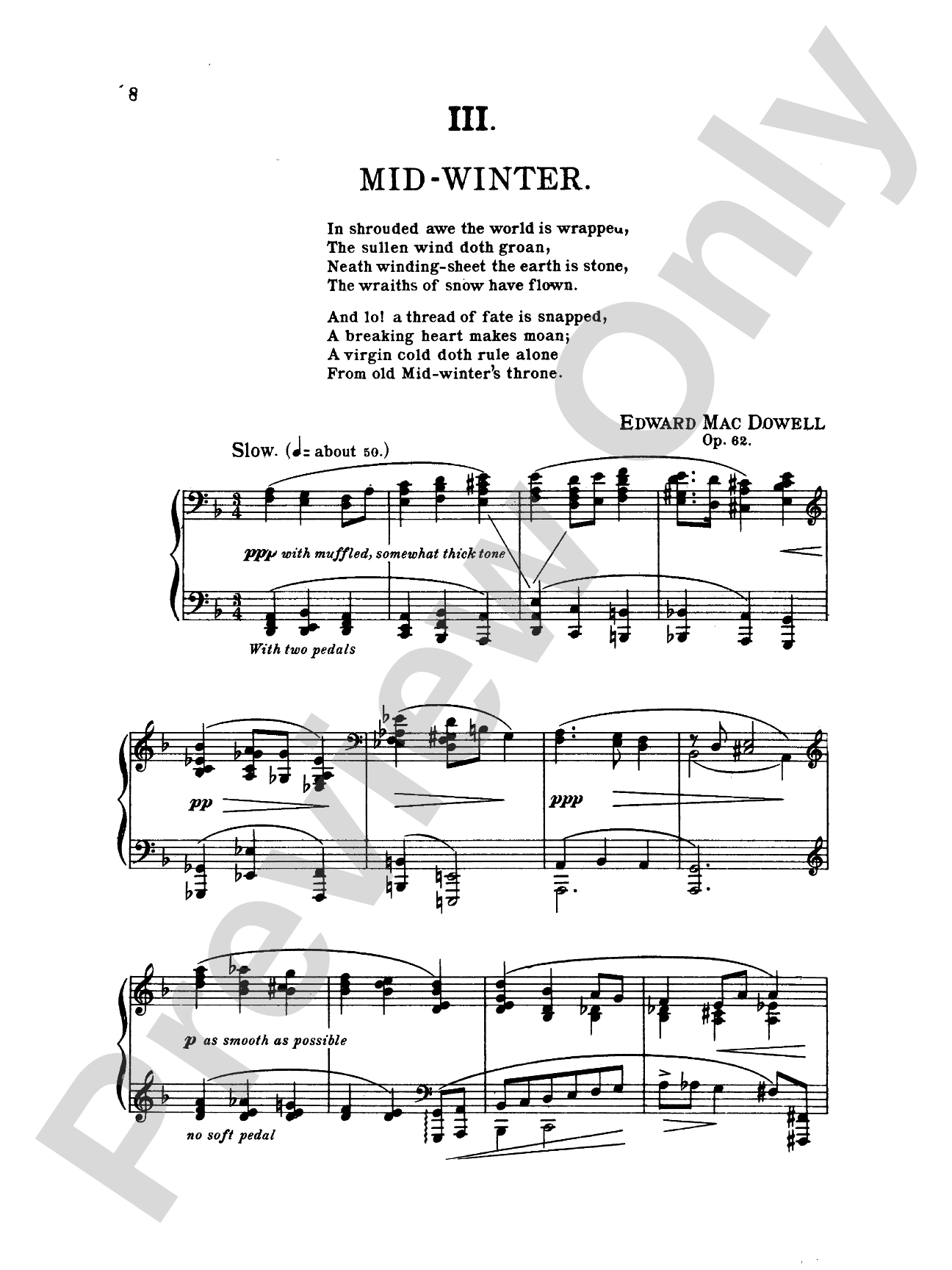
MacDowell: New England Idylls, Op. 62 Sheet Music Preview

MacDowell: New England Idylls, Op. 62

By Edward MacDowell

Level: Intermediate / Advanced

Item: 00-PC-0008390

Digital Download
$0.99
Description
Expertly arranged piano solo from our Kalmus Edition.

Don't just read it, hear it, play along with it, and watch your students grow with it. In MakeMusic Cloud, MacDowell: New England Idylls, Op. 62 comes alive with professional accompaniment, adjustable tempo, and built-in practice tools that turn solo practice into real progress.

Sample Audio
No sample audio found.
Sample Video
Additional Details
Series: Kalmus Edition
Publisher: Alfred Music
Page Count: 36
SKU: 00-PC-0008390

More about this title

About the Composer: Edward MacDowell

Edward MacDowell (1860-1908) was an American composer and pianist whose work bridged European Romantic traditions and American musical identity. He studied in Paris and Germany, absorbing the harmonic language and formal structures of his contemporaries, then returned to the United States to establish himself as both a virtuoso performer and a prolific composer for the piano.

MacDowell's output includes four piano concertos, numerous solo works, and art songs, but his most enduring legacy rests in his character pieces and shorter forms. He possessed a gift for miniature structures that balance technical demands with genuine lyricism, making his music accessible to serious amateurs while rewarding concert pianists. His New England Idylls represent his mature voice: deeply personal, rooted in American landscape and memory, and crafted with the care of a master craftsman.

Why we love this

These pieces showcase MacDowell's gift for expressive melody and colorful harmony without sacrificing structural clarity. The collection works beautifully as a complete recital suite or can be programmed individually to add substance and personality to mixed concerts. They offer intermediate-advanced pianists a pathway into genuine Romantic repertoire that demands musical maturity but remains within reach of dedicated students.

What to expect

Intimate and evocative, these idylls conjure quiet moments in nature and memory. MacDowell's harmonic palette shimmers with chromaticism and unexpected tonal shifts, while his melodies unfold with the unhurried elegance of someone lost in reflection. The overall mood is nostalgic and introspective, creating a world of personal reverie.

Who it's for

Intermediate to advanced pianists seeking substantive solo repertoire rooted in the Romantic era. This collection suits recital planning, competition preparation, or serious solo study at the late high school or undergraduate level. Teachers looking to introduce students to American Romantic composers will find these pieces both musically rewarding and pedagogically sound.

How to get the most out of it

  • Allow the harmonic language to breathe. MacDowell's chromaticism and voice leading reward patient, singing tone production rather than rapid or mechanical passagework.
  • Attend to dynamic nuance in the pastoral sections. Subtle shifts in registration and tone color define the character of these idylls more than dramatic extremes.
  • Study the historical context of each movement's title and imagery. Understanding the American landscape or emotional state MacDowell evoked will guide phrasing and interpretive choice.
  • Balance structural awareness with spontaneity. These pieces benefit from a sense of improvisation within their forms, particularly in the handling of repeats and internal transitions.

How to use it

Program these as a complete suite for a solo recital, or select individual movements to anchor a program of American Romantic music. They pair naturally with works by Barber, Copland, or other American composers, and can serve as a bridge between European Romanticism and twentieth-century American idiom. Consider using them in a concert exploring landscape and artistic response to place.

Skills your students will build

  • Harmonic analysis of chromatic voice leading and extended tonality
  • Sustaining lyrical lines through interpretive phrasing and tone control
  • Structural navigation of character-piece forms with varied tonal centers
  • Pedal technique for color and textural blending in Romantic style
  • Performance awareness of historical context and cultural identity in program music

You May Also Like