
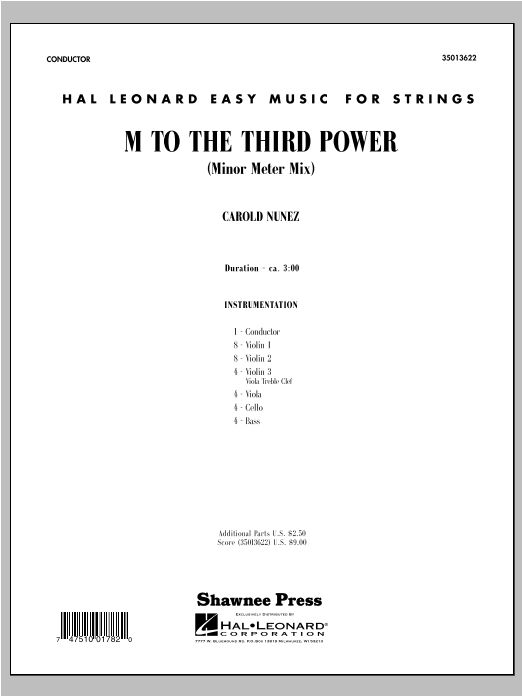

M To The Third Power (Minor Meter Mix): String Orchestra Conductor Score & Parts
As performed by Carold Nuñez
Grade: 2.5
Item: 35-PK00249230
$50.00
Pickup currently not available
Buy Extra Parts (Digital PDF Download)
Parts Added to Cart!
Description
This impressive teaching piece features a mixture of the melodic and harmonic minor forms, and a shifting of accents brought about by changing meters. Your students will love learning the aggressive, bold style that comes with the changing rhythms. Dur: 3:00


M To The Third Power (Minor Meter Mix): String Orchestra Conductor Score & Parts isn't in MakeMusic Cloud just yet...but it could be. Let us know you'd like to see it, and you'll help shape what comes next. In the meantime, start a free trial and dive into thousands of interactive titles your students can play along with today.
Request This Title
Tell us you want it.
Start Your Free Trial
Explore everything that's ready to play right now.
Sample Audio
No sample audio found.
Sample Video
No sample videos found.
Additional Details
Publisher:
Hal Leonard
SKU:
35-PK00249230
More about this title
Why we love this
The harmonic and melodic minor mixture creates real textural variety without overwhelming younger players. Carold Nuñez orchestrates these shifts so the changing meters feel natural rather than gimmicky, making this a piece that sounds confident and contemporary while staying solidly within Grade 2.5 reach.
What to expect
Restless and driving. The alternating minor forms keep the harmonic ground from settling, while the shifting accents create a forward momentum that feels almost unsettled in the best way. At three minutes, it's economical but never feels rushed.
Who it's for
String orchestras at the intermediate level who are ready to tackle rhythmic complexity and minor mode color. This works equally well for groups building confidence with ensemble cohesion and those seeking repertoire with contemporary energy.
How to get the most out of it
- Isolate the meter changes in sectional rehearsals before running full phrases. Have violins and violas map out where the accent falls in each new meter so the rhythmic displacement lands cleanly.
- Emphasize the harmonic minor passages with a slightly darker tone and sustained bow pressure; when you shift to melodic minor, brighten the character just enough to signal the change without altering tempo.
- Conduct the meter shifts with a clear, exaggerated gesture so everyone locks into the new pulse immediately. Even a moment of hesitation will flatten the aggressive quality the piece demands.
How to use it
Place this early in a concert to establish energy and sophistication, or use it as the anchor piece in a program exploring minor tonality across different styles. Its clean three-minute length makes it ideal for a concert that needs strong programming variety without excessive runtime.
Skills your students will build
- Distinguishing harmonic and melodic minor through sound production
- Reading and executing meter changes (shifting between duple and triple implied accents)
- Maintaining ensemble unity across changing rhythmic emphases
- Executing articulation and dynamics with precision in aggressive passages
- Building tone control across extended passages in the higher register