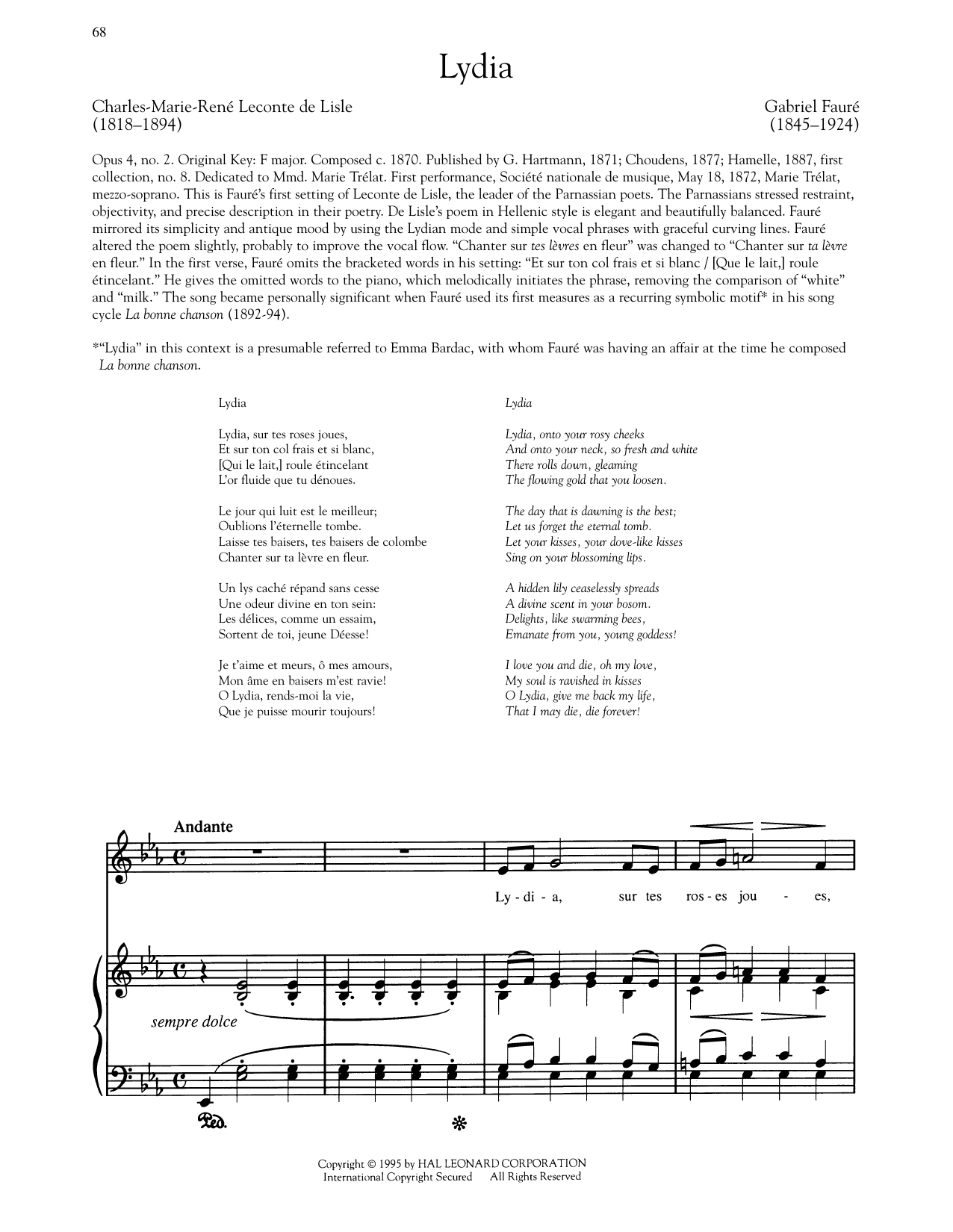
Lydia (Low Voice) Sheet Music Preview

Lydia (Low Voice): Piano Vocal

By Gabriel Fauré

Item: 35-DS01827451

Digital Download
$5.99
Description

Lydia (Low Voice): Piano Vocal isn't in MakeMusic Cloud just yet...but it could be. Let us know you'd like to see it, and you'll help shape what comes next. In the meantime, start a free trial and dive into thousands of interactive titles your students can play along with today.

Sample Audio
No sample audio found.
Sample Video
Additional Details
Publisher: Hal Leonard
Page Count: 4
SKU: 35-DS01827451

More about this title

About the Composer: Gabriel Fauré

Gabriel Fauré stands among the most refined voices in French music, a composer whose gift for melody and harmonic subtlety shaped an entire generation of musicians. His vocal works, in particular, represent the pinnacle of the art song tradition, combining intimate lyricism with sophisticated piano writing that elevates the accompaniment far beyond mere support.

Why we love this

Fauré's vocal writing sits in that rare territory where technical demands remain transparent to the ear. This setting rewards singers who understand the value of restrained expression and singers who have developed real control of the legit voice; the poetry lives in what you don't force.

What to expect

Lydia evokes afternoon light filtered through silk, a moment suspended between contentment and longing. The melodic line unfolds with natural grace, supported by harmonies that shift subtly beneath, creating an impression of effortless beauty that conceals considerable craft.

Who it's for

Low voice singers developing their French art song repertoire will find this piece essential preparation for the professional recital stage. Accompanying pianists gain valuable experience navigating Fauré's sophisticated harmonic palette and the delicate balance required between voice and keyboard.

How to get the most out of it

  • Shape the phrase across bar lines rather than punctuating at each beat. Fauré's melodies gain their elegance through architectural support from underneath, so the accompanist must listen intently and follow the vocalist's breath.
  • Resist the urge to vibrato aggressively on sustained notes. The French vocal tradition prizes clarity and directness; excessive vibrato obscures the harmonic language Fauré so carefully constructed.
  • Balance the recitative passages with stillness. When the vocal line loosens its rhythmic moorings, the piano provides the structural anchor; the interplay between freedom and constraint creates the emotional tension.

How to use it

Pair this with other French vocal music by Fauré or his contemporaries to build a recital segment that showcases the singer's lyrical gifts and refined musicianship. In an art song survey course, it serves as an excellent introduction to Fauré's approach to text setting and his signature harmonic language.

Skills your students will build

  • Sustained legit tone production in the low register
  • French diction and its relationship to vocal phrasing
  • Interpretation of Fauré's harmonic progressions and their emotional weight
  • Collaboration between vocalist and pianist at a chamber music level
  • Understanding of the art song as a unified whole rather than separate voice and accompaniment

You May Also Like