Lux Aeterna (arr. John Cameron) Sheet Music Preview

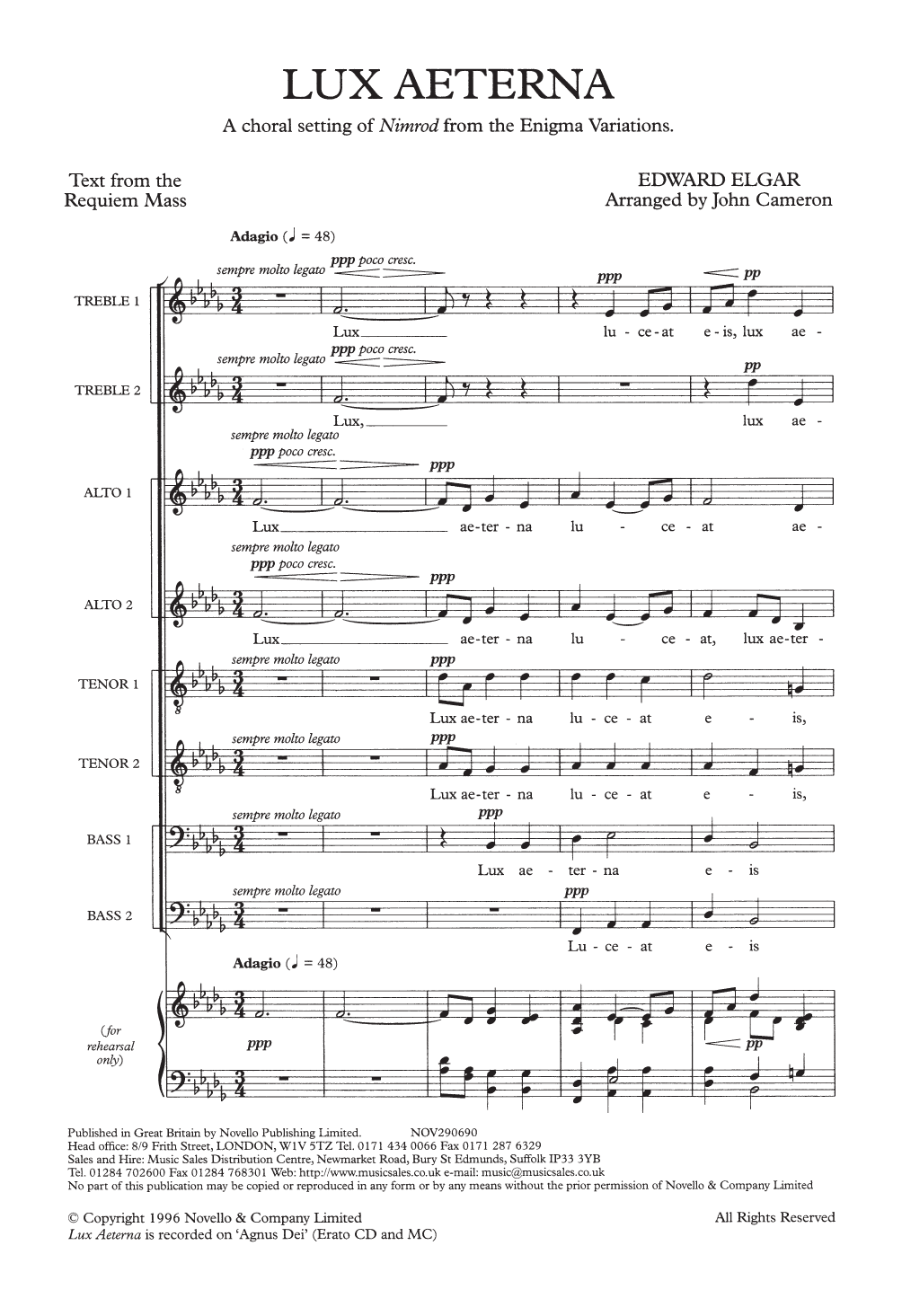
Lux Aeterna (arr. John Cameron): SSAATTBB Choral Octavo

By Edward Elgar / Arranged by John Cameron

Item: 35-DS01893994

Digital Download
$3.95
Description

Lux Aeterna (arr. John Cameron): SSAATTBB Choral Octavo isn't in MakeMusic Cloud just yet...but it could be. Let us know you'd like to see it, and you'll help shape what comes next. In the meantime, start a free trial and dive into thousands of interactive titles your students can play along with today.

Sample Audio
No sample audio found.
Sample Video
Additional Details
Publisher: Hal Leonard
Page Count: 11
SKU: 35-DS01893994

More about this title

About the Composer: Edward Elgar

Edward Elgar stands as one of Britain's most consequential composers, whose orchestral and choral works defined the sound of late Romantic music in the English tradition. His mastery of counterpoint and harmonic language, combined with his ability to craft sweeping melodic lines, made him a natural voice for sacred music; his choral compositions remain staples of cathedral and concert hall repertoires worldwide.

Why we love this

Elgar's harmonic sophistication translates beautifully into this eight-part setting, giving arrangers and directors material that feels both accessible and genuinely rewarding to rehearse. The octavo texture allows each voice section real melodic responsibility while maintaining the luminous, devotional character the Latin text demands. This arrangement proves that sacred music doesn't require large forces to achieve profound emotional weight.

What to expect

Radiant and contemplative in equal measure. The writing hovers between intimate vulnerability and grand harmonic gesture, creating a soundworld that feels both ethereal and deeply grounded in the weight of the Latin text. Singers will experience moments of vulnerability in exposed divisi passages followed by the visceral satisfaction of full octave unison.

Who it's for

Directors seeking sacred repertoire that showcases an advanced amateur or professional choir without requiring instrumental accompaniment. This works equally well in church services, concert settings, or regional choral competitions where the text and composer carry significant weight.

How to get the most out of it

  • Treat phrase endings with a slight ritardando to honor the liturgical pacing; Elgar's harmonic motion often benefits from breath and space rather than relentless forward drive.
  • Balance the upper voices carefully during divisi passages; the sopranos and altos carry primary responsibility for the melodic contour, and they need clear projection over the thickened harmonic foundation below.
  • Work the inner parts (tenor and alto divisi) with attention to voice independence; these lines weave between the outer parts and deserve rehearsal time in sections before full ensemble runs.
  • Shape each phrase as a single arc rather than punctuating every harmonic change; Elgar's language rewards legit singing that connects even complex chord progressions into coherent musical gestures.

How to use it

Pair this with other sacred works by English composers to build a thematic concert around the Anglican choral tradition, or program it as a centerpiece of a larger sacred choral set that showcases your ensemble's range and technical control. Its eleven pages and moderate difficulty make it suitable for a climactic final group in a concert where you've built your choir's confidence through lighter material earlier in the program.

Skills your students will build

  • Reading multiple divisi parts within each vocal line
  • Sustaining long phrases with consistent tone and breath support
  • Navigating complex harmonic progressions by ear and through voice-leading
  • Balancing ensemble sound in dense eight-part texture
  • Executing dynamic control within a primarily soft dynamic range
  • Shaping Latin text with proper diction and phrasing

You May Also Like