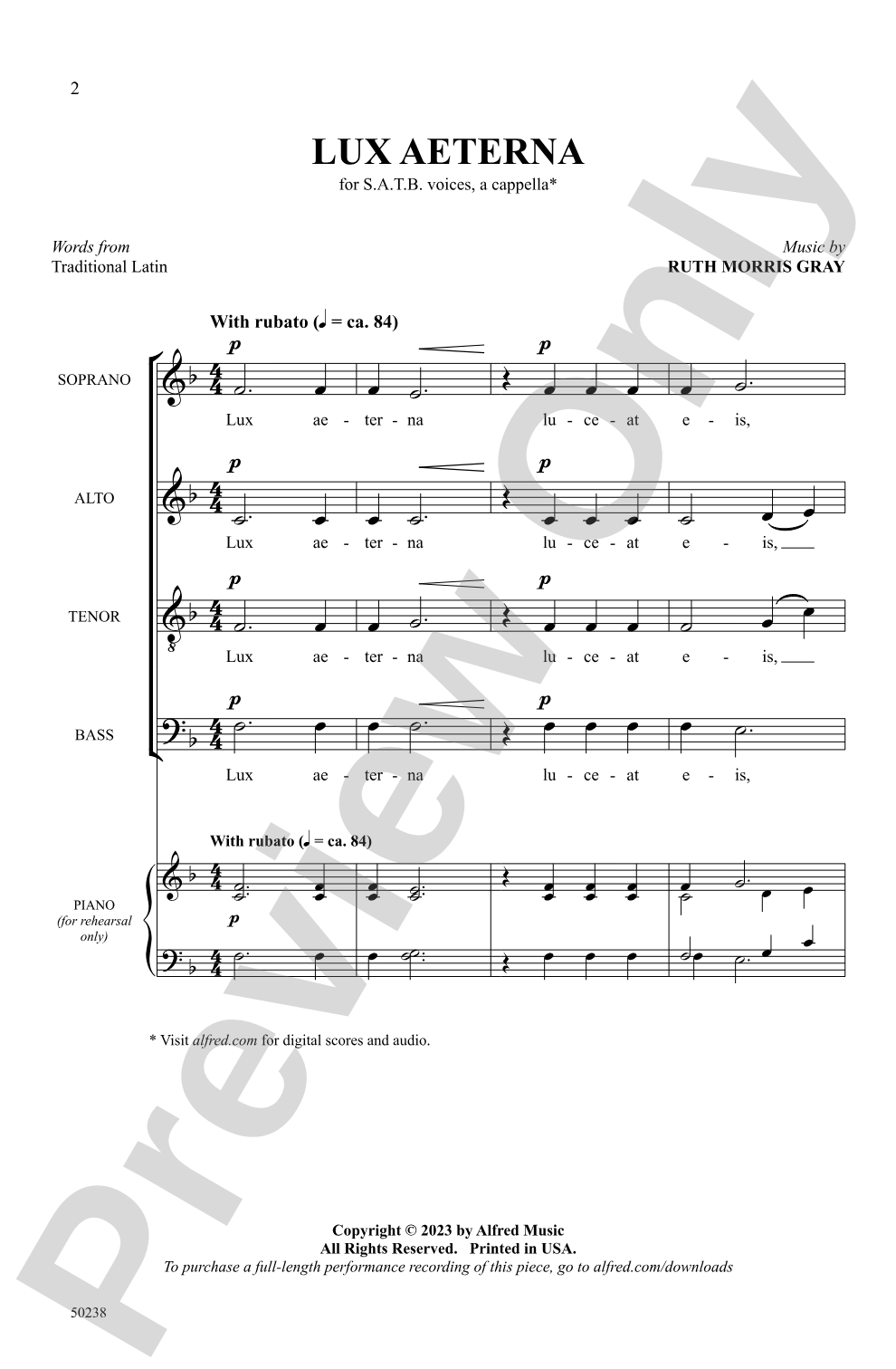
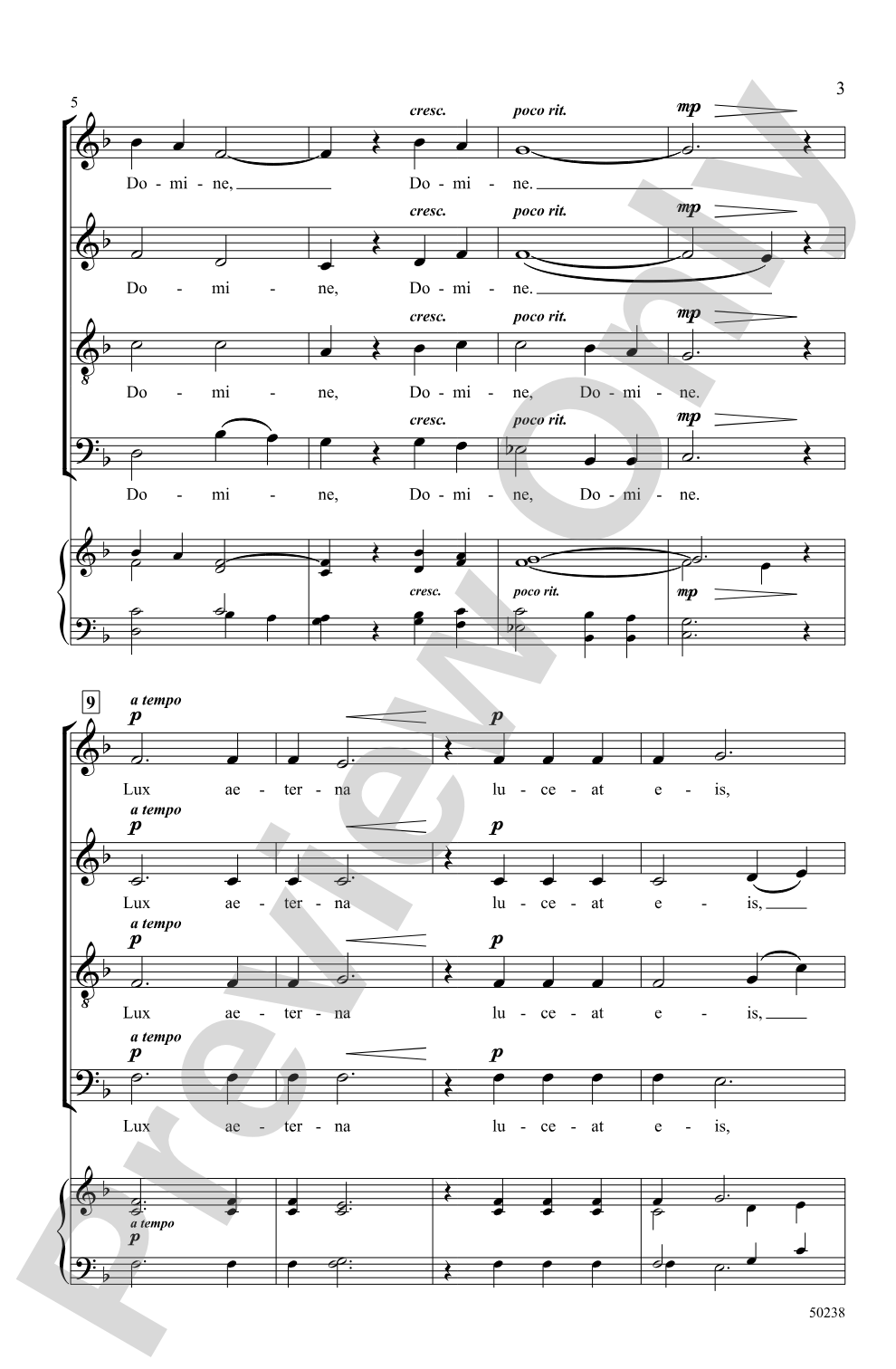
The traditional Latin "eternal light" text is beautifully brought to life in this artful a cappella work by contemporary choral composer Ruth Morris Gray. With plenty of room for rubato and dynamic expression, this piece employs a variety of choral textures with an approach that is simple yet elegant. Efficient part-writing achieves occasional dissonance with minimal divisi, and a delicate descant illuminates the final moments of this superb setting.
Discover MakeMusic Cloud: thousands of interactive titles your students can play along with today.
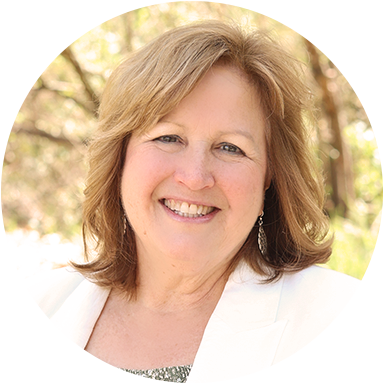
Ruth Morris Gray has directed choirs at Rosemead High School in California since 2004, where she also teaches piano. She holds a Bachelor of Music in Piano Performance and Composition from Biola University and a Master of Arts in Music Composition from UC Santa Barbara, along with a California Single Subject Music Credential from Cal State Northridge.
With more than 100 published choral works to her name, Gray has established herself as a prolific voice in contemporary choral composition. Her output spans sacred and secular repertoire, consistently balancing accessibility with musical sophistication. Beyond her work as composer and director, she performs regularly and finds creative inspiration through travel, reading, and cycling.
Why we love this
Gray's setting respects the weight of this timeless text without overcomplicating it. The part-writing is genuinely efficient; she achieves harmonic depth and moments of beautiful dissonance with minimal divisi, which means fewer sectional rehearsals and cleaner execution. The delicate descant in the final section gives choirs a moment to shine with something memorable and musically rewarding.
What to expect
Lux Aeterna unfolds with quiet dignity, inviting singers and listeners into a space of reflection. The interplay of voices feels intimate despite full four-part harmony, and the piece never rushes; instead, it breathes and settles around the eternal light that its text describes.
Who it's for
This octavo suits intermediate to advanced SATB choirs comfortable with a cappella singing and sensitive dynamic control. It works equally well for concert settings and festival competitions where nuance and restraint are valued over dramatic display.
How to get the most out of it
Shape the phrases with subtle rubato to honor the contemplative text; avoid metronomic rigidity even though there are no tempo markings to fight.
Balance the occasional dissonances carefully so they resonate rather than sound unintentional; these moments deserve clarity from all four parts.
Let the final descant line emerge with transparency by ensuring the lower three voices provide a secure, understated foundation.
How to use it
Program this as a centerpiece in a concert devoted to sacred or spiritual themes, or pair it with other contemporary Latin settings for a focused second half. At 12 pages, it anchors a mixed repertoire program without overwhelming rehearsal schedules, and its meditative quality makes it an effective transitional moment between livelier selections.
Skills your students will build
Sustaining ensemble blend in a cappella voicing
Interpreting rubato and expressive phrasing in contemporary sacred music
Balancing dissonant harmonies with secure pitch and intonation
Managing layered textures with occasional divisi
Executing delicate descant writing with independence and transparency
You May Also Like
Scan to Complete Your Purchase
Use your phone's camera to scan the code below
You'll log in on your phone and the order will be added to your account