


Lush Life (arr. Mike Tomaro): Jazz Ensemble Conductor Score & Parts
By Billy Strayhorn / Arranged by Mike Tomaro
Grade: 4
Item: 35-PK01094268
$55.00
Pickup currently not available
Buy Extra Parts (Digital PDF Download)
Parts Added to Cart!
Description
Here is Billy Strayhorn's beloved ballad, skillfully arranged with subtle reharmonizations and reworkings of the melody, all the while remaining faithful to the original intent. Featured are solos for piano and trombone. A gorgeous setting for the entire ensemble.


Discover MakeMusic Cloud: thousands of interactive titles your students can play along with today.
Sample Audio
No sample audio found.
Sample Video
Additional Details
Publisher:
Hal Leonard
SKU:
35-PK01094268
More about this title
About the Composer: Billy Strayhorn
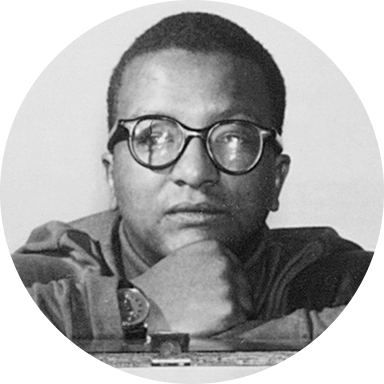
Billy Strayhorn emerged as one of the defining voices in jazz composition, born in Dayton, Ohio in 1915 and ascending to prominence through his landmark partnership with Duke Ellington beginning in 1939. Though lesser known by name than many of his contemporaries, Strayhorn authored some of the twentieth century's most enduring jazz standards. His refusal to remain closeted as a Black gay artist during an era of profound prejudice meant he worked largely in the shadows of history, yet his compositional genius touched virtually every major jazz voice of his generation, from Ella Fitzgerald and Sarah Vaughn to John Coltrane and Oscar Peterson.
Strayhorn's "Lush Life," composed remarkably at age sixteen, stands as the gold standard for ballad composition in jazz. The piece's harmonic sophistication and emotional depth have made it a proving ground for singers and musicians willing to engage its considerable challenges. While "Take the 'A' Train" became the Ellington Orchestra's calling card since the 1940s and remains a twentieth century classic, it is "Lush Life" that reveals the full scope of Strayhorn's artistry as a melodist and harmonist.
Why we love this
Mike Tomaro's arrangement honors the ballad's intrinsic sophistication without over-orchestrating it. The reharmonizations enhance rather than obscure Strayhorn's original conception, and the featured solos for piano and trombone give your ensemble members ownership of this jazz standard rather than treating it as a museum piece. This is the kind of Grade 4 that respects both the music and your musicians.
What to expect
Intimate and urbane, with a touch of melancholy that never tips into sentimentality. The arrangement breathes with the elegance of a late-night jazz room, where every harmonic shift carries weight and the soloists have space to explore without the ensemble overcrowding the soundscape.
Who it's for
Jazz ensembles at the high school and college level who are ready to tackle sophisticated harmony and ballad language. Players should have solid fundamentals in jazz articulation and comping skills, particularly the pianist.
How to get the most out of it
- Allow the ensemble time to absorb the harmonic landscape before rushing into tempo work. The beauty of this arrangement lives in the reharmonizations, so read through it slowly enough that players hear how chords resolve.
- Lock the piano and trombone soloists together in sectional rehearsals. Their interplay is central to the arrangement's character, and they need to understand how Tomaro has voiced the changes beneath them.
- Shape the melody as a unit rather than a line. This ballad requires genuine ensemble singing quality, which means attention to phrase contours, dynamic shape, and how voices move into and out of sustained notes.
How to use it
Pair this with uptempo Strayhorn fare like "Take the 'A' Train" to show the full range of his compositional voice in a single concert. It also works beautifully as a concert closer, allowing your ensemble to demonstrate interpretive maturity and harmonic awareness before an audience.
Skills your students will build
- Recognizing and executing jazz reharmonization while maintaining melodic integrity
- Voicing chords with sensitivity to balance and blend in a jazz context
- Responding to soloists with responsive comping and ensemble background figures
- Phrasing and breathing as an ensemble unit in a ballad setting
- Understanding harmonic movement and functional harmony in jazz standards