
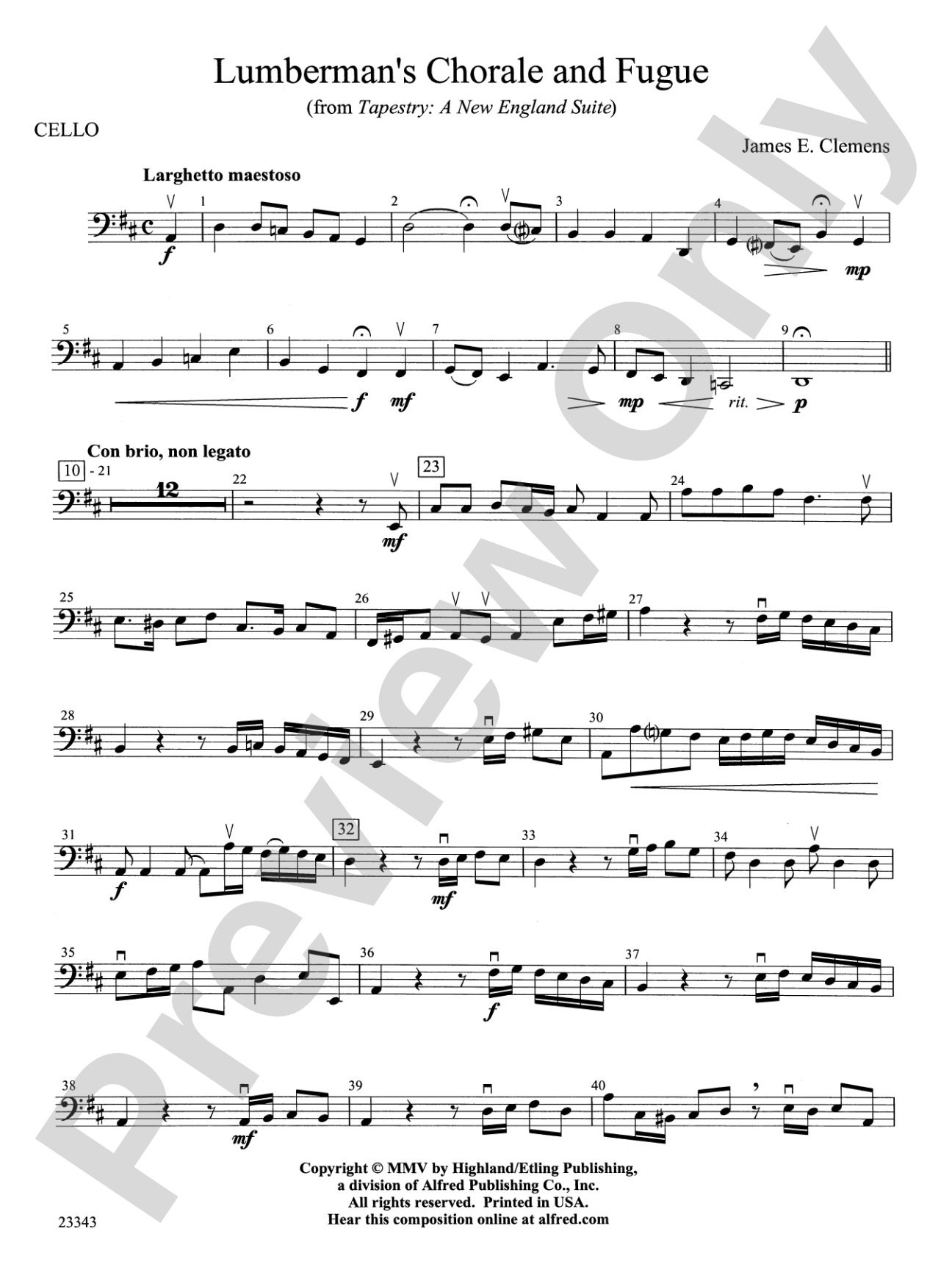

Lumberman's Chorale and Fugue: Cello
By James Clemens
Item: 00-PC-0000688_VC1
$5.99
Pickup currently not available
Description
This work, which uses "The Oxen Song," is said to have been written by Larry Gorman, a famous lumberjack. Written in the style of J. S. Bach, this piece shows the varied backgrounds (Irish, French, Canadian and Yankee) of the Ox teamsters, the people who were in charge of the oxen and horses that were used for driving logs on the river. A refreshing addition to the string repertoire.


Don't just read it, hear it, play along with it, and watch your students grow with it. In MakeMusic Cloud, Lumberman's Chorale and Fugue: Cello comes alive with professional accompaniment, adjustable tempo, and built-in practice tools that turn solo practice into real progress.
Open in the Player
Jump straight in and assign it today.
Start Your Free Trial
Open this title and explore the full library in minutes.
Sample Audio
1
Audio File
--:--
0:00
0:00
Sample Video
No sample videos found.
Additional Details
Series:
Highland/Etling String Orchestra
Publisher:
Alfred Music
Page Count:
2
SKU:
00-PC-0000688_VC1
More about this title
About the Composer: James Clemens

James Clemens grew up in Goshen, Indiana, where he developed an unusually broad musical foundation through self-directed study and formal training at Goshen College. During his years there, he moved fluidly between violin, piano, jazz band, recorder, and the er hu (a Chinese two-string instrument he studied in China), while also serving as accompanist for various vocal ensembles. His versatility across genres and instruments informs his compositional voice.
Clemens is drawn to commissions that invite genuine collaboration with the performers who will bring his work to life. He describes this collaborative process as both exciting and gratifying, suggesting that his compositions often emerge from deep conversations about what performers need and what audiences will connect with.
Why we love this
This piece transforms a lumberjack ballad into something genuinely educational without sacrificing musical substance. The Bach-inspired counterpoint gives students real training in independent line work while the folk melody grounding keeps everyone emotionally engaged. At just two pages, it's the rare piece that works equally well in concert and contest settings.
What to expect
The opening chorale unfolds with the gravity and clarity of a hymn, drawing listeners into the world of 19th-century river work and ox teams. As the piece pivots into fugal development, that same folk melody becomes a living argument, turning the Baroque form into something personal and immediate rather than academic.
Who it's for
String orchestras at the intermediate to early advanced level who are ready for genuine contrapuntal writing but benefit from music rooted in recognizable melody. This works equally well for groups preparing contest or festival appearances and those building a concert program that values both craftsmanship and historical connection.
How to get the most out of it
- Establish the character of each section's melodic line independently before bringing them together. The varied ethnic backgrounds represented in the arrangement reward players who can hear their own voice as a solo within the texture.
- Pay attention to how the chorale transitions into the fugal section. The shift should feel architecturally clear without becoming abrupt; think of it as a thoughtful response rather than a sudden change.
- Let the folk melody breathe in the opening chorale. This is not concert hall refinement but rather an honest, working-person's tune, and that authenticity is what makes the Bach-style development resonate.
- Balance the voices through the fugal writing carefully. Students often disappear into accompaniment patterns when they should be contributing equal weight to the musical argument.
How to use it
Program this as a bridge between a classical concerto and a contemporary piece, or use it to open a concert that aims to honor American musical roots. Its brevity makes it an ideal festival selection, and its educational depth rewards rehearsal time in ways that longer works sometimes cannot.
Skills your students will build
- Voice independence and listening within polyphonic texture
- Recognition and performance of fugal form
- Balancing melody and accompaniment across distributed string lines
- Stylistic interpretation of Bach-influenced counterpoint
- Following thematic development and transformation