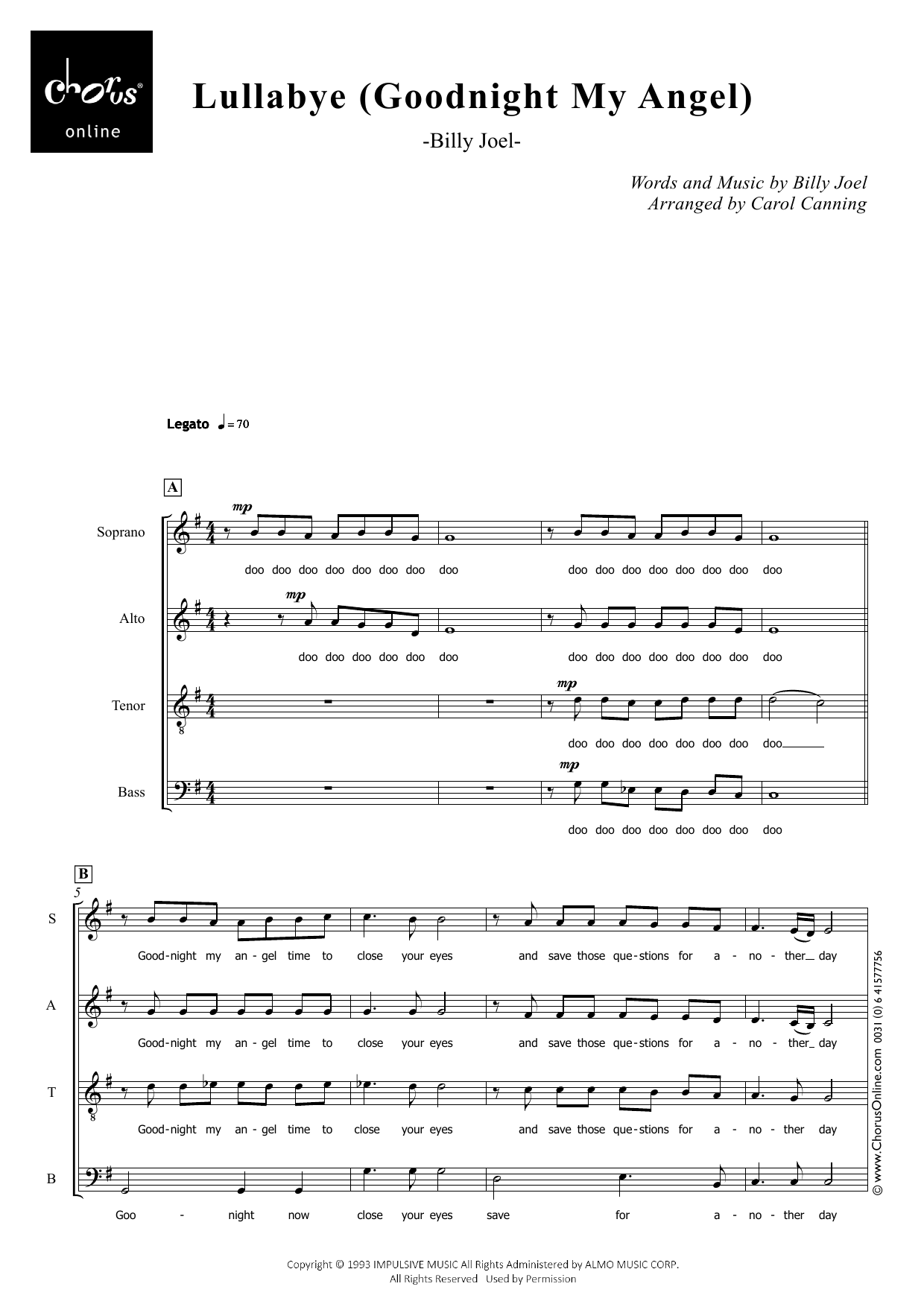
Lullabye (Goodnight, My Angel) (arr. Carol Canning) Sheet Music Preview

Lullabye (Goodnight, My Angel) (arr. Carol Canning): SATB Choral Octavo

As performed by Billy Joel / Arranged by Carol Canning

Item: 35-DS00489477

Digital Download
$2.99
Description

Lullabye (Goodnight, My Angel) (arr. Carol Canning): SATB Choral Octavo isn't in MakeMusic Cloud just yet...but it could be. Let us know you'd like to see it, and you'll help shape what comes next. In the meantime, start a free trial and dive into thousands of interactive titles your students can play along with today.

Sample Audio
No sample audio found.
Sample Video
Additional Details
Publisher: Hal Leonard
Page Count: 6
SKU: 35-DS00489477

More about this title

About the Artist: Billy Joel

Billy Joel emerged as one of the most successful pop songwriters of the late twentieth century, known for his ability to craft emotionally resonant melodies that resonate across generations. His work spans classical training, rock sensibility, and genuine lyrical depth, making his catalog a rich resource for choral arrangers seeking contemporary material with lasting substance.

Why we love this

Carol Canning's arrangement captures the intimate tenderness of Joel's original without losing its emotional core. The a cappella setting demands careful attention to blend and phrase, turning what could be a sentimental lullaby into a genuine ensemble moment that audiences find deeply moving.

What to expect

Tender and intimate, this lullaby settles into your chest rather than dazzling your ear. The harmonic language is warm without being cloying, and the text (a parent's gentle blessing to a child) invites singers to inhabit genuine vulnerability.

Who it's for

Directors building concert programs that balance art song traditions with contemporary material will find this arrangement accessible yet refined. It suits singers of intermediate to advanced ability who respond well to interpretive challenge and emotional storytelling.

How to get the most out of it

  • Balance the melody line across your sopranos and altos during the verses; the inner voices carry harmonic warmth that should never fade into accompaniment.
  • Shape phrases around the lyrical content rather than the bar lines. This song asks for rubato and breathing room, so give your singers permission to follow the text.
  • Work dynamics in layers during rehearsals. Start with the soprano line alone, then add harmonies one voice part at a time so singers hear how their individual contribution affects the whole.
  • Pay special attention to vowel unification on sustained notes; any drift in vowel color breaks the spell of this piece.

How to use it

Consider pairing this with other intimate a cappella works to create a quiet moment in a concert. It works particularly well as a closer to a set, where the audience can sit with the piece's quiet affection rather than moving quickly to something brighter.

Skills your students will build

  • Sustaining vowel unity across an a cappella texture
  • Interpreting expressive timing and rubato in ensemble
  • Balancing solo melodic material with harmonic support
  • Singing with emotional authenticity while maintaining technical precision

You May Also Like