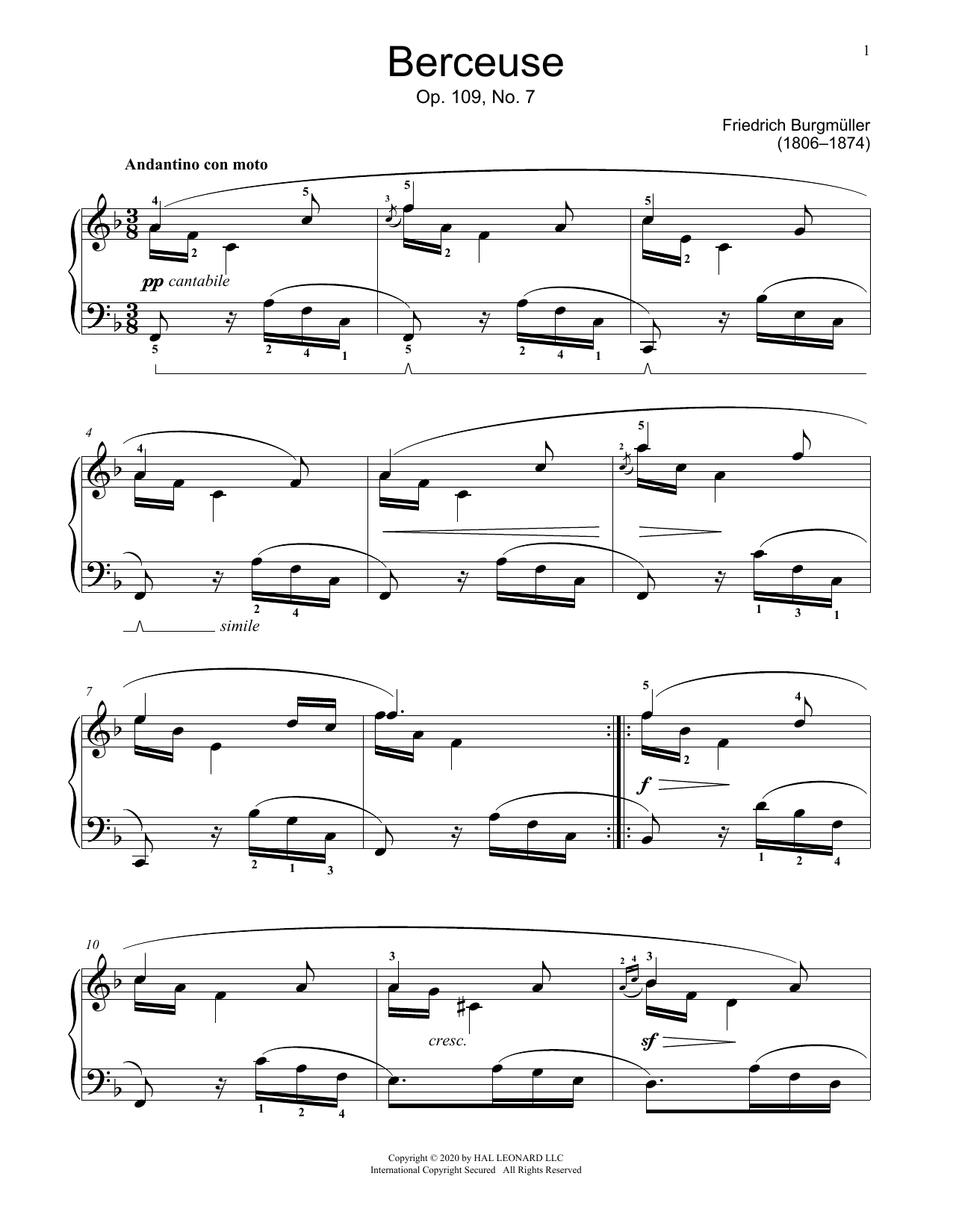
Lullaby, Op. 109, No. 7 Sheet Music Preview

Lullaby, Op. 109, No. 7: Educational Piano

Edited by Jennifer Linn

Item: 35-DS00457870

Digital Download
$4.99
Description

Discover MakeMusic Cloud: thousands of interactive titles your students can play along with today.

Sample Audio
No sample audio found.
Sample Video
Additional Details
Publisher: Hal Leonard
Page Count: 2
SKU: 35-DS00457870

More about this title

About the Creator: Antonín Dvořák

Antonín Dvořák spent his later years in America, where he served as director of the National Conservatory of Music in New York. During this period, he composed prolifically across all genres, drawing inspiration from both the American landscape and his deep roots in Czech musical tradition. His chamber works and character pieces from this era reveal a composer at the height of his craft, distilling decades of experience into music of remarkable warmth and accessibility.

Op. 109 represents Dvořák's final set of character pieces for solo piano. These miniatures showcase his gift for melody and his ability to create profound emotional statements within modest dimensions. For pianists and educators, they offer a window into the mature voice of one of the 19th century's greatest melodists.

Why we love this

This piece distills Dvořák's gift for singing melody into exactly two pages. Students encounter genuine 19th-century lyricism without the technical demands that often accompany larger Romantic works, making it an ideal bridge between early repertoire and the standard canon.

What to expect

A gentle rocking motion suffused with Dvořák's characteristic warmth. The music hovers between contentment and quiet yearning, with melody that feels inevitable rather than forced. It invites the listener into an intimate moment without demanding anything but presence.

Who it's for

Early advanced pianists (around Level 8-9) who are ready to approach Romantic character pieces with musical maturity. Teachers seeking repertoire that emphasizes expressive playing over virtuosity will find it invaluable for students developing interpretive skills.

How to get the most out of it

  • Shape the melody with a singing tone that breathes naturally at phrase endings. Think of the accompaniment as supporting the song rather than driving it.
  • Keep the left hand transparent and unrushed; the pulse should feel inevitable rather than metronomic.
  • Let dynamic shapes emerge gradually. Avoid sudden shifts in volume; instead, allow the music to grow and recede with the contours of the melody.

How to use it

Pair this with other character pieces by Romantic composers to create a themed recital segment exploring the miniature form. Its modest length and undeniable musicality also make it suitable for solo concerts or student recitals where impact matters more than showpiece difficulty.

Skills your students will build

  • Singing tone production and legato pedaling in the right hand
  • Voice leading awareness in simple textures
  • Rubato and phrase shaping without losing metric integrity
  • Building emotional narrative across a complete musical form
  • Accompanying technique that supports rather than overwhelms melody

You May Also Like