Lullaby of Broadway: SSAA Vocals Sheet Music Preview

Lullaby of Broadway: SSAA Vocals

Vocal Feature

Music by Harry Warren, words by Al Dubin / arr. Dave Wolpe

Grade: 3 (Medium)

Item: 00-PC-0014742_SSAA

Digital Download
$3.00
Description
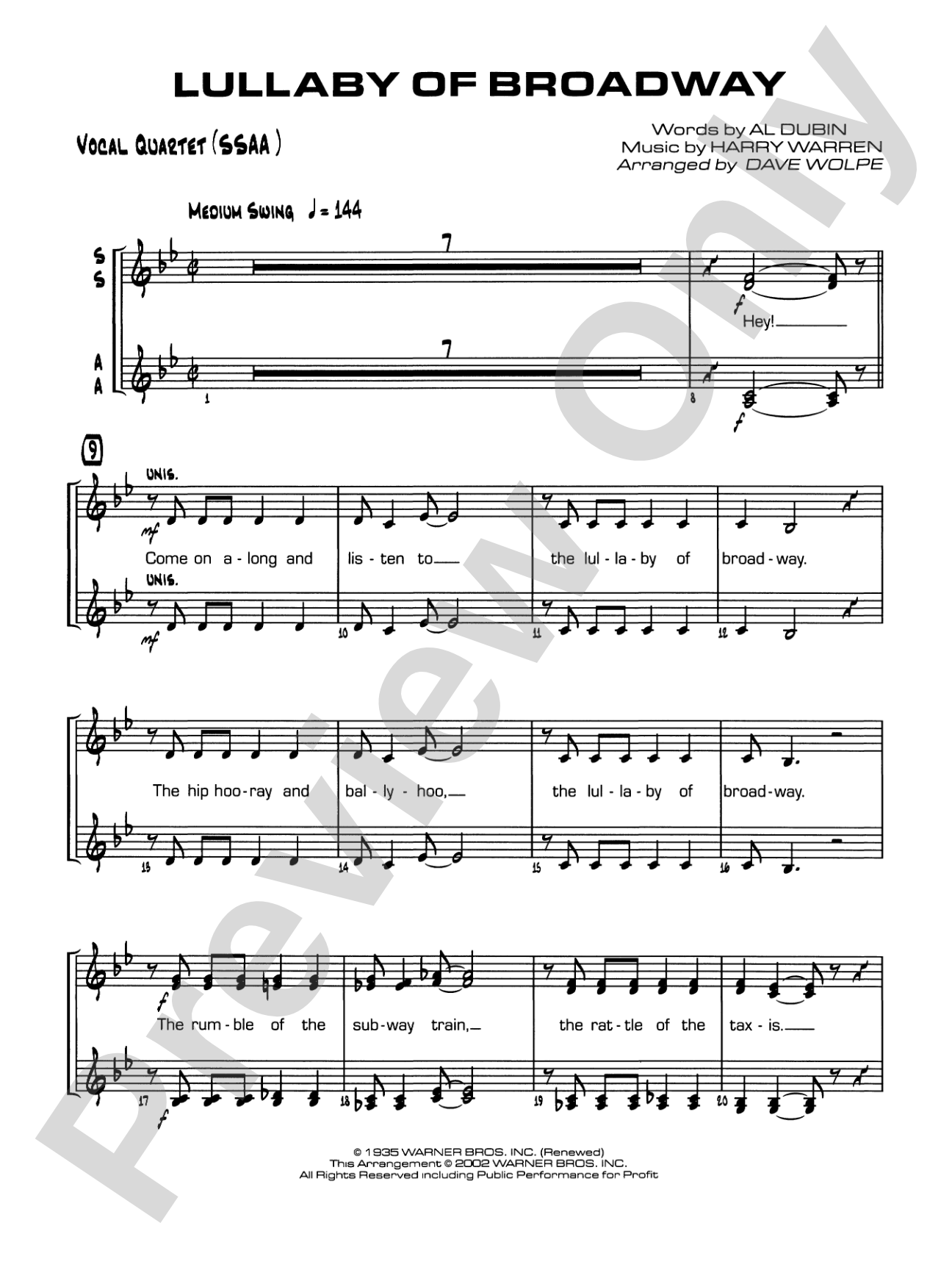
A swinging chart for vocal quartet with parts provided for SATB, SSAA or solo vocalist. Composed by Harry Warren, pitched in the key of B-flat, this excellent chart is arranged by Dave Wolpe, one of the best writers in the music business. Comfortable vocal parts, a brief tenor saxophone solo and expert writing throughout makes this a great vehicle for jazz vocal group. (2:49)

Don't just read it, hear it, play along with it, and watch your students grow with it. In MakeMusic Cloud, Lullaby of Broadway: SSAA Vocals comes alive with professional accompaniment, adjustable tempo, and built-in practice tools that turn solo practice into real progress.

Sample Audio
0:00
0:00
Sample Video
Additional Details
Series: Jazz Vocal Series
Publisher: Alfred Music
Page Count: 82
SKU: 00-PC-0014742_SSAA

More about this title

About the Composer: Al Dubin

Al Dubin was a lyricist and songwriter who shaped the American musical theater in the 1930s and 1940s. Working primarily with composer Harry Warren, Dubin crafted singable, memorable lyrics for dozens of Broadway and Hollywood productions, establishing himself as one of the era's most prolific songwriting voices.

Why we love this

Dave Wolpe's arrangement preserves the infectious swing of this Broadway standard while giving vocalists genuinely playable parts. The scoring for quartet or solo voice with a tight jazz ensemble gives your ensemble flexibility, and that brief tenor sax solo provides a natural showstopper moment without overwhelming the vocal line.

What to expect

Bright and bustling, with the energy of a stage number and the relaxed swing of a jazz club. The arrangement has personality and lift without losing sight of the song's theatrical roots.

Who it's for

Jazz ensemble directors working with singers, whether you're fielding a vocal quartet, an all-women's group, or a soloist with band accompaniment. This works for intermediate ensembles comfortable with basic swing feel and for students ready to balance jazz ensemble playing with vocal performance.

How to get the most out of it

  • Balance the vocal line carefully against the rhythm section; the ensemble should support and swing behind the vocalist rather than compete. Check that your drummer locks in with the bass player to establish a comfortable groove before adding the horn section.
  • Work the phrasing of the lyrics separate from the melody at first. Broadway diction and jazz timing often pull in different directions, so rehearse how you'll handle word stress within the swing rhythm.
  • Give the tenor saxophonist breathing room during the solo. Mark out the exact bar count in the parts so the vocalist knows exactly when to re-enter, and consider spotlighting the transition back to the vocal with a clear conductor cue.

How to use it

Pair this with other jazz standards to showcase your ensemble's vocal and instrumental range in a single program. It sits comfortably in a concert that mixes small-group jazz work with full ensemble charts, or feature it as a bridge piece between a purely instrumental set and a vocal-focused finale.

Skills your students will build

  • Singing over a walking bass and swing rhythm
  • Trading melodic phrases between voice and tenor saxophone
  • Balancing vocal blend and diction within a jazz context
  • Responding to ensemble swing and groove rather than a strict pulse

You May Also Like