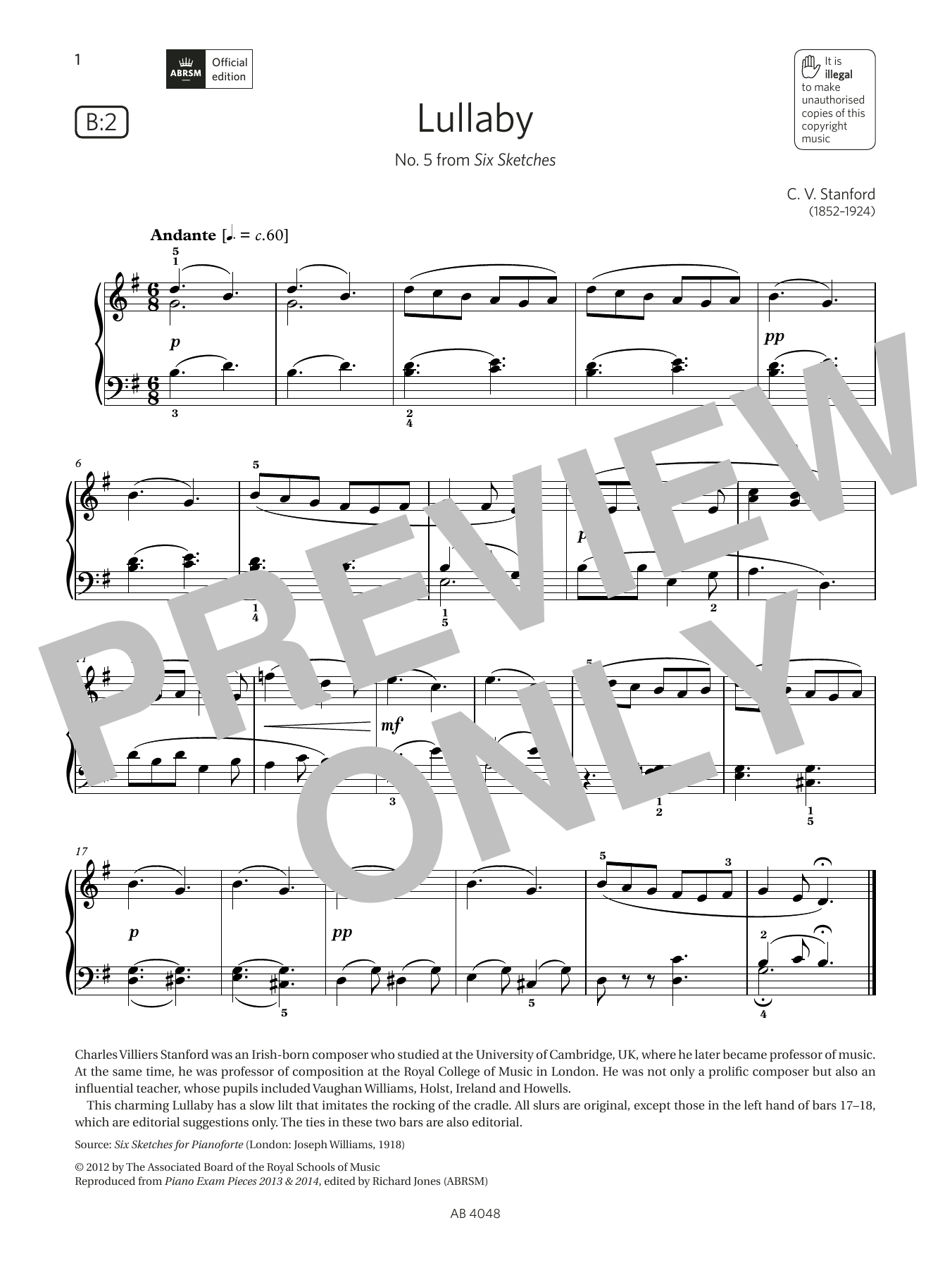
Charles Villiers Stanford (1852-1924) was an Irish composer and conductor whose prolific output shaped music education in Britain and beyond. His pedagogical works, including numerous piano pieces graded for young students, remain teaching staples because they balance musical substance with technical accessibility. Stanford understood what students need to progress: pieces that sound accomplished while building core pianistic skills.
Why we love this
Stanford's Lullaby sits at that sweet spot in Grade 2 where students finally feel like real musicians. The writing is straightforward enough to master in a few weeks, yet it has genuine lyrical warmth that rewards thoughtful playing. This piece teaches shape and phrasing naturally, without requiring students to solve technical puzzles first.
What to expect
A gentle, unhurried reverie that feels both intimate and composed. The melody unfolds with the quiet inevitability of a lullaby, supported by simple harmonic progressions that feel stable underfoot. There is nothing flashy here, only the satisfaction of singing through the piano with sincerity.
Who it's for
Young pianists in their second year of study who are ready to explore cantabile playing. This work suits students preparing for ABRSM Grade 2 exams, particularly those in the 2023 and 2024 syllabus. It appeals to teachers seeking repertoire that builds musicianship alongside technique.
How to get the most out of it
Shape the melody with subtle dynamic shaping rather than sudden changes; let each phrase breathe slightly before the next begins
Maintain an even, unhurried tempo throughout; rushing undermines the piece's gentle character
Balance the hands so the accompaniment stays transparent and doesn't overshadow the singing melody line
Listen to how the harmony supports the tune; that awareness transforms a technically simple piece into something expressive
How to use it
Use this as a palate cleanser in a recital, nestled between pieces with more surface activity. It works beautifully in a student showcase where you want to highlight expressive range rather than virtuosity. Early in the year, assign it as a study piece to establish healthy habits around phrasing and tone production before moving to more technically demanding material.
Skills your students will build
Legato playing and connecting phrases smoothly across register changes
Dynamic shaping within a narrow range
Coordination of melody and accompaniment at independent dynamic levels
Reading and interpreting simple harmonic progressions as guides for interpretation
Sustaining a consistent tempo without rushing
You May Also Like
Scan to Complete Your Purchase
Use your phone's camera to scan the code below
You'll log in on your phone and the order will be added to your account