
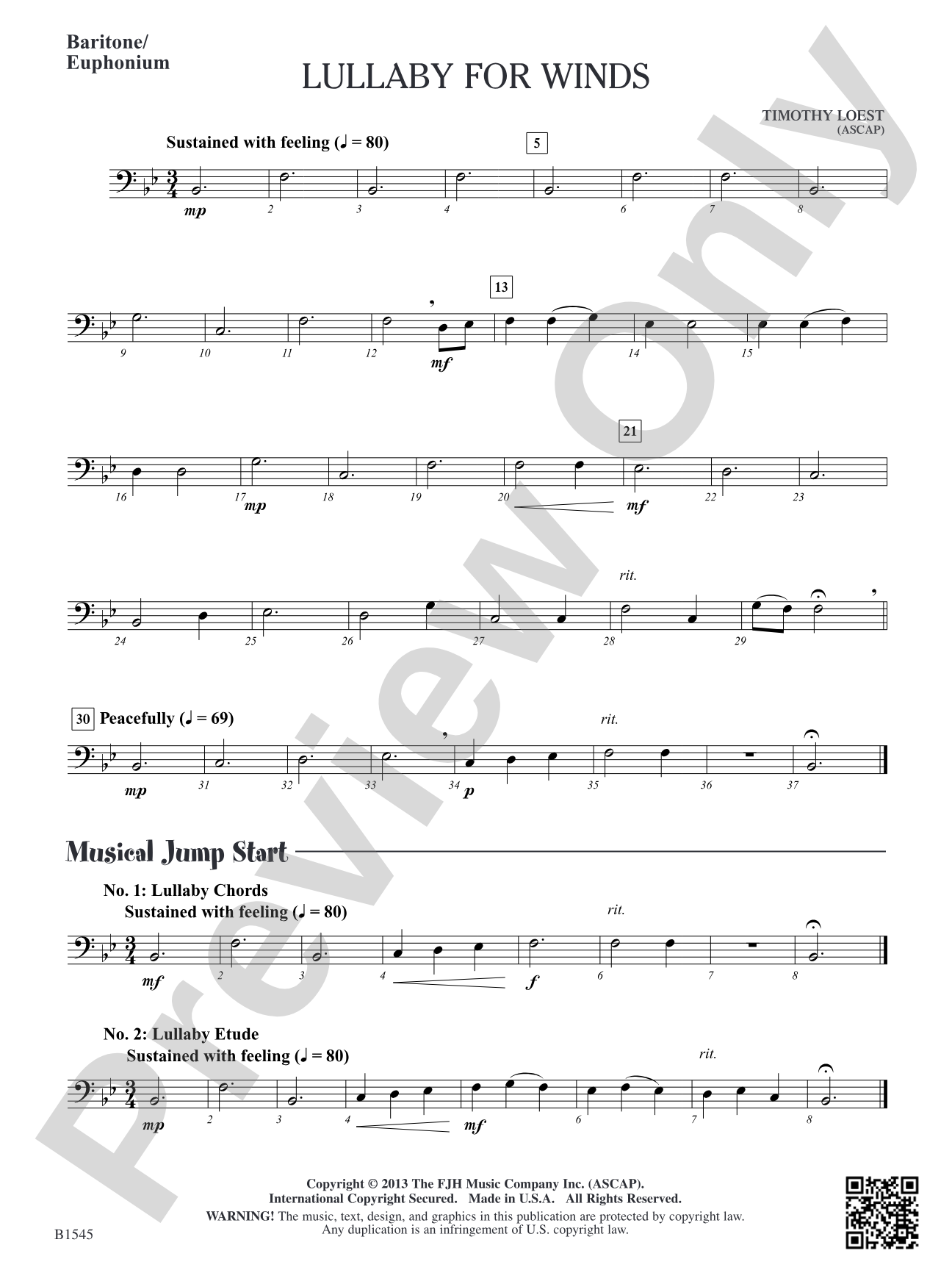

Lullaby for Winds: Baritone/Euphonium
By Timothy Loest
Level:.5
Item: 98-PC-DB1545_BBC1
$7.00
Pickup currently not available
Description
Lush harmonies and lyrical phrases support an unforgettable melody in this incredibly expressive lullaby. Approachable by the youngest of bands, this amazingly artistic composition is also well suited for mature ensembles. Quality literature that will showcase the musicality of your students.


Lullaby for Winds: Baritone/Euphonium isn't in MakeMusic Cloud just yet...but it could be. Let us know you'd like to see it, and you'll help shape what comes next. In the meantime, start a free trial and dive into thousands of interactive titles your students can play along with today.
Request This Title
Tell us you want it.
Start Your Free Trial
Explore everything that's ready to play right now.
Sample Audio
1
Audio File
--:--
0:00
0:00
Sample Video
No sample videos found.
Additional Details
Series:
FJH Concert Band
Publisher:
The FJH Music Company, Inc.
SKU:
98-PC-DB1545_BBC1
More about this title
About the Composer: Timothy Loest

Timothy Loest has established himself as a composer whose work bridges accessibility and artistic depth, with pieces performed by student ensembles worldwide. His impact extends beyond composition into pedagogy; he has shaped instrumental music education through his contributions to the Measures of Success band method and related pedagogical resources while maintaining a full teaching career. In 2017, his composition Cloud Gate received a landmark performance for over 5,000 spectators at Chicago's Millennium Park, and that same year he earned the Illinois Grade School Music Association's Cloyd Myers Memorial Award for Excellence in Music Education.
With a publishing history spanning nearly three decades and partnerships with major publishers including FJH Music Company and C.L. Barnhouse Company, Loest brings deep classroom experience to every score he writes. His work has appeared on network television programs including The Tonight Show Starring Jimmy Fallon and Good Morning America. He holds degrees from Illinois State University and Northwestern University, maintains ASCAP membership, and founded Fanfare Music Press in 2022 to continue publishing high-quality band literature. He regularly accepts commissions and teaches in the Chicago area.
Why we love this
Loest writes for the realities of the beginning band classroom without sacrificing musical substance. The unforgettable melody and lush harmonies give young musicians meaningful artistic material to shape, while the approachable voicing and scoring let even small or developing ensembles sound genuinely musical from the first rehearsal. This is the rare piece that works equally well as a confidence-builder for younger bands and as a vehicle for refined musicality in more experienced ensembles.
What to expect
A gentle, unhurried expression of melody and harmony that feels like settling into a moment of rest. The lush harmonic support and lyrical phrasing create warmth and tenderness, giving the band a chance to sound expansive and expressive even when playing within a smaller dynamic range.
Who it's for
Beginning to intermediate concert bands seeking literature that sounds mature without technical barrier. This piece also serves experienced ensembles looking for a genuinely artistic work that prizes musicality over technical display, offering them the chance to refine phrasing, balance, and ensemble blend.
How to get the most out of it
- Allow the melodic line to sing through even in the thinnest textures; sparse voicing can sound beautiful when each phrase has a clear direction and breath.
- Balance the harmonic foundation carefully so that supporting voices enhance rather than bury the primary melody.
- Shape dynamics gradually and deliberately, avoiding sudden changes that interrupt the lullaby's sense of calm and continuity.
- Encourage players to listen across sections and match tone quality within their own parts; uniformity of sound will amplify the expressive warmth.
How to use it
Pair this with other accessible concert band literature for a program that celebrates musicality across all ability levels, or use it as an opening piece to establish a reflective mood. The expressive demands make it equally suited to concert settings, adjudicated festivals, or community performances where emotional connection matters as much as technical brilliance.
Skills your students will build
- Phrasing and shaping lyrical melodic lines
- Balance between primary melody and harmonic accompaniment
- Controlled dynamics and expressive use of the full range
- Listening and blending across sections
- Ensemble musicality with accessible ranges and voicing