

Lullaby for Nicholas: String Orchestra Conductor Score & Parts
By Bob Cerulli
Grade: 1
Item: 00-PK-0001124

$40.00
Pickup currently not available
Buy Extra Parts (Digital PDF Download)
| Product | Price | Quantity |
|---|---|---|
| Lullaby for Nicholas: Score | $6.00 | |
| Lullaby for Nicholas: 1st Violin | $5.99 | |
| Lullaby for Nicholas: 2nd Violin | $5.99 | |
| Lullaby for Nicholas: Viola | $5.99 | |
| Lullaby for Nicholas: Cello | $5.99 | |
| Lullaby for Nicholas: String Bass | $5.99 | |
| Lullaby for Nicholas: Piano Accompaniment | $5.99 |
Parts Added to Cart!
Description
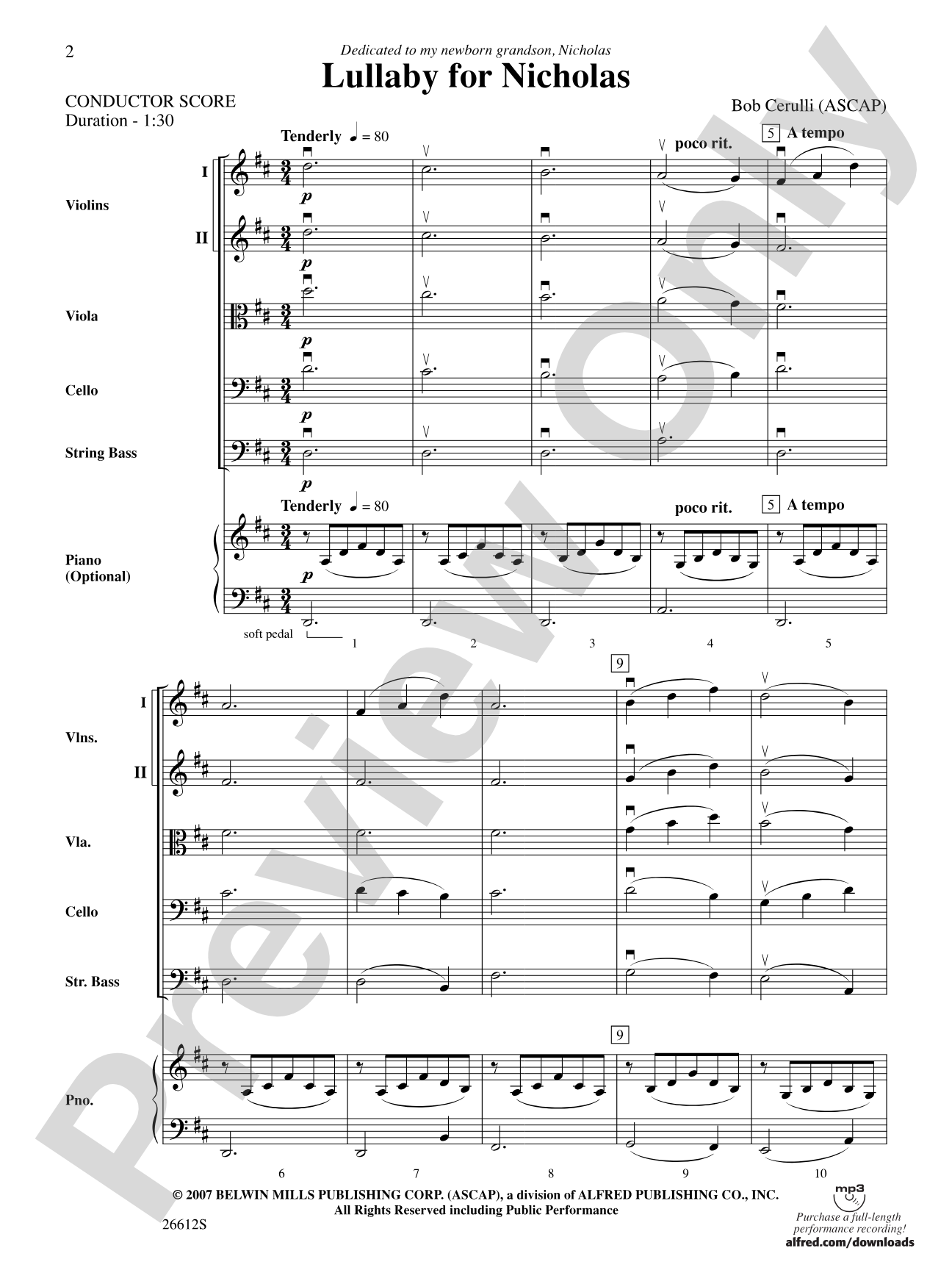
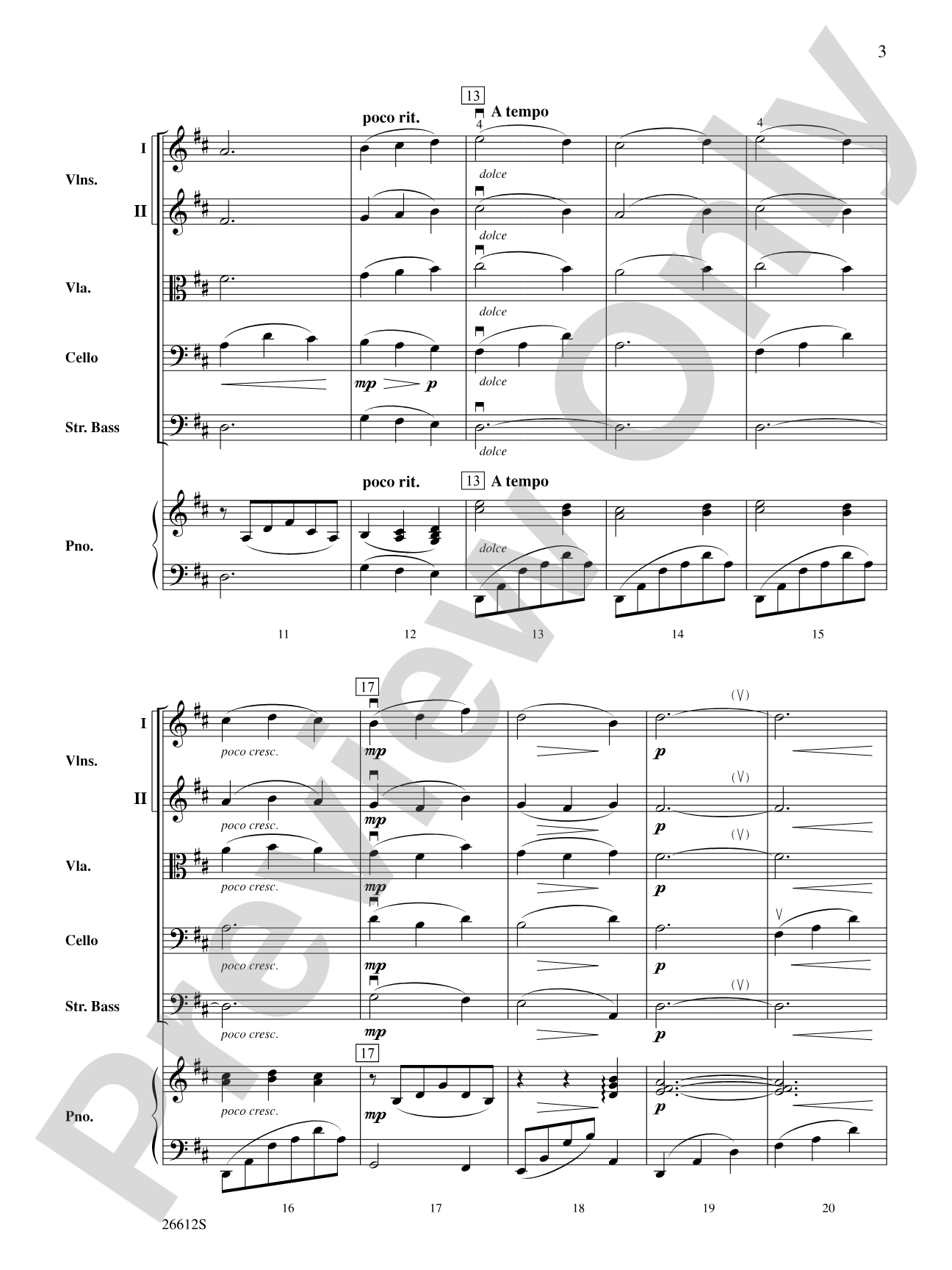
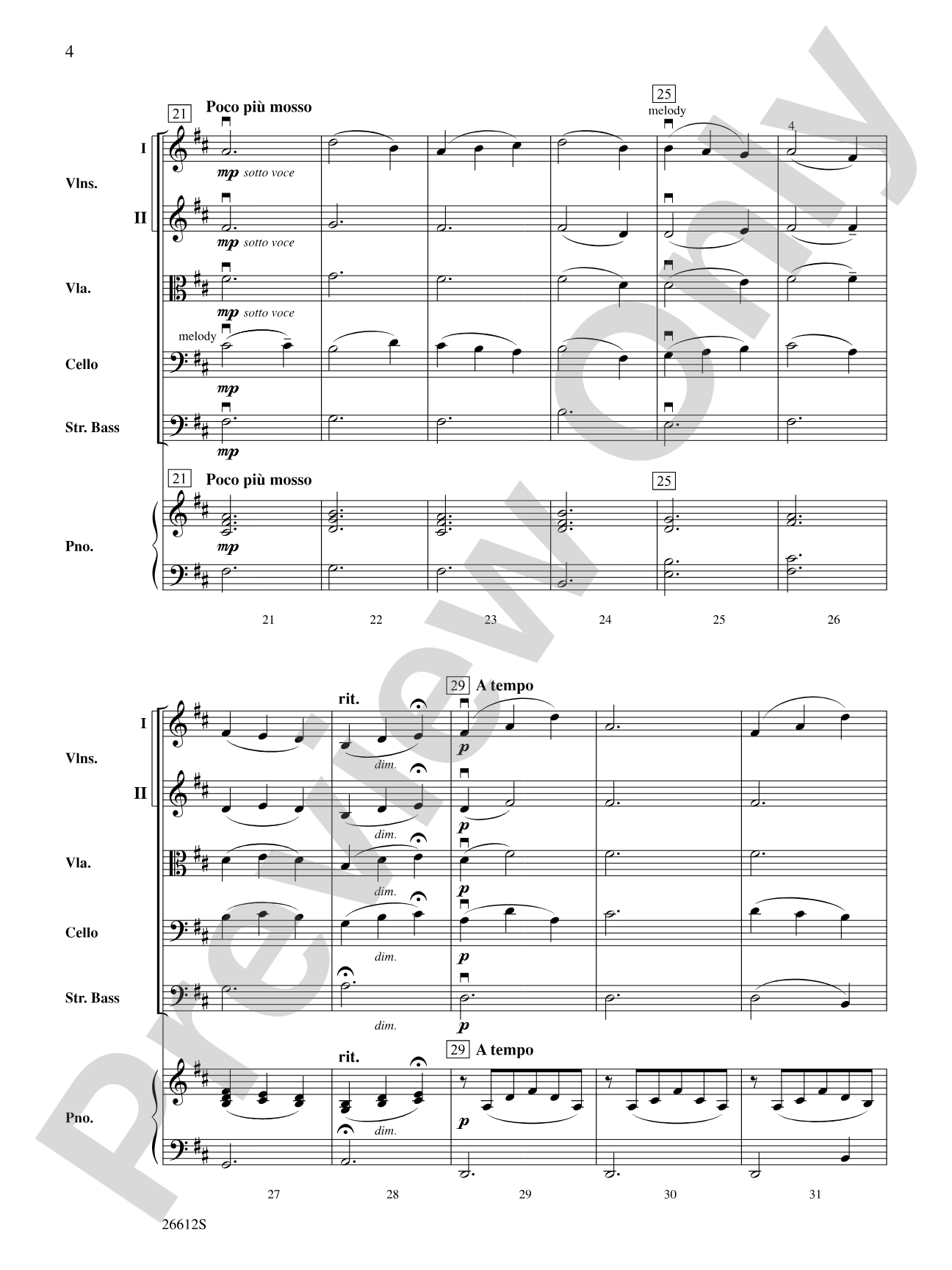
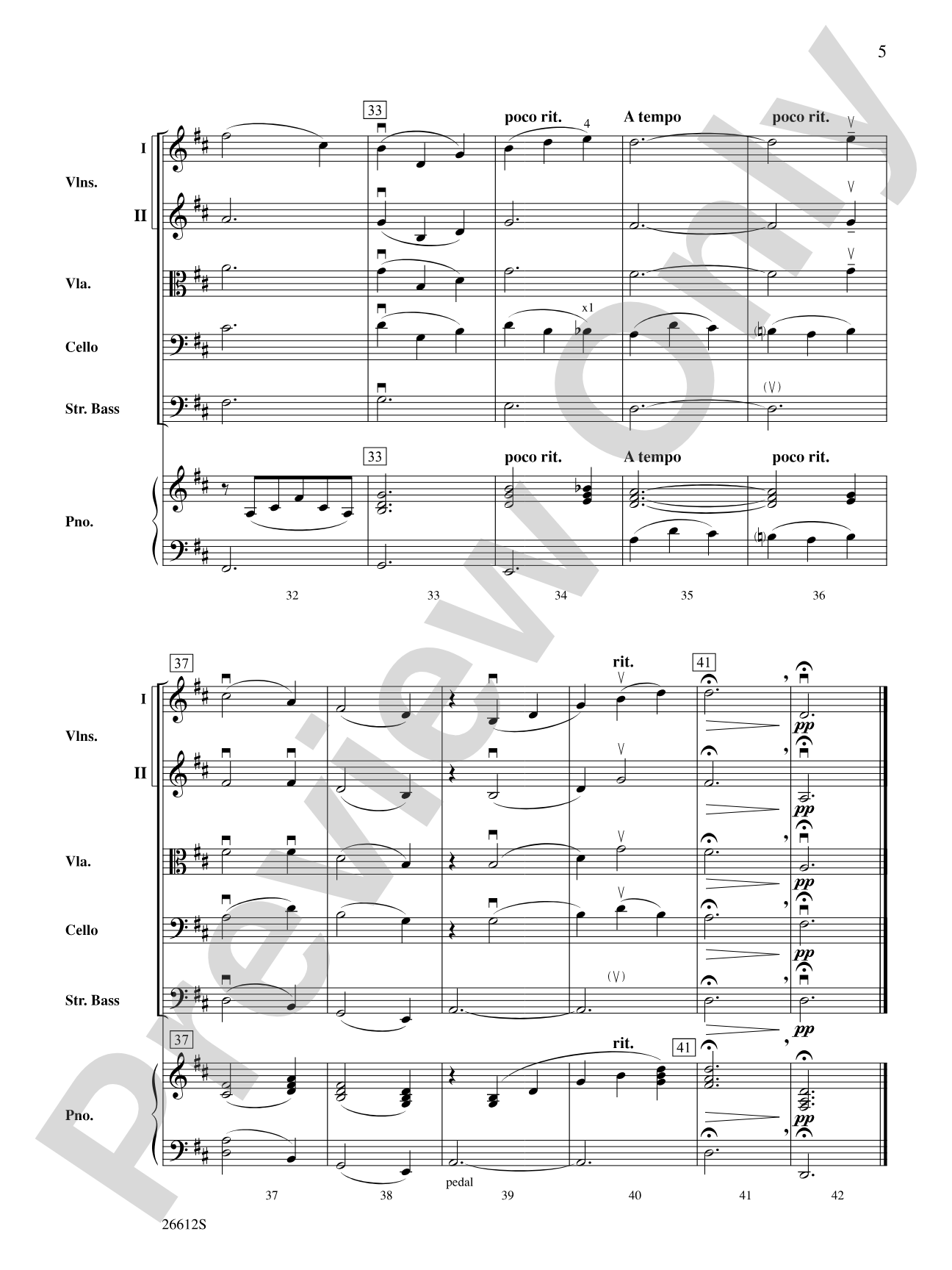
A flowing and delicate piece written for the composer's new grandson, this lovely lullaby will delight audiences with its simplicity. The legato nature of the piece will provide great bowing practice for young players. This title is available in MakeMusic Cloud.


Don't just read it, hear it, play along with it, and watch your students grow with it. In MakeMusic Cloud, Lullaby for Nicholas: String Orchestra Conductor Score & Parts comes alive with professional accompaniment, adjustable tempo, and built-in practice tools that turn solo practice into real progress.
Open in the Player
Jump straight in and assign it today.
Start Your Free Trial
Open this title and explore the full library in minutes.
Sample Audio
1
Audio File
--:--
0:00
0:00
Sample Video
No sample videos found.
Additional Details
Series:
Belwin Very Beginning String Orchestra
Publisher:
Alfred Music
Page Count:
33
SKU:
00-PK-0001124
More about this title
About the Composer: Bob Cerulli
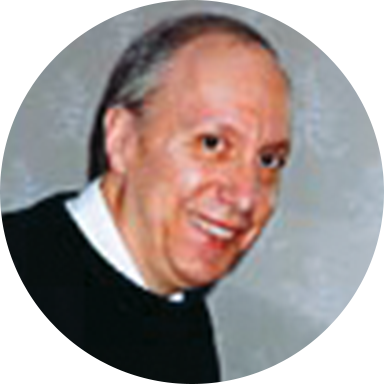
Bob Cerulli studied double bass at the Curtis Institute of Music under Roger Scott, then earned degrees in music education from the University of the Arts and conducting from the College of New Jersey. He performed as Principal Bass with the Greater Trenton Symphony, The New Jersey Capital Philharmonic Orchestra, and Delaware Valley Philharmonic Orchestra, and was a member of the Buffalo Philharmonic under Josef Kripps.
Cerulli's career spans both performance and composition. He freelanced throughout Philadelphia and Atlantic City, appearing on television and recording with artists including Henry Mancini, Bill Conti, Michel Legrand, Marvin Hamlish, Luciano Pavarotti, and Andrea Bocelli. The Philadelphia Orchestra performed his composition Celebration, and his Romance in D Major for cello and piano was written for and premiered by Philadelphia Orchestra Principal Cellist William Stokking. After 29 years teaching music in public schools, Cerulli now serves as Senior Adjunct Professor at Rowan College at Burlington County and continues to conduct at regional music festivals.
Why we love this
Cerulli writes from genuine experience with young string players and understands what makes early repertoire both musically satisfying and pedagogically sound. The legato writing naturally builds bowing control without requiring technical pyrotechnics, and the piece's personal origin (written for his grandson) gives it an authenticity that young musicians respond to. It's the kind of work that sounds beautiful in performance while serving real teaching purposes.
What to expect
Gentle and flowing, like a musical hug. The piece breathes calmly and invites listeners into a quiet, intimate moment while young players experience the joy of making beautiful, connected sound together.
Who it's for
String orchestras at the earliest stages of development will find this piece accessible and rewarding. Conductors leading Grade 1 ensembles can program it confidently knowing it suits developing bow control and expressive listening without overwhelming young players.
How to get the most out of it
- Shape the legato lines with gentle dynamic contours rather than playing straight mezzo-forte throughout. Vary the phrase arches slightly to keep the audience engaged.
- Encourage violins to sustain tone consistently across bow changes; a lullaby's effectiveness depends on seamless, singing lines.
- Balance the ensemble so that whoever carries the melody (likely first violins) projects clearly, but keep inner voices present and warm.
- Take time in rehearsal to discuss what a lullaby represents musically and emotionally; this context helps young players understand why legato matters here.
How to use it
This works beautifully as a concert opener, settling an audience into a receptive state before more energetic selections. It also serves well in spring or end-of-year programs where you want to showcase both the musicality and growth your young string players have achieved.
Skills your students will build
- Sustained legato bowing across phrase lengths
- Dynamic shaping and phrasing in a simple melodic context
- Ensemble balance and blend within a homogeneous texture
- Expression through tone quality rather than technical difficulty