Lullaby for Clarinets: E-flat Baritone Saxophone Sheet Music Preview

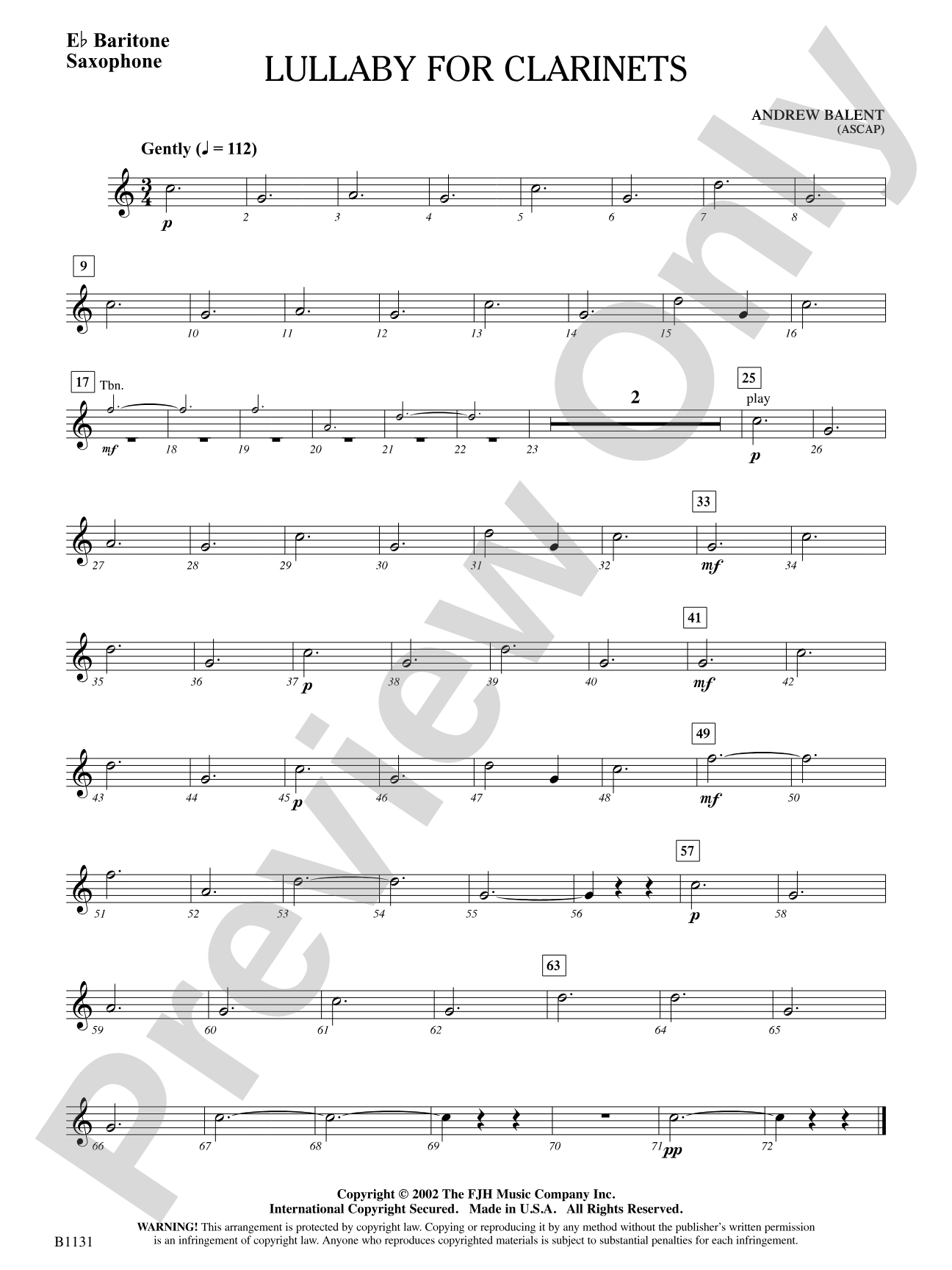
Lullaby for Clarinets: E-flat Baritone Saxophone

By Andrew Balent

Grade: 1

Item: 98-PC-DB1131_BTX

Digital Download
$7.00
Description
This is a wonderful way to feature the lyrical playing of your beginning clarinet section. A simple accompaniment in 3/4 provides a nice background for the beautiful melody presented by the clarinets. Plenty of cues are provided, as well as ample amounts of rest, in each part. An excellent choice to teach phrasing, and show off the lyrical abilities of your band. (2:00)

Lullaby for Clarinets: E-flat Baritone Saxophone isn't in MakeMusic Cloud just yet...but it could be. Let us know you'd like to see it, and you'll help shape what comes next. In the meantime, start a free trial and dive into thousands of interactive titles your students can play along with today.

Sample Audio
0:00
0:00
Sample Video
Additional Details
Series: FJH Beginning Band
Publisher: The FJH Music Company, Inc.
SKU: 98-PC-DB1131_BTX

More about this title

About the Composer: Andrew Balent

Andrew Balent has built a reputation as a composer and arranger who understands the realities of the beginning band classroom. His work with the FJH Beginning Band series demonstrates a consistent commitment to writing accessible music that doesn't sacrifice musicality or educational value.

Balent's compositions are grounded in practical pedagogy. He knows what young musicians can accomplish at each level and writes accordingly, creating pieces that challenge students just enough to build their skills while keeping the experience rewarding rather than frustrating.

Why we love this

This score lets you build a genuine solo feature around young clarinetists without the complexity or time demand of teaching anything beyond foundational musicianship. The strategic cues and rest placement keep your ensemble grounded while the clarinet section takes center stage, and that's rare to find this well-balanced at Grade 1.

What to expect

Gentle and intimate, like someone humming a familiar tune to themselves. The three-four meter gives it an almost waltz-like sway, and the clarinet melody sits in a warm, accessible register that feels natural for younger players.

Who it's for

This works especially well for beginning band directors who want to feature their clarinet section without abandoning the rest of the ensemble. It's equally useful as a concert opener or closer, and works nicely when you need a piece that looks modest on the page but delivers musically.

How to get the most out of it

  • Shape the clarinet melody in two-bar phrases rather than thinking in four-bar chunks; this helps younger players understand how a simple tune actually breathes and prevents the dotted rhythms from feeling mechanical.
  • Let the accompaniment sit comfortably behind the soloists. Remind the supporting sections that they're coloring the sound, not driving it.
  • Have your clarinetists mark dynamic contours in their parts at rehearsal. Even beginners respond well to knowing where the phrase wants to grow and where it settles.

How to use it

Opening a concert with this piece sets a lyrical tone and lets the audience settle in. It also pairs well in a thematic program about melody or phrasing, where you might follow it with something more rhythmically driven to show contrast.

Skills your students will build

  • Sustaining lyrical phrasing in 3/4 meter
  • Balancing melodic expression with technical simplicity
  • Listening to accompanimental texture while maintaining independence
  • Controlling dynamic shaping across a complete musical phrase

You May Also Like