Lullaby for a Starry Night: Viola Sheet Music Preview

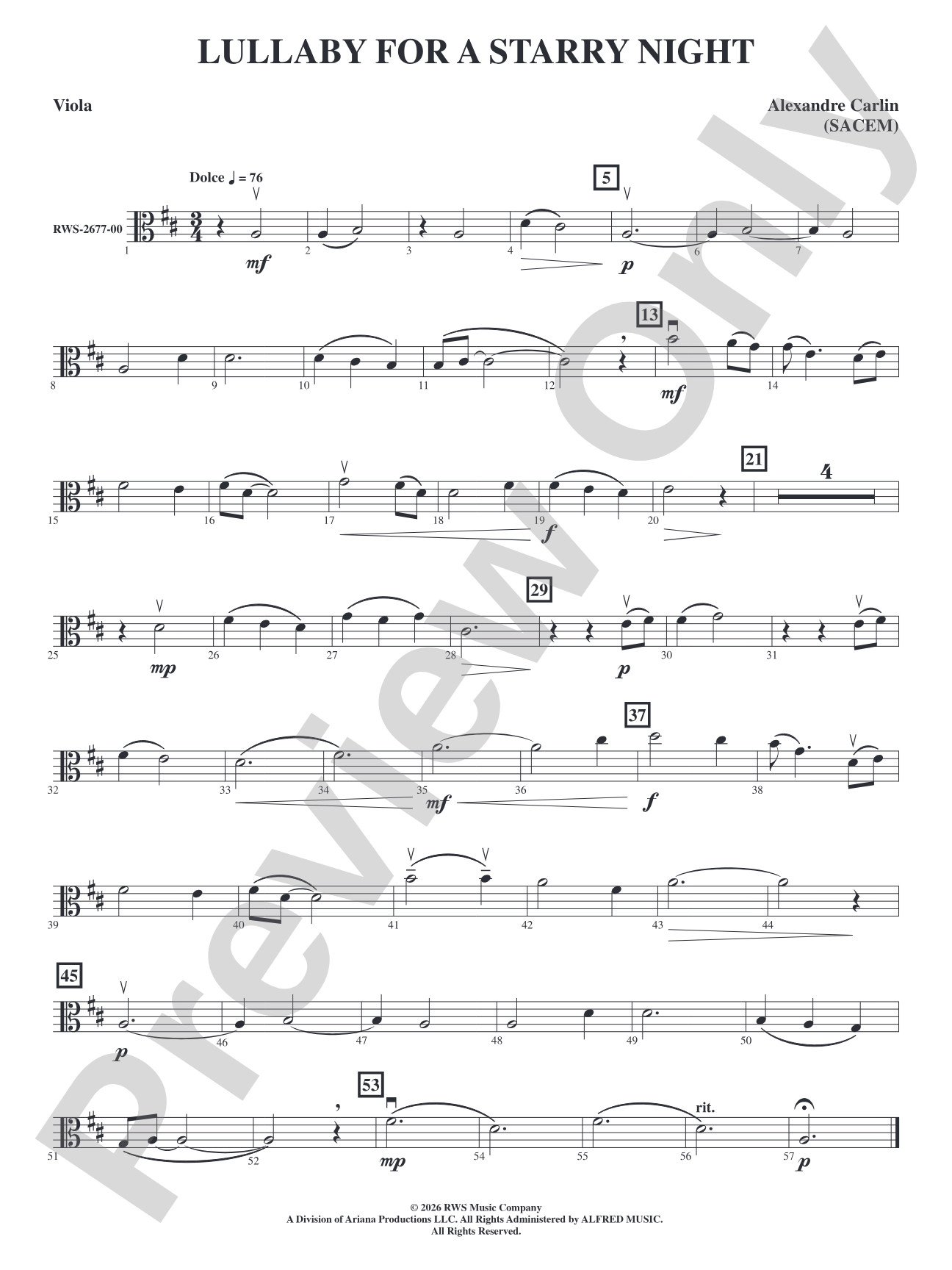
Lullaby for a Starry Night: Viola

By Alexandre Carlin

Grade: 1.5

Item: 98-PC-0000051_VA1

Digital Download
$3.00
Description
Delight your audience with the tranquil beauty of Lullaby for a Starry Night by Alexandre Carlin. This lyrical work, set in graceful 3/4 time, paints a serene portrait of the night sky. An excellent choice for beginning string ensembles, it offers young musicians the chance to explore expressive playing and musicality, making it an enchanting addition to any concert program.

Lullaby for a Starry Night: Viola isn't in MakeMusic Cloud just yet...but it could be. Let us know you'd like to see it, and you'll help shape what comes next. In the meantime, start a free trial and dive into thousands of interactive titles your students can play along with today.

Sample Audio
0:00
0:00
Sample Video
Additional Details
Series: RWS - Beginning Strings
Publisher: RWS Music Company
SKU: 98-PC-0000051_VA1

More about this title

Why we love this

The writing here respects young players without condescending to them. Carlin shapes genuine lyricism through simple means: clean textures, unhurried phrasing, and space for individual voices to emerge. Your ensemble will sound polished and musical from the first rehearsal.

What to expect

Quiet starlight cast across still water. The 3/4 waltz rhythm creates a gentle rocking motion, while the lyricism invites players to shape phrases with intention rather than velocity. You're building an atmosphere, not racing toward a finish.

Who it's for

Beginning string orchestras seeking repertoire that develops musicality without technical pyrotechnics. Directors programming concert sets that balance energy with reflective moments will find this particularly valuable.

How to get the most out of it

  • Establish the gentle 3/4 pulse early with a light conductor's beat; avoid pushing the tempo forward even when young players gain confidence.
  • Balance the melody across sections so no single part dominates; younger violins often bloom when they understand they're supporting rather than leading.
  • Let silence breathe. The composition's serenity depends on restraint, so mark breath points in parts and honor them in rehearsal.
  • Record a full run-through midway through preparation so students hear the complete arc; it transforms their understanding of where they fit within the whole.

How to use it

Position this after an upbeat opener to reset the room's energy, or use it to close a first half and transition audiences into deeper focus. Its contest and festival suitability also makes it a solid choice for adjudicated performances where judges respond to control and ensemble balance.

Skills your students will build

  • Sustained legato playing and phrase shaping in 3/4 meter
  • Dynamic control at softer volumes (pp to p range)
  • Listening across sections for blend and balance
  • Expressing musicality through restraint rather than intensity

You May Also Like