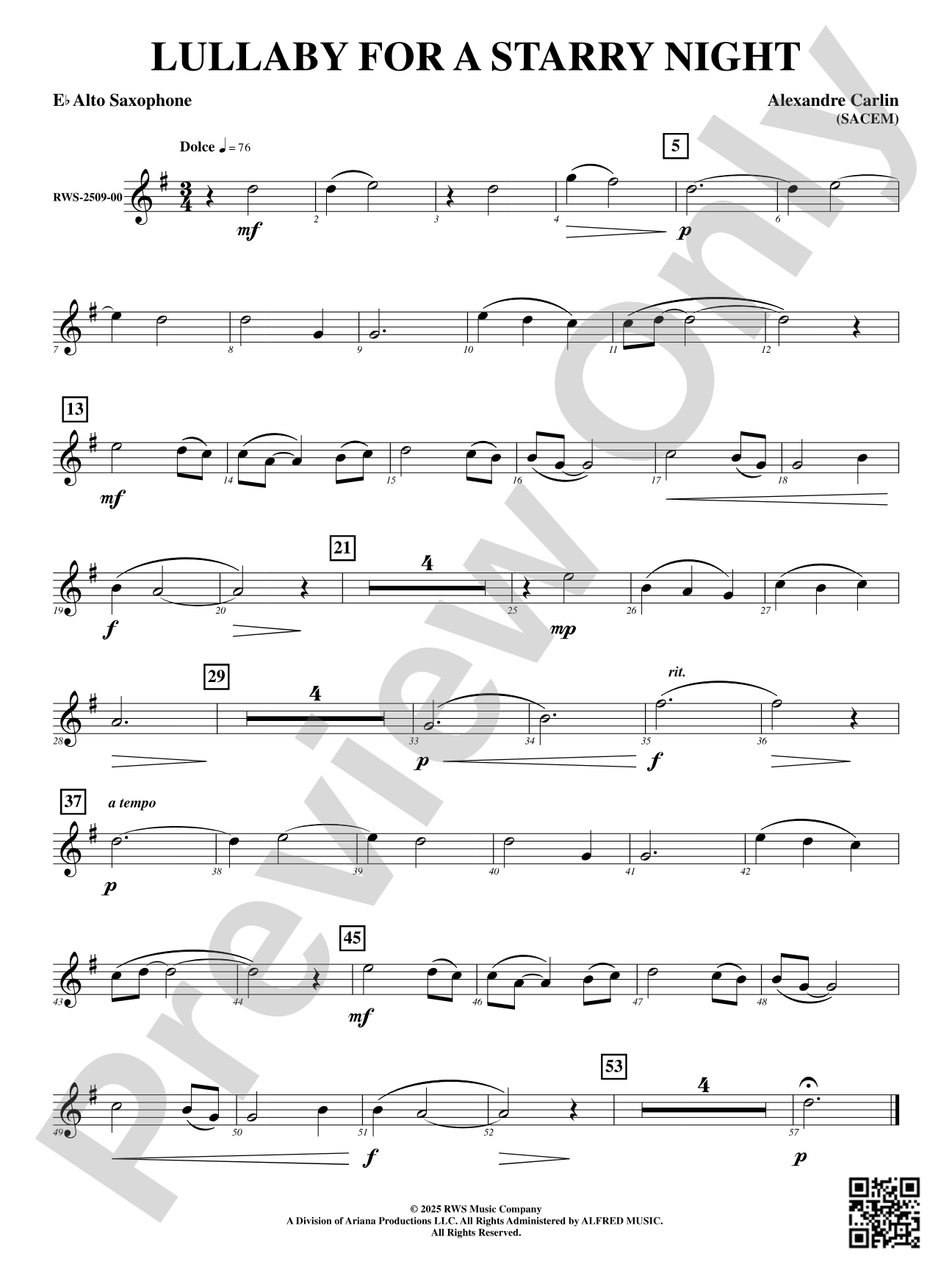
Delight your audience with the tranquil beauty of Lullaby For A Starry Night by Alexandre Carlin. This lyrical work, set in graceful 3/4 time, paints a serene portrait of the night sky. An excellent choice for beginning bands, it offers young musicians the chance to explore expressive playing and musicality, making it an enchanting addition to any concert program. (2:35)
Discover MakeMusic Cloud: thousands of interactive titles your students can play along with today.
Carlin writes music that respects the developmental needs of young players without sacrificing genuine musicality. Beginning bands often struggle to find repertoire that teaches expressive playing without demanding technical heroics, and this piece nails that balance. The 3/4 meter and lyrical phrasing give students something beautiful to shape from their first read-through.
What to expect
Serene and unhurried, like watching constellations emerge in a darkening sky. The 3/4 meter creates a gentle, rocking quality that invites players to move with the music rather than fight against it. Moments of subtle harmonic color shimmer without overwhelming the straightforward elegance of the melodic line.
Who it's for
Beginning band directors seeking a Grade 1 concert piece that develops musicianship alongside technical literacy. This works equally well for young ensembles preparing for their first festival or for established beginner groups looking to deepen their interpretive skills.
How to get the most out of it
Shape phrases deliberately in long lines rather than playing measure to measure. Young players often need permission to think beyond bar lines, especially in lyrical writing.
Balance the middle voices so the melody doesn't disappear into the thicker sonority of the full band. A light rehearsal touch early on prevents drowning out your soloists.
Establish a steady, singing tempo that supports the 3/4 lilt without rushing. Waltz-time pieces reveal uneven ensemble rhythm immediately.
Encourage players to listen for the starry night imagery in the harmonic movement. Framing the music visually helps young musicians understand why a particular chord change matters.
How to use it
Open a concert with this piece to establish a reflective mood and ease your audience into the program. Alternatively, use it as a palate cleanser between more energetic selections, or program it alongside other lyrical Grade 1 works to create a thematic arc around beauty and restraint.
Skills your students will build
Singing tone production within a fuller ensemble texture
Shaping long melodic phrases across multiple measures
Listening to middle voices and harmonic support parts
Reading music in 3/4 meter
Balancing dynamics to feature and support different instrumental sections
You May Also Like
Scan to Complete Your Purchase
Use your phone's camera to scan the code below
You'll log in on your phone and the order will be added to your account