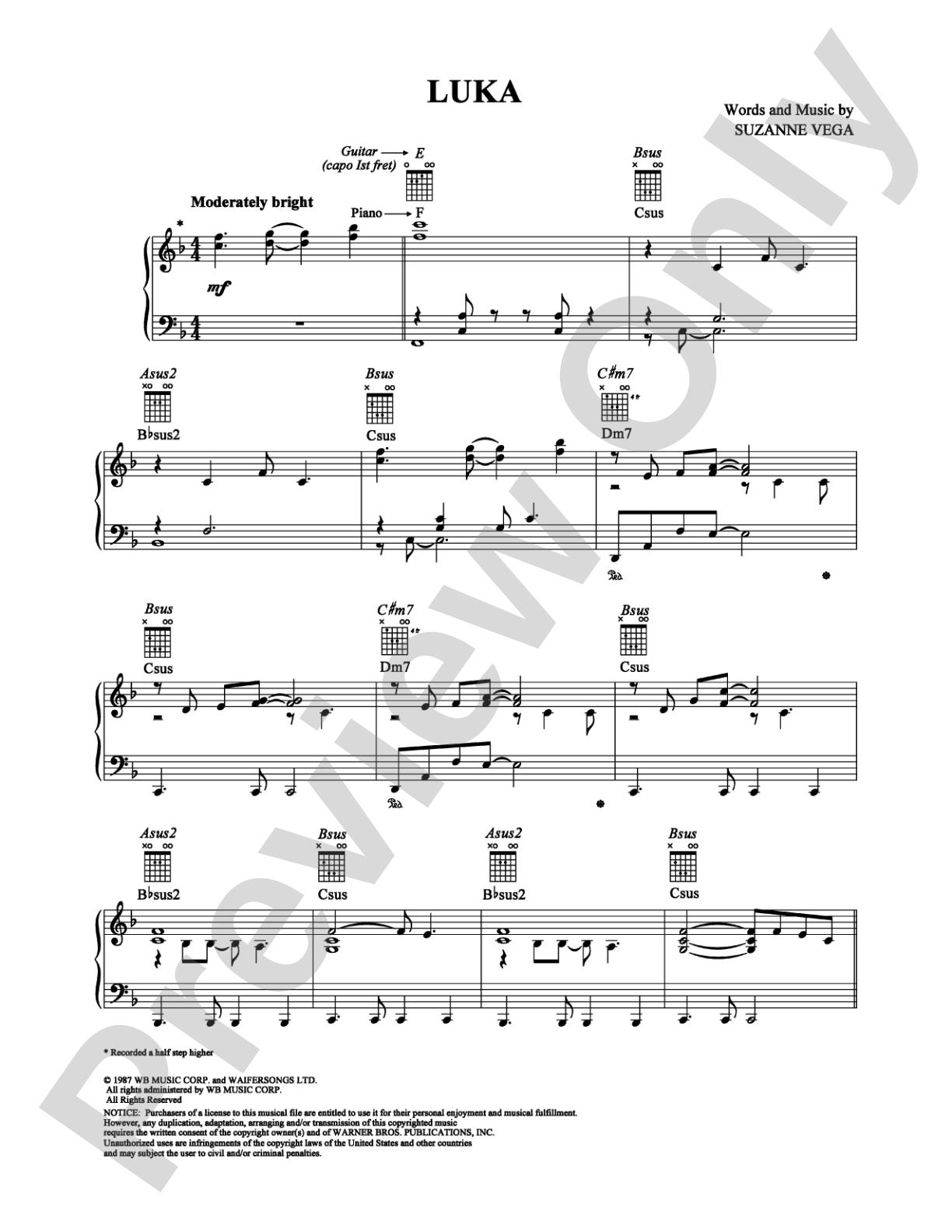
Suzanne Vega emerged in the 1980s as a singer-songwriter whose sparse, literary approach to pop music set her apart from her contemporaries. Her compositions are built on precise lyrical observation and minimal sonic arrangements, allowing words and melodies to carry equal weight. These qualities made her work influential in music education circles, where her songs appear frequently in vocal and piano curricula.
Vega's storytelling method, particularly her ability to embed narrative tension in deceptively simple chord progressions, provides valuable models for students learning to connect text and music. Teachers have long recognized the pedagogical value of her catalog for developing interpretive awareness and emotional authenticity in performance.