
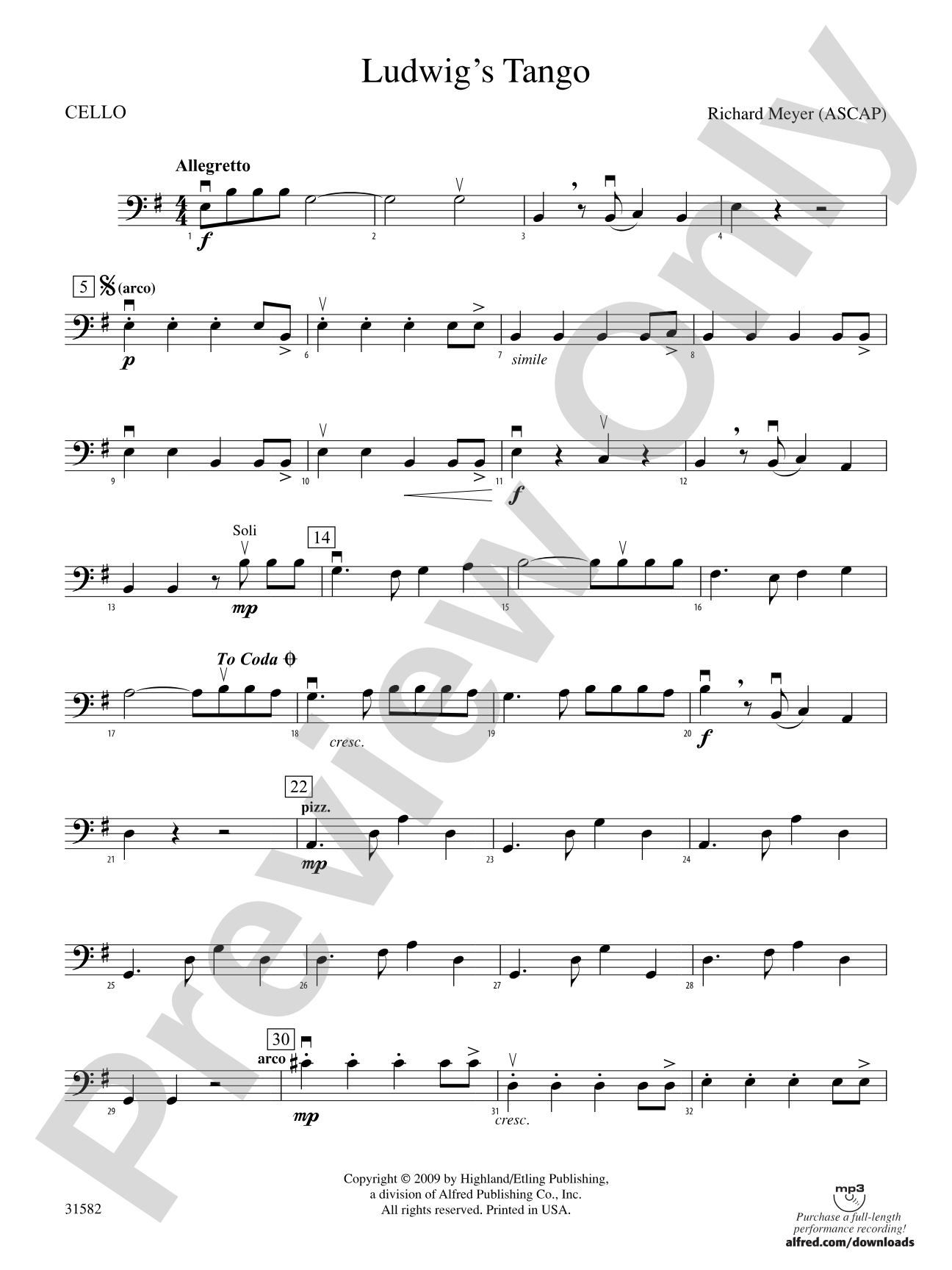

Ludwig's Tango: Cello
By Richard Meyer
Grade: 2
Item: 00-PC-0014847_VC1
$5.99
Pickup currently not available
Description
Beethoven's famous Fifth Symphony has been transformed into a delightful tango for your young string orchestra. Everyone will recognize the material here, and all of the instruments get a chance at the tune, as Ludwig's famous four-note motif is tossed from section to section. Packed full of learning opportunities including staccato and legato bow styles, dotted rhythms, accents and simple accidentals, this arrangement even includes parts for maracas and claves to add to the international flavor. A fun way to introduce your students to a symphonic masterpiece and to tango style. Correlates with String Explorer Book Two, Unit 3. This title is available in MakeMusic Cloud.


Don't just read it, hear it, play along with it, and watch your students grow with it. In MakeMusic Cloud, Ludwig's Tango: Cello comes alive with professional accompaniment, adjustable tempo, and built-in practice tools that turn solo practice into real progress.
Open in the Player
Jump straight in and assign it today.
Start Your Free Trial
Open this title and explore the full library in minutes.
Sample Audio
1
Audio File
--:--
0:00
0:00
Sample Video
No sample videos found.
Additional Details
Series:
Highland/Etling String Explorer
Publisher:
Alfred Music
Page Count:
148
SKU:
00-PC-0014847_VC1
More about this title
About the Composer: Richard Meyer

Richard Meyer brings three decades of classroom experience to his compositions and arrangements. He spent 22 years directing orchestras at Oak Avenue Intermediate School in Temple City, California, expanding the program from 29 students to 200, and also oversaw the district's elementary string curriculum. His "Giving Bach" program, launched in 2009, has earned national recognition for using interactive concerts to reach special needs and underserved students across Southern California.
Beyond the classroom, Meyer has conducted the Pasadena Youth Symphony Orchestra for 16 years and guest-led all-state ensembles in multiple states. He served as string editor for Alfred Publishing Company for 16 years and co-authored the String Explorer Series, now standard in many school programs. With nearly 200 published compositions and arrangements, Meyer remains an active clinician at national conferences and workshops.
Why we love this
This arrangement solves a real programming need: young orchestras want to play material their audiences recognize, and Beethoven's Fifth gives you exactly that while teaching essential bow techniques and rhythmic concepts. Meyer's orchestration keeps every section engaged by rotating the iconic four-note motif throughout the ensemble, so no one sits out the fun. The tango styling adds genuine musical contrast to typical Grade 2 repertoire without abandoning pedagogical substance.
What to expect
Spirited and playful, with the unmistakable weight of Beethoven's revolutionary opening transformed into something graceful and dance-like. The constant exchange of the famous four-note motif creates a sense of musical conversation, while the added percussion brings warmth and rhythmic vitality that feels fresh even to seasoned audiences.
Who it's for
Grade 2 string orchestras looking for engaging concert repertoire that connects young players to canonical music. This arrangement works equally well for festival play or school assemblies where recognizable melodies matter.
How to get the most out of it
- Balance the staccato articulation across all sections during the motif exchanges; mark entrances lightly in rehearsal so players recognize when their section takes the lead.
- Bring out the dotted rhythms with clear rhythmic precision in the accompaniment parts, especially in viola and second violin, to keep the tango pulse steady.
- Let the percussion (maracas and claves) establish the Latin groove from the first rehearsal; their rhythmic security will help younger string players internalize the tango feel.
- Shape the dynamic accents Meyer writes into the theme to create forward momentum; avoid rushing the syncopated passages by conducting them with a relaxed downbeat.
How to use it
Program this as a concert opener to grab attention with a familiar tune, or place it in the middle of a set to lift energy after a more serious work. It pairs naturally with other Grade 2 light concert pieces and makes an excellent festival selection that showcases both musicality and ensemble cohesion.
Skills your students will build
- Distinguishing between staccato and legato bow articulation within a single piece
- Reading and executing dotted rhythms accurately
- Playing rhythmic accents with control and consistency
- Navigating simple accidentals while maintaining ensemble intonation
- Managing thematic exchanges and sectional awareness when the melody passes between string sections
- Responding to the rhythmic and stylistic demands of tango idiom