
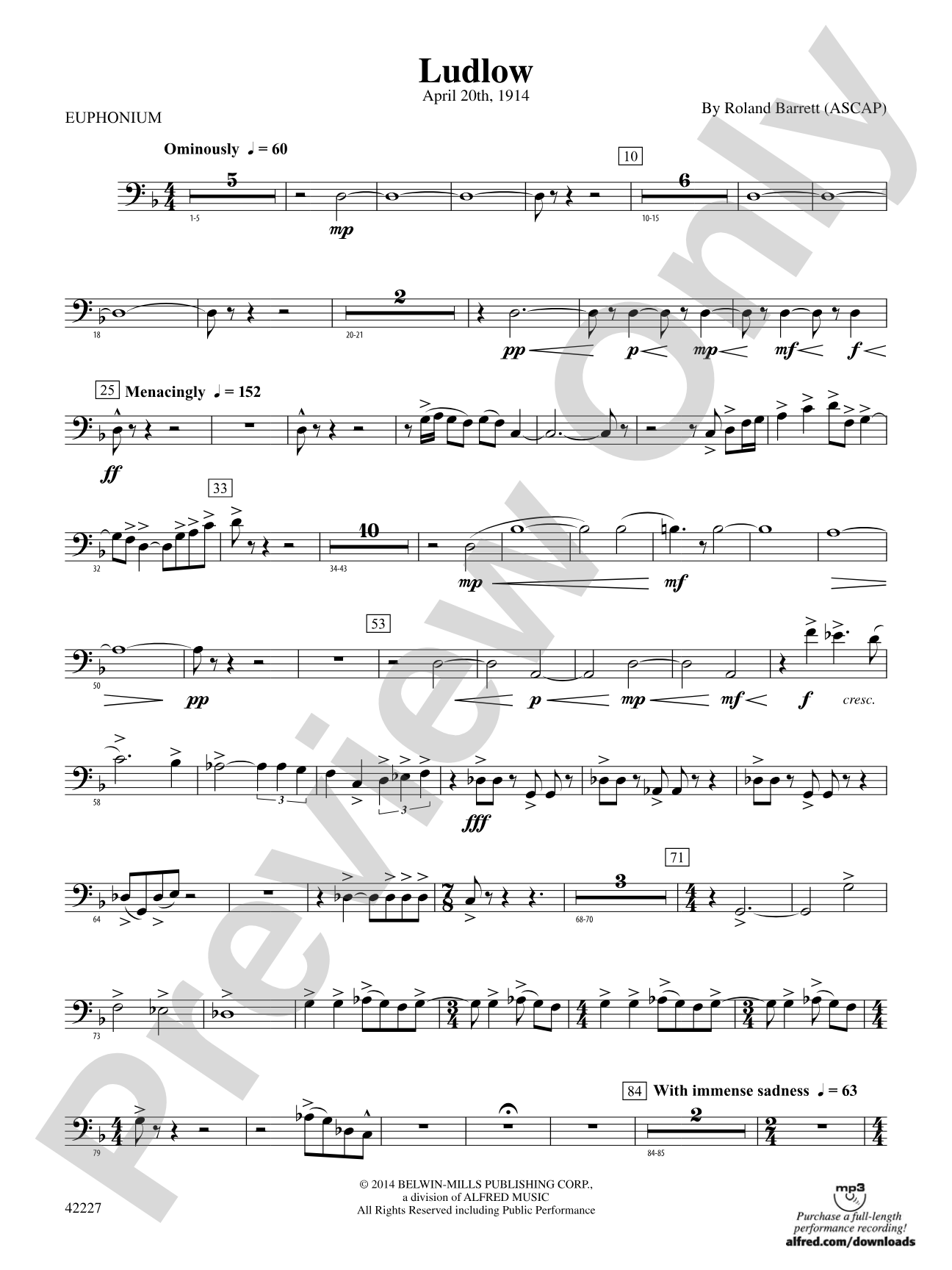

Ludlow: Baritone B.C.
April 20th 1914
By Roland Barrett
Grade: 4 (Medium)
Item: 00-PC-0016715_BBC1
$3.00
Pickup currently not available
Description
The tragic events involving organized labor known as the Ludlow massacre of 1914 served as the catalyst for this original epic work. Opening with the building of tension between factions, the exciting and contemporary work depicts the 14-hour battle and its aftermath, concluding with a musical statement of hope and resolution. (7:45)


Don't just read it, hear it, play along with it, and watch your students grow with it. In MakeMusic Cloud, Ludlow: Baritone B.C. comes alive with professional accompaniment, adjustable tempo, and built-in practice tools that turn solo practice into real progress.
Open in the Player
Jump straight in and assign it today.
Start Your Free Trial
Open this title and explore the full library in minutes.
Sample Audio
1
Audio File
--:--
0:00
0:00
Sample Video
No sample videos found.
Additional Details
Series:
Belwin Symphonic Band
Publisher:
Alfred Music
Page Count:
292
SKU:
00-PC-0016715_BBC1
More about this title
About the Composer: Roland Barrett

Roland Barrett has shaped multiple generations of musicians through his dual role as educator and prolific composer. Since joining the University of Oklahoma's music theory and composition faculty in 2001, he has taught 20th-century topics at both undergraduate and graduate levels while maintaining his position as musical arranger for the Pride of Oklahoma marching band.
With more than two hundred published works for symphonic band, chamber ensembles, and marching band, Barrett's compositions have earned recognition from the Dallas Wind Symphony, All-State and All-Region Honor Bands, and major national platforms including NPR, the Midwest Band & Orchestra Convention, and the International Trumpet Guild. He is a multiple recipient of the ASCAP Plus award and holds a former Michael Hennagin memorial scholarship in composition from the University of Oklahoma.
Why we love this
Ludlow transforms historical tragedy into a compelling narrative arc that sustains interest across its seven-and-a-half-minute runtime without sacrificing musical substance. The piece balances visceral dramatic content with genuine musicality, giving your band a concert work that engages audiences emotionally while offering Grade 4 players genuine artistic challenges. Barrett's approach to depicting conflict and resolution through purely instrumental means creates space for each section to contribute meaningfully to the storytelling.
What to expect
The work unfolds like a historical account told through sound. Tension accumulates from quiet unease into the chaos of conflict, building relentlessly before subsiding into a closing section that feels earned rather than imposed. Throughout, the music respects both the gravity of its subject matter and the resilience of those affected.
Who it's for
Concert bands at the Grade 4 level seeking a substantial original work with programmatic depth and contemporary relevance. This piece suits ensembles that balance technical development with musical storytelling and want to engage their audience beyond standard wind band fare.
How to get the most out of it
- Balance the intensity of the battle section against the opening tension-building passage; this contrast defines the dramatic arc. Resist the temptation to play everything at full volume.
- The resolution and statement of hope require a marked shift in tone and tempo awareness. Bring clarity to this final section so the audience hears it as a genuine conclusion, not simply a return to earlier material.
- Study the historical context of the 1914 Ludlow massacre with your ensemble. Musicians who understand what the piece depicts will make more informed dynamic and phrasing choices.
How to use it
Position this as a centerpiece in a concert exploring American history or social themes through music. It pairs effectively with contrasting repertoire—a lighter opening work and a triumphant closer create a well-shaped program that showcases your band's range. The piece also works well for festival and contest competition where dramatic works that avoid sentimentality stand out.
Skills your students will build
- Sustaining musical tension across extended dynamic curves
- Balancing ensemble blend during rapid textural shifts
- Interpreting programmatic content with precise articulation and phrasing
- Executing rapid dynamic changes without losing rhythmic precision