
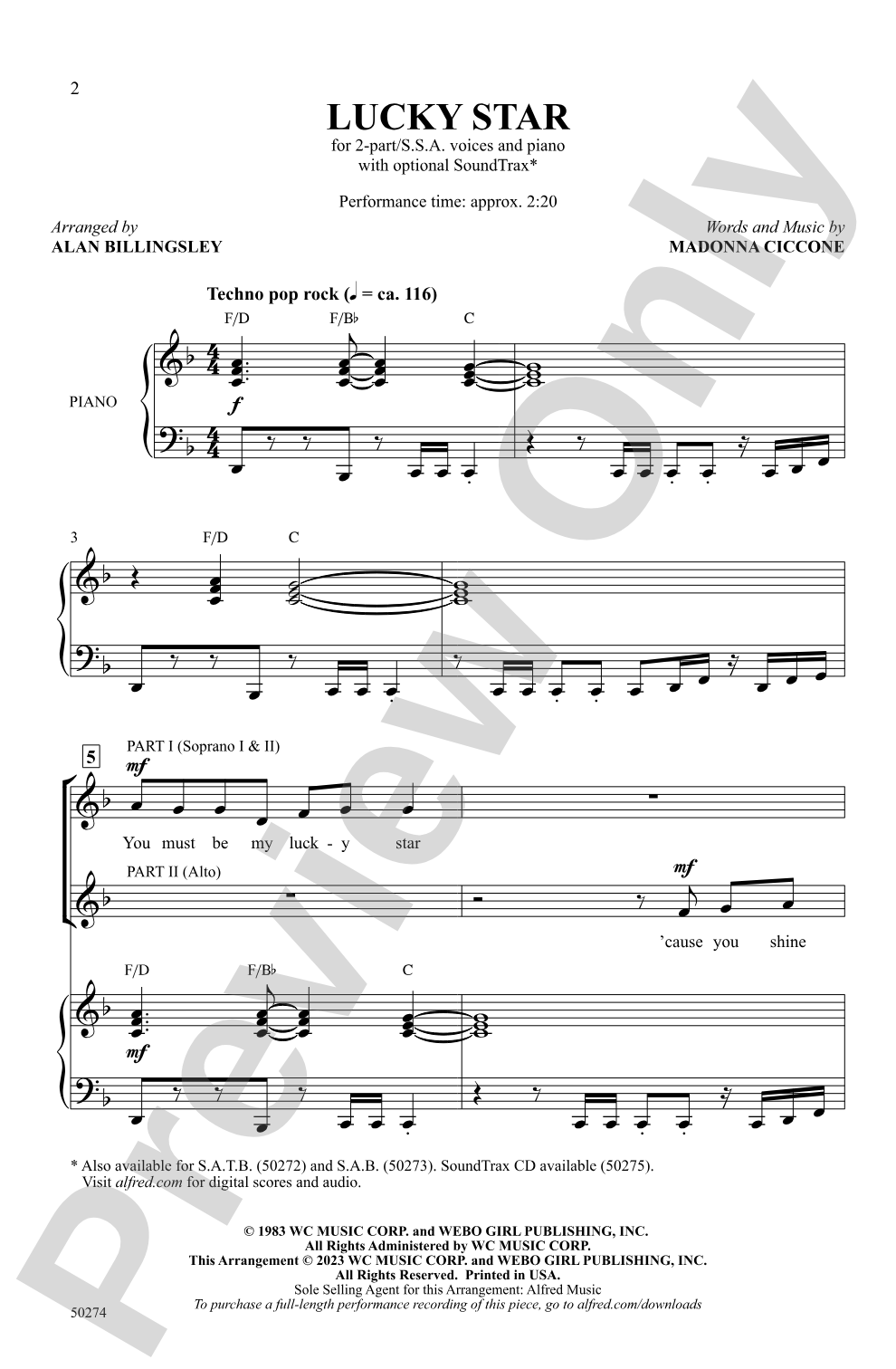
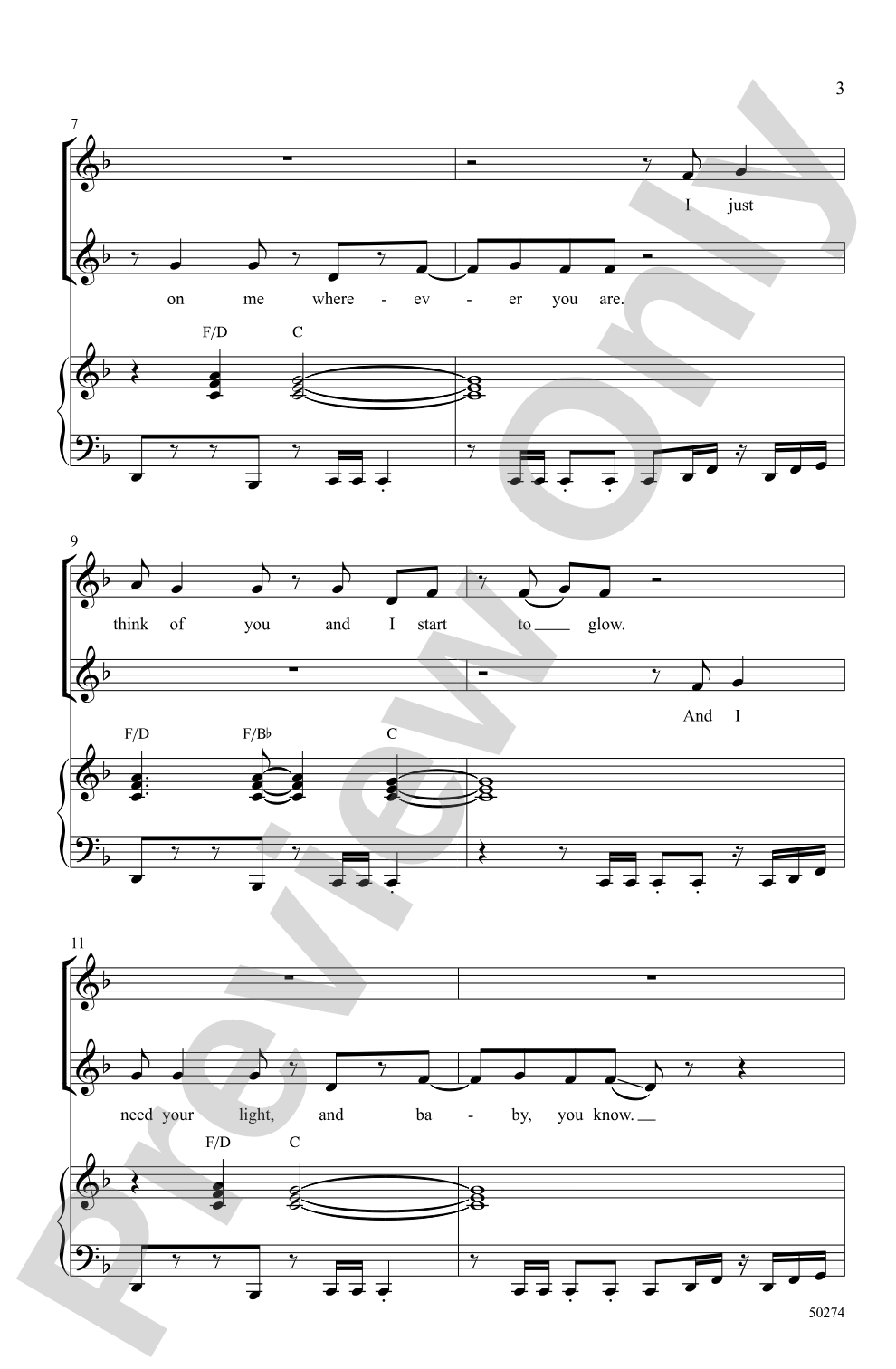
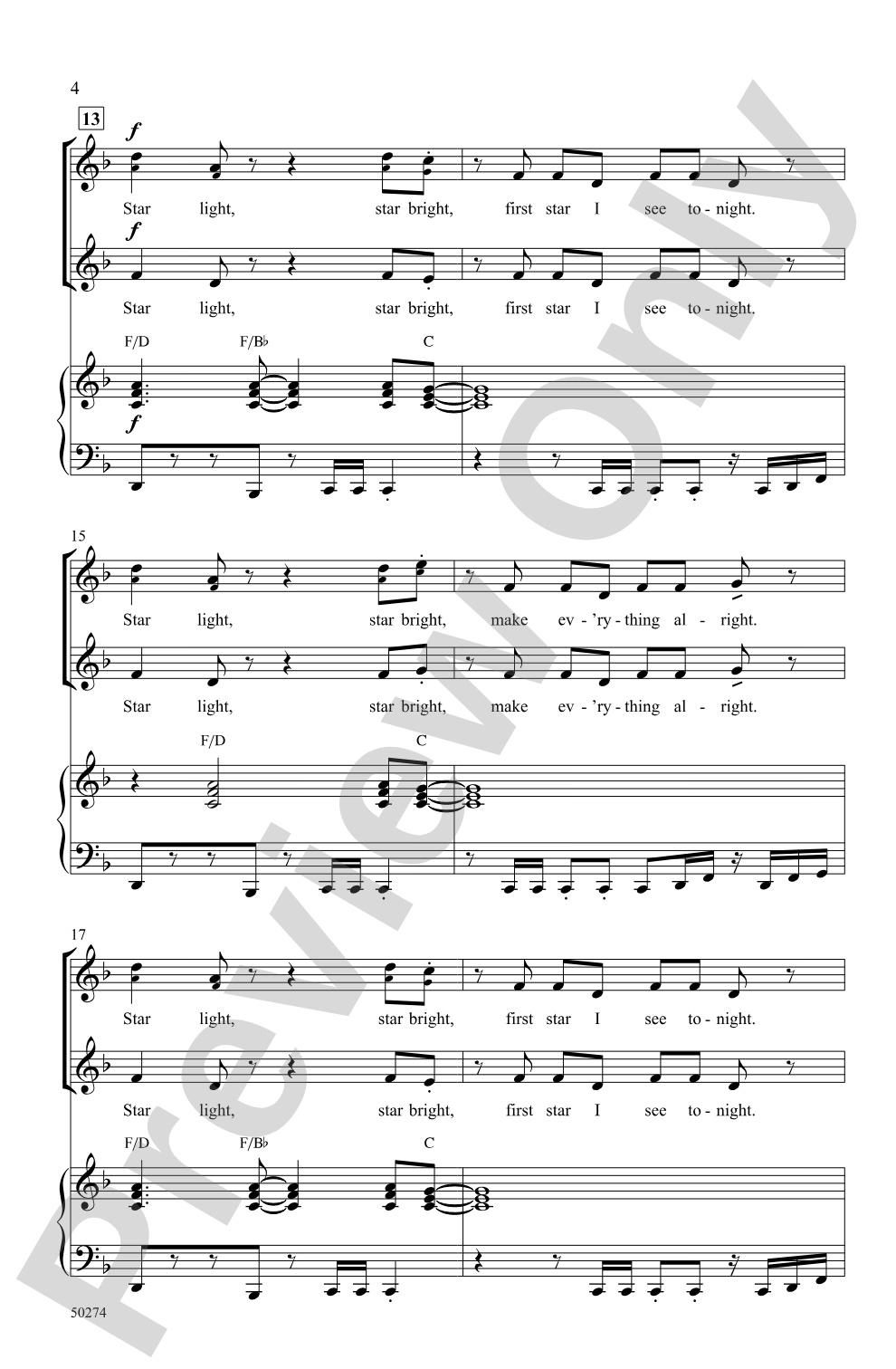

Lucky Star: 2-Part/SSA Choral Octavo
Words and music by Madonna Ciccone / arr. Alan Billingsley
Item: 00-PO-0007101
$2.10
Minimum order quantity: 20 copies
One moment…
Related Items
Lucky Star: SoundTrax Digital Audio Download |
$29.98
|
View | |
Lucky Star: SATB Choral Octavo |
$2.10
|
View | |
Lucky Star: SAB Choral Octavo |
$2.10
|
View | |
Lucky Star: SATB Choral Octavo |
$2.10
|
View | |
Lucky Star: SAB Choral Octavo |
$2.10
|
View | |
Lucky Star: 2-Part/SSA Choral Octavo |
$2.10
|
View | |
Lucky Star: Choral SoundTrax CD |
$29.99
|
View |
Description
"Star light, star bright!" This dance-pop single from Madonna's debut album made a welcome comeback in the animated movie Luck. Upbeat rhythms, a catchy melody, and no-fuss harmonies allow for ease of learning. Alan's flexible treble voicing works for 2-part singers and includes many optional cue notes for SSA groups. At the end, a featured soloist shows off their star power.


Discover MakeMusic Cloud: thousands of interactive titles your students can play along with today.
Sample Audio
1
Audio File
--:--
0:00
0:00
Sample Video
Additional Details
Series:
Alfred Pop Choral Series
Publisher:
Alfred Music
Page Count:
12
SKU:
00-PO-0007101
More about this title
About the Composer: Madonna Ciccone
Madonna Ciccone emerged as one of pop music's most influential figures, beginning her recording career in the early 1980s with a sound that blended dance, pop, and electronic production. Her debut album introduced several songs that became cultural touchstones, including "Lucky Star," which showcased her gift for crafting memorable melodies over infectious rhythmic grooves. As a composer and performer, she fundamentally shaped how pop music sounded across multiple decades, making her work a natural fit for contemporary choral programming.
Her influence on popular music extends beyond commercial success to her impact on how artists approach songwriting, production, and performance. For music educators, her catalog offers accessible entry points into arranging and performing pop repertoire, allowing singers to engage with music that feels relevant and modern while building fundamental choral skills.
Why we love this
Alan Billingsley's arrangement captures the infectious energy of "Lucky Star" without overcomplicating the vocal writing, making it genuinely achievable for mixed-ability choirs. The flexible voicing structure means you can perform it as written for two-part singers or expand into full SSA sonorities, giving you real programming flexibility across different ensemble levels in the same school or season. The solo moment at the end gives singers a chance to step into the spotlight, transforming this pop staple into a solo-plus-ensemble feature that feels fresh and rewarding.
What to expect
Bright and propulsive, with a dance-pop energy that feels modern even as it honors the original's 1980s production aesthetic. The catchy melody sits naturally in the voice, and the harmonies are clean and supportive rather than complex, creating a sense of accessibility and fun. There's an infectious rhythmic swagger here that makes singers feel cool performing it.
Who it's for
Choirs ranging from middle school through community ensembles who want to program contemporary pop without sacrificing musicality or arranging craft. The flexible voicing makes it especially useful for directors working with evolving ensembles or mixed ability singers, since you can adjust the complexity in real time. Singers enjoy performing music they recognize and love, and this arrangement honors both the original while remaining genuinely singable.
How to get the most out of it
- Nail the rhythmic precision in the ensemble sections by working those syncopated figures slowly at first, then gradually building tempo once the patterns lock in. The groove drives everything.
- Let the featured soloist own their moment at the end. Balance matters here: the ensemble should be present enough to support, but restrained enough that the soloist feels truly featured.
- If you're using the recorded accompaniment, run it in rehearsal frequently enough that singers internalize the groove independent of counting. Pop music lives in pocket and feel, not metronomic accuracy.
- Clarify which parts are cue notes for SSA groups and which are essential to 2-part balance. This prevents confusion when you have mixed ability levels singing together.
How to use it
This works beautifully as a closer or encore piece on a concert mixing classic choral repertoire with contemporary music. Consider pairing it with other pop arrangements from the Alfred series to build a full contemporary set, or spotlight the featured soloist moment as a bridge between your concert's choral selections and any solo/small ensemble features. It's also an effective audience connector in spring concerts or casual performance settings where the familiarity and accessibility help singers and listeners relax into the music together.
Skills your students will build
- Rhythmic precision in syncopated pop grooves
- Blending ensemble voicing across flexible part structures (2-part and SSA)
- Interpreting cue notes and optional parts to support different voice ranges
- Intonation in sustained harmonies supporting a strong melodic line
- Solo confidence and audience connection through featured moments
- Stylistic interpretation of pop music phrasing and ensemble balance