


Lucky 13
By John Whitney
Grade: 1.5
Item: 00-PK-0000990

$40.00
Pickup currently not available
Buy Extra Parts (Digital PDF Download)
| Product | Price | Quantity |
|---|---|---|
| Lucky 13: Score | $6.00 | |
| Lucky 13: 1st Violin | $5.99 | |
| Lucky 13: 2nd Violin | $5.99 | |
| Lucky 13: 3rd Violin (Viola [TC]) | $5.99 | |
| Lucky 13: Viola | $5.99 | |
| Lucky 13: Cello | $5.99 | |
| Lucky 13: String Bass | $5.99 | |
| Lucky 13: Piano Accompaniment | $5.99 |
Parts Added to Cart!
Description
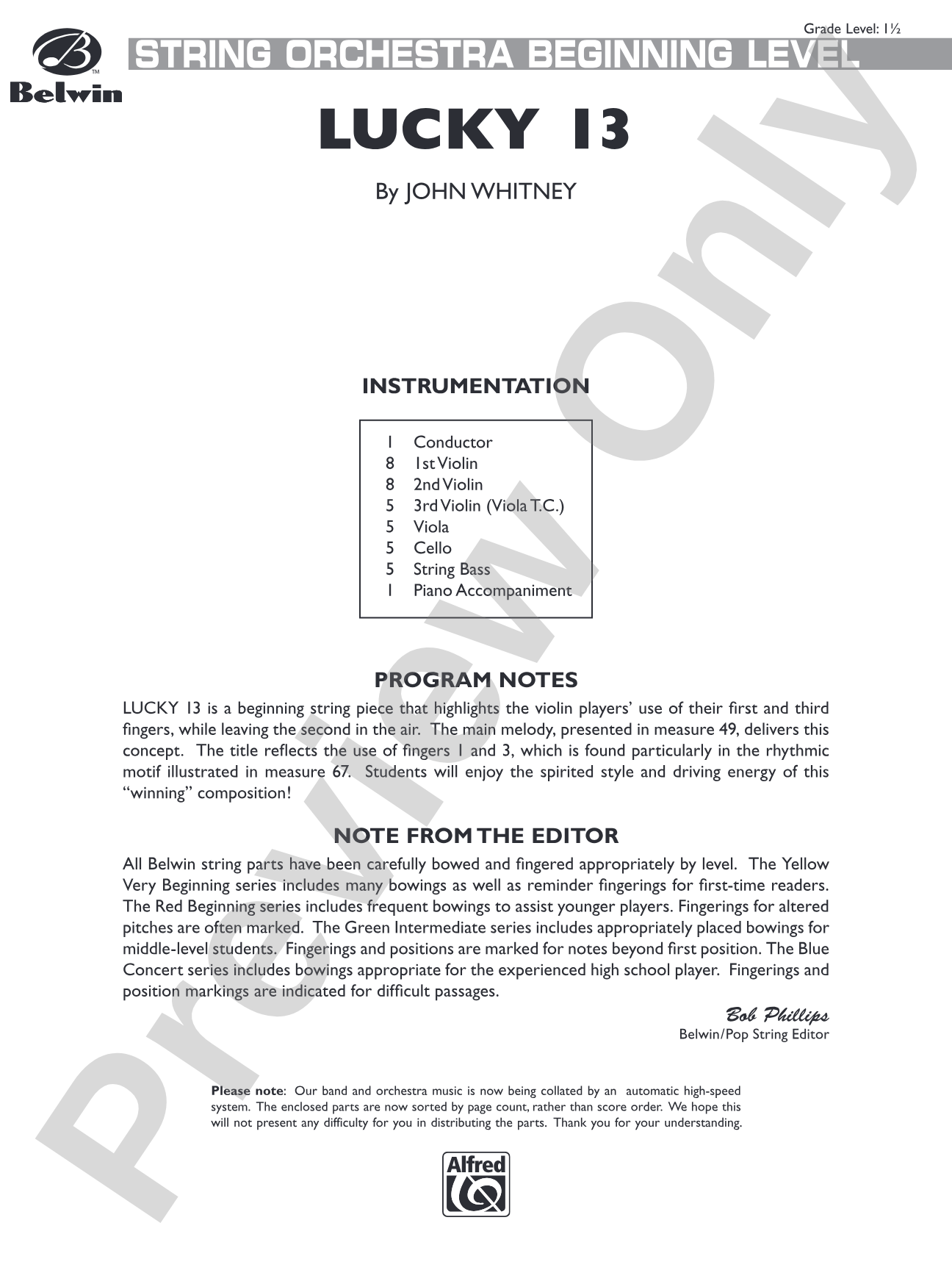
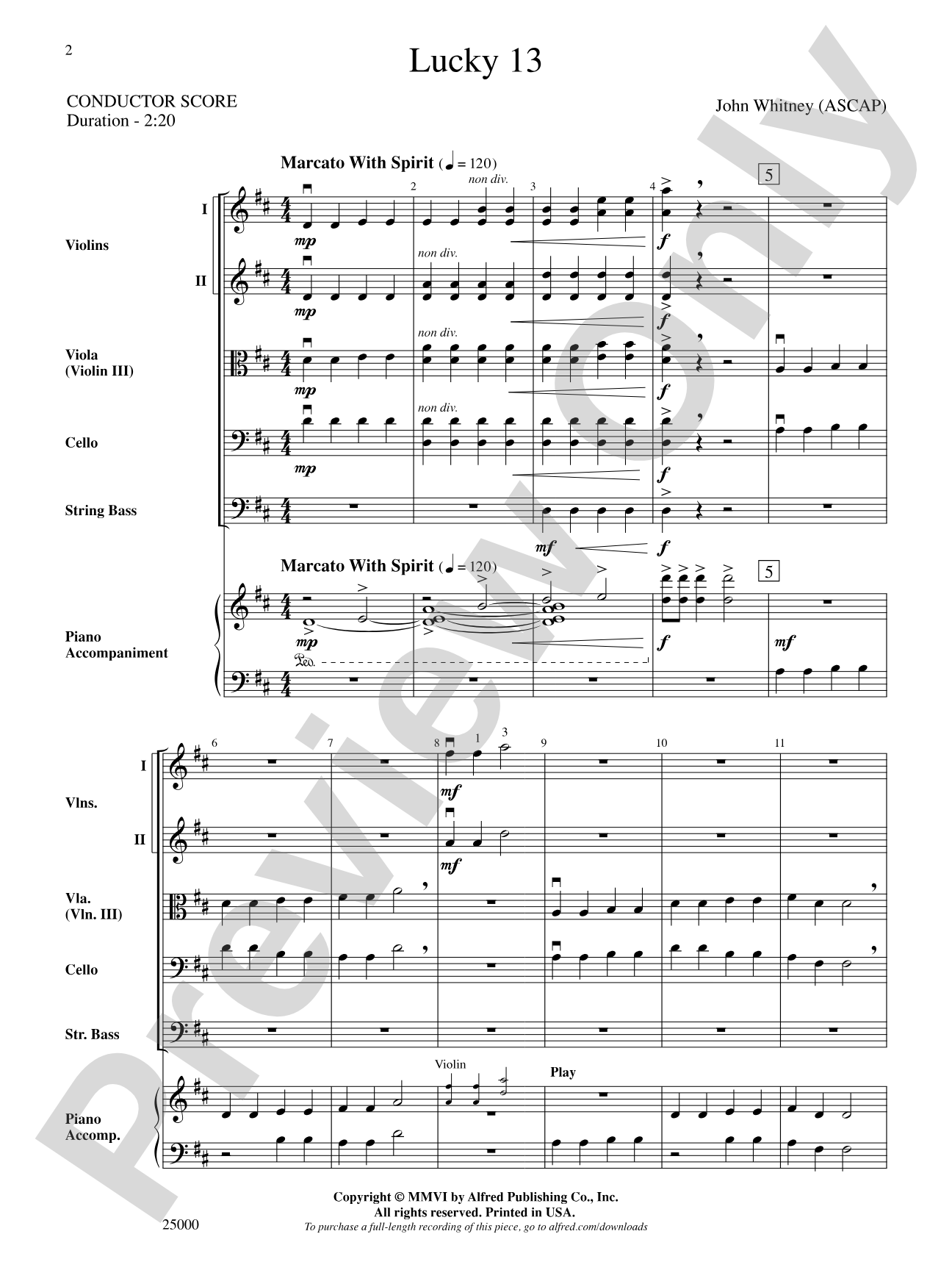
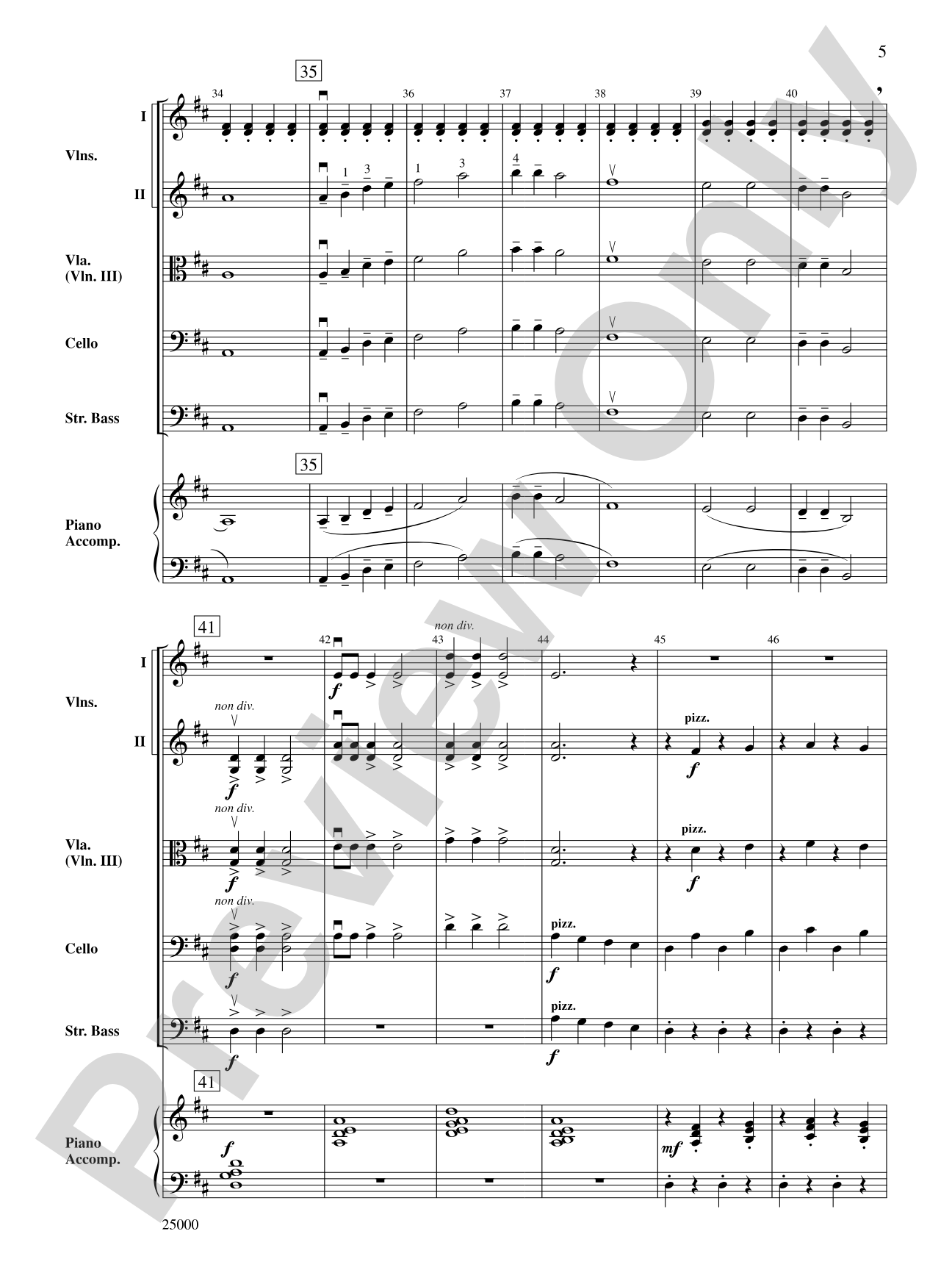
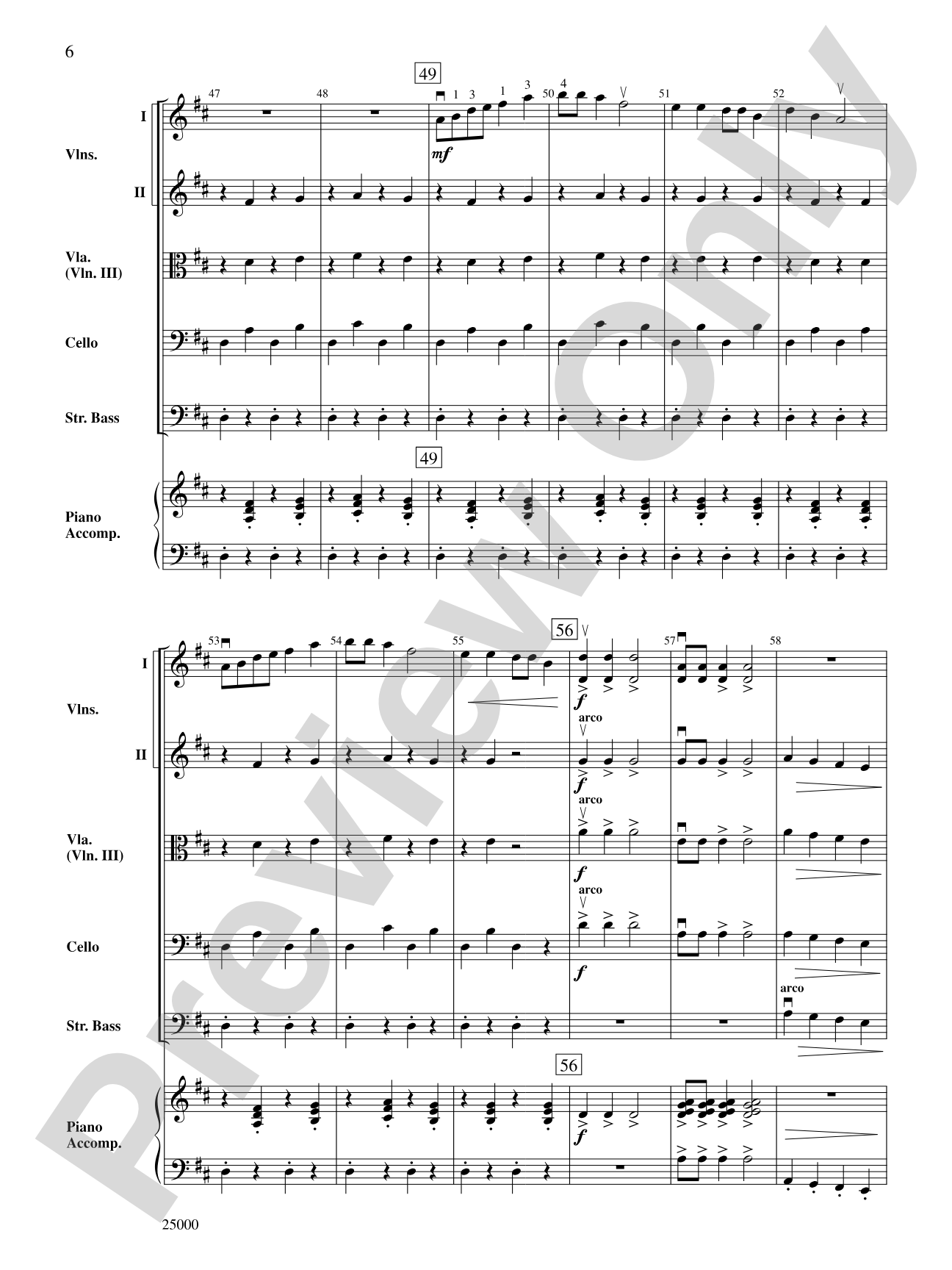
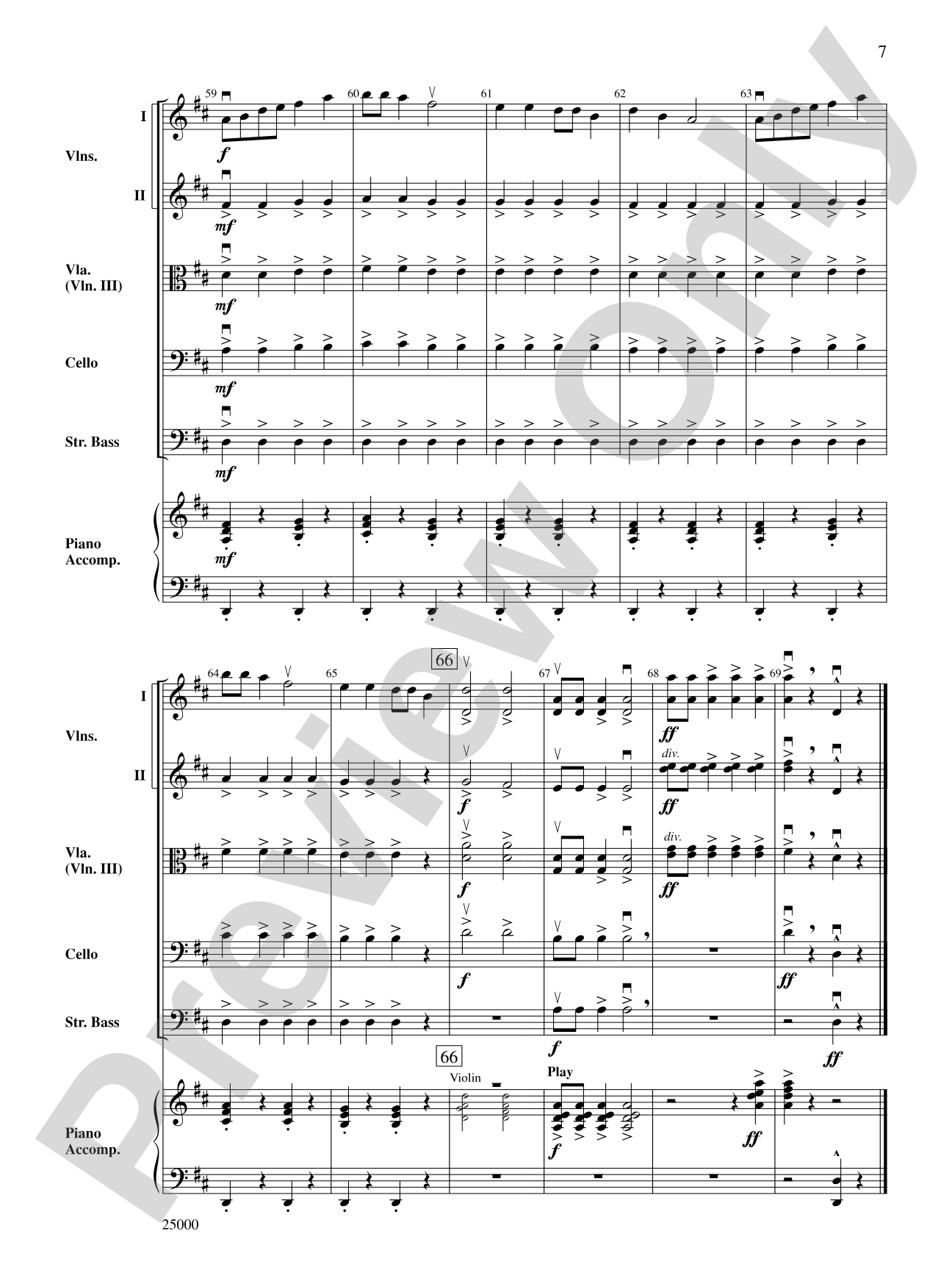
Lucky 13 is a designed as a beginning string work highlighting the violinist's use of first and third finger, while leaving the second in the air. The main tune (see bar 49) delivers this concept. The title reflects the use of fingers 1 and 3, found particularly in the rhythmic motif (see bar 67) of the piece. Students will enjoy the spirited style and rhythmic energy of this winning composition.


Don't just read it, hear it, play along with it, and watch your students grow with it. In MakeMusic Cloud, Lucky 13 comes alive with professional accompaniment, adjustable tempo, and built-in practice tools that turn solo practice into real progress.
Open in the Player
Jump straight in and assign it today.
Start Your Free Trial
Open this title and explore the full library in minutes.
Sample Audio
1
Audio File
--:--
0:00
0:00
Sample Video
No sample videos found.
Additional Details
Series:
Belwin Beginning String Orchestra
Publisher:
Alfred Music
SKU:
00-PK-0000990
More about this title
About the Composer: John Whitney
John Whitney has established himself as a composer who understands the pedagogical needs of young string players. His work with beginning orchestras demonstrates a keen ear for what engages students while building foundational skills in a structured, musical way.
Why we love this
John Whitney designed this piece with clear pedagogical intent: first and third finger work on the violin becomes the star of the show, taught through an actual musical idea rather than isolated exercises. The rhythmic motif at bar 67 reinforces this concept memorably, so students internalize the finger pattern while playing something genuinely engaging. That's smart teaching wrapped in a spirited, contest-ready arrangement.
What to expect
Energetic and rhythmically driven, with the kind of forward momentum that keeps younger players engaged. The fingerwork sits naturally in the melodic line, so it never feels like a finger exercise; it's simply how the tune goes.
Who it's for
Beginning string orchestras ready to move past open strings and explore left hand patterns with real musical purpose. This works perfectly for Grade 1.5 ensembles that need repertoire addressing specific technical goals without sacrificing musicality.
How to get the most out of it
- Focus the ensemble on rhythmic precision during the main tune at bar 49. Lock the articulations together; this passage is where the fingering concept becomes audible.
- Balance the violin line clearly in measures where the fingerwork pattern appears. Make sure listeners hear what students have worked so hard to develop.
- Maintain energy throughout without rushing. The spirited character depends on confident, clean execution of the finger patterns, not speed.
How to use it
Program this early in a concert or festival appearance to build ensemble confidence with a piece that sounds polished and plays cleaner than it might initially appear. Its straightforward character pairs well alongside other Grade 1.5 offerings, and the technical clarity makes it ideal for demonstration or educational performances.
Skills your students will build
- Violin fingering patterns using first and third finger with second finger lifted
- Rhythmic accuracy in ensemble context
- Sustaining melodic line clarity while managing left hand technique
- Reading and executing rhythmic motifs in unison