
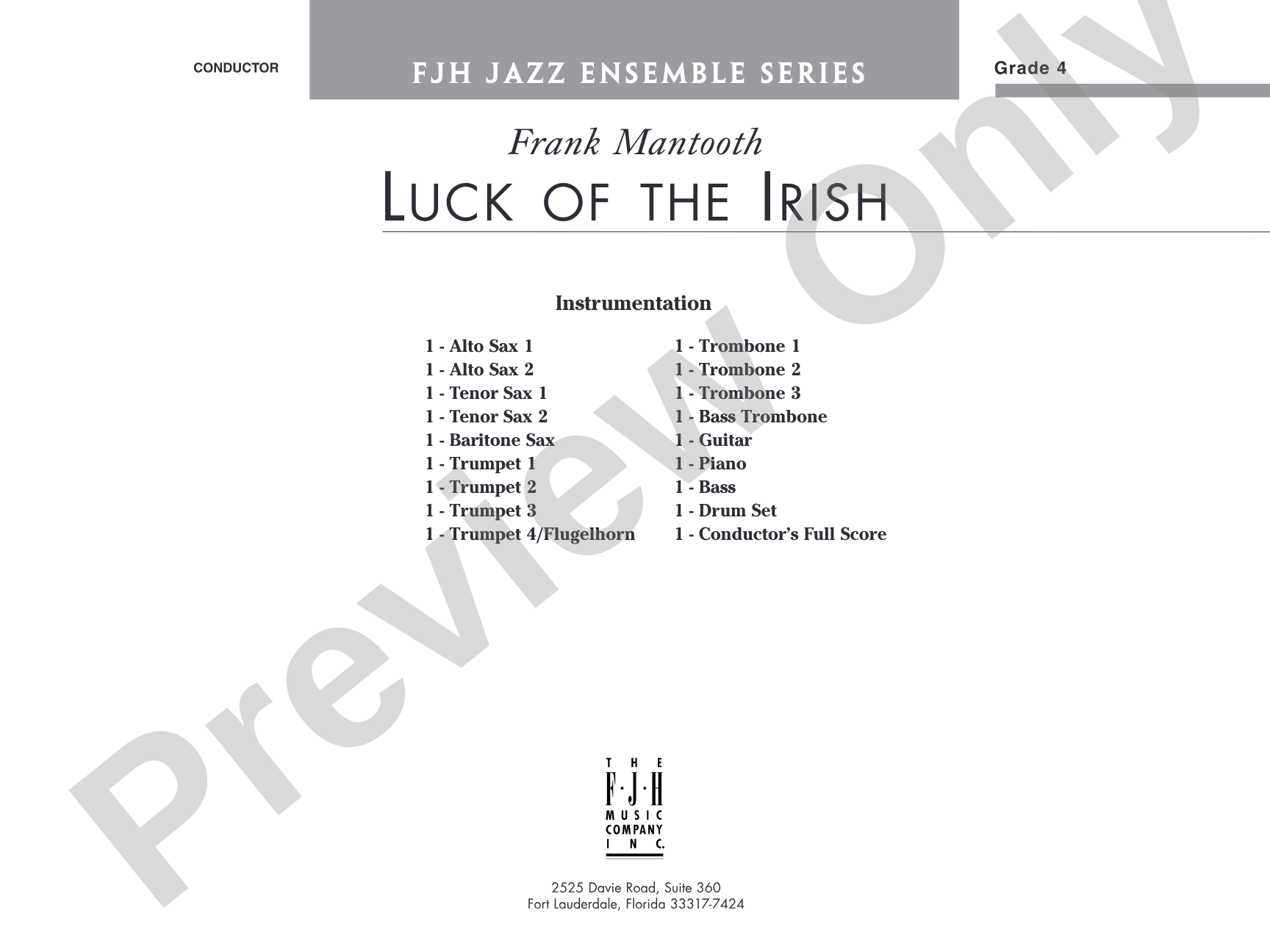

Luck of the Irish: Jazz Ensemble Conductor Score & Parts
By Frank Mantooth
Grade: 4
Item: 98-DJE4045
$40.00
Pickup currently not available
Buy Extra Parts (Digital PDF Download)
| Product | Price | Quantity |
|---|---|---|
| Luck of the Irish: Score | $5.00 | |
| Luck of the Irish: Alto Sax 1 | $7.00 | |
| Luck of the Irish: Alto Sax 2 | $7.00 | |
| Luck of the Irish: Tenor Sax 1 | $7.00 | |
| Luck of the Irish: Tenor Sax 2 | $7.00 | |
| Luck of the Irish: Baritone Sax | $7.00 | |
| Luck of the Irish: Trumpet 1 | $7.00 | |
| Luck of the Irish: Trumpet 2 | $7.00 | |
| Luck of the Irish: Trumpet 3 | $7.00 | |
| Luck of the Irish: Trumpet 4 / Flugelhorn | $7.00 | |
| Luck of the Irish: Trombone 1 | $7.00 | |
| Luck of the Irish: Trombone 2 | $7.00 | |
| Luck of the Irish: Trombone 3 | $7.00 | |
| Luck of the Irish: Bass Trombone | $7.00 | |
| Luck of the Irish: Guitar | $7.00 | |
| Luck of the Irish: Piano | $7.00 | |
| Luck of the Irish: Bass | $7.00 | |
| Luck of the Irish: Drum Set | $7.00 |
Parts Added to Cart!
Description
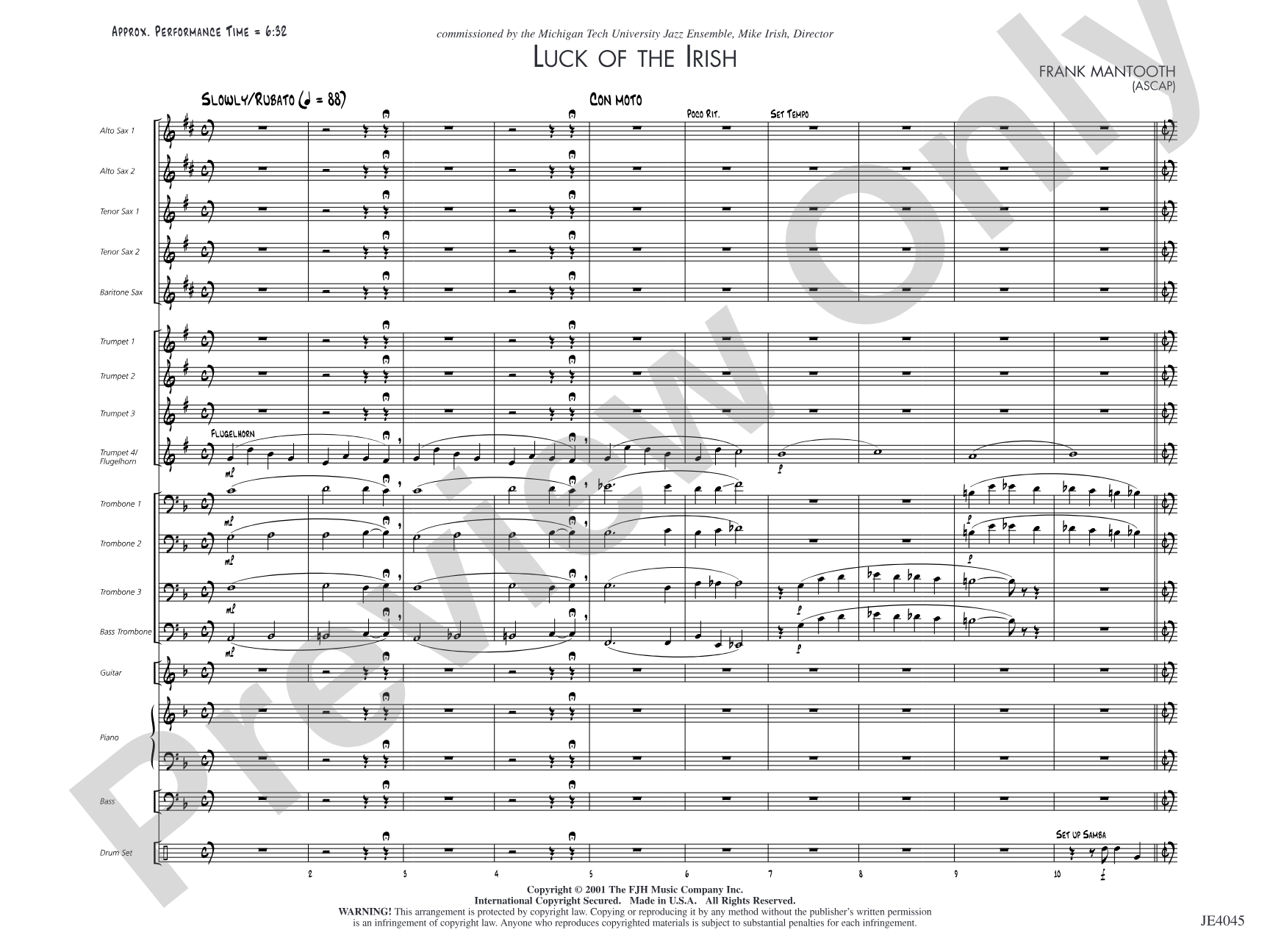
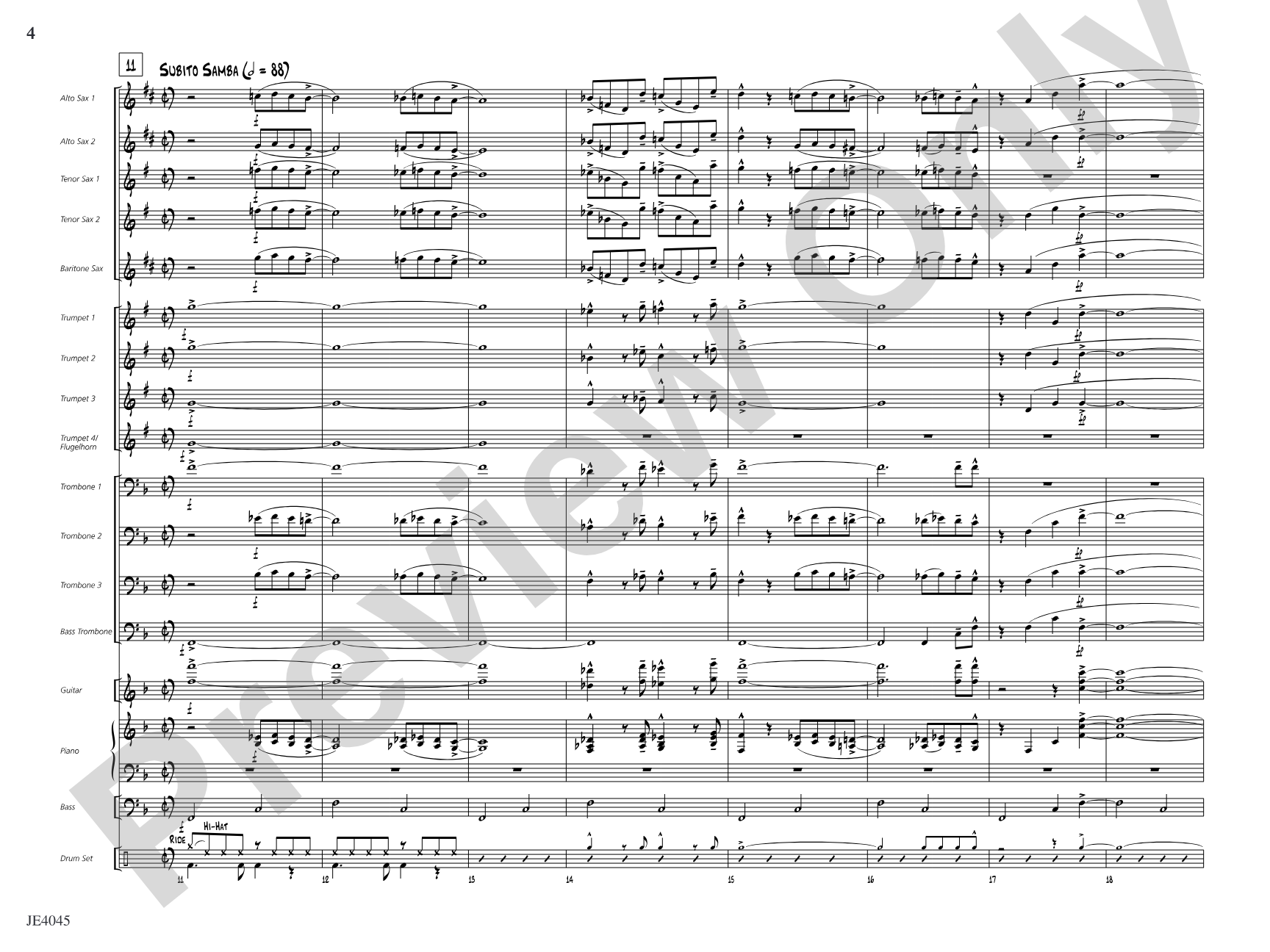
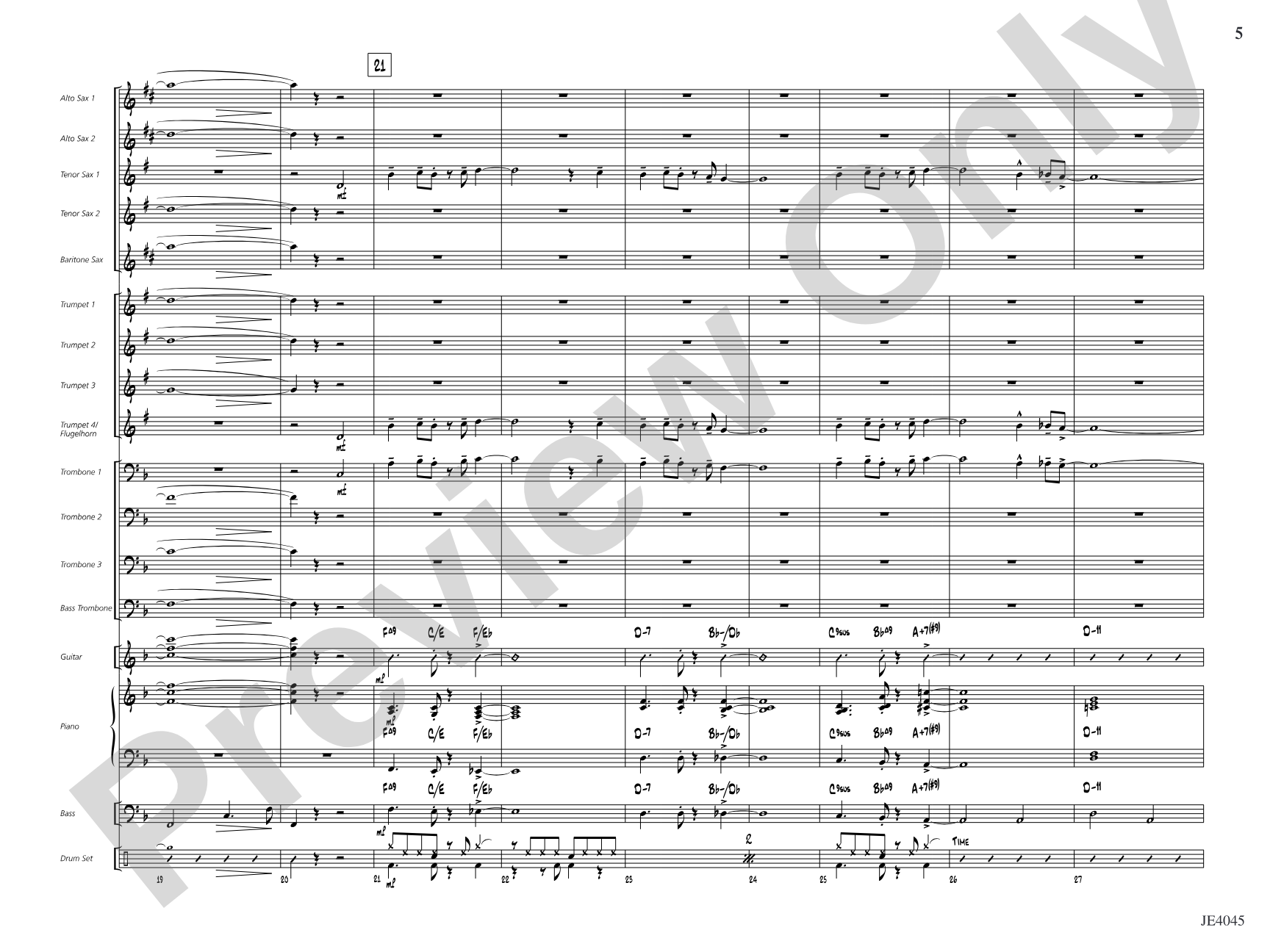
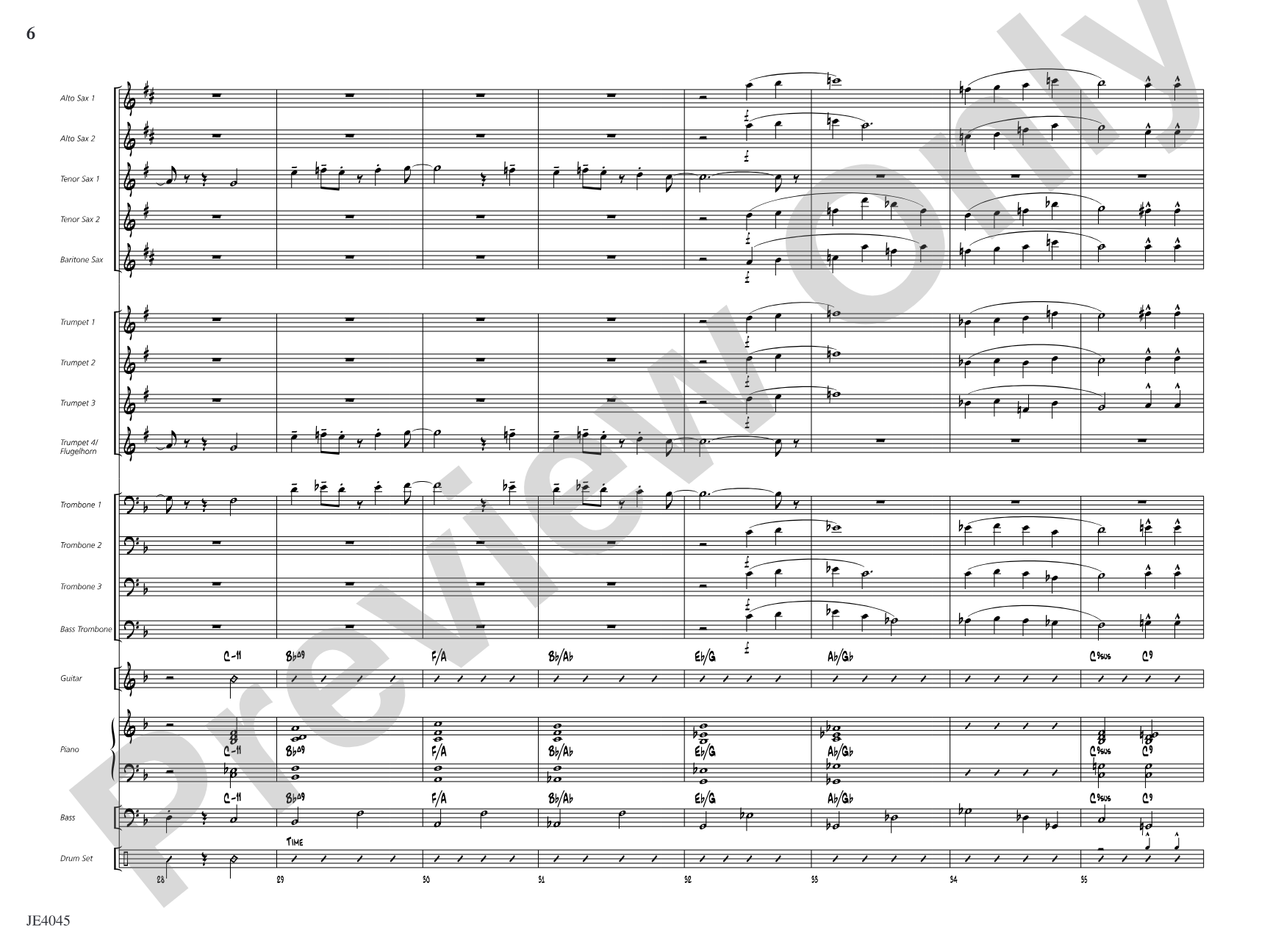
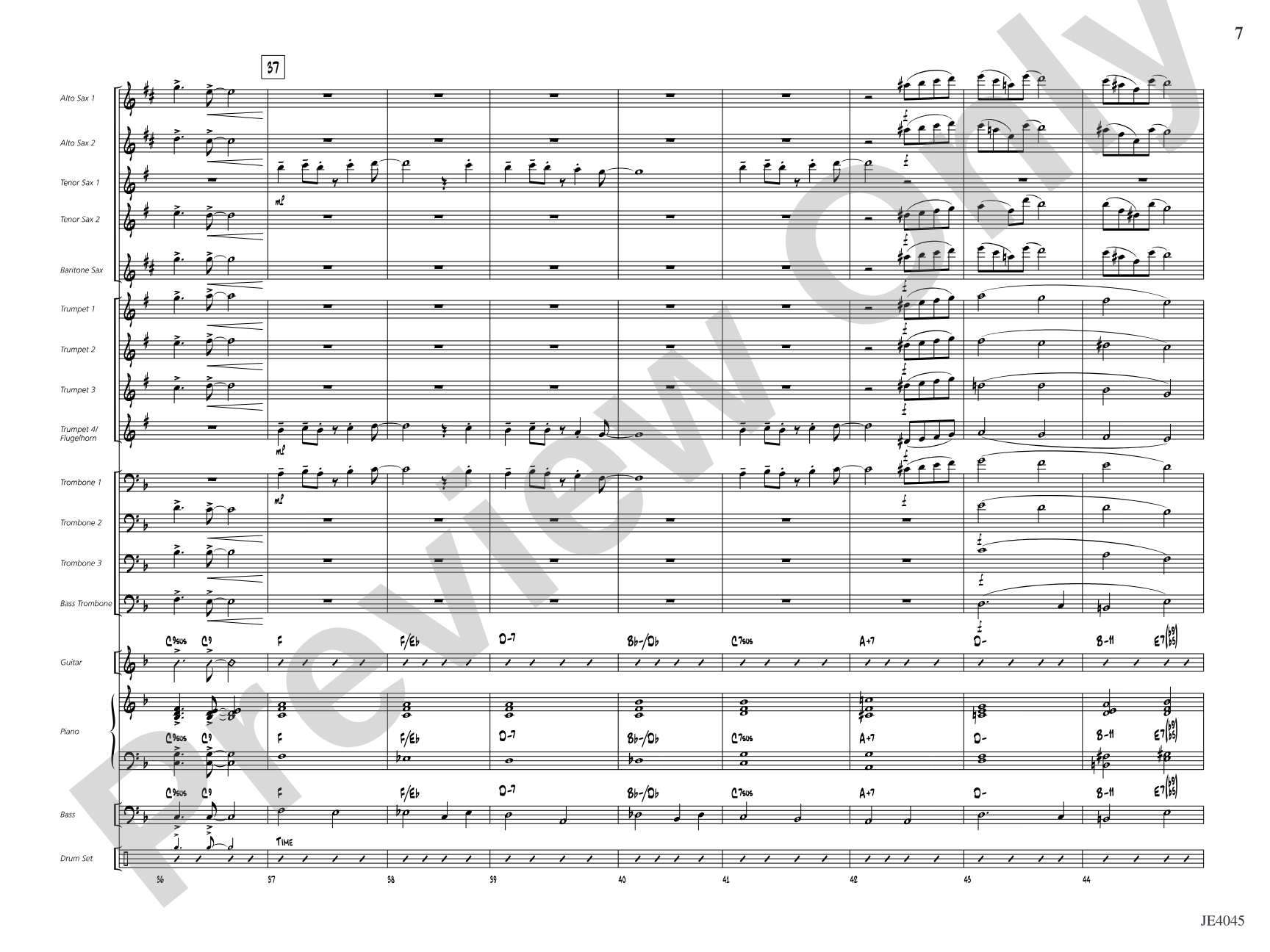
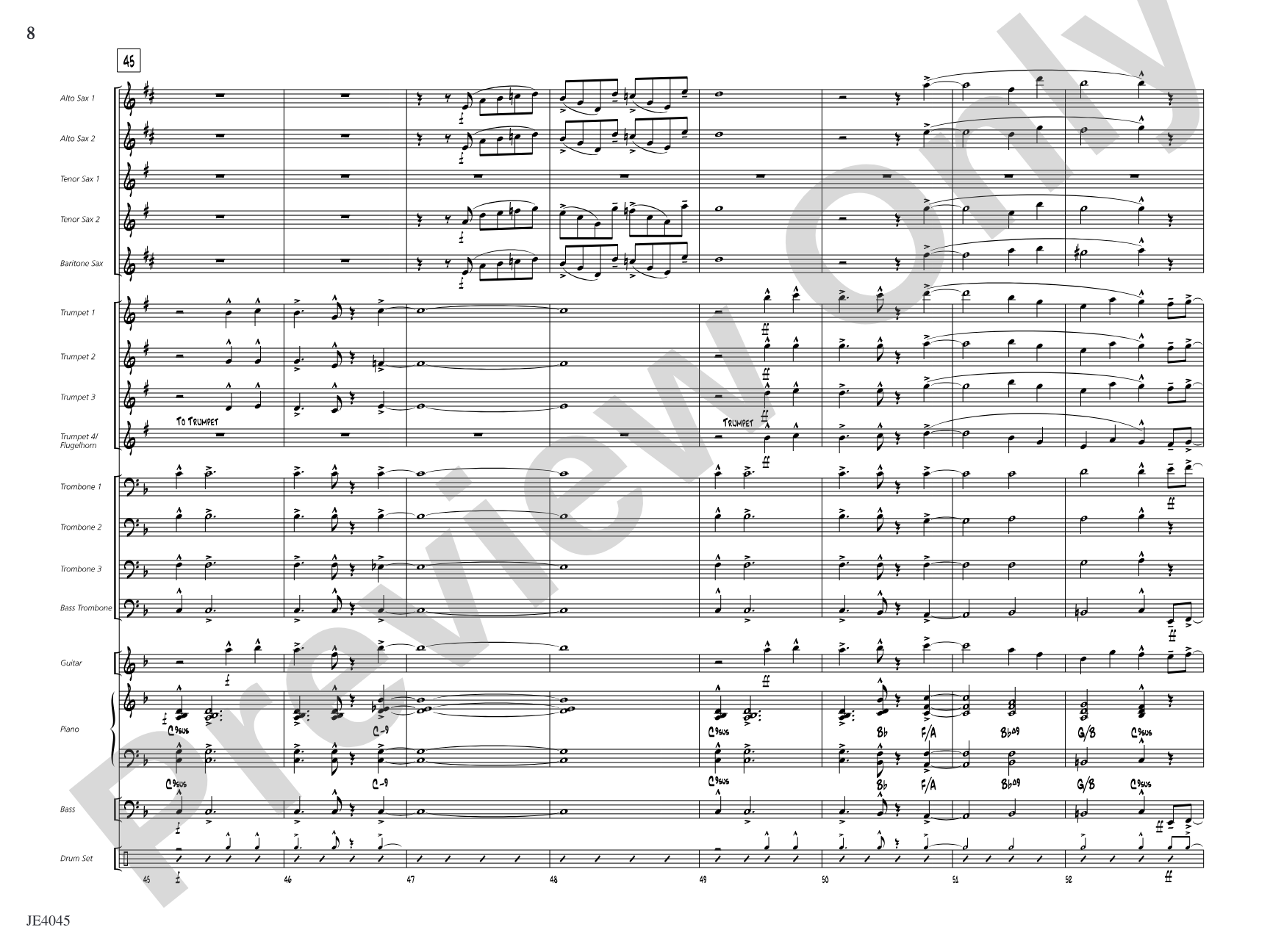
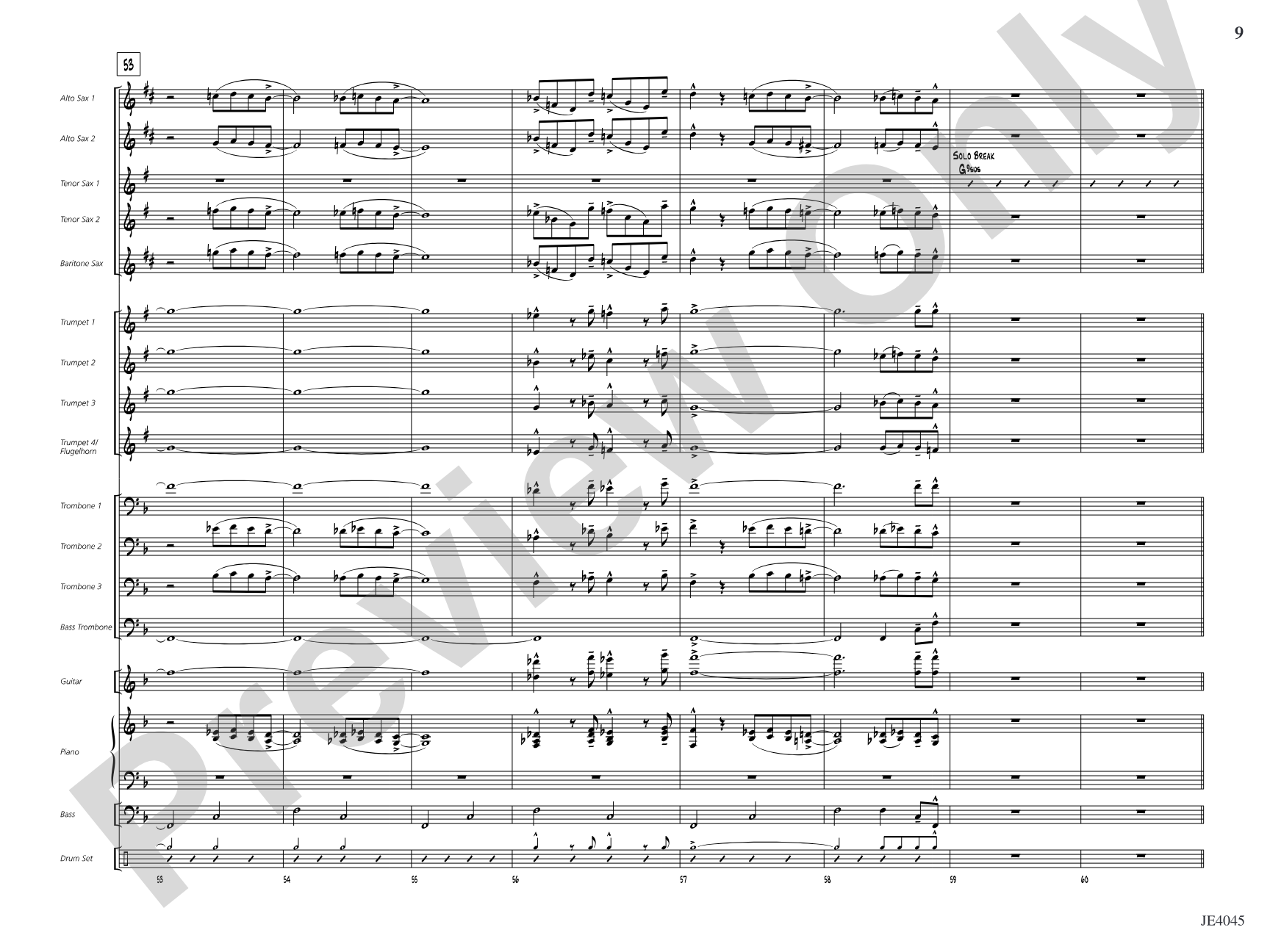
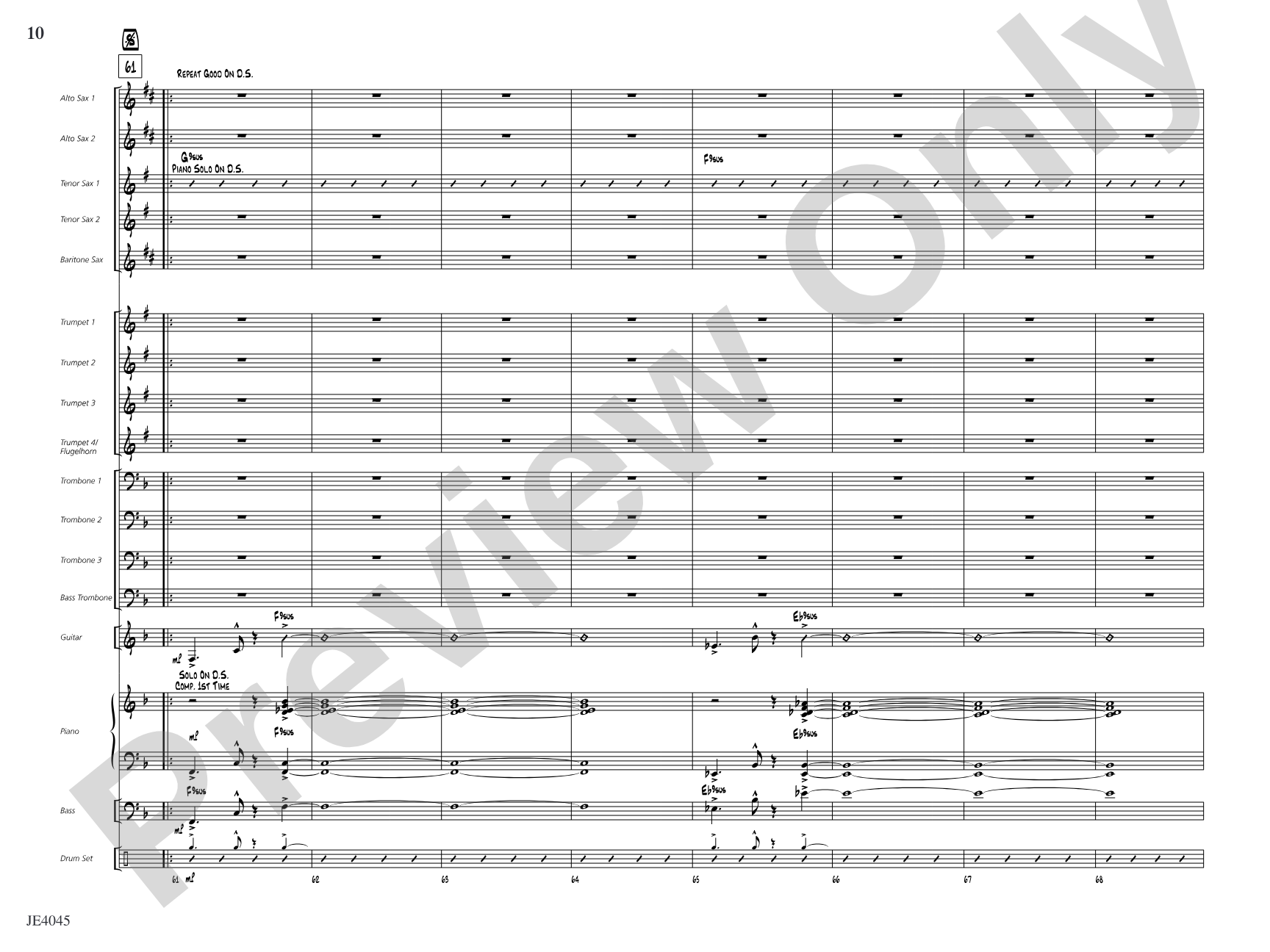
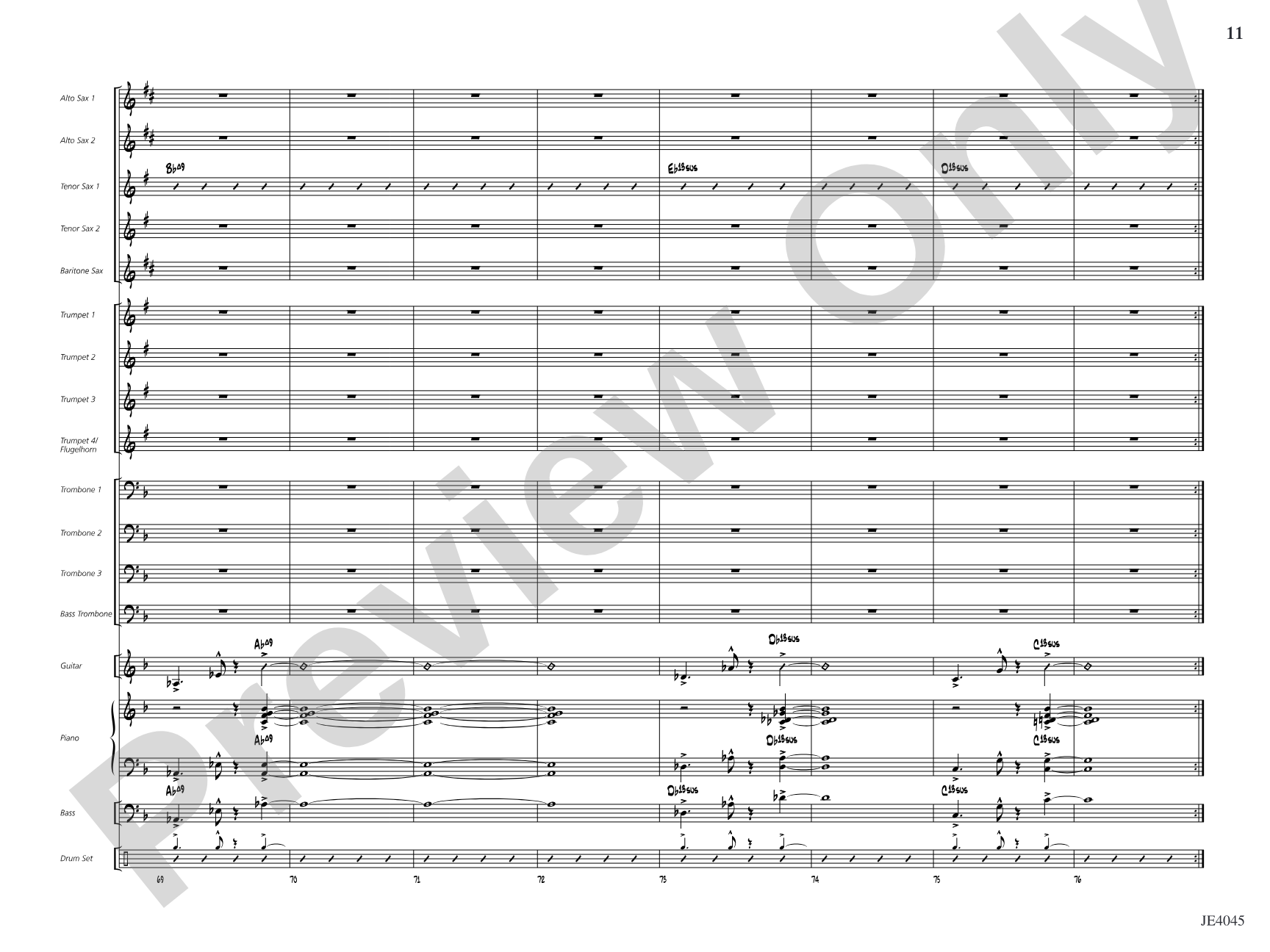
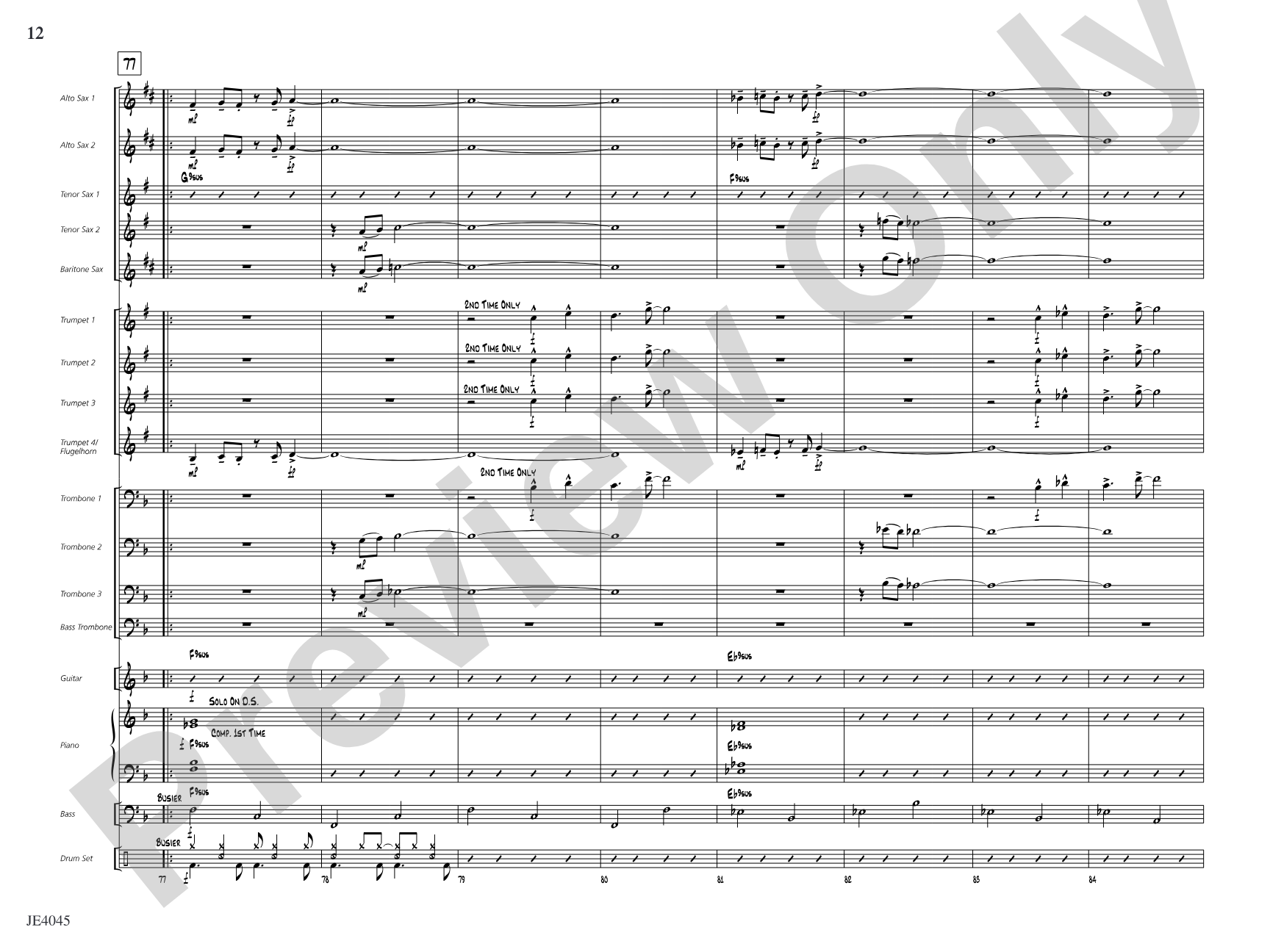
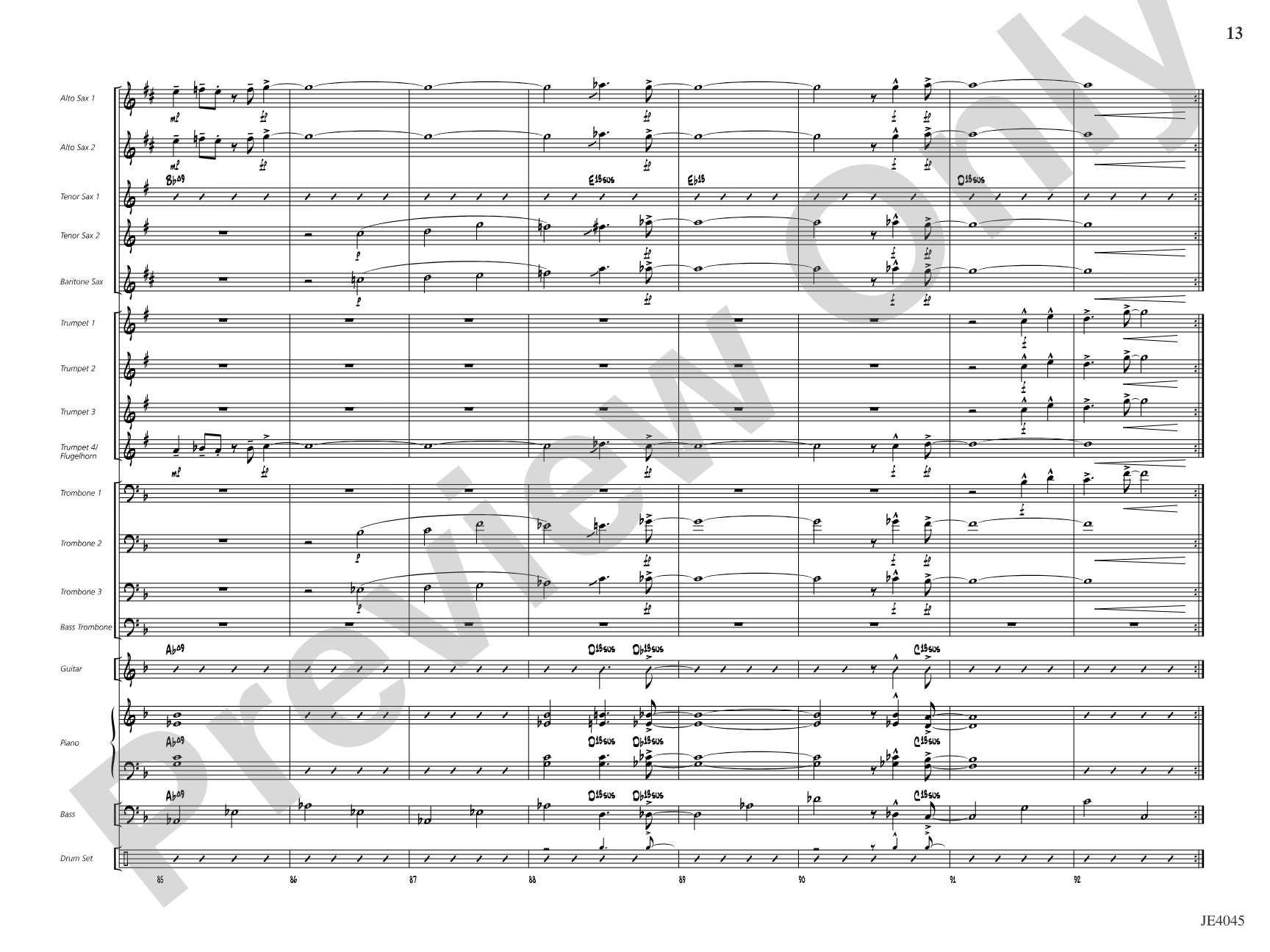
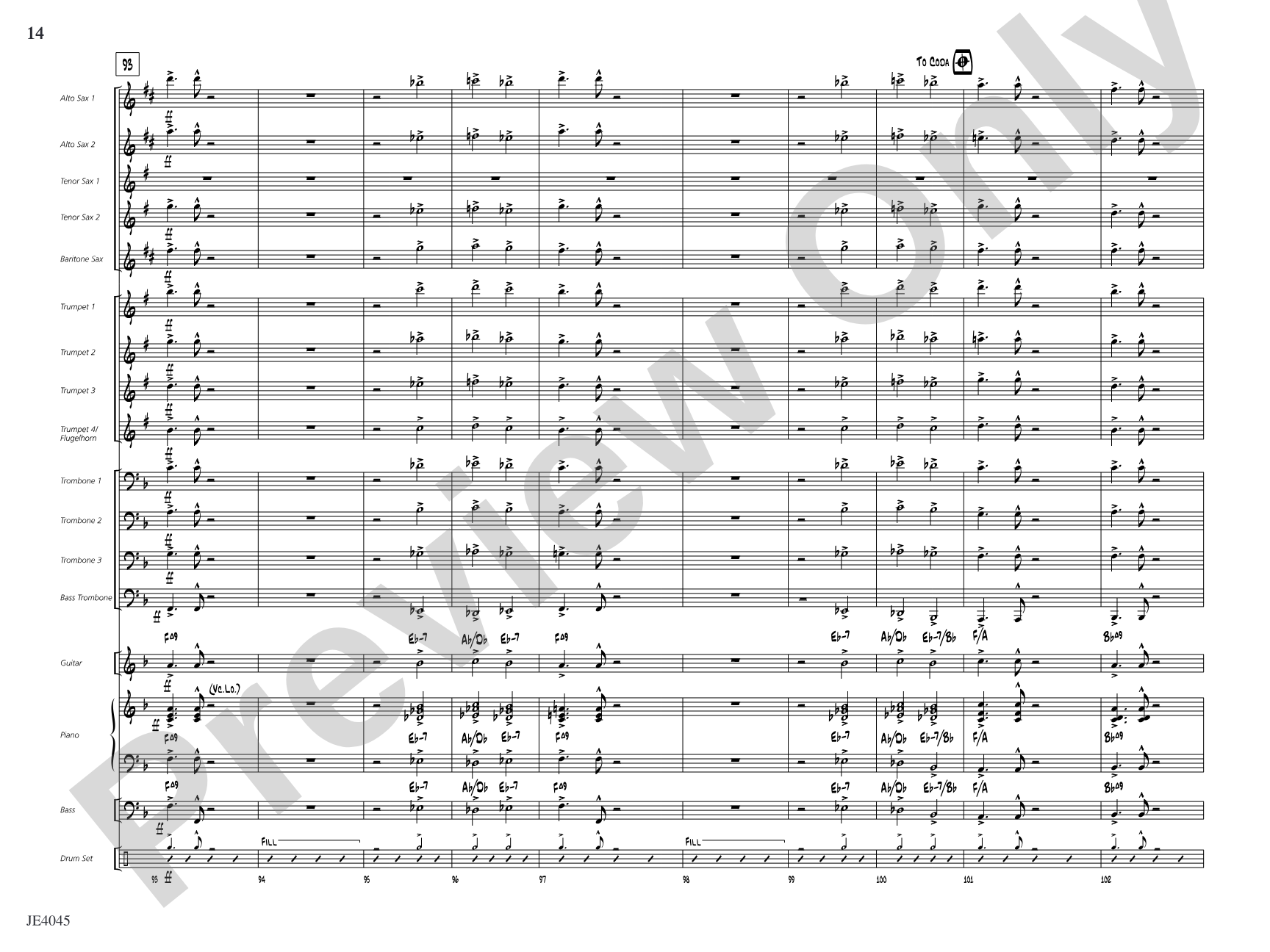
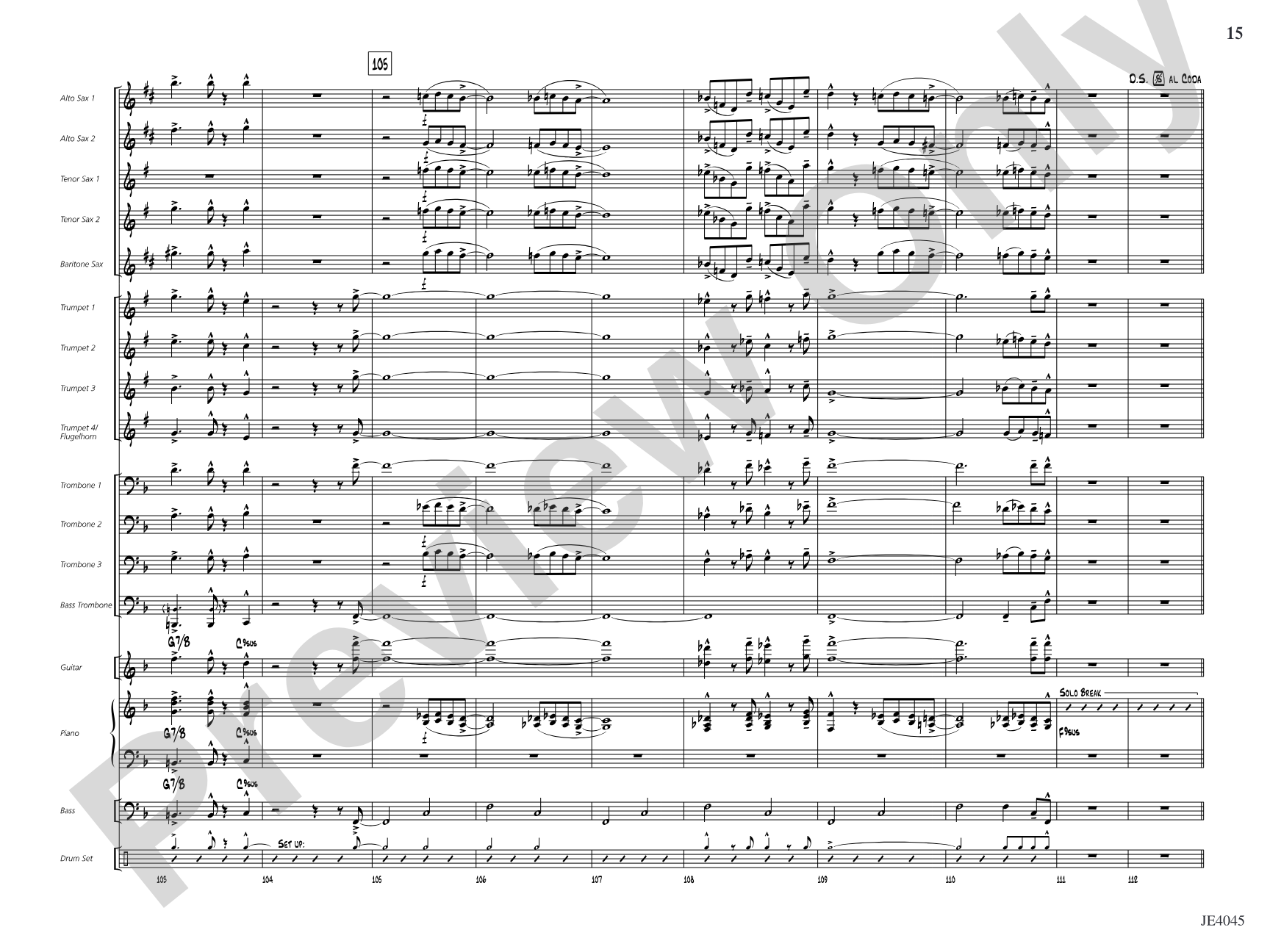
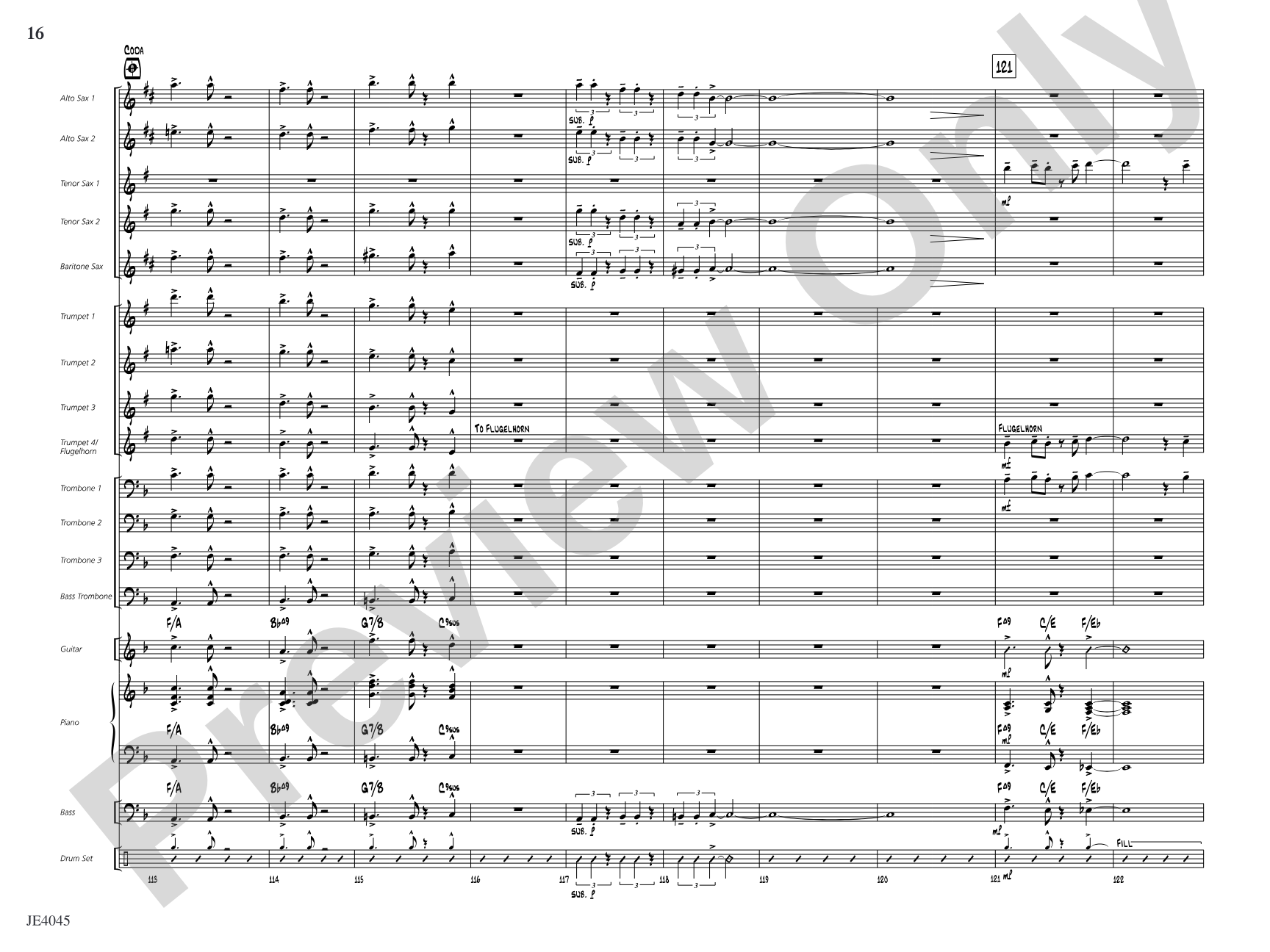
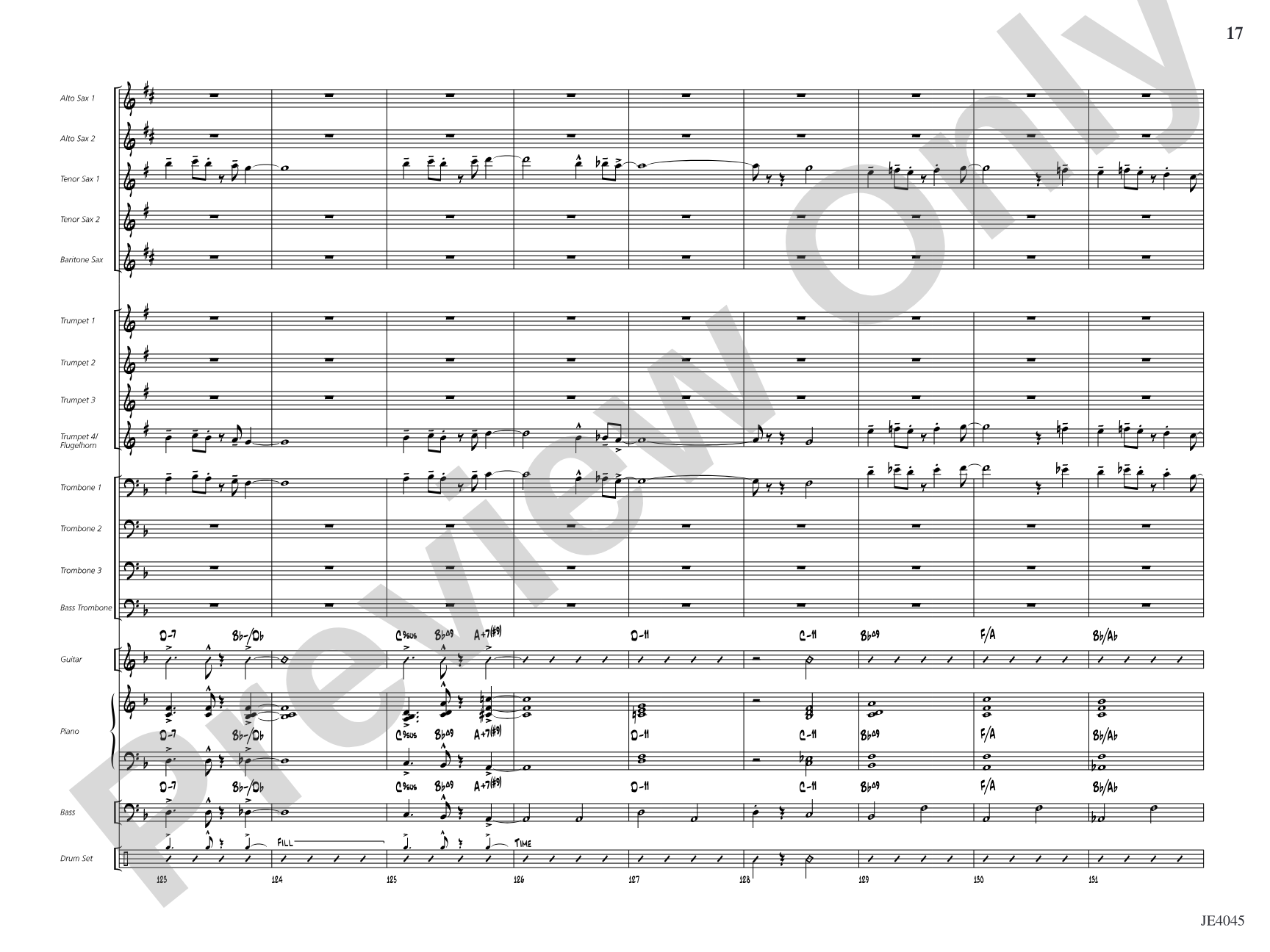
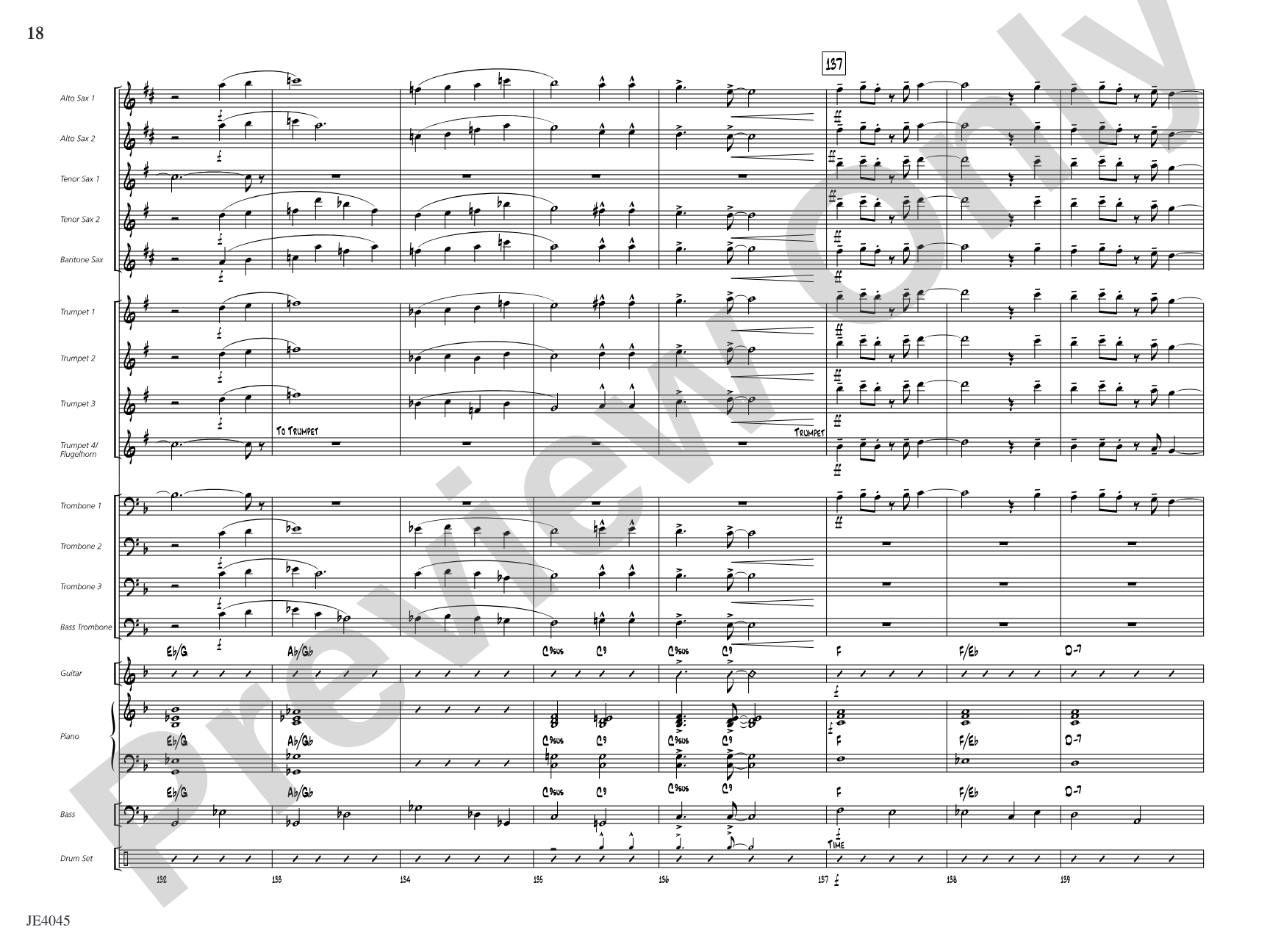
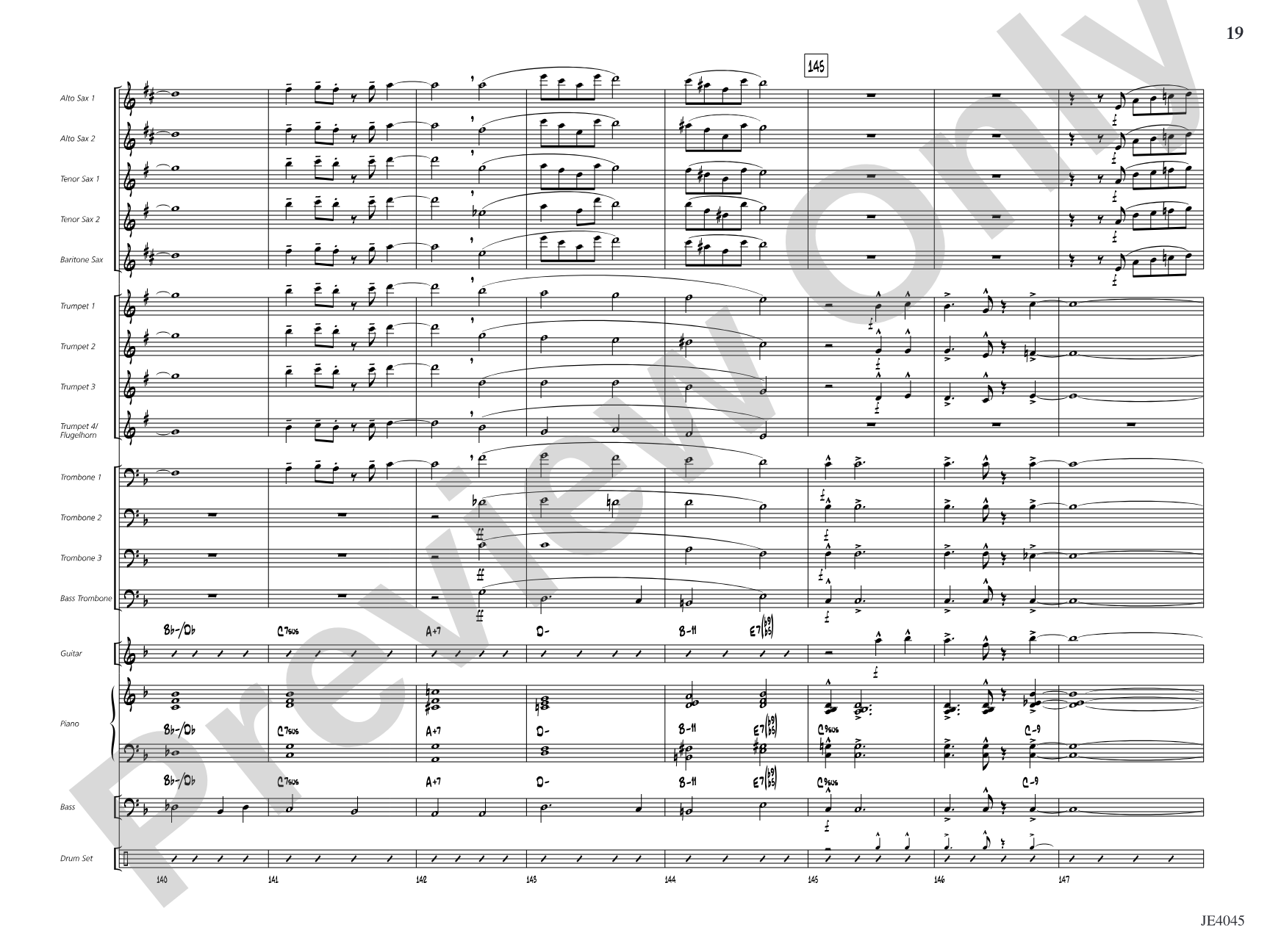
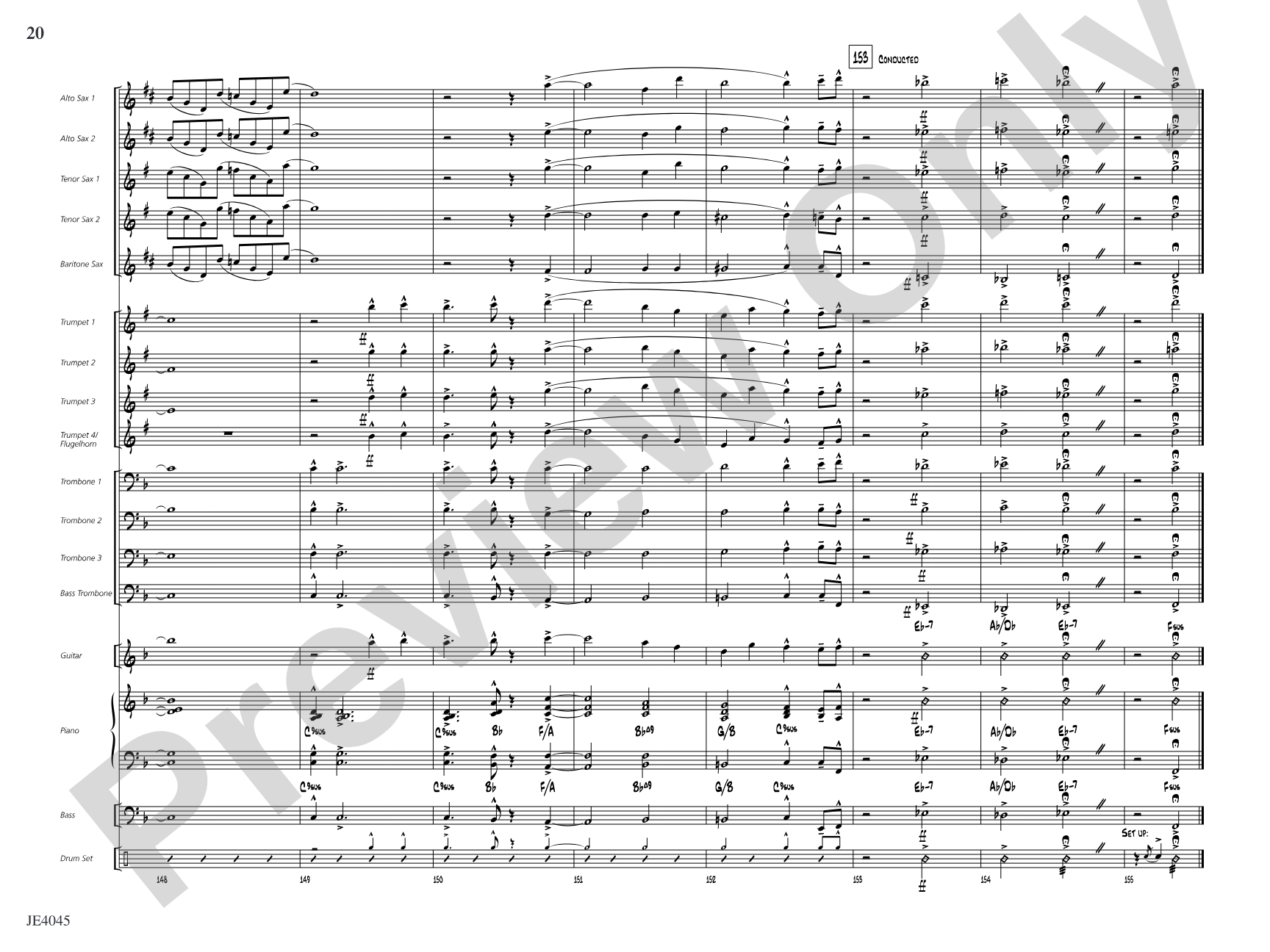
Consider this great Frank Mantooth original for your contest or festival repertoire. The opening trumpet/bone chorale is an excellent intro before the up-tempo samba beat takes over. Frank features a small combo of tenor, trumpet, and bone on the head, which should give you plenty of options for your solo section. Powerful block scoring sets up your drummer for some hot fills throughout. This pro-sounding chart has very reasonable range demands. A festival winner!


Luck of the Irish: Jazz Ensemble Conductor Score & Parts isn't in MakeMusic Cloud just yet...but it could be. Let us know you'd like to see it, and you'll help shape what comes next. In the meantime, start a free trial and dive into thousands of interactive titles your students can play along with today.
Request This Title
Tell us you want it.
Start Your Free Trial
Explore everything that's ready to play right now.
Sample Audio
1
Audio File
--:--
0:00
0:00
Sample Video
No sample videos found.
Additional Details
Series:
FJH Advanced Jazz Ensemble
Publisher:
The FJH Music Company, Inc.
SKU:
98-DJE4045
More about this title
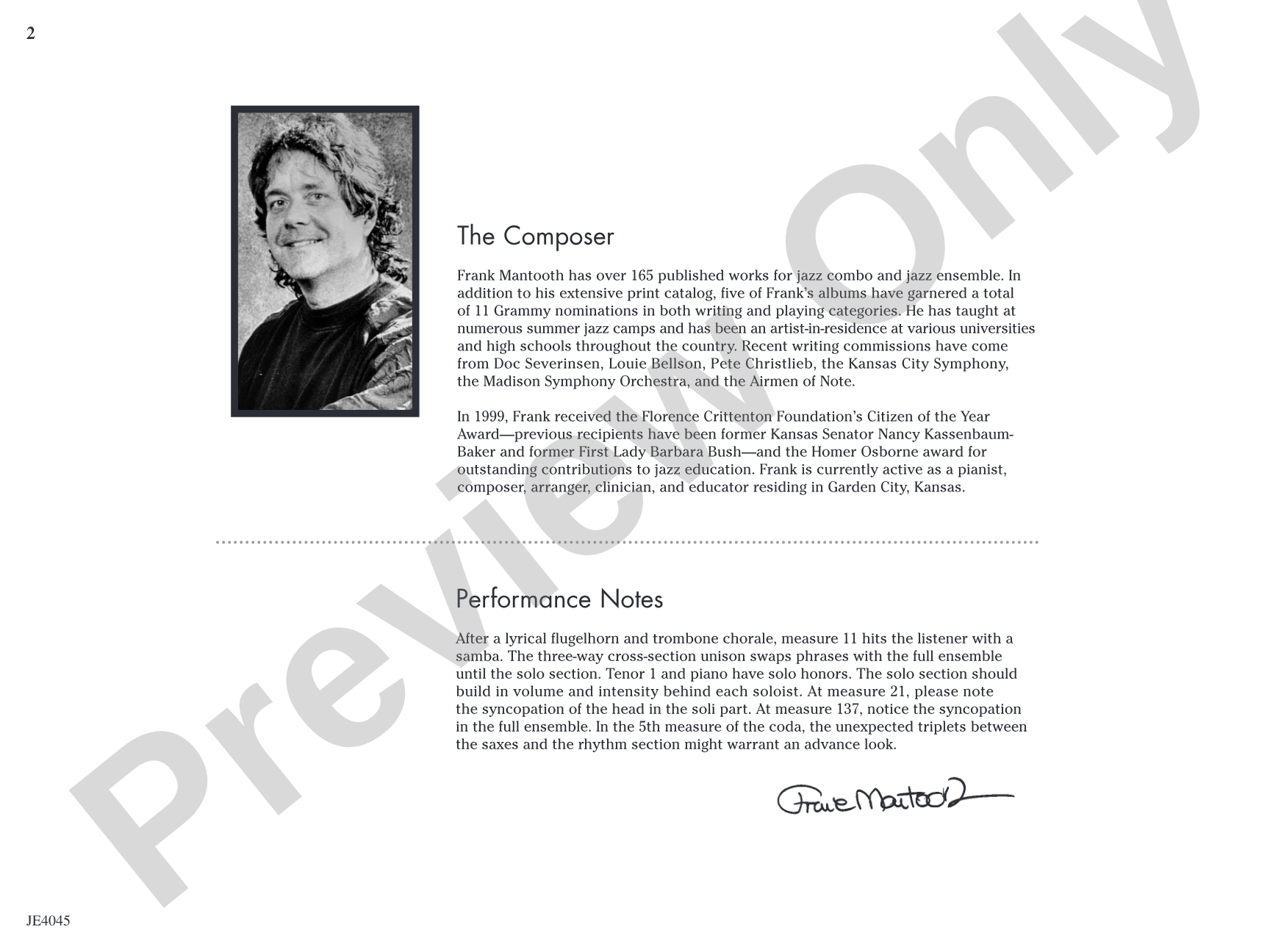
About the Composer: Frank Mantooth
Frank Mantooth is a composer and arranger whose work has become a cornerstone of jazz education repertoire. His charts balance accessibility with musical sophistication, designed specifically for student ensembles without sacrificing the sound and energy that engage audiences.
Mantooth's gift for orchestration shines in pieces that showcase individual voices while building ensemble cohesion. His contributions to the FJH catalog have made contemporary jazz writing available to high school programs across the country.
Why we love this
Mantooth's architecture here gives you real structural drama: a chorale opening that feels composed and sophisticated, then a pivot into samba energy that lets the ensemble breathe. The solo section choices (tenor, trumpet, bone) mean you can rotate featured players across performances, and the block scoring gives your rhythm section room to drive without anyone getting buried.
What to expect
Suave and grounded. The balladic opening has the warmth of a classic jazz chorale, but the samba rhythm that follows carries genuine heat—infectious without being chaotic. There's a confidence in Mantooth's writing that lets even developing ensembles sound like they know what they're doing.
Who it's for
Grade 4 jazz ensembles looking for contest or festival material that sounds professional without requiring virtuosic ranges from students. The piece works equally well for programs with developing soloists and for those with strong players ready to stretch into samba phrasing.
How to get the most out of it
- Shape the opening chorale with attention to balance between the trumpet and bone lines; let the harmonic movement unfold rather than rushing through the sectionalism.
- Lock the samba groove early in rehearsals. Once the rhythm section feels the pocket, soloists will settle in and the fills Mantooth has written for drums will land with impact.
- Manage the energy level between the two sections thoughtfully. The tempo shift should feel like a natural acceleration, not a shock.
- Use the trio scoring on the head as a chance to highlight individual tone quality before the full section enters; this sets up solo sections for clarity.
How to use it
Strong choice for a festival set where you want to show range: pair it with a standard ballad or swing tune to demonstrate your ensemble's versatility across tempos and feels. The accessible ranges make it a solid second-semester piece once your students have built foundational jazz articulation and comping skills.
Skills your students will build
- Samba rhythm feel and comping in Latin jazz contexts
- Balancing harmonic writing in ensemble chorale settings
- Trading solos and ensemble cohesion during head sections
- Reading and executing dynamic fills in the rhythm section
- Phrasing and tone color across two contrasting musical sections