Luck Be A Lady Sheet Music Preview

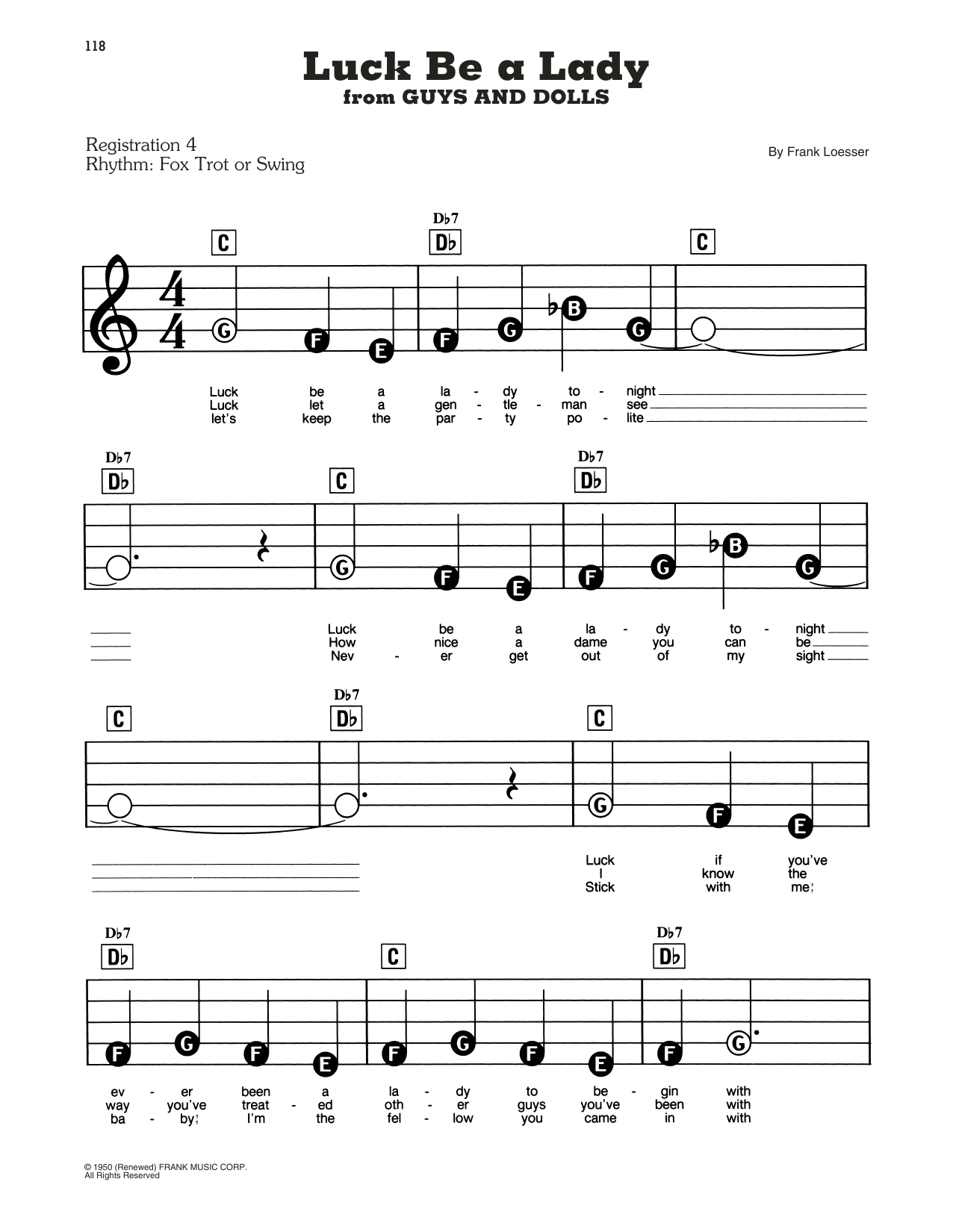
Luck Be A Lady: E-Z Play Today

As performed by Frank Sinatra

Item: 35-DS00447856

Digital Download
$4.99
Description

Luck Be A Lady: E-Z Play Today isn't in MakeMusic Cloud just yet...but it could be. Let us know you'd like to see it, and you'll help shape what comes next. In the meantime, start a free trial and dive into thousands of interactive titles your students can play along with today.

Sample Audio
No sample audio found.
Sample Video
Additional Details
Publisher: Hal Leonard
Page Count: 3
SKU: 35-DS00447856

More about this title

About the Artist: Frank Sinatra

Frank Sinatra dominated American popular music for over five decades, setting the standard for jazz vocal phrasing and interpretation that remains the benchmark for singers today. His influence extends far beyond the concert hall; his approach to rhythm, dynamics, and emotional storytelling shaped how musicians understand the jazz standard repertoire and continues to inform pedagogy across voice and instrumental instruction.

Why we love this

This arrangement captures the swagger and rhythmic precision that made Sinatra's original recording iconic, giving pianists a chance to internalize the phrasing and harmonic sophistication of one of jazz's greatest interpreters. The E-Z Play format opens this material to pianists at earlier stages of development without sacrificing the song's essential character.

What to expect

Confident and urbane, with the kind of easy sophistication that only comes from deeply knowing your material. There's a lightness to the touch required here, a sense of effortless command that makes the listener feel they're in on something classic.

Who it's for

Pianists developing fluency with jazz standards and the harmonic language of mid-century American song will find this accessible yet musically substantial. It works equally well for sight-reading practice or as a foundation for improvisation study.

How to get the most out of it

  • Anchor the rhythm section feel in the walking bass line; the groove lives in the consistency of that foundation rather than rushing the melody.
  • Shape the phrase endings by slightly easing the tempo, mirroring the vocal contours Sinatra favored on his classic recordings.
  • Lean into the chromatic passing tones and alterations in the harmony; these details distinguish a standard arrangement from a generic one.

How to use it

Pair this with other Sinatra or Rodgers and Hammerstein standards to build a full program around the golden age of American songwriting. It also serves as an excellent model for students studying vocal interpretation through the lens of instrumental arrangement.

Skills your students will build

  • Jazz phrasing and rubato within a metered context
  • Walking bass coordination and rhythmic independence
  • Harmonic analysis of jazz reharmonization and chromatic alterations
  • Interpretation of standards through attention to dynamics and articulation

You May Also Like