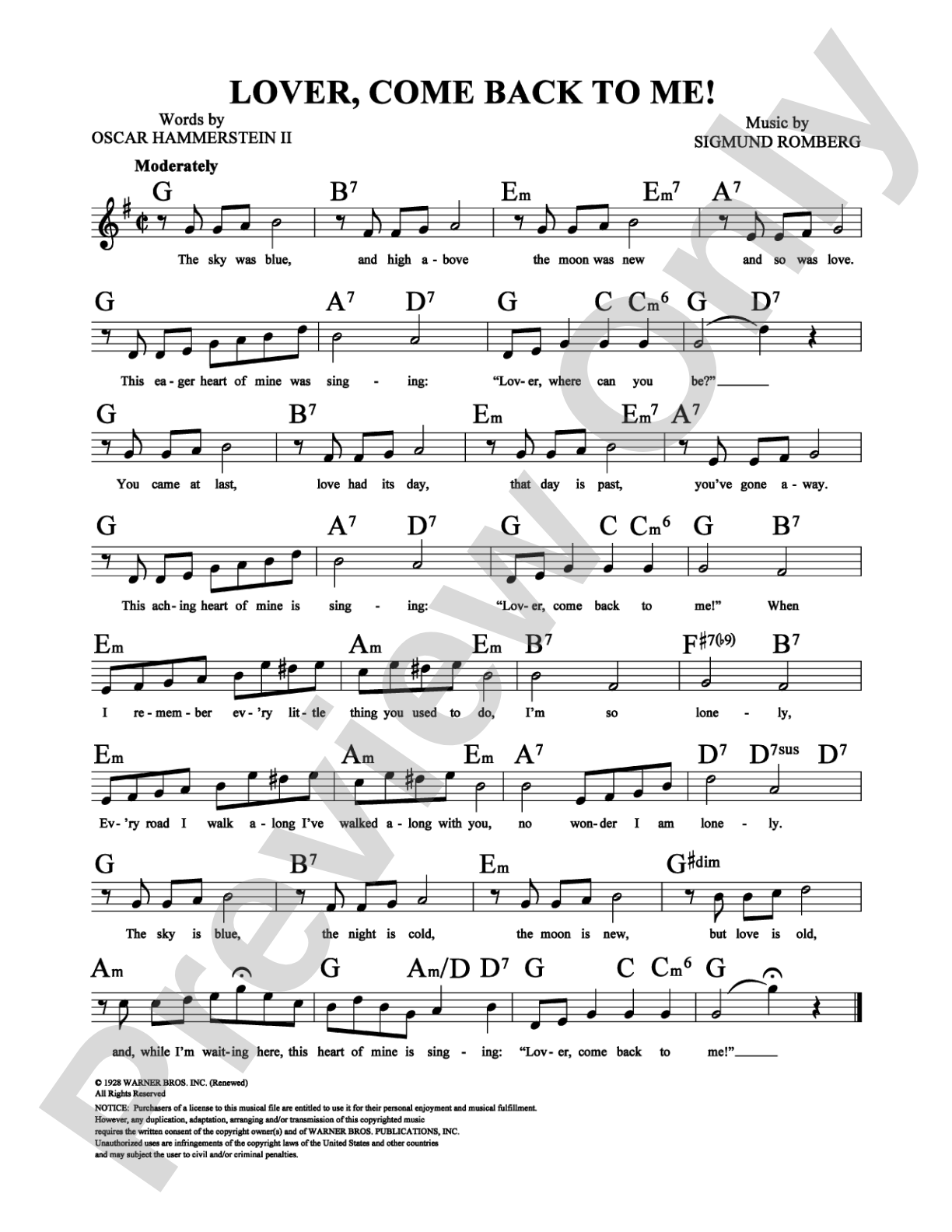
Lover, Come Back To Me!: Lead Sheet Digital Sheet Music

Lover, Come Back To Me!: Lead Sheet Digital Sheet Music

Nat "King" Cole, Sigmund Romberg

Item: 00-PS-0001927

Digital Download
$1.99
Description

Lover, Come Back To Me!: Lead Sheet Digital Sheet Music isn't in MakeMusic Cloud just yet...but it could be. Let us know you'd like to see it, and you'll help shape what comes next. In the meantime, start a free trial and dive into thousands of interactive titles your students can play along with today.

Sample Audio
No sample audio found.
Sample Video
Additional Details
SKU: 00-PS-0001927

More about this title

About the Artist: Nat "King" Cole

Nat "King" Cole (1919, 1965) stands as one of the most influential vocalists in American popular music. His smooth baritone, impeccable phrasing, and elegant interpretations of standards made him a dominant force in both jazz and popular music from the 1940s through his death. Cole's musicianship extended beyond singing; he was an accomplished pianist whose understanding of harmony and song structure shaped how generations of singers approach the American songbook.

Why we love this

Nat King Cole's interpretation of this standard is a masterclass in restrained elegance and emotional depth. The lead sheet gives students and performers direct access to the harmonic and melodic architecture that made Cole's version so enduring, allowing jazz ensembles, vocalists, and pianist to build their own reading of the tune while learning from one of American music's most influential interpreters.

What to expect

This is a song of longing tempered by hope. The melody sits in a comfortable middle register, allowing plenty of room for subtle expression and variation without requiring dramatic vocal or instrumental leaps. There's a quality of patient yearning here, neither desperate nor overly sentimental, that invites musicians to find their own emotional truth within the standard's familiar contours.

Who it's for

Jazz musicians, pop vocalists, and instrumentalists building a foundational repertoire in American standards will find this lead sheet invaluable. Piano students preparing for recitals or small ensemble work, as well as conductors arranging for jazz bands or vocal groups, can use this to explore one of the era's most recorded melodies.

How to get the most out of it

  • Study Cole's phrasing on the original recording; notice how he sits slightly behind the beat in certain phrases and clips the ends of others to create conversational intimacy.
  • Approach the harmony with attention to voice leading; this standard's chord changes reward smooth resolutions that feel inevitable rather than mechanical.
  • Use rubato sparingly and with clear intention. Cole's flexibility in tempo serves the lyrical content, not the other way around.
  • Consider the range and tessitura when adapting this for different vocalists or instrumentalists. The original sits comfortably for a baritone but may need transposition for other voices or instruments.

How to use it

Include this in a jazz or standards-focused concert that explores interpretations of classic American songbook material. It pairs naturally with other mid-century vocal standards for a themed program, or it can anchor a piano recital segment that contrasts classical repertoire with American popular song. Solo vocalists and small ensembles will find it accessible enough for mid-year performances while still offering interpretive depth.

Skills your students will build

  • Reading lead sheet notation and realizing chord changes
  • Analyzing jazz harmony and voice leading
  • Phrasing and rhythmic flexibility within a standard song form
  • Stylistic interpretation of mid-century American popular song
  • Transposition and adaptation for different vocal ranges and instruments

You May Also Like