
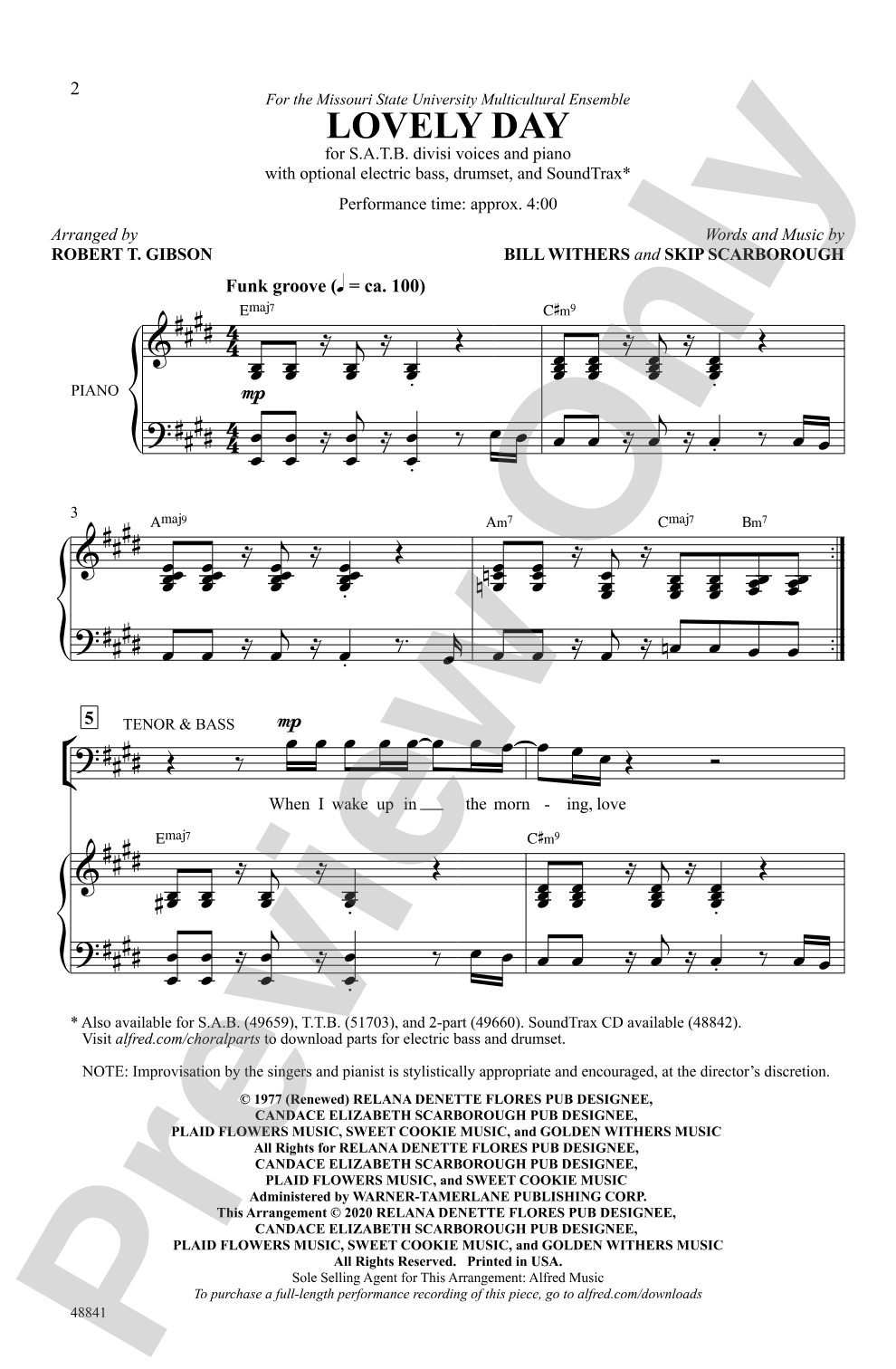
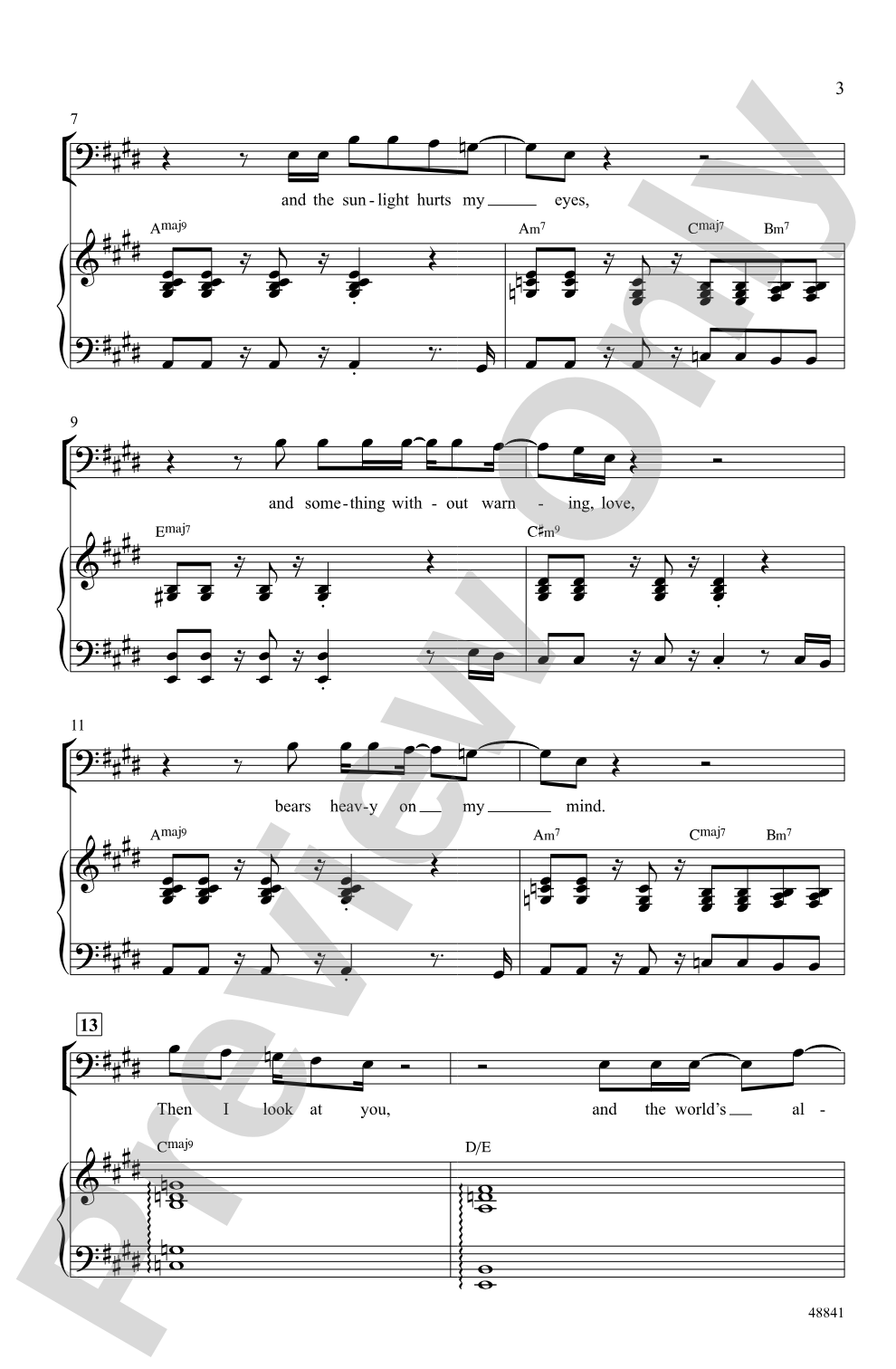
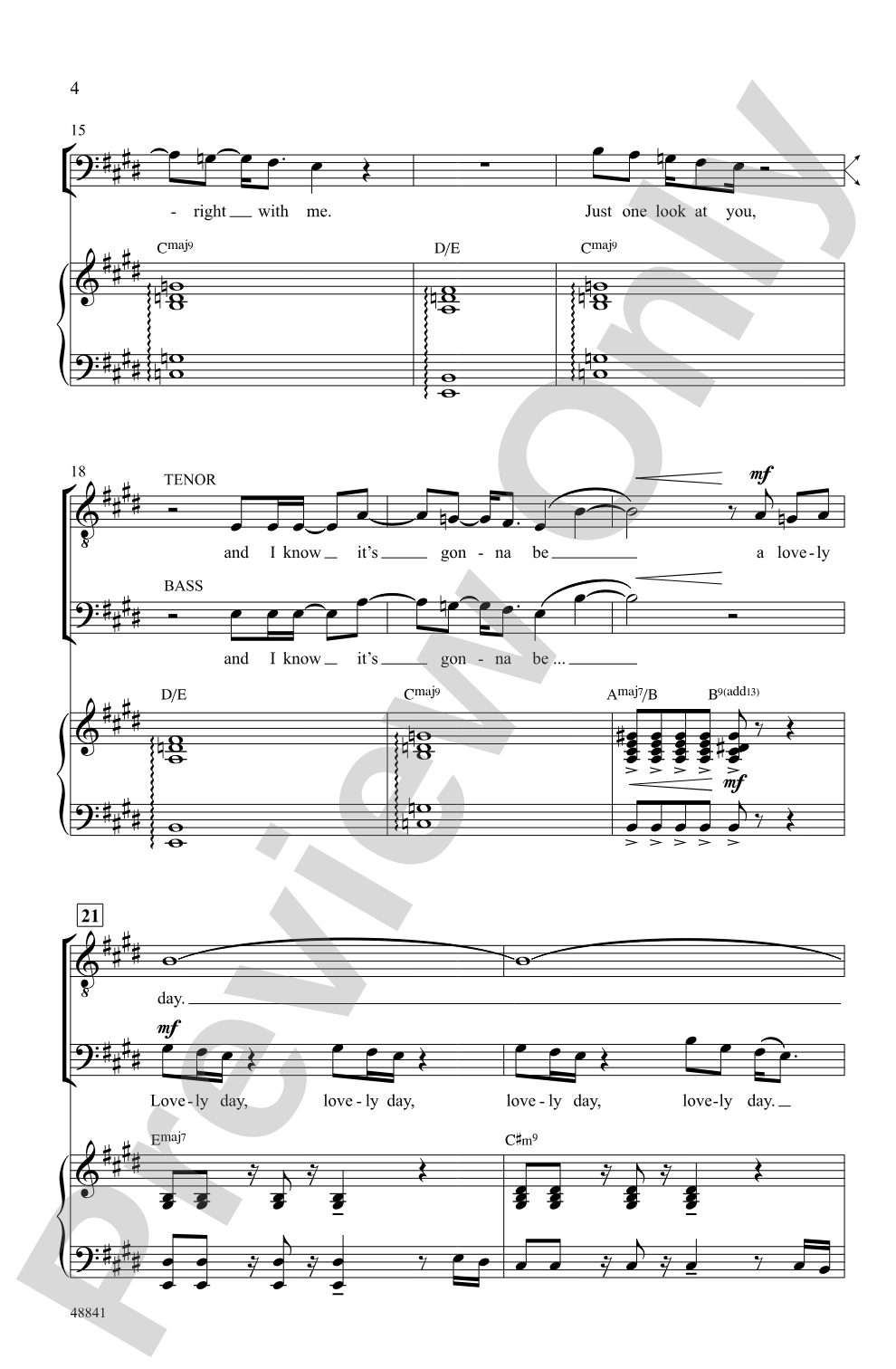

Lovely Day: SATB divisi Choral Octavo
Words and music by Bill Withers and Skip Scarborough / arr. Robert T. Gibson
Item: 00-PO-0006481

$2.25
Minimum order quantity: 20 copies
One moment…
Related Items
Lovely Day: SAB Choral Octavo |
$2.85
|
View | |
Lovely Day: TTB Choral Octavo |
$2.45
|
View | |
Lovely Day: 2-Part Choral Octavo |
$2.25
|
View | |
Lovely Day: SoundTrax Digital Audio Download |
$29.99
|
View | |
Lovely Day: SATB divisi Choral Octavo |
$2.25
|
View | |
Lovely Day: SAB Choral Octavo |
$2.85
|
View | |
Lovely Day: TTB Choral Octavo |
$2.45
|
View | |
Lovely Day: 2-Part Choral Octavo |
$2.25
|
View | |
Lovely Day: Choral Octavo SoundTrax CD |
$29.99
|
View |
Description
Recorded by GRAMMY® winner Bill Withers in the '70s, this optimistic song has become a beloved and respected favorite. Robert T. Gibson's groovin' arrangement stays true to the R&B style of the original while employing some gospel techniques designed to show off your singers. Optional electric bass and drumset parts fill out the sound, or perform with the super-charged SoundTrax accompaniment.


Don't just read it, hear it, play along with it, and watch your students grow with it. In MakeMusic Cloud, Lovely Day: SATB divisi Choral Octavo comes alive with professional accompaniment, adjustable tempo, and built-in practice tools that turn solo practice into real progress.
Open in the Player
Jump straight in and assign it today.
Start Your Free Trial
Open this title and explore the full library in minutes.
Sample Audio
1
Audio File
--:--
0:00
0:00
Sample Video
1 / 2
Additional Details
Series:
Alfred Pop Choral Series
Publisher:
Alfred Music
Page Count:
16
SKU:
00-PO-0006481
More about this title
About the Composer: Bill Withers
Bill Withers emerged from the soul and R&B landscape of the 1970s with a gift for writing songs that felt both intimate and universally resonant. His sparse, honest approach to melody and lyric influenced generations of songwriters, and his catalog remains a touchstone for understanding how popular music can achieve genuine emotional depth without sacrificing groove or accessibility.
Withers' impact on music education extends beyond his recording legacy. His songs have become standards in choral and popular music curricula precisely because they contain the musical DNA that students need to understand: strong melodic lines, rhythmic sophistication rooted in African American musical traditions, and lyrics that actually mean something. Teaching his work teaches singers how to honor a style while bringing their own voices to it.
Why we love this
Robert T. Gibson's arrangement captures the soul of the original without feeling like a note-for-note transcription. The gospel techniques woven throughout give your singers real textural and harmonic vocabulary to work with, making this as much a learning experience as a performance vehicle. The optional rhythm section parts transform this from a traditional choral piece into something your ensemble will feel genuinely excited to perform.
What to expect
Optimistic and buoyant, with a pocket that makes you want to move. The arrangement balances the brightness of the original with enough harmonic color to keep singers engaged on every line. There's real joy in this piece, and it carries the warmth of the source material without ever feeling saccharine.
Who it's for
Choirs with singers who can handle light divisi writing and respond well to grooved, stylistically specific material. This works equally well in show choir, concert choir, or popular music ensemble settings. You'll want singers with solid rhythmic literacy and an interest in contemporary vocal idioms.
How to get the most out of it
- Lock the rhythm section and vocals together early in rehearsal. The groove only works if everyone feels the same pocket, so spend time with the drums and bass even before the singers have all their notes.
- Highlight the gospel techniques Gibson uses in the divisi passages. They're designed to shimmer and overlap, so clarity of each part matters more than volume.
- Use the recorded accompaniment in early rehearsals to lock the style and feel, then gradually transition to live rhythm section parts if you're using them.
- Find the lightness in the upper voices during the soaring passages. This isn't a belting number; it's about control and air.
How to use it
This is a natural closer for a concert built around contemporary pop and soul standards, or a highlight piece if you're programming an evening that celebrates African American musical traditions. The 16-page length gives it presence without demanding excessive rehearsal time, making it useful as a learning piece mid-year or a lockdown concert favorite late in the season.
Skills your students will build
- Singing through divided parts in R&B and gospel contexts
- Understanding and executing contemporary rhythmic grooves
- Balance and blend in gospel-influenced harmony
- Stylistic flexibility moving between classical choral technique and soul-influenced phrasing
- Ensemble cohesion with optional rhythm section parts