

Love Will Keep Us Together: SATB Choral Octavo
Words and music by Neil Sedaka and Howard Greenfield / arr. Greg Gilpin
Item: 00-PO-0005672

$2.10
Minimum order quantity: 20 copies
Pickup currently not available
Related Items
Love Will Keep Us Together: SoundTrax Digital Audio Download |
$27.99
|
View | |
Love Will Keep Us Together: SAB Choral Octavo |
$2.00
|
View | |
Love Will Keep Us Together: SSA Choral Octavo |
$2.10
|
View | |
Love Will Keep Us Together: Choral SoundPax |
$10.00
|
View | |
Love Will Keep Us Together: SATB Choral Octavo |
$2.10
|
View | |
Love Will Keep Us Together: SAB Choral Octavo |
$2.00
|
View | |
Love Will Keep Us Together: SSA Choral Octavo |
$2.10
|
View | |
Love Will Keep Us Together: Choral Octavo SoundTrax CD |
$27.99
|
View | |
Love Will Keep Us Together: Choral SoundPax |
$10.00
|
View |
Description
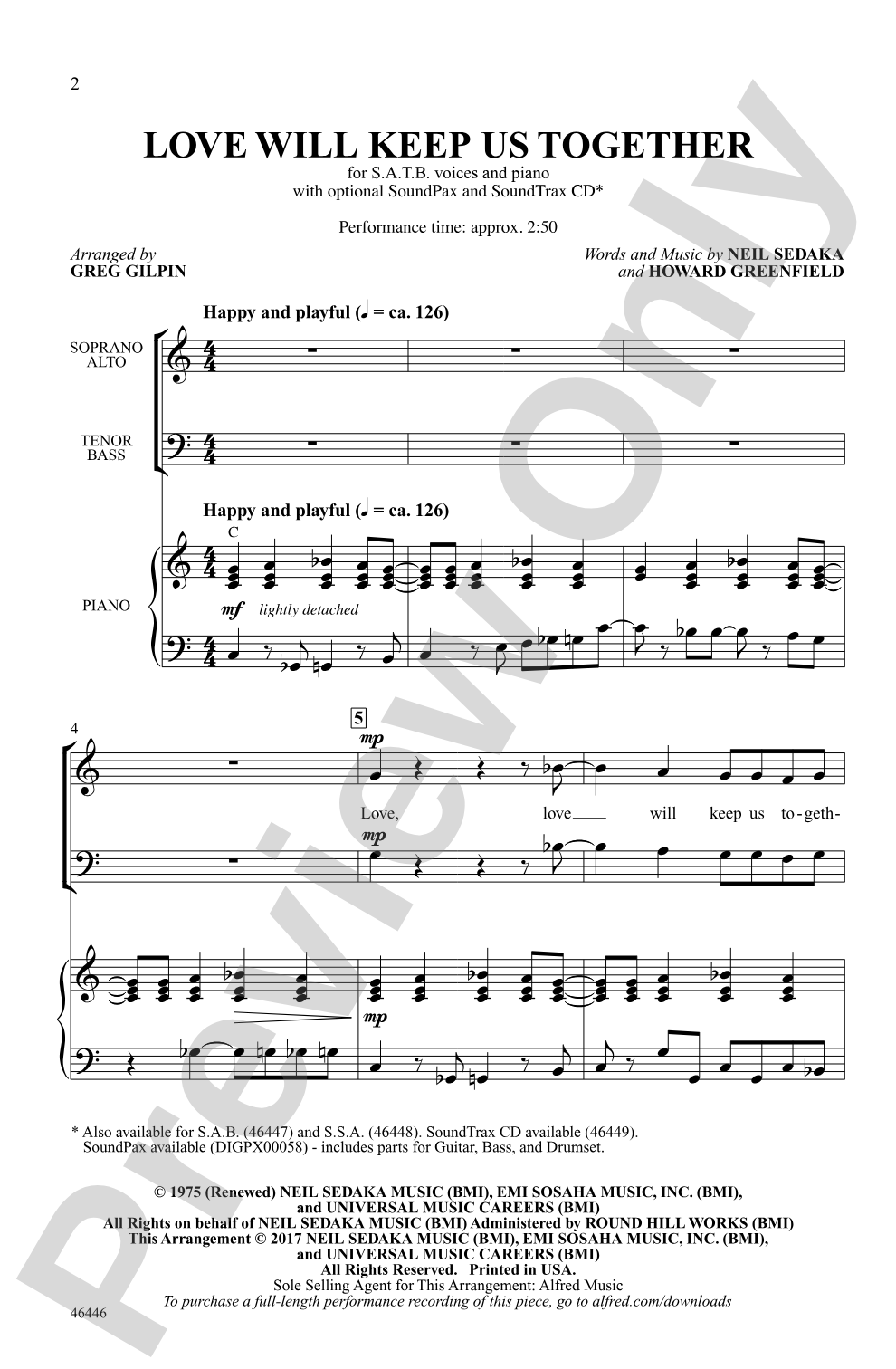
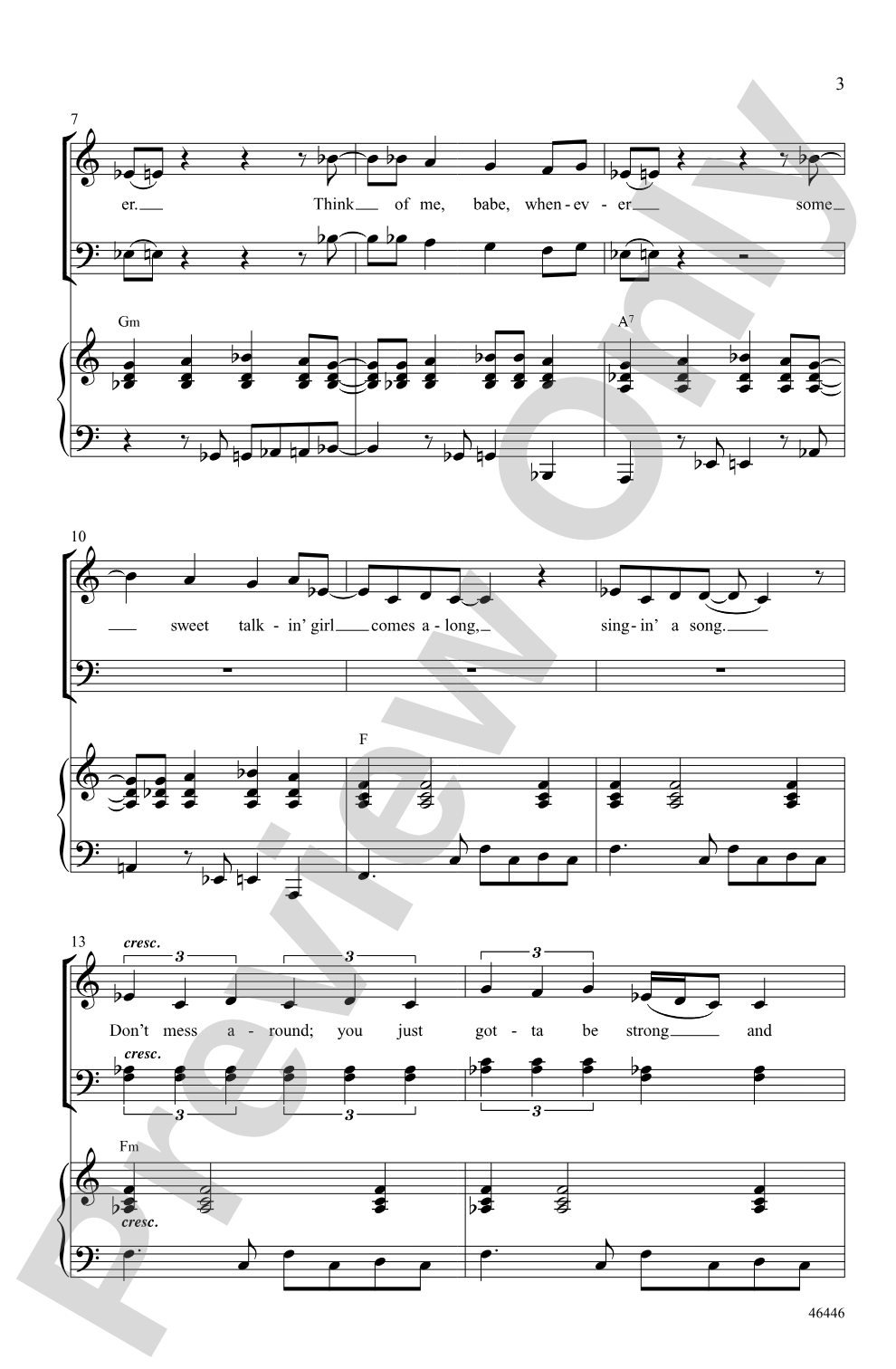
Originally recorded by Sedaka, this classic shot to worldwide fame when Captain and Tennille released it as the lead single on their 1975 debut album. With sensible voiceleading, this fun, rhythmic arrangement is crafted for success!


Don't just read it, hear it, play along with it, and watch your students grow with it. In MakeMusic Cloud, Love Will Keep Us Together: SATB Choral Octavo comes alive with professional accompaniment, adjustable tempo, and built-in practice tools that turn solo practice into real progress.
Open in the Player
Jump straight in and assign it today.
Start Your Free Trial
Open this title and explore the full library in minutes.
Sample Audio
1
Audio File
--:--
0:00
0:00
Sample Video
Additional Details
Series:
Alfred Pop Choral Series
Publisher:
Alfred Music
Page Count:
12
SKU:
00-PO-0005672
More about this title
About the Composer: Neil Sedaka
Neil Sedaka built his songwriting reputation in the 1950s and 1960s with a gift for crafting infectious melodies and emotionally direct lyrics. His compositions became standards of the pop era, recorded by countless artists and performed across generations. For music educators, Sedaka's work represents accessible yet sophisticated songwriting that engages singers with memorable hooks and meaningful melodic contours.
Working frequently with lyricist Howard Greenfield, Sedaka created songs that balance commercial appeal with genuine musical substance. His melodies sit naturally in the voice and his harmonic language, though rooted in pop tradition, rewards careful choral treatment. These qualities make his compositions particularly valuable in school choral programs where singers benefit from material that's both fun to perform and musically substantive.
Why we love this
Greg Gilpin's arrangement captures the irresistible charm of the original without overcomplicating it. The voiceleading makes musical sense for teenage singers while maintaining the rhythmic energy and accessibility that made this song a worldwide hit. You get a piece that feels current and engaging to your singers while delivering solid four-part writing.
What to expect
Bright and optimistic, with the kind of buoyancy that makes people want to listen and sing along. The arrangement bounces with confident rhythm while the harmony keeps the piece feeling genuine and warm rather than novelty-driven.
Who it's for
High school and developing collegiate choirs looking for material that connects with singers and audiences alike. This works equally well for groups focused on pop repertoire and those wanting to program one accessible contemporary piece alongside more traditional fare.
How to get the most out of it
- Keep the rhythm section locked from rehearsal one. The groove is the foundation here, so pianists and any percussionists need to establish the pocket early and hold it steady through all voicing changes.
- Shape the phrase endings with slight dynamic softening rather than hard stops. The song wants to float forward, and a gentle release on cadences maintains the song's buoyant character.
- Balance the soprano line when it carries the main melody against the supporting harmonies below. This arrangement works best when the tune stays clear but the backgrounds provide rich harmonic context.
- Emphasize the rhythmic precision in the ensemble sections. The fun of this piece lives partly in the snap and clarity of the rhythmic figures, so clean attacks and releases matter.
How to use it
Use this as a concert opener or closer to set an upbeat tone and engage your audience immediately. It also sits naturally in a pop or contemporary-music concert alongside other standards from the 1970s, or as a standalone piece that shows your choir's range and versatility. The recorded accompaniment makes it practical for smaller performance contexts where live accompaniment isn't available.
Skills your students will build
- Singing in a pop idiom with authentic style and groove
- Balancing melody and harmony within a four-part arrangement
- Rhythmic precision and ensemble clarity
- Interpreting dynamic shaping and phrasing in contemporary music