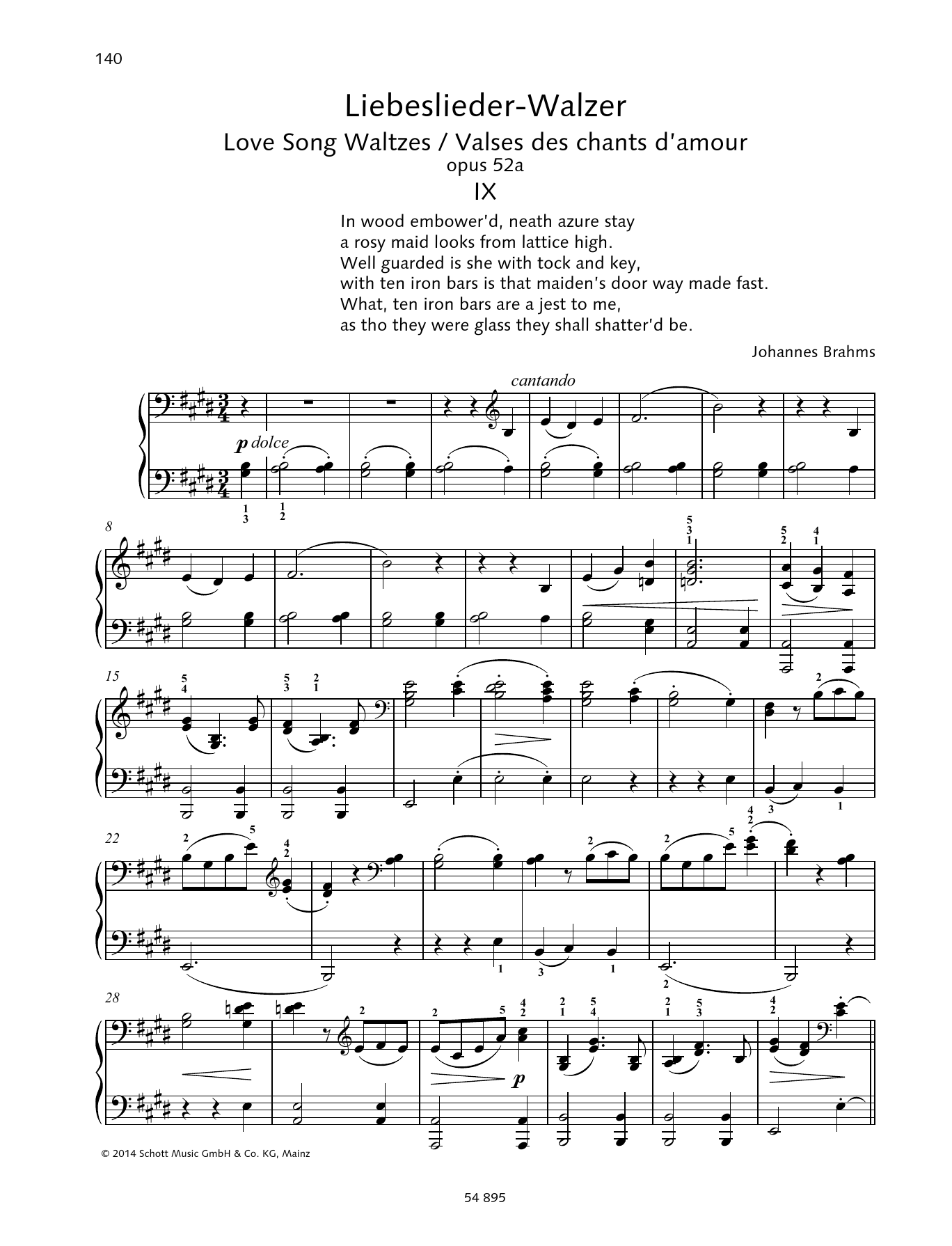
Johannes Brahms (1833–1897) was a German composer whose mastery of form and orchestration made him one of the most influential classical composers of the 19th century. His waltzes occupy a distinctive place in his output, blending the dance tradition of Vienna with the harmonic sophistication and structural clarity that define his larger works. These pieces showcase his ability to write music that is both immediately appealing and harmonically rich, making them enduring teaching tools for pianists developing interpretive maturity.
Brahms composed his waltzes across several decades, often drawing inspiration from the waltz tradition he encountered in Vienna. Unlike many of his contemporaries who treated the waltz as light entertainment, Brahms elevated the form through inventive accompaniment patterns, unexpected key relationships, and subtle melodic development. His waltz arrangements remain valuable for intermediate to advanced pianists seeking to balance technical precision with lyrical expression.